Tag Archives: featured

The Greatest Governance Failings of the 21st Century
Corporate governance has catapulted from the fringes to the fore since the turn of the millennium, with numerous scandals dominating headlines in recent years. Essentially, corporate governance is the system by which companies are directed and controlled. When governed well, companies can achieve an optimal balance of all their stakeholder’s interests. However, when corporate governance goes wrong, even the most large-scale businesses can suffer its destructive consequences. Outlined below are three of the most momentous governance scandals since the beginning of the 21st century.

Enron – 2001

It is impossible to list the most notorious governance scandals of recent years without beginning with the grandfather of corporate failings. Enron, a former giant of the energy sector and darling of Wall Street, suffered a collapse that shook the business world to its core in 2001. In August 2000, Enron had a market capitalization of $70 billion and was outperforming the S&P by more than 200%. By November 2001, the company was bankrupt.

The situation began in early 2001 when institutional analysts monitoring Enron questioned irregular accounting practices employed in the company’s latest Annual Report. The U.S. Securities and Exchange Commission (SEC) subsequently began an investigation which uncovered that Enron was concealing liabilities and toxic assets to the value of billions of dollars through mark-to-market accounting and special purpose vehicles.

The company’s senior executives basically measured the value of their securities based on its current market value instead of its book value. This allowed the company to build an asset and instantly claim its forecasted profits on their books even if the company had not yet generated any revenue from the project. If it transpired that actual revenues were inferior to those forecast, Enron simply transferred the asset to an off-books entity where the loss wouldn’t be reported, thereby having no negative consequences on Enron’s accounts. Furthermore, Enron were able to impose significant pressure on their auditor, Arthur Andersen, to overlook the irregularities. This allowed Enron to appear very profitable when in fact it was bleeding cash.

The fallout from the scandal was immense. Enron’s share price plummeted from $90.75 at its apex to $0.26 in a matter of months, leading to the filing of a $40 billion lawsuit from the company shareholders. The scandal is also believed to have been the prime motivation behind the introduction of the Sarbanese Oxley Act in 2002, which helps to protect investors from fraudulent financial reporting. Enron ultimately filed for bankruptcy on December 1st 2001 with $63.4 billion in assets, the single largest corporate bankruptcy in U.S. history at the time.

Lehman Brothers – 2008

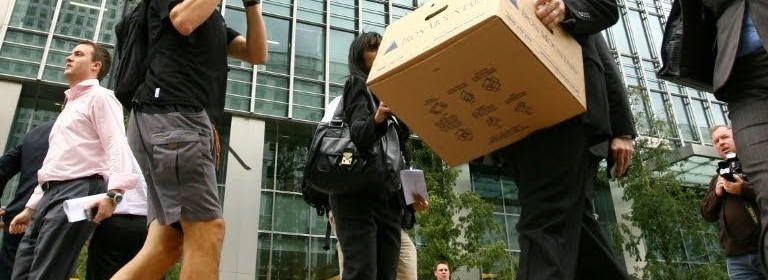
On September 15, 2008, Lehman Brothers filed for bankruptcy having fallen victim to the subprime mortgage crisis. Images showing hundreds of smartly dressed workers, exiting the bank’s offices with their belongings in small cardboard boxes is the quintessential portrayal of the subprime mortgage crisis’ climax.

As the housing bubble began to accelerate in the early 2000’s, Lehman Brothers directed their attentions firmly on mortgage-backed securities and collateral debt obligations in order to provide those seeking to purchase real estate with loans. By 2007, Lehman Brothers had underwritten more mortgage-backed securities than any other firm, garnering a portfolio to the value of $85 billion, four times the firms shareholder value.

Being so highly geared meant that the firm was extremely sensitive to the housing market, leaving it at significant risk of collapse in the occurrence of a housing downturn. In order to disguise this fact, Lehman Brothers made repurchase agreements with banks in the Cayman Islands, effectively agreeing to sell them the firms liabilities with an agreement to repurchase them at a later date. Lehman Brothers then manipulated accounting standards to record these repurchase agreements as sales, allowing the firm to acquire cash in the short run without recording any liabilities.

However, when real estate values began to fall and the credit market began to tighten, Lehman Brothers found themselves in the fatal position of being unable to repay their repurchase agreements, as their own clients were defaulting on their loans. Despite ‘Hail Mary’ attempts at the final minute to agree a takeover with Barclays PLC and Bank of America, in September 2008 Lehman Brothers filed for bankruptcy with $639 billion in assets and $619 billion in debt.

The Lehman Brothers bankruptcy was a seminal governance failure that sent financial markets reeling in its wake and effectively marked the beginning of the Global Financial Crisis. It acts as a stark reminder that no company nor market is too big to fail.

Volkswagen – 2015

‘Dieselgate’ rocked the automotive world in in September 2015 when the U.S. Environmental Protection Agency (EPA) announced its belief that Volkswagen had installed software devices in diesel cars to defeat emissions testing. The announcement triggered a staggering fall from grace for the German firm famed for its precision engineering and drive to become the world’s best-selling car manufacturer.

Volkswagen allowed their lofty ambitions to blind them from their responsibilities towards their customers, shareholders, the environment, and society in general.

The EPA discovered that the company had installed illegal software, dubbed ‘defeat devices’, in polluting vehicles that could recognise when it was undergoing an emissions test and subsequently change its performance in order to pass. Volkswagen had intentionally set emissions controls in their diesel engines to turn on during laboratory emissions testing only. This allowed vehicles’ outputs of Nitric oxide output to conform with U.S. standards during testing, but actually emit up to 40 times more Nitric oxide when driving on the road.

In total, Volkswagen installed defeat devices in 11 million cars across the globe between 2009 and 2015, 500,000 of which were in the U.S. Volkswagen were forced to pay a heavy price for their governance failures in the aftermath of the scandal, most notably a mammoth $18 billion fine from the EPA. Volkswagen’s share value plunged 30% in the immediate aftermath of the scandal, constituting a loss of over $26 billion in shareholder value. As of writing, the fallout from the controversy has cost Volkswagen over $33 billion, taking into account fines, financial settlements and recall/ repurchase costs, a substantial figure when you consider that the GDP of many small nations is less.

The greatest price of Volkswagen’s actions, however, are the 59 estimated premature deaths that will occur as a direct result from excess pollution of illegal Volkswagen cars in the United States alone.

Lessons to be Learned

Enron, Lehman Brothers, and Volkswagen teach us that the absence of a sound corporate governance structure can hold disastrous consequences for any company, regardless of their size and revenues. Corruption, lost profits, reputational damages, and in extreme cases bankruptcy, are just some of the potential consequences for a company chooses to ignore its governance responsibilities. On a grander scale too, governance neglect can have large-scale ramifications. Lives can be lost and economies unbalanced through neglect of even a single company. Therefore, it is clear that businesses must remember their corporate governance duties if they, and society, are to thrive and succeed into the future. If not, they may just be the next name to join this list.

Covid-19 Vaccine News Sparks Market Rally

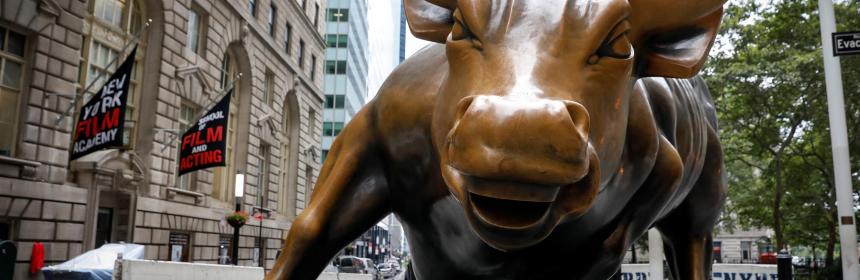
Investors showed confidence in the market last week as certain stocks hit all-time highs. This bull market comes on the back of positive news in the race to find a vaccine for Covid-19, which has been responsible for putting many countries into output crushing lockdowns. Investors are betting that the vaccine developed by Pfizer in collaboration with Germany’s BioNtech could be the key to ending the pandemic.

Investor confidence was also given a boost when it became clear that Democrat Joe Biden would become the next US President. Investors see this as a return to predictable policy-making especially in combination with a Republican controlled Senate. A Republican Senate would make it very difficult for any radical regulatory or tax changes to be enacted, giving investors more confidence.

Market Records

The apparent turning point in the fight against the Covid-19 and the election of Joe Biden have given investors the chance to look beyond the current crisis. So-called “stay-at-home” stocks such as Zoom and Netflix fell sharply while the stocks hit the hardest by lockdowns such as British Airways rose 16% on Monday. Last week saw the largest capital inflow into equity markets in past twenty years according to The Financial Times. $44.5 billion worth of US stocks were bought in the first half of the week. This growth came mostly from large institutional investors such as pension funds. Smaller retail investors accounted for just $3.3 billion of inflows. Extremely low interest rates and the promise of more fiscal stimulus will have also played a part in the rally.

Yield Curve Growth

The yield curve on U.S Treasury Bonds – the difference in interest rates between long-term and short-term bonds – which can be an accurate measure of the likelihood of a future recession grew from 0.57% to 0.77% signifying growing investor confidence. The steeping yield curve will help banks who borrow for the short term and lend for the long term.

The Winners and Losers

The stock price rally was the most visible in what are known as value-stocks. The performance of these stocks is more linked with the overall performance of the economy as opposed to individual companies. This has meant that tech stocks did not see the same rise with the tech heavy NASDAQ index actually falling a percentage point. This bucks the trend seen over the decade as value stocks have been unable to produce the same yields as growth stocks.

Market Challenges

There are still many reasons for investors to remain cautious. Attention will inevitably turn to the complex roll out of any new vaccines. It appears for the short term that European countries will have variations of lockdowns that have suppressed economic activity in order to suppress the virus. Germany’s health minister confirmed on Saturday that “severe restrictions” would be in place for the next 4-5 months. The U.S has seen its largest daily case figure of 155,000. The incumbent President Donald Trump has vowed that there would be no lockdown, however the incoming President may be more cautious.

Gradlife with Orla Comerford

This week on the Gradlife podcast Kate spoke to Orla Comerford, an Irish Paralympic athlete, who is currently focused on the 2021 Tokyo Paralympic Games.

They discuss the Orla’s journey from the Leaving Cert to the 2016 Rio games, where she represented Ireland for the first time on the international stage. Orla speaks about how disappointing herself in Rio motivated her into the next phase of her competitive career.

They also discuss recovering from injury, training during Covid-19 and the postponement of the Tokyo 2020 Games. The podcast also touches on studying at NCAD and how Orla has managed to balance college with her athletic career.

Socialify: Designed to Create Disruption Through Digital Strategy

Speaking to co-founder Ethan Monkhouse, Trinity Business Review gained an exclusive insight into digital strategy and business during a pandemic. Founded in April 2018, Socialify is a digital marketing agency concerned with psychological digital marketing. Their work focuses on creating bespoke digital strategies for businesses through content creation, paid traffic campaigns and social media management. 

The Team

Socialify’s founders are Trinity student Ethan Monkhouse and his business partner Killian O’Neill. Ethan is a Computer Science and Business student, while Killian is studying Sustainable Energy Engineering, Energy Management and Systems Technology at Cork Institute of Technology.

Director of Business Development Ethan and Director of Marketing Killian decided to commercialise and bring together their respective interests in film and Killian’s passion for photography to birth Socialify.

Where They Are Now

While countless businesses found themselves in deep waters as a result of the COVID-19 pandemic, Socialify experienced the opposite. Due to the necessity of an online presence during COVID-19, many small businesses came to Socialify to increase their online reach.

With campaigns often generating in excess of €250,000 in revenue for clients, and with a portfolio of more than 15 clients, Socialify has seen great success. As Socialify grows, due to the constraint in regards to the scale of the local workforce, they now outsource projects to subcontractors. Even prior to the pandemic, Socialify worked almost entirely remotely, so transitioned seamlessly into the new wave of widespread online working.

Plans for the Future

Socialify is continuing to scale up year on year. With both founders being full-time students, during the academic year Socialify focuses solely on social media management and paid traffic retainers, with their main clients including car dealerships such as Lexus and Toyota, as well as marine companies both nationally and within Europe.

Meanwhile, the summer months see a restructuring of Socialify, with summer 2020 seeing their biggest project to date; building e-commerce stores.

Get in Touch

Interview with Mr. Conor O’Kelly – CEO of the NTMA

By Victoria O’Connor

The COVID-19 pandemic has affected the global community on the broadest of spectrums. One area that has increasingly been overlooked is the impact the crisis is having on student entrepreneurs, their motivations to launch businesses and their ability to establish new enterprises. I recently interviewed Mr. Conor O’Kelly to discuss how new and evolving hurdles have challenged youth-led enterprises as they learn to sink or swim.

Conor, a proud Trinity alumni, is the Chief Executive of the National Treasury Management Agency. He has an extensive range of experience ranging from former Chairman of Investec Holdings (Ireland) Ltd to Chief Executive of NCB Group. He is also a former director of the Irish Stock Exchange. Conor studied ESS (today’s BESS) in Trinity. During his college years, Conor embraced student life representing Trinity in both rugby and golf, two passions which he still holds today. He graduated from Trinity College Dublin in 1982 and the first student to be awarded a prestigious scholarship to Senshu University in Tokyo, Japan, where he completed a master’s degree.

The outbreak of COVID-19 is having a profound impact on the global economy, commercial markets and consumer behaviour. I asked Conor his thoughts on the repercussions of lockdowns and if we’re moving towards a society where the average consumer will no longer shop on the high street. He sees the issue as two fold, firstly, the pandemic’s role in shifting consumer behaviour and secondly, the trends that are developing from the global remote working experience.

It is important for young entrepreneurs to separate and identify the short-term repercussions of the pandemic from the permanent trends that are materialising. Businesses are either on the “right side or wrong side of the digital divide”. Conor sees the challenge for businesses as keeping up with the acceleration of the market shift from “bricks” to “clicks”.  As the pandemic unfolds, existing trends in the market have been accelerated dramatically, Conor describes it as “time traveling forward to 2030”.  Young entrepreneurs must respond and be experimental and innovative in not only with what their enterprise can offer the consumer but also how they can connect, engage and sustain a customer base.

Shifts in Consumer Spending and Attitudes

The pandemic is changing city centres around the world in irreversible ways. The global “working-from-home experiment” has meant consumer spending has shifted from city centres to local communities. City centre businesses whose success is based on a commuter workforce are going to be adversely impacted by this crisis. One strategy for centrally located enterprises is to focus less on their traditional presence and increase efforts towards driving consumers towards their online channels.

Young entrepreneurs aspiring to operate in retail outlets, must take steps to build consumer trust by adapting to the new health and safety expectations in the community. It is both a responsibility as well as an opportunity for business owners to provide a “safe environment” where consumers are comfortable with the risk, thereby encouraging shoppers to return. Conor opines that emerging technology is likely to be a prominent method in which business owners can confidently deliver on this. Scientists at Oxford University have developed a COVID-19 test that can produce a result in less than 5 minutes. While logistically implementing this at scale may be difficult, it demonstrates the potential for businesses to establish COVID-free spaces.

Opportunities and Challenges Facing Young Entrepreneurs

As the pandemic increasingly pushes consumers towards the world of e-commerce, Conor considers this as a golden opportunity for young entrepreneurs to maximize the opportunity presented by changing consumer behaviours.  A report by Digital Business Ireland found that 74 per cent of shoppers surveyed have been put off by the queues, capacity limits and social distancing requirements in stores. Most young entrepreneurs form the large part of the digital generation, Conor sees them as possessing an “intuitive sense” of how to understand the online spending pattern and behaviours of today’s consumer.

Overall, the pandemic has had a tremendously adverse impact on SME’s who face a unique and difficult challenge for survival. In spite of the turbulence caused by the crisis, a number of companies have improvised, adapted and thrived. Conor provides insight into the ways in which student enterprises can mirror the resilience and success of global companies – “if a business has a good product, they will be able to access distribution channels and will be encouraged to do so”.  Amazons “shop local scheme” is just one example of a global platform opening up access to local businesses.

Reimagining Business – The Role of Technology

Young entrepreneurs must seek opportunity for reinvention and differentiation in times of market disruption. Zoom, an app that was available 9 years ago and largely unknown, has emerged as one of the leading platforms for businesses to ensure their teams can function and communicate effectively and is now worth approximately €25bn.

Encouraging consumers to adopt new products is one of the most challenging obstacles for new businesses to overcome according to Conor. The world has experienced a simultaneous collective grief like no other, and consumer behaviour has changed as a result of it.  We’re living through “seismic societal change “, and the opportunities are endless for the entrepreneurs who successfully identify opportunities and react to consumer demands and expectations living in the “new normal”.

Technology is playing a key role in reducing barriers to business entry for young entrepreneurs launching businesses, it opens a window towards perpetual innovation. Before the internet, start-ups faced costly processes of finding and operating a premise, ordering stock and paying for licenses etc. Now, with an ability to eliminate the majority of traditional overhead costs, online opportunities are increasingly available and more accessible than ever.

Risks Facing Young Entrepreneurs

The short-comings of e-commerce are exposing the difficulties many entrepreneurs face in connecting emotionally with their consumer base to establish loyalty. One recommendation Conor offers is for young entrepreneurs to enhance, augment and personalize the online shopping experience for their consumers.

Providing consumers with an enriched experience by connecting with them is likely to establish both brand loyalty and brand awareness, these can be developed as competitive tools for new and adapting enterprises.

Creativity, imagination and innovative marketing ideas can be driving factors that enable organisations to connect with their target market, and are crucial constituents for young entrepreneurs in 2020.  In the dawn of the internet, any brand can instantly become a viral sensation or a viral nightmare. Companies must prioritise developing and protecting their online reputation as the image of an enterprise is more pertinent than ever before. Citing being on the “wrong side” of a sustainability issue or exercising “greenwashing” as examples,  Conor explains how reputational risk can threaten the survival of the business itself. With a global audience comes a global risk. Money talks, but it’s the consumer who decides where that money goes. In an increasingly cashless society,  a transaction is only a click away with the consumer in ultimate control – that’s a powerful concept at scale.

Advice

Most young entrepreneurs with innovative business concepts face obstacles without the benefit of having a lived experience. Against the backdrop of the current pandemic, youth-led enterprises should adapt and find experience and partners that can help. Conor advises them to take advantage of opportunities to learn from others, whether it’s through a mentor, alumni or listening to podcasts from industry leaders. The perspective and insight of others added to the imagination and creativity of student entrepreneurs is a powerful combination.

« Older Entries Recent Entries »