Category Archives: Current Affairs

From Iran to Ireland: How the Oil Shock Is Hitting Home
By Joey Kennedy

The price on the petrol pump is not supposed to tell a geopolitical story, but right now it does. Every jump past €2 per litre is not just a number, it is a signal. A signal that a conflict involving Iran, thousands of kilometres away, is already working its way into Irish households. For most people, it shows up quietly at first. An extra €20 here, €50 there, and suddenly a monthly budget that no longer quite works. What looks like a distant war has quickly become something much closer, a global oil shock that has already reached Ireland. 

This shock does not begin in Dublin or Brussels. It begins in one of the most strategically important stretches of water in the world, the Strait of Hormuz. Running along Iran’s southern border, this narrow passage carries roughly a fifth of global oil supply. When tensions escalate, as they have in recent weeks, the risk is not theoretical. Any disruption, or even the threat of it, is enough to tighten supply expectations and push prices higher. 

Markets do not wait for a full shutdown. The possibility alone is enough. When traders see Iranian involvement putting such a critical supply route at risk, they react immediately. That is why oil prices have surged so quickly. And this time, the system is more fragile than it looks. Venezuelan output, which could normally act as a stabilising force, remains constrained by US sanctions. Without that buffer, the shock from Iran is not absorbed. It is amplified. 

For Ireland, none of this stays abstract for long. Oil is priced globally, so Irish consumers and firms face the same marginal price regardless of where supply originates. As a net energy importer, that creates a clear vulnerability. When prices rise because of conflict involving Iran, it is not just a global issue. It is a direct transfer of income out of the Irish economy, money that would otherwise be spent locally now flowing abroad to cover higher energy costs. 

That impact is already visible. Fuel prices have climbed back above €2 per litre, while heating oil has jumped sharply in a matter of weeks. For households, this is not marginal. It is a squeeze that forces trade offs, less spending elsewhere, tighter budgets, and a noticeable drop in financial breathing room. What begins as a reaction to events in Iran quickly becomes a change in how money is spent across the entire month. 

The deeper issue is how quickly this spreads. Oil does not just power cars, it underpins the entire economy. When the Iran-driven shock pushes fuel costs higher, transport becomes more expensive, and  those costs ripple outward. They show up in places people do not immediately connect to geopolitics, until the weekly shop feels different and everyday spending starts to creep up. What began as a conflict driven supply shock turns into broader inflation, moving quietly through supply chains before becoming impossible to ignore. 

That is where the pressure builds. Households pull back first, particularly on discretionary spending. Retail and hospitality feel it quickly as people cut back on non-essential purchases. Businesses, meanwhile, are caught in the middle. Costs rise because of higher energy prices linked to the Iran conflict, but passing those costs on is not always possible. In competitive sectors, margins take the hit. Profitability weakens, and decisions begin to shift. Investment is delayed, hiring slows, and expansion plans are quietly put on hold. What started with geopolitical tension now feeds directly into slower economic growth. 

There is also a quieter problem developing underneath all of this. Irish firms compete globally, often against businesses in energy-producing economies like the United States. When energy costs rise in Ireland due to global shocks triggered by Iran, that gap matters. It makes Irish operations relatively more expensive and, over time, erodes competitiveness. 

At the macro level, the pattern is familiar but still dangerous. Inflation moves higher as energy costs filter through the system, while growth slows as spending and investment weaken. This is exactly the type of environment policymakers worry about. It leaves central banks in a bind. Cutting interest rates risks fuelling inflation further, while keeping them high extends the pressure already being felt across the economy. 

Ireland is not entering this from a weak position. Growth has been strong and public finances are relatively solid. But that does not remove the exposure. With the economy already running close to capacity, an externally driven shock, like one tied to Iran’s disruption of global oil flows, risks feeding  into wages and creating a broader cycle that is harder to control once it begins. 

What happens next depends largely on how the conflict involving Iran evolves. If tensions ease and supply stabilises, oil prices could fall back relatively quickly, and the pressure on households would begin  to ease. But if disruption continues, particularly in the Strait of Hormuz, the consequences become more lasting. Higher energy costs become embedded, inflation lingers, and the squeeze on both households and businesses does not go away. 

That is the real takeaway. This is not just about oil; it is about exposure. Ireland cannot insulate itself  from shocks like this. When Iran threatens a route that carries a fifth of the world’s oil, the effects do not  stay in the Gulf. They move through markets, through prices, and into everyday life. 

And that is what makes this different from a normal price spike. It starts with a geopolitical flashpoint involving Iran, but it does not end there. It shows up quietly at first, at the pump, on a heating bill, in a slightly more expensive weekly shop. Then it spreads. By the time it becomes a headline at home, it is already part of everyday life.

Here for a good time, not a long time: Dublin’s dining scene runs on hype

Jessica Weld

Over the last few years, the food and drink scene in Dublin has become a quick-moving conveyor belt of sparkly new concept destinations, each trying to win foodies over to be crowned the best in its particular niche in the capital.

One glaringly obvious reoccurrence has been the short-lived nature of most of these ventures. In Dublin these days, it’s feast or famine – miss a beat and due to the extortionately high overheads of rent, labour and utilities and not to mention the ever lingering cost-of-living crisis hampering footfall, your new venture won’t be long going under. 

The Restaurants Association of Ireland reported that in the first three months of 2025, a whopping 150 restaurants closed across the country, citing rising operating costs as the reason for closure. In this report, RAI CEO Adrian Cummins called on the government to reduce the VAT rate on food and beverage sales to 9% in order to prevent further closures.

While many new entrants to the Dublin food scene typically fail after one year, there are some popular spots that stand the test of time and are regularly booked up and thriving. Social media has become an invaluable marketing tool for hospitality startups seeking to make their mark on the Dublin food scene. The reality of the current state of the Dublin hospitality trade is that the entire scene is being determined by online influence and for lack of a better word – “hype”. 

There are a growing number of Dublin based “foodie” influencers that fuel this hype, adhering to a whole range of different tastes and targeting very diverse audiences. From dual-threat DJ and Chef Marcus O’Laoire to the edgy and alternative vibe of former TV presenter Cassie Stokes, representation of the Irish food and drink scene on social media is at an all time high. 

Additionally, the rise of “User Generated Content” attributes to the Dublin foodie hype train. Everyone wants to be credited with finding the next “hidden gem” and gaining their own individual fame from a popular video on TikTok or Instagram.

This influence doesn’t just hit Dublin, shockwaves quickly ripple abroad leaving people from all over Ireland in a state of puzzlement over makeup guru James Charles’ TikTok video review of a Spice Bag from Xi’an Street Food in the centre of the city. The video posted in October 2024 garnered a whopping 6.3 million views and brought the restaurant international acclaim, causing an influx of tourists that were travelling to Dublin specifically to try their newly “viral” Spice Bag.

It’s these “viral” moments that are keeping the lights on in Dublin’s current flavour-of-the-month food spots. Popular steak restaurant Boeuf and Frites cultivated its own social media frenzy ahead of its opening in February 2024. The rapidly expanding restaurant group exploited a gap in the market for a good quality steak in the centre of the city – without paying the steakhouse premium price. 

They struck a very hard-to-find balance in the Dublin hospitality game and a lot of their success can be credited to their strong social media presence, appearing regularly on TikTok and Instagram feeds of Dublin locals through both their own content and masses of User Generated Content. Due to their consistent presence and a well-received “good bang for your buck” offering, Boeuf has continued to thrive in the local market despite the poor economic conditions.

Despite Dublin’s hype economy keeping some of the city’s old and new favourite institutions afloat, this whole situation begs the question of how much more can Dublin’s food and beverage scene really take? 

With an exponential rise in restaurant closures and the industry’s outcry for a VAT decrease being ignored in the latest budget, will our favourite hotspots be able to survive on vibes and hype alone? Or are spoiled dishes and closed doors the price of dining in Dublin?

The Collins Aerospace Cyber Attack – Valuable lessons to be learned in Business Continuity Planning

Jessica Weld

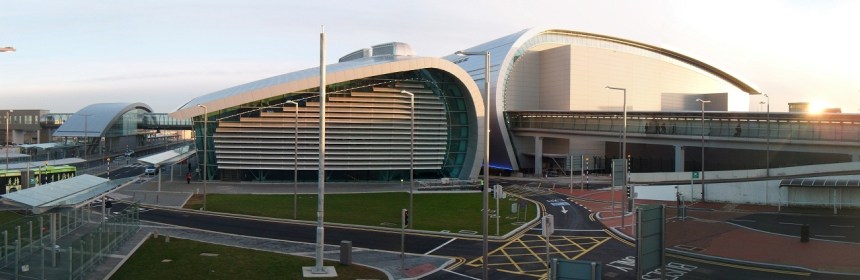
A recent cyber-attack on aerospace giant Collins Aerospace, has caused widescale outages of its MUSE Software, a check in system used by some of Europe’s largest airports including Dublin Airport and London Heathrow has caused mass disruption, resulting in stranded passengers and endless flight delays, ultimately resulting in mountains of manual work for ground staff.

The EU’s Cybersecurity Agency has since confirmed that this was a malicious ransomware attack. Hackers have deliberately knocked out Collins Aerospace systems for potential monetary gain.

In a time where large ransomware attacks on vital networks and systems are becoming increasingly common, organisations must not only strengthen cybersecurity measures, but it’s becoming increasingly imperative that they also have adequate plans in place for if and when crises like this arise. 

Industry Specific View – Commercial Aviation

The Commercial Aviation industry operates on a tightly coordinated supply chain which in recent decades, has become heavily automated. An issue with one link in the chain can cause a catastrophic domino effect which can, as a result, affect many flights and thousands of passengers. 

Within the European Union, airline passengers are heavily protected against such delays under EU 261 regulations. These regulations entitle passengers to compensation for events such as delays, cancellations and missing luggage. 

Compensation agency Skycop revealed that in 2024 alone, airlines owed passengers €6 billion under EU 261 regulations. One can only imagine the cost of passenger compensation with the amount of flights and passengers affected by this cyber-attack. Alongside this, airlines will have to factor in staff overtime, the cost of repositioning crews and aircraft and additional airport fees. (EU flight delays in 2024 may cost airlines over €6 billion).

For the airline industry, the financial risks associated with such an attack are far too high to not have a robust contingency plan in place. 

The Airline Response  

The Dublin Airport Authority’s Head of Media Relations, Graeme McQueen, informed RTÉ that both Ryanair and Aer Lingus test their manual check-in processes on one flight per week.

While regular testing is useful to familiarise staff with manual processes, it is not sufficient in testing the airline’s capacity to cope with a wide-scale outage. For if the system were to fail, it’s unlikely that it does so for one flight. More often than not, outages are widescale. 

The system outage caused Aer Lingus to revert to fully manual check-in processes for all scheduled flights. As a result, queues for check-in were taking 30 to 40 minutes at times. This caused multiple flight delays and as many as 13 Aer Lingus flights were cancelled on the second day of the outage, Tuesday, September 23rd. 

Better Business Continuity Planning Practice

A fit-for-purpose business continuity plan first and foremost must require a comprehensive risk assessment of potential threats. The instructions of the business continuity plan should comprehensively respond to all of these potential threats so that the organisation is fully prepared for any eventuality.

Secondly, resilience measures are vital to business operations and must be incorporated into business continuity planning. These are the measures taken to ensure that when an incident like this occurs, the recovery time is as quick as possible. A common resilience measure would be the use of backup systems to ensure downtime is minimised. 

Regular testing of business continuity plans is vital to ensure their success in the event of an incident. Testing is important to raise staff awareness of crisis procedures so that response time is quick. Testing is also beneficial to spot any weaknesses in planning and processes so they can be rectified. 

Capacity planning is very important in business continuity planning. As previously noted, outages are usually widespread and rarely occur in single iterations. Organisations need to be prepared for the worst-case scenario and must ensure that their entire business operation can be supported by the business continuity plan in the event of an incident.

Lessons to be Learned by Airlines 

While it is known that airlines had regularly tested contingency plans in place to deal with an issue like this, it is clear that capacity was an unfortunate downfall of the incident response. This flaw wouldn’t appear in testing as usually conducted by Ryanair and Aer Lingus as they only tested on one flight a week. It is apparent that the airlines didn’t account for manpower requirements to handle manual procedures for all scheduled flights.  

Resilience measures also appear to be lacking as there is no back-up system available to assist the recovery effort. Improvement in backup systems would reduce the risk posed by such incidents and in this particular event, would prevent the enormous financial losses. 

Finally, as it almost goes without saying, tightening of cybersecurity measures should be top priority for the airlines, airports and suppliers like Collins Aerospace. In the current climate, ransomware attacks pose detrimental risks to vital, fast-moving industries like commercial aviation. In an ever developing and increasingly automated world, organisations need to prioritise investment in cybersecurity to reduce risk. 

Ireland in the Crossfire: How Trump’s 2025 Trade Policies May Affect the Irish Economy

Gabi Svobutaite

US President Donald Trump has roused global economic uncertainty with the announcement of  “reciprocal tariffs” targeting several countries, including Ireland. 

Ireland’s position as a small, open economy means that we are largely affected by fiscal  developments in the US, the world’s largest economy. Exposure to global  macroeconomic disruptions is further amplified by Ireland’s dependence on the US as both an export market and on US foreign direct investment (FDI). With an astounding €73bn of Irish goods, totaling to almost a third of the country’s aggregate exports having been distributed to the US in 2024, Ireland is forecasted to be among the hardest hit countries after President Trump’s new round of tariffs earlier last week. But what exactly could this mean for Ireland, and which sectors  can we expect to see bearing the largest brunt of these trade policies? 

Tariffs: Why These Tools of International Trade Matter

Simply put, tariffs are taxes imposed on goods being imported from one country to another. Such  taxes are applied to the importer and are calculated as a percentage of the total value of the goods  in question. The aim of tariffs is to encourage corporations within a country to source their  materials and labor domestically, rather than relying on international aid.  

Our Taoiseach, Micheál Martin has expressed a fear of the rise of US tariffs as being “a very  grave and serious threat”. Additionally, a joint analysis of the situation by Ireland’s Department  of Finance and the ESRI Irish Think Tank pointed to a potential loss of approximately €18bn in  trade for Ireland as a direct result of these tariffs. This analysis also suggested that a prolonged  trade conflict between the EU and US may endanger Ireland’s public finances.  

Since Ireland is a key financial hub in Europe, with many US-based financial institutions having  put down roots in Dublin, any tariffs affecting the financial services sector such as limitations on  US institutions offering services in the EU can harm Ireland’s finances. Furthermore, trade  barriers, or at least shifts in international trade patterns caused by Trump’s tariffs, will likely lead  to market volatility and increased costs for Irish businesses, creating a knock-on effect on  Ireland’s financial services landscape. This is likely to manifest through fluctuations in the value  of the euro or Irish stocks. 

Brexit and Trump: Double Trouble

One potential upside of the recent US tariffs in relation to Ireland’s financial services industry,  however, is the possible benefit from some companies shifting operations from the UK to Ireland 

post-Brexit, as the EU-US monetary relationship becomes increasingly complicated. An action  like this one could be extremely beneficial given the compounded difficulty of Trump’s new  tariffs and our closest neighbor being outside of the EU. To put it plainly, Ireland’s trade with the  UK and US could now face dual barriers; if the US imposes tariffs on products entering from the EU, Irish products that pass through the UK before heading to the US might face additional tariffs, increasing costs and reducing competitiveness. 

Key Sectors at Stake

A whopping 20% blanket tariff has been imposed on Ireland, covering key export areas of  aluminum and steel, foreign-made cars and most regrettably, Irish whiskey and dairy products.  The Irish Whiskey Association has cautioned that such tariffs are likely to leave long-lasting and  severe effects on the Irish drinks industry, with the US accounting for a remarkable 41% of  aggregate Irish drink exports, valued at €865 million annually. The association furthermore  emphasized a noteworthy growth of 450% in the joint EU and US spirits sector under a tariff free system between the years of 1997 and 2018. Taoiseach Micheál Martin has expressed his  disappointment in such developments, quoting that there was “no justification” for such tariffs  and that Ireland will now take combined action with the EU to determine steps moving forward. 

Pharma Under Pressure

Another Irish industry hanging in the balance of a budding trade war is pharma. With President  Trump yet again singling out the Irish pharmaceutical industry as prey for his tariffs, stating that  “all of a sudden Ireland has our pharmaceutical companies, this beautiful island of five million  people has got the entire US pharmaceutical industry in its grasp”. It is of utmost importance that  Ireland establishes domestic policies to increase competitiveness such as infrastructure investments, helping Irish pharma companies to diversify into new markets. In 2023, the US  consumed around €36bn of Irish pharmaceutical and chemical product exports, showcasing  Ireland’s role as a key offshore manufacturing hub for US pharmaceutical companies. Although  pharma products have thus far been excluded from Trump’s “Liberation Day” tariff  announcement, it may likely be a temporary reprieve. The threat of a global trade war still holds  strong, and the EU and its Asian comrades prepare countermeasures in the likely event that  negotiations are unsuccessful.  

Moving Forward

President Trump’s recent tariffs likely signal the start of a prolonged period of economic  uncertainty surrounding international trade and tariff policies, an issue of a multi-continental  degree. Conor O’Toole, a researcher at the ESRI Irish Think Tank states that “while the Irish  economy entered 2025 in a relatively positive position, the outlook is clouded by international 

developments. Changes in US tariffs and policy will have a notable impact on Ireland and could  hurt key sectors such as pharmaceuticals.” While we do not yet know the full extent of what  Trump’s tariffs mean for the Irish economy, we can be sure that impacts will partly depend on  proceeding responses from UK and European governments. It is imperative that leaders remain  level-headed in the near term, making sure that the various complexities and results of the  upcoming bilateral negotiations are considered in any medium to long-term trade and investment  decisions made by Irish companies and the government alike.

What Anna Delvey’s Ankle Monitor Can Teach Us About Marketing Strategies

Chloé Asconi Feldman

At this stage, it is unlikely that one is active online or in the pop culture sphere without knowledge of the convicted con-artist-turned-socialite Anna Delvey. Recently making her debut on Dancing with the Stars with her bedazzled ankle monitor, Anna Sorokin, known familiarly as Anna Delvey, is known for posing as an upper-class heiress to the New York elite and swindling hundreds of thousands of dollars, eventually finding herself in jail for almost four years on the charge of grand larceny. Despite her criminality, Anna Delvey has been taken on by the general public as a new socialite, featuring on magazine covers and even gaining support from the “Eat the Rich” movement. The narrative surrounding Delvey is fascinating in itself, but her recent rebrand from con to dancer can also offer valuable insights into effective marketing strategies.

Scheming to Streaming: Swindling Scarcity

I had never given much thought to the television series Dancing with the Stars, but upon learning that Delvey would feature in the upcoming season, I found myself suddenly intrigued. This is because Delvey holds an air of alluring exclusivity; with her jail time and limited public appearances, seeing her on a television series increases the appeal of tuning in and engaging with show material. This phenomenon resembles the scarcity principle of marketing, a strategy where marketers urge customers to engage with a good or service based on its finite nature, whether numerically limited or seasonal. 

A brand notorious for its scarcity marketing is Hermès and its infamous Birkin bag. Social media frequently showcases celebrities carrying their Birkins as everyday bags; however, if one tries to buy one in a Hermès store they are met with a waiting list with an indefinite length. This scarcity of the product is what makes the Birkin so notorious, compared to other high-end designer bags – consumers are willing and able to wait to obtain a status indicator. This technique encourages customers to buy a product or service because it feels exclusive. In the case of Delvey and her limited public appearances, this comes in the form of television viewership.

Influencer Marketing: Controversy or Commonality? 

As controversial as she may be, Delvey proves once again how successful influencer marketing can be. Reaching just over a million followers on Instagram, the brands that Delvey partners with inevitably reach a wide audience. Yet what differentiates Delvey from other influencers is her status as an ex-con artist and her blurry public image. What makes influencer marketing especially differentiable is when an influencer with an indefinable allure posts about a product, compared to the typical state of the influencer world, which is plagued with fast-fashion and superficiality. 

As a brand, choosing Delvey to promote your product may seem controversial and ill-advised as she is an ex-con artist, but there is no denying the reach and influence that her posting about products would have. By simply bedazzling her ankle monitor, the concept has gone viral on social media with many claiming Delvey as their Halloween costume inspiration. By crafting a sensationalist, American-dream presenting image, Delvey stands out among influencers and those interested will seemingly follow along. 

Embracing Infamy: Brand Personas

Another marketing strategy that Delvey has executed to improve her personal brand is by embracing her controversy rather than ignoring it. While her story went viral when she was arrested in 2017, the Netflix series Inventing Anna, which documented the story of Delvey and her arrest, made it practically impossible to know about Delvey without associating her with scamming, scandal and fraud. Instead of shying away from this track record, Delvey’s Instagram bio states, “this is not financial advice”, and her bedazzled ankle monitor seems to embrace her criminal past rather than sweeping it under the rug. 

This strategy is nothing new to the world of brand management; in recent times, companies are more willing to face their criticism head-on. Ryanair for instance is a champion in the social media sphere for being bold and abrasive when considering promotion and CRM. However, this has only augmented the attention the airline receives over social media, as their cavalier remarks are in line with the brand’s persona – bare, no-frills and to the point. For Delvey, the choice to lean into and accept her criminal past creates a more authentic personal brand that invites discussion and publicity, whether good or bad. Whether talking about a convicted conwoman or an airline, there is truth in the effectiveness of using humour and marketing to address criticism rather than sugarcoating it.

Overall, Delvey’s rebrand –and her ankle monitor– offer insights into contemporary marketing strategies. She has been able to maintain the spotlight while capitalising on her controversial past and creating a personal brand, whether you love it or hate it. By using influencer partnerships, the principle of scarcity, and embracing her past, Delvey has demonstrated that even the most unexpected elements may play a significant role in the marketing narrative, including a bedazzled ankle monitor and a dance routine.

« Older Entries