Tag Archives: featured

Impact Investing: The Way Ahead?

By Abigail Fernandes

On September 20th and 27th , millions of people took to the streets to strike for climate action. This mass protest was a way of expressing a public sentiment that “Business as usual is no longer an option”. However, Charities and Governments around the world do not have enough capital to meet the challenges faced by the environment. Where then can we find enough capital to help the government tackle this issue? One of the best solutions to this ever-existing crisis is “Impact Investing’. The term was coined more than a decade ago but begun to gain momentum only since the last year. It refers to an agreement entered into by entrepreneurs, companies, organisations and philanthropists to invest in markets that create a social or environmental impact and generate returns. This in turn creates a win-win situation for the environment and the investors at large.

Why Impact Investing Now?

The benefits of Impact Investing are manifold. The future of human beings and the environment are interdependent. The temperatures of our planet are rising, and the icebergs are melting and the on area that is bound to get impacted is our ‘Big Businesses’. As rational beings we need to have a strong compulsion to protect our dying planet that has so much to offer. Impact Investing ensures that businesses are held accountable for the activities undertaken. Institutional Investors can see to it that the companies that they invest in are minimising risks and maximising opportunities that are presented by climate change. Thus, enabling a cleaner and greener environment. Investing in sectors like solar energy and wind power can put an end to the use of fossil fuels and help companies find new efficient ways of meeting the energy needs of the society. A greener future can be good not only for the planet that we live in but also to our wallets. A 2018 study by GIIN found that more than 90% of impact investors reported that their investments were meeting or surpassing their projections.

Growth Avenues for Impact Investing

With the growth of Impact Investments rapidly increasing, some of the best options for impact investing are iShares Global Clean Energy ETF, First Trust ISE Global Wind Energy Index Fund, Gree Mutual Funds like Amundi, Calvert Green Bond Fund, Brown Advisory Sustainable Growth Fund. These investments have a proven track record of positive returns while being beneficial to the society. The growth in these avenues is only going to increase as people now have the option of investing in hedge funds, private foundations, banks, pension funds, and other fund managers. Another way of investing is by adding a Donor Advised Fund (DAF) to one’s impact strategy. An investor gets a multiplier effect on his investments while investing in a DAF. The Fund invests only in companies that create a social impact and then those investments give back up to two to five percent returns to the DAF.

The US municipal finance sector is need of environmental impact bonds as climate change has become very important to protect their community from the bad effects of climate changes. Environmental impact bonds offer a solution to this problem. These securities are municipal bonds that transfer a portion of the risk involved with implementing climate adaptation or mitigation projects from the public agency on to the bondholder.

A good example for this is quoted from an article in The Harvard Business Review regarding a $25 million bond issued by the municipal water board in Washington, D.C. in 2016.The water board used the bond to fund the construction of green infrastructure to manage stormwater runoff and improve water quality. The return to investors is linked to the performance of the funded infrastructure, which allows DC Water to hedge a portion of the risk associated with both constructing green infrastructure and, once it’s in place, how well it works. Investors receive a standard 3.43 percent semi-annual coupon payment throughout the term of the tax-exempt bond. Towards the end of a five-year term – at the mandatory tender date – the reduction in stormwater runoff resulting from the green infrastructure is used to calculate and assign an additional payment If the results are strong (defined in three tiers; tier 1 being best performance) the investors receive an additional payment ($3.3 million) – bringing their interest rate effectively to 5.8 percent. If the results are as expected, there is no additional payment. And if the infrastructure underperforms, the investors owe a payment to DC Water ($3.3 million) – bringing the interest rate to 0.8 percent.

The Verdict

Impact Investing is and will be the future. However, investors should choose not to invest in companies that have a negative impact on the environment. The more investors give importance to impact investing, the better companies with a mission of environmental sustainability will perform. Hopefully this should encourage more and more environmental conscious investors to grow their investments and improve the world in one motion. Thus, rewarding businesses for their commitment to a higher calling.
The Impact of Artificial Intelligence on the Agricultural Industry

By Jan Keim

Artificial Intelligence (AI) and its subsets, such as Machine Learning (ML), are among the most heavily discussed technologies, both in academia and in business. AI is predicted to fundamentally disrupt many areas of business, from cybersecurity to supply chain management. In fact, most people interact with some sort of AI on a regular basis, for example when using a chatbot or filtering emails. A 2018 study conducted by PricewaterhouseCoopers (PwC) estimates a worldwide Gross Domestic Product (GDP) growth by up to 14% by 2030 as a result of accelerated use of AI, with China growing its GDP by up to 26%, compared to Northern Europe with an expected growth of 9.9% and North America with 14.5%. The Organisation for Economic Cooperation and Development (OECD) forecasts a strong impact of AI, especially on manufacturing, with the potential creation of entirely new industries. The digitalisation of industry, commonly referred to as “Industry 4.0”, is a prime example of rapid change driven by AI. Technologies such as the Internet of Things (IoT), big data analytics, cloud computing, augmented reality (AR) and 3D printing underpin this process and may lead to the transformation of manufacturing into “a single cyber-physical system in which digital technology, internet and production are merged in one”, as the European Parliament Research Service puts it.

While AI certainly has tremendous potential to transform manufacturing, one industry that is less talked about in this context is agriculture, even though the agriculture industry is among the most relevant to populations’ daily lives. There are various applications of AI in agriculture already. However, most of these applications are limited to bigger farms, currently neglecting smallholder farmers. Three areas of application of AI in agriculture are outlined below:

Precision Agriculture

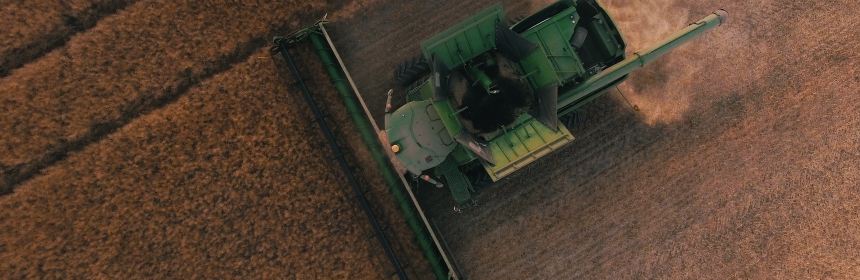
Precision agriculture refers to the observation, measurement and responses to variability in crops, fields and animals. By using AI to increase crop yields and animal performance, precision agriculture can reduce costs and optimise processes. For example, Blue River Technology, a U.S. based start-up that has been acquired by tractor giant John Deere in 2017, uses computer vision and AI to precisely apply herbicides, instead of spraying entire fields. This approach not only saves money, it also decreases the environmental impact of plant protection products by eliminating up to 90% of the herbicide volumes.

Field Monitoring & Harvest Forecasting

Analysing the current condition of fields has long been a labour-intensive challenge for farmers. By analysing drone and satellite pictures using AI, farmers are now able to receive accurate data on their fields’ condition, vegetation issues and problem areas. For instance, IBM’s Watson Decision Platform for Agriculture provides farmers with tools that alert them should there be threats from weather forecasts, soil conditions, evapotranspiration rates, or crop stress. This helps farmers improve crop protection and optimise crop yields, for example. Ultimately, field monitoring helps farmers estimate their agricultural yield and plan security measures accordingly.

Process Automation

The United Nations (UN) predicts that by 2050, 68% of the world’s population will live in urban areas. This will lead to a decrease in labour force in rural areas. By automating processes, easier risk identification, faster decision making and remote operations, AI can significantly reduce the need for labour in the agriculture industry and decrease labour costs.

While there are many benefits to using AI in agriculture, there are a few challenges that have to be taken into consideration while moving towards a more automated and AI-enhanced future. Firstly, many applications of AI, or digitalisation more generally, can be cost intensive, require technological knowledge and demand special infrastructure. While big farms can largely benefit from AI applications, smallholder farmers may be left behind. Hence, ensuring that smallholder farmers equally benefit from the technological progress is a crucial task for politics and science alike. Secondly, the AI-supported automation of agricultural processes tends to benefit countries with large farmlands, such as the United States, Germany or France. Yet, many smaller countries are dependent on agriculture, such as Togo, Sierra Leone or Guinea-Bissau. So far, trade barriers have helped some smaller countries to protect their agricultural sector. However, the advancing globalisation and increasing international trade may exacerbate such policy, which could endanger smaller countries’ agriculture. Thirdly, the technological development in agriculture tends to benefit developed countries. High wages in developed countries create a strong incentive to automate processes and thereby save labour costs. In developing countries with lower wages, this incentive is weaker. According to a discussion paper by McKinsey & Company, the automation could bring back production from poorer countries to developed countries, which would likely increase the lead of developed countries over developing countries.

AI can help farmers tackle some of the most pressing problems they face today. Therefore, the steady adoption of AI will most likely continue and ultimately become mainstream. However, to ensure a level playing field, policymakers, scientists and innovators need to make sure that neither smallholder farmers nor entire developing countries are left behind.

The Economic Impact of UAV Technology: Regulatory Approvals Paving the way for a Billion Dollar Industry?

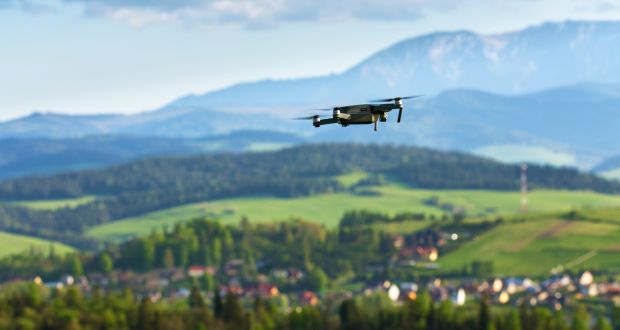
While the concept of an unmanned aerial vehicle (hereinafter UAV), also known as a drone, delivering products may seem futuristic it is set to become a reality. Given that, the Irish Aviation Authority (hereinafter IAA) have shown a willingness to support drone airspace. This is hardly surprising when considering that, according to Goldman Sachs, UAV technology is estimated to be worth $100 billion, in market opportunity, to the worlds’ global economy by 2020.

With the fastest area of growth projected to be in the commercial and civil sector. For instance, a study conducted by PwC has suggested that UAV powered business operations could potentially be worth $127 billion. While, UAV technology, which is of military origin, is likely to be as ground-breaking as similar products of military origin, such as the internet and GPS. It is questionable whether its value will be derived from its hardware which has low production costs and is, therefore, unlikely to drive industry growth. Since the technology used in this area can be easily reproduced, growth in this area is likely to be in services that operate and manage drones. For instance, Amazons’ drone delivery service, PrimeAir, which has been described as ‘ground-breaking’.

Although UAV’s have the potential for enormous market opportunity, regulatory approval is needed to start operations and to generate profits. For instance, in the U.S the Federal Aviation Administration (hereinafter FAA) must grant an air carrier certificate before commercial UAV operations can be commenced. Though Wing Aviation became the first U.S company that received FAA approval other companies such as Amazon, and UPS are still awaiting approval. In Ireland, Manna, which aims to facilitate “3-minuet food delivery” using UAV technology, should become a reality by Q1 of 2020. While the Small Unmanned Aircraft (Drones) and Rockets Order S.I. 563 of 2015 outlines that UAV registration is mandatory in Ireland for vehicles over 1kg.

It is submitted that since drone airspace is a new concept a more comprehensive framework will be needed. For instance, in April 2019 an Airbus A320 landing in London Gatwick had to swerve to avoid collision with a UAV. However, the IAA has indicated that persons operating drones illegally will be subject to the full rigors of the law. Moreover, in June 2019 the Commission Delegated Regulation (EU) 2019/945 & Commission Implementing Regulation (EU) 2019/947 published European rules on UAV’s to ensure that UAV operations across Europe are safe. Given, the novel nature of commercial UAV activity safety has been a paramount concern for regulators. 

Due to economies of scale UAV technology is predicted to play a larger role in our everyday lives. Furthermore, there may be financial incentives for using this technology. For instance, in the construction industry, when lease agreements are in place, the lessor would likely qualify for tax deductions. While data privacy concerns and infringements of General Data Protection Regulations (hereinafter GDPR) have been raised. These concerns may likely be mitigated if commercial UAV’s operate using Lidar, Sonar, and GPS without cameras. The impact of the UAV regulations and whether they will bring harmony and economic growth to this area remains to be seen.

A Round of Applaud – Trinity Start Up Launch Impressive New Booking Platform

Trinity Start Up Applaud.live, the live-music booking enterprise that empowers musicians to make a living from performing, has launched their new platform with the announcement of the Artist Tier. The Artist Tier will help independent artists compete for bookings with larger management companies and record labels with big marketing budgets.

The Applaud.live platform levels the playing field by allowing unsigned musicians to set up customisable profiles that can be used as an affordable, low maintenance alternative to setting up individual websites. Musicians can also link their social media pages to their profile and display their audio and video content from SoundCloud, Spotify and YouTube allowing potential clients to easily find and listen to the musicians they want to hire for an event.

Applaud.live disrupts the traditional live music business model by enabling independent musicians easy access to their target market without expensive management fees or high commission rates. 

The platform charges €12 per month or €100 annually for a customisable profile that independent musicians can use as a tool to market themselves. Musicians that sign up can select what type of events they wish to perform at as well as define the genres that they most closely align themselves to. The profile serves as an online electronic press kit/music résumé that they can use to send to booking agents and event organisers independently. 

A member of TU Dublin’s Hothouse New Frontiers programme, Applaud.live is led by founder Luke Rynne Cullen. A freelance classical musician, Luke has performed at weddings and festivals and learnt first hand how challenging it is to secure bookings and get paid for these gigs. 

“I was inspired by my own experiences to create this platform for musicians who find it hard to market themselves to event organisers. It enables potential clients to find the perfect musicians for their event. Independent music artists, without professional management, have all had issues both in marketing themselves and getting paid for bookings.”

“Applaud.live has really had a chance to grow as part of the New Frontiers programme and build a platform that can help independent musicians market themselves to a wider audience. This is only the beginning as we are currently building features to help musicians manage their bookings and receive payments securely” he added.

Applaud.live currently has over 400 musicians signed up to their pre launch website and has secured musicians on the prototype platform bookings from the Castleknock Hotel, The Grand Social and ThinkHouse Marketing Agency. Applaud is looking to double the number of musicians signed up to use the service and increase the number of bookings made via the platform with the release of the Artist Tier

How the Internet of Things is Changing Business

John Fink

The Internet of Things (IoT) is a relatively new term used to describe the relationship between modern digital technologies; it is a paradigm under which consumer technologies record data about their usage and operation and share it with relevant devices for certain purposes in a sprawling network of interconnected machines. The power of the Internet of Things is in task automation, by using the data recorded from usage analytics, devices within the IoT can satisfy simply and repetitive tasks with minimal to no human input. It allows for your home thermostat to know when you’ve arrived home based on your phone’s location data, and warm up your house for you; Or it sends you an email when the postman was detected as arriving at your front door through your IoT security camera. The potential for what tasks can be automated, and what quality of life improvements can be developed, are vast in scope.

The market for the Internet of Things is rapidly expanding. Research, development, and marketing of IoT enable devices from major tech developers has seem a massive uptick over the past decade, and it’s slated to grow ever larger, you may be familiar with several AI personal assistants that have become more popular in previous years and are often bumbled with modern smartphones and speakers. As of late 2018, Forbes predicted that world spending on Internet of Things technologies will reach 1.2 trillion in 2022. This growth in popularity and creative application of IoT devices has not only affected consumers but has also changed business in more than a few ways. How businesses interact within themselves, with other businesses, and with customers all have the potential to change with IoT technology, and many already do. Using them, data about internal operations and external interactions can be unified within one interconnected network of devices for easy access and organization. Here are just a few of the ways that the Internet of Things has affected business.

  1. Product Management: Using scanners, cameras, digital ID tags, sensors for pressure/impact/temperature/humidity, and computers to manage them all, buyers and sellers in the IoT world can track not only the location of a shipped or stored product, but the conditions of its storage and handling. Grocers can ensure that perishable food was stored at the correct temperature throughout handling, and a window pane installer can ensure that a tempered glass screen was not dropped at any point while shipping.
  2. Operations Management: By connecting devices to your workflow that measure the frequency of the completion of a task, it can be quantified how productive certain measures are without the need of a human observer. Scanners, switches, and computers that record the use of devices on a worksite can compile their data into an accurate summation of workplace efficiency. In a complimentary light, devices like smart locks, lights, and HVAC systems can help to automate certain simple tasks, increase security, and decrease waste.
  3. Customer Management: Through IoT enabled consumer devices, notably the popular AI personal assistants that are found on smartphones and speakers (Alexa, Siri, Cortana, Google Assistant), businesses can interact with their customers, and make sales, on a completely unprecedented platform, with an unprecedented amount of ease in making a sale for both buyer and seller. A good example of this is the Domino’s Pizza Alexa skill, by downloading it, you can shout at your Alexa enabled TV or speaker to order your favorite pizza without even requiring you to pick up your phone. This benefits Domino’s in that no employee time (and therefor, company money) is utilized to make the sale.

These are just a few of the ways that IoT devices are changing business. Several modular and bespoke technologies/software have been released recently with the aim of increasing consumer and business interconnectivity with the internet of things. Such devices are the raspberry pi and other popular small computer kits, the Amazon Alexa skills kit, AI assistant control interfaces like the Google Assistant Home, and more. There is a great opportunity now for businesses not only to integrate these technologies into their workflow, but to develop services that utilize the consumer versions of these technologies to increase their level of customer interaction.

« Older Entries Recent Entries »