Category Archives: The HUB

The Sales Circle: Transforming Training and Recruitment in Tech Sales
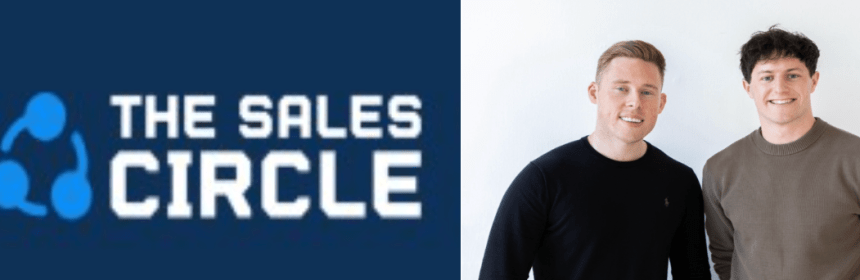
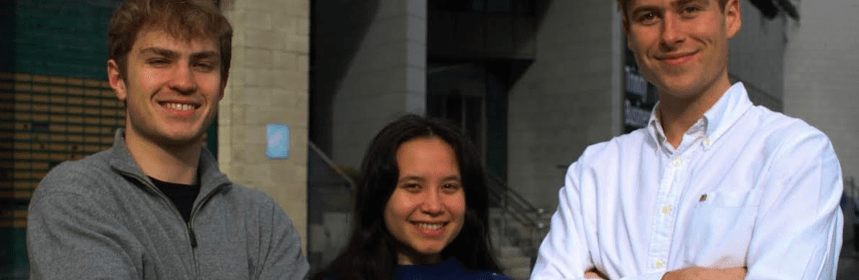
Above: Tommy French (left) and Eoin Murphy’ (right),  founders of The Sales Circle

Anna Lelashvili

While business students often hear all about the glories of working in finance, consulting or accounting, most of us have probably never considered a career in tech sales. Tech sales is becoming increasingly popular in Ireland, with the rise of multinational technology companies establishing offices in Dublin. Tech sales offers great career progression and earning opportunities with graduates earning an average salary of €60,000. 

TBR’s Chief Finance Officer Anna Lelashvili spoke with Eoin Murphy, co-founder of The Sales Circle, to learn more about a career in tech sales and how The Sales Circle can help people looking to break into the field. 

The Founders

Co-founders Eoin Murphy and Tommy French met as business development associates at Salesforce, a cloud-based CRM company. According to Eoin, the two clicked instantly due to their aligned vision and aspirations of being successful. Both Eoin, who studied Business at DCU, and Tommy, who completed a Masters in Finance at Trinity, planned to work in Finance. They both gained experience in the finance field with Eoin completing a 9 month placement in banking and Tommy working as a financial consultant.  

After a quick Indeed search for summer internships, Eoin came across the Salesforce sales development internship and applied to it, not knowing what either Salesforce or sales development was. Although Eoin started working in sales at just 15 years old, helping his father at trade shows, he didn’t know it was a career you could pursue post-graduation until he started the Salesforce internship; a great example of what is meant for you, will not pass you. 

‘When I went into college it was never even a consideration of going into sales. I had never heard of tech sales. I was always going the finance route, same with Tommy. We never envisioned going down this route but I stepped in on the first day (at Salesforce) and said ‘this is what I am doing after college’. It was a hidden gem’.

The Sales Circle Origin

It all began when Eoin started posting content on TikTok, showing viewers the behind the scenes of cold-call filled ‘Day in The Life’ videos and being transparent about the salary in tech sales. In only 9 months he has amassed over 7,000 followers on TikTok and 4,000 followers on Linkedin due to his transparency and love for tech sales.

‘I always had the itch to start posting content. Being in Ireland I always had the fear of judgement, but when I moved to Australia I said ‘look I’m away from everyone, I’m gonna go for it’.

Following Eoin’s success on TikTok, an overwhelming number of people started reaching out to him wondering how they could get into tech sales and find success. While Eoin tried to juggle content creation with working and advising others, he realised that there was an opportunity to create something. He turned to Tommy, and the two started The Sales Circle, offering two-day intensive boot camps once a month. Each bootcamp sees 10 people receiving training and one-to-one support in their journey in breaking into tech sales.

The Sales Circle is unique as it not only helps participants get a job in the industry but also provides them with the resources to excel in their new role. Tommy and Eoin were both very high performers, citing ‘what we teach, we know works’. The Sales Circle is ‘hoping to change the recruitment space, creating a model of recruitment where people are trained by high performers in the industry’. As a result, participants are not only landing jobs quickly, with an average of only 30 days, but are also excelling in hitting their sales targets.

Eoin emphasised the importance of standing out and making yourself ‘the most obvious choice for the role’. At The Sales Circle, they ensure that participants do one thing to set themselves apart at every stage of the recruitment process. As well, they have created a partner network of companies who are interested in hiring high quality talent and hopefully secure your spot at a partner company. 

The Sales Talent of Tomorrow Programme for College Students

After seeing the huge demand from college students looking to get into tech sales, The Sales Circle is launching a new programme called the Sales Talent of Tomorrow Programme, which will see small, monthly cohorts of students receiving two weeks of intensive upskilling sessions on the fundamentals of being a high performing sales and business development representatives. They will also learn how to outshine the 200+ applicants they will find themselves competing against. 

Unlike most careers that students pursue post-graduation, there aren’t many graduate programmes in the tech sales sphere. Instead, there are entry level positions that graduates can apply for. This role is typically the Sales Development Representative role but the name varies across companies. As a result, most final year students begin applying to jobs towards the end of their degree in April. But not to worry, The Sales Circle ensures that “when you get to the end of your college year and you’re looking to apply to jobs, you are so far ahead of others,” according to Eoin.

A Career in Tech Sales

For those of you who have never considered a career in tech sales before, here are some benefits of working in the sphere:

  1. Earning potential and career progression: On average, graduates can expect to earn about €60,000 in their first year as an SDR and can progress to an account executive role earning €100,000+ in 2 years. In contrast, the average graduate salary in Ireland is around €35,000. 
  2. Soft Skills: Sales helps you develop resilience, confidence and communication skills, with Eoin describing it as “the single greatest job for building resilience”. As an SDR, you speak a lot to business owners, learning about their business models and pain points, which could be very beneficial to those considering starting a business themselves. You also face a lot of rejection from prospects and learn how to handle rejection. 
  3. It’s fun!: Speaking to Eoin, you can see how much he really loves his job.

 ‘I was so worried coming out of college, especially when I was in my finance role, that I would hate life working and I could say with complete confidence that every single day, even if it was a tough day, I absolutely loved doing what I was doing in Salesforce, and tech sales in general. I loved the people, the job and everything that came with it. There wasn’t a day I wasn’t grateful that I went down that route.’

Tips to Break into Tech Sales

If you’ve been convinced to break into tech sales, here are some tips from Eoin to help you (as well as joining the Sales Talent of Tomorrow Programme, of course):

  1. Reaching out to people: Reach out to people on LinkedIn who are in tech sales and have conversations with them! You learn so much and also make amazing connections in the process. Eoin suggests having a conversation a week with an SDR/BDR/Account Executive. By the end of the year, that’s around 40 connections! When it comes to applying to jobs, you have a network of people who can help you whether that’s through a referral or some tips and tricks for the interview.
  2. Listen to podcasts: Recommendations from Eoin include 30 Minutes to President’s Club, Outbound Squad and Outbound Kitchen (formerly SDR Game). 
  3. Read books: Recommendations from Eoin include Gap Selling, Never Split the Difference and Problem Prospecting.

Follow Eoin, Tommy and The Sales Circle!

TikTok: @eoinmurphyyy, Linkedin: Eoin Murphy & Tommy French, Website: The Sales Circle 
Driving Sustainability in SMEs: A Conversation with PlasTrak Co-Founder Finn Howley

Petro Visagé

As small and medium enterprises (SMEs) grapple with the growing demands of corporate sustainability reporting, PlasTrak, an innovative Irish startup, has carved out a niche by demystifying complex EU regulations. This initiative provides SMEs with tailored, easily digestible guidance to enhance their sustainability reporting practices. Deputy Editor Petro Visagé sat down with Finn Howley, co-founder of PlasTrak, to unpack the origins of this transformative tool, the challenges they faced and their impact on the Irish SME sector. 

Can you give a brief overview of what PlasTrak does. How does PlasTrak specifically address the needs and challenges of SMEs in becoming more sustainable?

Howley: The mission of PlasTrak is to guide Irish SMEs through the transition to full plastic waste reporting and measurement. SMEs, by 2028, will have to track a huge amount of data points in relation to their sustainability footprint under CSRD. While not directly in scope of the directive, SMEs will be affected by the upstream and downstream reporting requirements of corporations above them in the value chain. For instance, for Musgraves to be able to comply with the directive, they will need to provide data on things like packaging waste that goes out the front door of every retailer that they supply to. Thus, there is a massive challenge for SMEs to start developing the infrastructure to record and report on their sustainability impact. What we do is provide SMEs with their reporting requirements in simple and digestible terms, in stark contrast to a 200 page EU document that is full of legalistic and technical language. We know that time is the most valuable resource for small businesses, so our aim is to create value for them by saving them hours and hours spent understanding their requirements under CSRD. 

Could you tell us more about the origins of PlasTrak?

Howley: So, we started working together as a trio in October 2023 when our lecturer paired up Robert and I with Maïlé because of our similar research interests in our capstone. It’s a very practical capstone where the first semester is spent doing primary research on a challenge, and the second semester is all about implementing solutions to that challenge. We were all interested in the implications of the new CSRD legislation so when we went and carried out our research, our biggest finding was that Irish SMEs needed help in the transition to sustainability reporting. So, when it came to taking action in January this year, the PlasTrak Initiative for Irish SMEs was born based on that finding. 

Could you tell us more about the founders?

Howley: I’m from Balbriggan in North County Dublin, Robert’s from Ashbourne in County Meath and Maïlé’s from Bali, Indonesia. Robert and I have been close friends since we were 12 years old, having gone to the same secondary school and playing rugby together in CUS. We’re both studying BESS, while Maïlé is in Computer Science & Business. 

What inspired PlasTrak and how did your personal and professional experiences shape the company’s mission?

Howley: So we were inspired to start PlasTrak when we were nudged by an Audit Partner that we interviewed in one of the Big 4 firms to look into Europe’s new sustainability reporting regulation, the CSRD. He described it as the “biggest change in company reporting in 40 years”, and when we did look into it, we found it to be a really interesting opportunity. 

From a personal point of view, we’re all passionate about sustainability. Robert and I have been involved in our local tidy towns committees for a number of years and Maïlé was part of the Bali’s Big Clean Up while at school in Bali. We’ve also all done internships in financial services firms, and studied in financial reporting modules, so I think we all kind of had an interest in the technical side of sustainability reporting – the whole aim of the CSRD is to bring sustainability reporting up to the same level of credibility and usefulness as financial reporting.

In launching a sustainability-focused startup, what were some of the biggest challenges you faced, and how did you overcome them?

Howley: I think that growing the initiative at the beginning was challenging as people didn’t take us seriously, perhaps we were initially perceived as inexperienced university students attempting to tell business owners how to run their businesses. This might have been the viewpoint of the people we intended to work with but declined our help. We moved away from the identity of college students working on a project, which might carry connotations of temporariness and lack of practical experience. Instead, we positioned ourselves as informed experts in the field of CSRD, letting on that we could “walk the walk” and not just talk about it. This repositioning helped in building trust and respect in the business community.

How important are partnerships and collaborations to PlasTrak, and can you share examples of successful collaborations?

Howley: Partnerships played a huge role in our initiative, we couldn’t have done it without our industry, government and academic partners. We collaborated with businesses across the sectors of healthcare, agriculture, construction, clothing retail, and food and beverage. Collaborating with Honey Truffle was a really fun experience, Eimer (Chef and Owner) is so nice. She gave up a lot of time out of her day and provided us with a lot of helpful feedback. 

In terms of the government side, the initiative was supported by the Department of Enterprise, Trade and Employment. They invited us to Local Enterprise Office events where we were able to network. We met a really cool entrepreneur at one of the events who then became one of our SME website users. We also collaborated with TBS faculty to share our insights and to both give and receive feedback. 

What are some of the biggest challenges currently facing the sustainability sector, and how is PlasTrak addressing them? 

Howley: Well certainly the first things that come to mind are costs and regulation, which is exactly where our business model fits. There’s no doubt that most business owners welcome the idea of sustainability but the question is to what extent are they willing to implement sustainable processes within their businesses? Sustainability initiatives often require substantial upfront investment. For instance, transitioning to renewable energy sources, upgrading facilities to reduce emissions, or adopting advanced recycling technologies can be expensive initially. The financial return on investments in sustainability could take several years to realise and the long payback period can deter businesses who prioritise meeting short-term demands. 

I think the initial success of PlasTrak stems from us providing our service for free. Our toolkit was created out of passion for the SMEs that keep the Irish economy ticking. By removing the cost barriers, we make it feasible for even small to medium enterprises to adopt sustainability measures that they would otherwise deem too expensive. Additionally by educating both the business community and students about the long-term cost savings and brand enhancement benefits of sustainability we encourage investing in sustainable practices and being prepared for the regulatory changes down the road.

What are the lessons you learned through this experience and what advice would you give to entrepreneurs looking to start a sustainability-focused business? 

Howley: We’ve learned so much already but to boil it down to key points: 

  1. You’d be surprised how willing people are to help if you just take the first step and ask.
  2. Being a college student makes for a great opportunity to use the free time you have to help others who are time and resource constrained with their challenges. It’s also a great chance to bridge the gap between the theory you learn in the classroom and the real challenges like climate change that are taking place in the world. 
  3. Resilience is key – the more comfortable you are with rejection and setbacks early on the better. It was the setbacks in our initiative that allowed us to step back and rethink. Being resilient actually allowed us to expand the initiative in new ways as we stopped worrying so much about following our plan so precisely.

Trinity Entrepreneurial Society: Dragons’ Den Recap

Rhea Singhal

In modern society, entrepreneurs serve as catalysts for evolution, driving change through boundless creativity and innovation. They actively seek out opportunities within untapped markets, pioneering products, services, and initiatives. The impact of entrepreneurship extends beyond business; it can reshape perspectives and foster meaningful connections.  

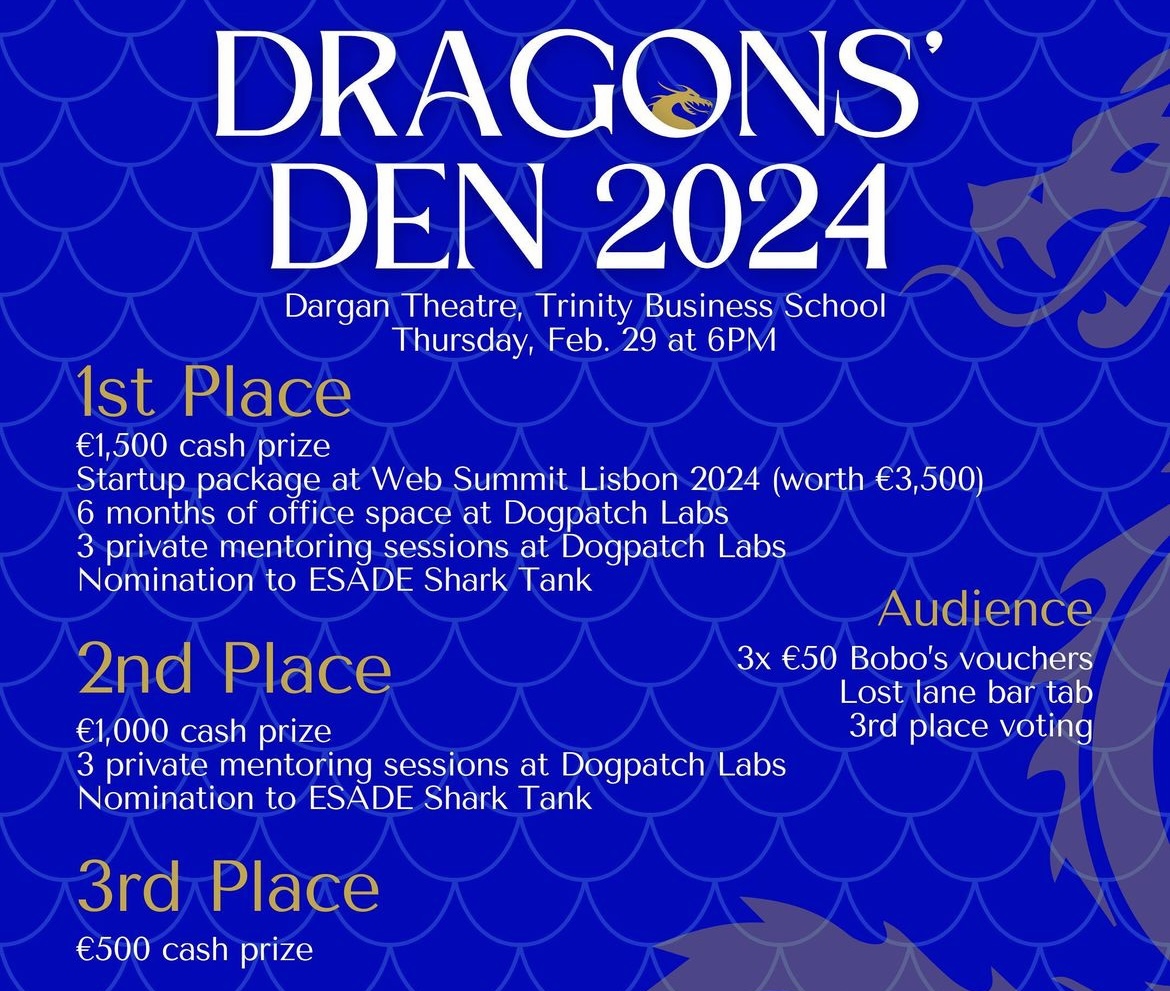
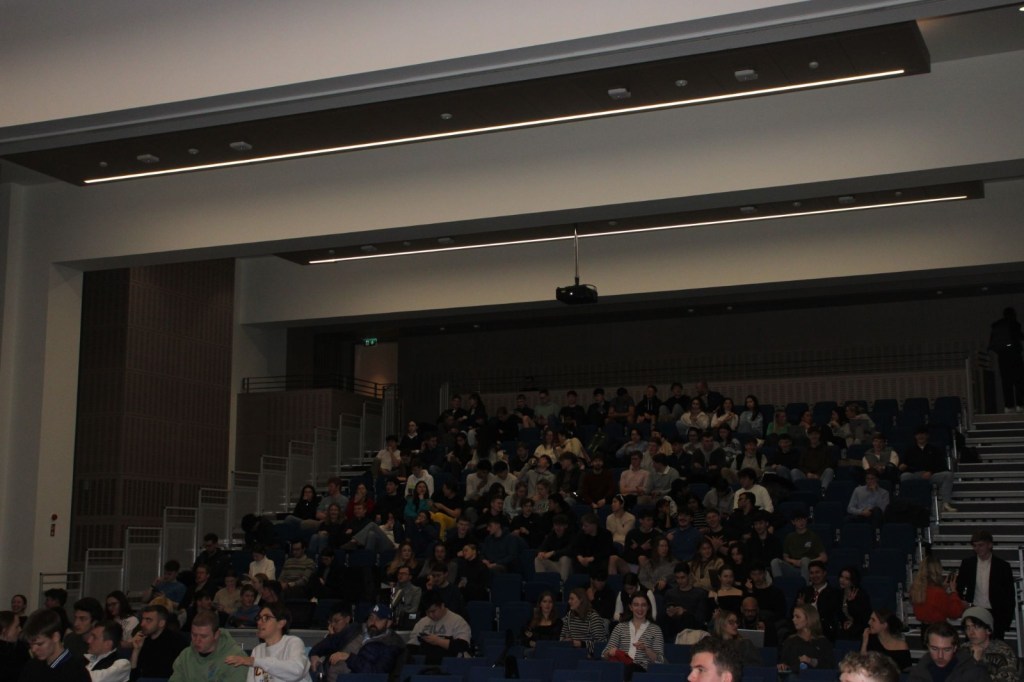
Trinity Entrepreneurial Society’s Flagship event the “Dragons’ Den” competition encourages this very spirit of innovation. The event, held on 29th February 2024, garnered over 250 attendees and also included an intermission pitching competition. The ‘Den’ boasted outstanding prizes up for grabs:

Inside the Den

The overwhelming number of entries are a testament to not only its popularity and continued success, but also to the resilience, creativity, and ambition of Irish innovators. At the event, finalists pitch their ideas to a panel of esteemed judges, “ dragons”,  who are leaders in the business community. The dragons this year were Heather Morris (MD, Founder Talent Accelerator at Dogpatch Labs), Orla Dunbar (Director at Deloitte Consulting), Keavy Ryan and Darren Nagle (Corporate and M & A partners at A & L Goodbody) and Conor Joyce (TES President). Mastering the art of pitching is an indispensable skill for every entrepreneur to be able to present a compelling and convincing case for their venture. It is a dynamic and strategic journey which is an eclectic mix of passion, clarity, and persuasion. 

This year’s contestants brought to the table a diverse array of concepts ranging from ways to simplify business to enhancing social media connections to early detection of life-changing diseases. They had to demonstrate, within a strict time limit, a suave ability for technical integration of their concept with data and convince the dragons that their idea was worth investing in. The pitches this year were exceptional in their data driven presentations highlighting meticulously researched strategies and astute business acumen. In the current business landscape, data serves as a cornerstone for credibility and provides concrete evidence of market potential and feasibility. 

The electric atmosphere and motivated pitchers set the stage for a riveting entrepreneurial battleground. The tension was palpable as the contestants faced the intense scrutiny and relentless questioning by the dragons.

Finalists included:

  1. Saor Water: Saor was born with a clear vision- to challenge the status quo and redefine the way brands connect with people. They offer free recyclable, branded water at events and on the go. Their customers include Mercedes, Roots health foods etc. https://saorwater.ie/?trk=public_post-text
  2. Kish: A digital receipt app which aimed at revolutionising receipt management and organisation. 
  3. SkinAware: An AI based wellness app that aims to integrate personalised care insights to wellness. 
  4. Peak Predict: An app that tracks every aspect of your fitness, catering to sports enthusiasts and athletes.
  5. Tribe: Tribe is modernising the way people drink whiskey with the first of its kind canned whiskey cocktail in Ireland. https://lnkd.in/eEfVBH8S?trk=public_post-text
  6. Rentilia: A service which proposes to be an intermediary for renting equipment. Contact rentiliaofficial@gmail.com
  7. Neurosonic:  A smart device designed to aid in the prevention of strokes through early detection at home. https://www.neuro-sonic.com
  8. Common Ground: An app enhancing social media connections fostering meaningful interactions in the digital sphere. 

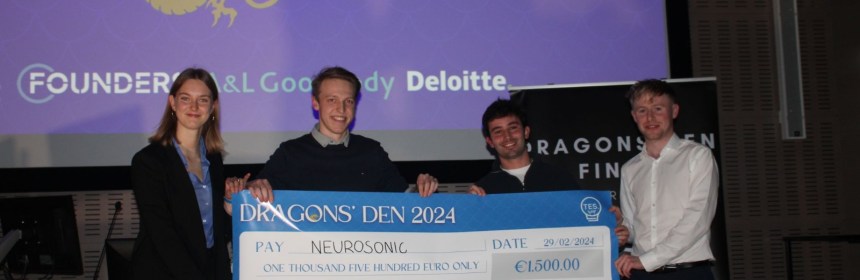
NeuroSonic took the win, with Tribe and Saor Water securing second and third place respectively. While the winners went home with prizes, everyone from the competitors to the audience gained inspiration and insights into the nuances of pitching, the inherent obstacles faced by start-ups, and the indispensable art of navigating market forces.

An Interview with Clive Bourke, EMEA & APAC President of Daon 

Fiachra Mooney

About Daon 

Nestled in Dublin’s eminent Docklands one can find Daon, a digital identity trust company. Focusing on the Business-to-Business-to Customer (sometimes even B2B2B2C) and Business-to-Government-to-Customer sectors, it provides the backbone for many of the services you likely use on a regular basis. 

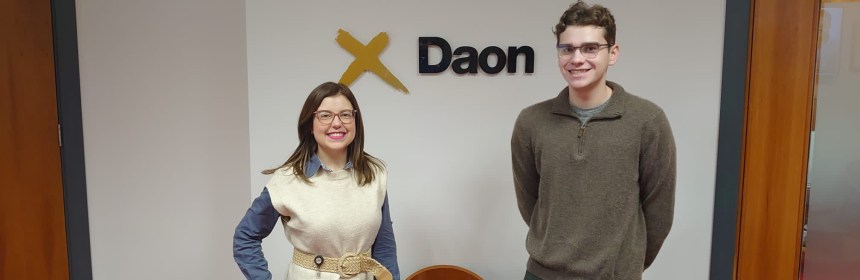
You would be forgiven for not being too familiar with Daon, as you’re unlikely to see their brand name plastered around the internet. It generally provides the software and processes for its customers to integrate into their own apps and websites. Daon instead grows through its reputation of excellence and referrals and word of mouth from happy customers. TBR’s Chief Strategy Officer and Editor-in-Chief Sean Smith sat down with Daon’s EMEA & APAC president, Clive Bourke, to learn a little more about the firm and its contributions to the growing identity proofing and authentication industry and its implications for the future business landscape. 

Origins of Daon 

Daon derives its name from the old Irish word for person, similar to the modern word for people, daoine. The company was started in order to predict and provide the technology necessary to bring biometric authentication to the masses and reduce the need to memorise complex pins for multiple services and accounts. 

Clive spoke about the importance that Enterprise Ireland (EI) played in helping the company to expand its global operations. EI missions in Japan and the United States offered a great pathway to meeting potential clients and partners, and to help the company maintain sustainable foreign expansion. 

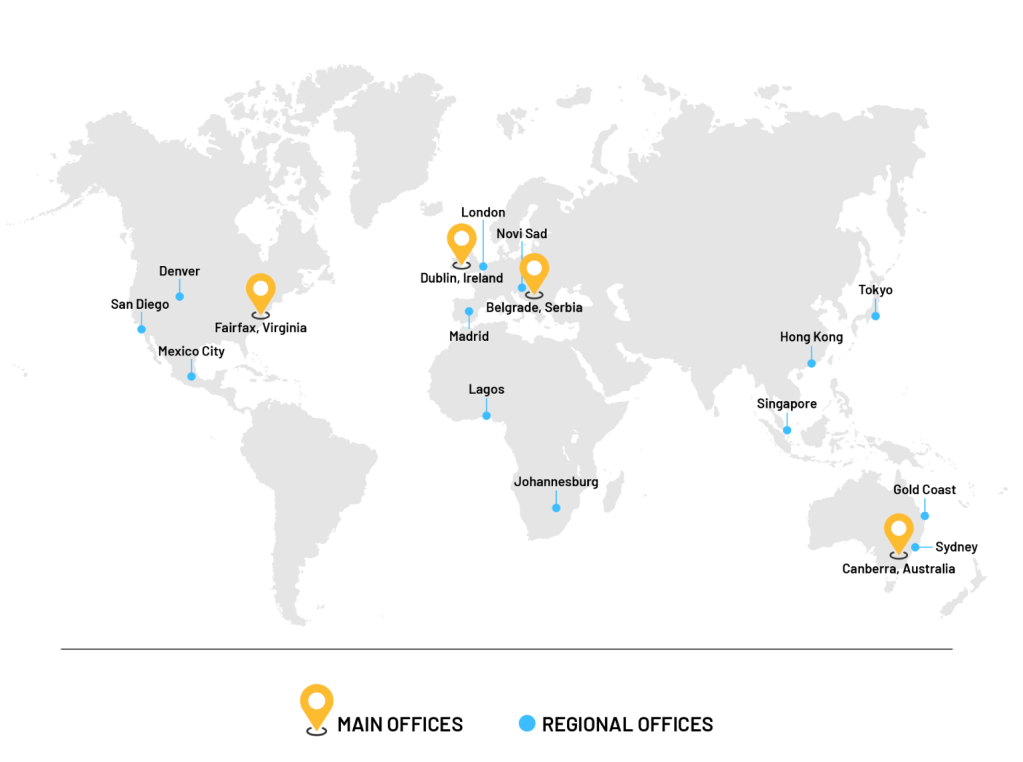
What started off as a small company in Dublin’s IFSC at the turn of the millennium has grown to a global operation with 17 offices spread throughout the world. Daon now has offices from Virginia right across to Canberra. While it is now a global operation, their headquarters and R&D remains in Ireland, as does their Chief Technology Officer. Their office in the IFSC remains the headquarters for EMEA. 

Bread & Butter 

Daon’s services provide the security underpinning for many financial institutions personal banking apps, enabling biometric authentication to facilitate new customer account opening and secure transactions for existing customers. There can be up to 50-100 different identity workflows between a customer and their service provider such as a bank. In the past, B2C firms would have had to design and implement all of these identity journeys themselves, but now Daon can provides a low code platform with configurable workflows that don’t require a lot of software development for not only financial institutions, but areas like travel and hospitality, telecommunication and social platforms.

Emerging Challenges & Areas of Interest 

Voice to text 

Clive discussed the popularity of voice commands that Amazon Alexa brought posed a new challenge for biometric authentication. If people wanted to conduct shopping with their Alexa devices, a problem arises as to how banks would be able to authenticate the purchase without forcing the customer to go onto another computing device. Voice commands for payments on home devices proved not to be as prolific as was originally expected however.

Deepfakes 

Another relevant phenomenon for Daon, as Clive noted, is the advance of deepfakes in recent news. Despite the development of this deceptive AI over the last few years being rapid, their risk to biometric authentication certainty is minimal thanks to the work of companies like Daon. Firstly, deepfakes require a screen to be displayed, and Daon’s software can recognise when a picture is being shown on a screen. And while phones can be broken apart, and devices used to trick the phone into thinking that a deepfake is coming directly from the phone’s own camera (so called injection attacks), the multi-factor authentication imposed by Daon has limited the possibility of such a breach being successful in committing fraud for a long time. As such, consumers can rest easy knowing biometric multi-factor authentication is a fortified wall of security against deepfakes being used to access personal information. 

AI 

While AI has become THE technology of 2024, Clive said that prior to the current onslaught, Daon had already seen a 3-4-fold increase in accuracy of models in machine learning. This has also been seen with facial recognition systems, run at airports and by agencies like Homeland Security at border crossings to quickly confirm a person’s identity. 

COVID 

One of the ways you have probably interacted with Daon’s service unknowingly was via their VeriFLY service during the pandemic. Developed with limited time, it allowed the return of international travel by allowing online check-in that verified and kept up to date with COVID vaccination certificate rules between countries. Over sixteen million people used the service successfully, and it gave Daon experience in dealing directly with consumers and building consumer facing apps. This was the closest that Daon had gotten to being a directly consumer facing Software-as-a-Service (SaaS) business, and they carried out about a thousand updates to the apps in the space of two years, which wasn’t a possibility in their previous products. 

But lessons from this B2C experiment have enabled Daon to launch their new TrustX platform. A cloud-native SaaS-based identity continuity platform, which is enabled by AI and ML, it enables businesses to integrate the software directly into their own products, featuring a no-code orchestration layer for rapid deployment and customisation to enhance user journeys. While maintaining full regulatory compliance, TrustX supports identity proofing and authentication which in turn will enable quick biometric authentication set up and recovery. 

Customer Base: Where Operations Take Place 

Facial biometric use for financial transactions is an arena that Daon has seen considerable growth in the last few years. With the proliferation of online purchasing and banking apps, biometric authentication has come to the masses; while biometrics have taken on a new importance, multi-factor authentication, with another factor e.g. possession or knowledge, remains a safeguard. A new area of research is enabling certain smaller purchases based on your behaviour. 

In terms of geographic breakdown, Daon operates in most parts of the world. Clive also points out that the framework of the EU’s GDPR is a well adopted well understood framework with provisions for biometric data which enables the broader adoption of biometrics for consumer protection use cases such as opening accounts, account access, payment confirmation, account recovery etc. Outside of the EU differing legislation and regulatory environments to be considered.

Students Interested in Pursuing a Career in the Industry 

For business, computing and mathematical students interested in a career with Daon and in the biometric authentication sphere, Clive suggests studying how AI would help improve cyber-attack detection. This area is an ongoing field of research, and is the main task in preventing presentation attacks, where fraudsters use imitations of a person’s biometric characteristics to verify their identity. This can be with expensive Mission Impossible style masks or full deep fake videos such as ones that made the news recently.


We wish to thank Clive for his time and for Daon’s support to TBR this year. For more information on Daon, visit their website www.daon.com and for careers visit http://www.daon.com/careers

Bambino: How a Brick Wall Created a Cult Classic for the Dublin Takeaway Market

Sean Smith

For those of us hunting for a quick respite during the lunch hours, or contributing to the all-too-familiar hot honey craze, Bambino has become a household name amongst the Dublin food scene. Known for their quick, by the slice service, the shop has gained a favourable reputation amongst Dubliners for its unique flavours served on a white, paper plate.

TBR’s Editor-in-Chief Sean Smith spoke with Nick DiMaio, co-founder of Bambino, to learn a little more about the pizza joint’s history and the business model that made the shop so successful.

Bambino’s Story: A String of Events

Bambino’s start-up is an untraditional one. Being born in the United States, Nick was no stranger to the New York style slice shop. Moving to Ireland in 2001 to pursue a career in the restaurant industry, with the birth of Dublin favourite Token under his belt, DiMaio would “beat the 3PM slump by getting a pizza slice in any one of the pizza slice shops that were available back then – usually DiFontaines”, sparking a dormant idea for a market in quick-serve pizza.

Fast forward to 2020, this slice shop concept began to materialise. During the pandemic induced lockdowns, Nick met up with a few friends via Zoom, where he got talking with Shane Windrim, the eventual co-founder of Bambino. The two chatted about the potential for a slice-shop in Dublin, and with Shane’s background in fine-dining, the pair started generating inspiration for a future storefront. 

A year later, Nick received a message from a friend with a photo of a piece of paper saying ‘Manager/Business Partner Wanted – Must Have Experience Running Business”, prompting DiMaio to pursue the vague offering out of curiosity. Much to his delight, Nick soon learned the vacancy appeared for a unit on Stephen Street, near facilities he previously owned. With no particular inspiration for the space at the time, Nick viewed the property and it hit him: “…there was a brick wall immediately to my left when I entered the premises. In 5 seconds I said to myself – this is a slice shop. I had seen that brick wall before in so many pizzerias I had been to in my lifetime. It made so much sense. I was in the unit for about 10 minutes, and I had mapped the place out.”

Shortly thereafter, Nick phoned Shane to pitch the idea. The two were sold, preparing the facility for operation and opening toward the latter half of COVID regulations. Facing adversity, as most small businesses during the pandemic did, the pair were met with challenges during construction and denied a startup loan due to the ‘volatility of the hospitality industry”. Nevertheless, Nick and Shane opened the shop and have not looked back, amassing a swiftly loyal customer base. 

A Slice Worth Eating: A New Operating Model for Pizza

Acclimating the Irish market to a slice shop model was not an easy feat, as traditional clientele are often used to full pies in a restaurant setting. “Initially the idea of grabbing & going/eating at a ledge, no bookings, no cutlery, 1 slice of pizza for €4-6, not being ‘full’ after one slice, was a bit foreign to people” DiMaio affirmed. “I think people have gotten used to us, and what we do. Even for us, if we wanted more of a restaurant style pizza experience, we’d definitely just go to an actual restaurant.” 

With such a new operating configuration comes inherent obstacles. Nick cited issues like minimising wait times and handling queues out the door, as unlike their New York counterparts, “Our customer base probably wouldn’t wait outside, especially as it’d more than likely be raining”. As with any SMB, uniformity and a consistent product regardless of customer foot traffic and staffing is a prime goal that the team is striving to cultivate. 

On top of massive demand, Bambino has faced no exemption from the rising costs faced by Dublin businesses at present. While mentioning that the shop’s electricity bills surpass their rent at times, DiMaio maintains an optimistic perspective: “Inflation hasn’t affected us too much, which is why we haven’t raised our prices other than 25 cents per slice to accommodate the recent VAT rate increase…Perhaps it’s positively impacted our sales because what we’ve remained consistent with our pricing as pints, coffees, and other takeaway items have increased quite drastically over the last couple years.” A point of disruption however has presented itself in the form of supply chain issues, as Nick recounted a time when the type of tomato used for Bambino’s renowned sauce became unavailable. The team had to think on their feet, altering their sauce profile with other tomatoes, highlighting their growing concern over consistency.

A Cult Classic: From Tattoos to Tik Tok

Despite any operative challenges, the Dublin food scene has welcomed Bambino with open arms. DiMaio credits the shop’s high customer loyalty to its basic, convenient nature: “It’s just very easy to be a regular customer of ours – the slice is cheap, the wait isn’t too long, there’s a buzz outside the shop, and the quality is high, so we can kind of see how we’ve got a strong following.” Yet despite a convenient customer experience, Bambino has amassed a cult following, with a dozen loyal customers getting the iconic cupid logo tattooed; the owner of the inaugural tattoo received free pizza for life, with subsequent “copycats” as DiMaio puts it receiving a t-shirt and voucher.

In spite of a buzzing consumer base, Nick cites that this is not as a result of the shop’s social media presence. “We are, admittedly, crap at social media and marketing. What we do was always going to be a challenge,” DiMaio said. “We’ve been open for a year and a half and have only posted 40 things, most of which show me holding a slice in one hand and taking the photo with my phone. As before, we want the pizza to speak for itself”. Instead, external promotion has been a substantial driver for Bambino, with the Irish Times and Independent calling the slices the best pizza in Ireland and guests sharing their slices across different social media outlets. Nick even shared his delight at the shop’s Tik Tok fame, admitting “The Cassie Stokes segments where she interviews people in the food industry who have often said Bambino is the best pizza, went from flattering, and then transitioned to hilarity as repetitiveness set in and the memes began. The meme of the microphone being held up to the hole in the beach in Portmarnock with a speech bubble saying ‘gotta be Bambino’ was 10/10.”

For the Bambino cultists among us, fear not; DiMaio hinted at 2024 being a year of growth for the shop and its operations. At present, Bambino has just finished up a refurbishment of their kitchen facilities to streamline its pizza-making. Nick also exclaimed an expansionary project in the works, one that will “See us prepare our dough in a new space with a temperature controlled environment, that will also serve as a small restaurant for whole pies & pitchers of beers with its own slice shop element.” With almost two years of slices achieved, Bambino has solidified itself as a Dublin staple, and we join DiMaio in his excitement for a future full of Hot Pep slices.

« Older Entries