Tag Archives: featured

What Anna Delvey’s Ankle Monitor Can Teach Us About Marketing Strategies

Chloé Asconi Feldman

At this stage, it is unlikely that one is active online or in the pop culture sphere without knowledge of the convicted con-artist-turned-socialite Anna Delvey. Recently making her debut on Dancing with the Stars with her bedazzled ankle monitor, Anna Sorokin, known familiarly as Anna Delvey, is known for posing as an upper-class heiress to the New York elite and swindling hundreds of thousands of dollars, eventually finding herself in jail for almost four years on the charge of grand larceny. Despite her criminality, Anna Delvey has been taken on by the general public as a new socialite, featuring on magazine covers and even gaining support from the “Eat the Rich” movement. The narrative surrounding Delvey is fascinating in itself, but her recent rebrand from con to dancer can also offer valuable insights into effective marketing strategies.

Scheming to Streaming: Swindling Scarcity

I had never given much thought to the television series Dancing with the Stars, but upon learning that Delvey would feature in the upcoming season, I found myself suddenly intrigued. This is because Delvey holds an air of alluring exclusivity; with her jail time and limited public appearances, seeing her on a television series increases the appeal of tuning in and engaging with show material. This phenomenon resembles the scarcity principle of marketing, a strategy where marketers urge customers to engage with a good or service based on its finite nature, whether numerically limited or seasonal. 

A brand notorious for its scarcity marketing is Hermès and its infamous Birkin bag. Social media frequently showcases celebrities carrying their Birkins as everyday bags; however, if one tries to buy one in a Hermès store they are met with a waiting list with an indefinite length. This scarcity of the product is what makes the Birkin so notorious, compared to other high-end designer bags – consumers are willing and able to wait to obtain a status indicator. This technique encourages customers to buy a product or service because it feels exclusive. In the case of Delvey and her limited public appearances, this comes in the form of television viewership.

Influencer Marketing: Controversy or Commonality? 

As controversial as she may be, Delvey proves once again how successful influencer marketing can be. Reaching just over a million followers on Instagram, the brands that Delvey partners with inevitably reach a wide audience. Yet what differentiates Delvey from other influencers is her status as an ex-con artist and her blurry public image. What makes influencer marketing especially differentiable is when an influencer with an indefinable allure posts about a product, compared to the typical state of the influencer world, which is plagued with fast-fashion and superficiality. 

As a brand, choosing Delvey to promote your product may seem controversial and ill-advised as she is an ex-con artist, but there is no denying the reach and influence that her posting about products would have. By simply bedazzling her ankle monitor, the concept has gone viral on social media with many claiming Delvey as their Halloween costume inspiration. By crafting a sensationalist, American-dream presenting image, Delvey stands out among influencers and those interested will seemingly follow along. 

Embracing Infamy: Brand Personas

Another marketing strategy that Delvey has executed to improve her personal brand is by embracing her controversy rather than ignoring it. While her story went viral when she was arrested in 2017, the Netflix series Inventing Anna, which documented the story of Delvey and her arrest, made it practically impossible to know about Delvey without associating her with scamming, scandal and fraud. Instead of shying away from this track record, Delvey’s Instagram bio states, “this is not financial advice”, and her bedazzled ankle monitor seems to embrace her criminal past rather than sweeping it under the rug. 

This strategy is nothing new to the world of brand management; in recent times, companies are more willing to face their criticism head-on. Ryanair for instance is a champion in the social media sphere for being bold and abrasive when considering promotion and CRM. However, this has only augmented the attention the airline receives over social media, as their cavalier remarks are in line with the brand’s persona – bare, no-frills and to the point. For Delvey, the choice to lean into and accept her criminal past creates a more authentic personal brand that invites discussion and publicity, whether good or bad. Whether talking about a convicted conwoman or an airline, there is truth in the effectiveness of using humour and marketing to address criticism rather than sugarcoating it.

Overall, Delvey’s rebrand –and her ankle monitor– offer insights into contemporary marketing strategies. She has been able to maintain the spotlight while capitalising on her controversial past and creating a personal brand, whether you love it or hate it. By using influencer partnerships, the principle of scarcity, and embracing her past, Delvey has demonstrated that even the most unexpected elements may play a significant role in the marketing narrative, including a bedazzled ankle monitor and a dance routine.

Driving Sustainability in SMEs: A Conversation with PlasTrak Co-Founder Finn Howley

Petro Visagé

As small and medium enterprises (SMEs) grapple with the growing demands of corporate sustainability reporting, PlasTrak, an innovative Irish startup, has carved out a niche by demystifying complex EU regulations. This initiative provides SMEs with tailored, easily digestible guidance to enhance their sustainability reporting practices. Deputy Editor Petro Visagé sat down with Finn Howley, co-founder of PlasTrak, to unpack the origins of this transformative tool, the challenges they faced and their impact on the Irish SME sector. 

Can you give a brief overview of what PlasTrak does. How does PlasTrak specifically address the needs and challenges of SMEs in becoming more sustainable?

Howley: The mission of PlasTrak is to guide Irish SMEs through the transition to full plastic waste reporting and measurement. SMEs, by 2028, will have to track a huge amount of data points in relation to their sustainability footprint under CSRD. While not directly in scope of the directive, SMEs will be affected by the upstream and downstream reporting requirements of corporations above them in the value chain. For instance, for Musgraves to be able to comply with the directive, they will need to provide data on things like packaging waste that goes out the front door of every retailer that they supply to. Thus, there is a massive challenge for SMEs to start developing the infrastructure to record and report on their sustainability impact. What we do is provide SMEs with their reporting requirements in simple and digestible terms, in stark contrast to a 200 page EU document that is full of legalistic and technical language. We know that time is the most valuable resource for small businesses, so our aim is to create value for them by saving them hours and hours spent understanding their requirements under CSRD. 

Could you tell us more about the origins of PlasTrak?

Howley: So, we started working together as a trio in October 2023 when our lecturer paired up Robert and I with Maïlé because of our similar research interests in our capstone. It’s a very practical capstone where the first semester is spent doing primary research on a challenge, and the second semester is all about implementing solutions to that challenge. We were all interested in the implications of the new CSRD legislation so when we went and carried out our research, our biggest finding was that Irish SMEs needed help in the transition to sustainability reporting. So, when it came to taking action in January this year, the PlasTrak Initiative for Irish SMEs was born based on that finding. 

Could you tell us more about the founders?

Howley: I’m from Balbriggan in North County Dublin, Robert’s from Ashbourne in County Meath and Maïlé’s from Bali, Indonesia. Robert and I have been close friends since we were 12 years old, having gone to the same secondary school and playing rugby together in CUS. We’re both studying BESS, while Maïlé is in Computer Science & Business. 

What inspired PlasTrak and how did your personal and professional experiences shape the company’s mission?

Howley: So we were inspired to start PlasTrak when we were nudged by an Audit Partner that we interviewed in one of the Big 4 firms to look into Europe’s new sustainability reporting regulation, the CSRD. He described it as the “biggest change in company reporting in 40 years”, and when we did look into it, we found it to be a really interesting opportunity. 

From a personal point of view, we’re all passionate about sustainability. Robert and I have been involved in our local tidy towns committees for a number of years and Maïlé was part of the Bali’s Big Clean Up while at school in Bali. We’ve also all done internships in financial services firms, and studied in financial reporting modules, so I think we all kind of had an interest in the technical side of sustainability reporting – the whole aim of the CSRD is to bring sustainability reporting up to the same level of credibility and usefulness as financial reporting.

In launching a sustainability-focused startup, what were some of the biggest challenges you faced, and how did you overcome them?

Howley: I think that growing the initiative at the beginning was challenging as people didn’t take us seriously, perhaps we were initially perceived as inexperienced university students attempting to tell business owners how to run their businesses. This might have been the viewpoint of the people we intended to work with but declined our help. We moved away from the identity of college students working on a project, which might carry connotations of temporariness and lack of practical experience. Instead, we positioned ourselves as informed experts in the field of CSRD, letting on that we could “walk the walk” and not just talk about it. This repositioning helped in building trust and respect in the business community.

How important are partnerships and collaborations to PlasTrak, and can you share examples of successful collaborations?

Howley: Partnerships played a huge role in our initiative, we couldn’t have done it without our industry, government and academic partners. We collaborated with businesses across the sectors of healthcare, agriculture, construction, clothing retail, and food and beverage. Collaborating with Honey Truffle was a really fun experience, Eimer (Chef and Owner) is so nice. She gave up a lot of time out of her day and provided us with a lot of helpful feedback. 

In terms of the government side, the initiative was supported by the Department of Enterprise, Trade and Employment. They invited us to Local Enterprise Office events where we were able to network. We met a really cool entrepreneur at one of the events who then became one of our SME website users. We also collaborated with TBS faculty to share our insights and to both give and receive feedback. 

What are some of the biggest challenges currently facing the sustainability sector, and how is PlasTrak addressing them? 

Howley: Well certainly the first things that come to mind are costs and regulation, which is exactly where our business model fits. There’s no doubt that most business owners welcome the idea of sustainability but the question is to what extent are they willing to implement sustainable processes within their businesses? Sustainability initiatives often require substantial upfront investment. For instance, transitioning to renewable energy sources, upgrading facilities to reduce emissions, or adopting advanced recycling technologies can be expensive initially. The financial return on investments in sustainability could take several years to realise and the long payback period can deter businesses who prioritise meeting short-term demands. 

I think the initial success of PlasTrak stems from us providing our service for free. Our toolkit was created out of passion for the SMEs that keep the Irish economy ticking. By removing the cost barriers, we make it feasible for even small to medium enterprises to adopt sustainability measures that they would otherwise deem too expensive. Additionally by educating both the business community and students about the long-term cost savings and brand enhancement benefits of sustainability we encourage investing in sustainable practices and being prepared for the regulatory changes down the road.

What are the lessons you learned through this experience and what advice would you give to entrepreneurs looking to start a sustainability-focused business? 

Howley: We’ve learned so much already but to boil it down to key points: 

  1. You’d be surprised how willing people are to help if you just take the first step and ask.
  2. Being a college student makes for a great opportunity to use the free time you have to help others who are time and resource constrained with their challenges. It’s also a great chance to bridge the gap between the theory you learn in the classroom and the real challenges like climate change that are taking place in the world. 
  3. Resilience is key – the more comfortable you are with rejection and setbacks early on the better. It was the setbacks in our initiative that allowed us to step back and rethink. Being resilient actually allowed us to expand the initiative in new ways as we stopped worrying so much about following our plan so precisely.

Leveraging AI in Digital Marketing

Anirudh Singh

As technological and social advancements sweep the globe, the digital marketing industry is expanding rapidly. Every day new developments in the industry appear, and artificial intelligence is no exception. AI has revolutionised the path for digital marketers; by leveraging AI in digital marketing, professionals can employ data-driven strategies, enhanced personalisation and customer targeting, improved efficiency, and cost-effectiveness, gaining real-time data insights for campaigns. Therefore, understanding the role of AI in digital marketing has become incredibly significant not only for marketing professionals but also for firms to gain a competitive edge.

Artificial Intelligence: A Background

Before delving into the application of AI in digital marketing, it is first important to highlight its history. Putting it in very colloquial terminology as many know, AI is a form of technology that has the potential to think and act like humans and complete assigned tasks in mere seconds– those which humans may take hours to complete. The evolution of AI in digital marketing is not an earth-shattering development; the phenomenon can be dated back to the 1950s when researchers applied linear programming and game theory concepts to predict consumer trends, transforming into neural networks in the 1970s. In the late 1990s and early 2000s, the boom of the Internet and E-Commerce opened the door for online marketing and advertising. From 2010 onwards, the advancement of machine learning, big data, the Internet of Things, and SAAS have changed digital marketing algorithms completely; now, marketers can leverage AI such as Chat GPT, Copilot, and many other AI-driven tools to complete tasks that would previously require many hours of labour.

Impact of AI in Digital Marketing

The impact of AI in digital marketing is very profound and visible in nearly every corner of the industry. For instance, AI has impacted the process of social listening and target marketing, especially using software like Emplify where marketers garner insights and data under one roof to streamline data management. Similarly, for search engine optimisation and content creation, AI can extract metrics from search engine databases in turn helping in the creation of content for target audiences. To enhance effectivity, AI also has a profound impact on email marketing and paid Google, Meta, Instagram and LinkedIn advertisements by formulating crafted content to audiences via optimisation of ad bidding strategies based on factors like behaviour, device type, and location. 

Benefits of Using AI in Digital Marketing

Before discussing the challenges and ethical considerations of the technology, it’s important to discuss the benefits of using AI in digital marketing. As much of the industry is aware, AI has many benefits for digital marketing; some of the most significant, however, are as follows. All of these benefits need to be properly acknowledged before a deeper discussion on the topic moves forward.

Prediction of Client Behaviour

For any business to grow, it is incredibly important to understand the behaviour of its client. Here, AI plays a vital role by making these efforts simpler and more cost-effective for marketers. AI tools can use statistical decision trees to understand customer behaviour, review past data, and suggest the best marketing strategy for marketers to better understand current and potential consumer patterns .

Customer Engagement

Understanding customer engagement is a challenging task for any marketer or agency;  it is frequently said that customer acquisition cost is far more than retention cost. Using AI-driven tools, marketers can scope out which customer segments they have to target to get the maximum acquisition. AI can also help them to track what each customer wants based on behavioural patterns, thus providing a blueprint for effective engagement that appeals to emotions.

Target Audiences

Selling a good or service to an unknown consumer is a very challenging and frustrating task. Traditional marketing saw the analysis of data and consumer preferences manually to target customers and sell their products; however, with the advancement of AI targeting customers and strategically segmenting them has become less time-consuming and more cost effective. Seemingly, all marketers need to do is feed their consumer data into AI which in turn generates tailored content, preferences and strategies to target the different segments who are interested in buying the product, thus broadening possibilities for marketers to strategise. 

Automation of Repetitive Tasks 

AI not only helps marketers and companies to engage the customer and target audiences but also helps to automate repetitive tasks. Through AI, marketers now automate pay-per-click (PPC), content for email marketing, search engine optimisation (SEO) and potentially social media content, which could have been traditionally laboursome and repetitive prior to AI’s initiation.

Customer Relations

Customer Relationships are all about loyalty and customer support, and AI has proven itself a strong candidate in maintaining these relationships. With AI assistance companies can gauge customer relationships that would require human capital traditionally. For instance, many companies have employed AI as the preliminary feature for aiding consumer queries in a format similar to texting. Although beneficial for cutting costs in many regards, employing AI for managing customer relations must be dealt with in a conscientious manner, as consumers often prefer human contact and possess queries that go beyond the scope of artificial means.

Overcoming Challenges and Ethical Considerations

One of the biggest challenges with AI’s use in marketing is the issue of transparency. In 2018, Amazon came under backlash when its AI recruitment platform collected the details of male and female candidates and favoured male candidates. Later on, Amazon relinquished that particular AI tool, but its use raises questions about transparency and bias in recruitment. If companies are using AI to collect data, they should remain transparent and inform people well ahead in advance about the purpose and application of their data collection.

Another challenge of using AI is privacy. Before collecting data to be used by AI, customers have the right to know how their data will be used and if they want to step out from this data collection. For instance, in 2020 Google was under attack when it collected the details of children under the age of 13 from YouTube without their parental consent and was fined 170 million dollars from the Federal Trade Commission. For marketers to employ AI, they must do so in a way that promotes accountability and ethical practices.

Bias is another common limitation to artificial intelligence. For instance, AI can be biassed if a marketer feeds the biassed data into it, which in turn yields untrue results which may be employed in a misconstrued way. Additionally, creators of AI software may possess inherent biases which in turn is implemented into the behaviour of their platform. For instance, AI’s use in creating photographs has perpetuated stereotypes, as seen in advertisements from EPIC museum in Dublin. Fact hallucination, reasoning errors, and use in creative sectors less driven by numeric data are all considerations that must be addressed and accounted for by marketers employing AI effectively. As such, knowledge of the technology’s limitations at the same level of its strengths is paramount to leveraging its use in marketing successfully. 

Future Trends and Challenges of AI in Digital Marketing

To conceptualise the future for AI and digital marketing, one can turn to the words of a key researcher in its field. “When it comes to how AI is shaping the future of digital marketing we need to understand its current role in digital marketing. AI not only helps us to understand consumer behaviour or enables tailored content, it’s also a great tool that enables marketers like us to anticipate future trends and needs.  But challenges are always there and will always remain there such as data privacy and biases and therefore to strike a balance between them and to ensure we remain on the right path is the hour of need for every digital marketer”, says Dr. Eamonn O’ Raghallaigh, PhD and Digital Strategist at Trinity College Dublin. As such, employing AI in a way that keeps the consumer at the heart of operations in an ethical manner can be extremely beneficial for garnering a competitive edge in the evolving marketing landscape. By employing its usage in relevant and ethical spheres while acknowledging and diverting its disadvantages, marketers can improve ROIs, provide valuable insights, and better target their consumers.

Foresight Business Breakfast: Insights from Carolan Lennon & Pioneering Equity in the Tech Sector

Ayesha Ahmed & Michael D. Mooney 

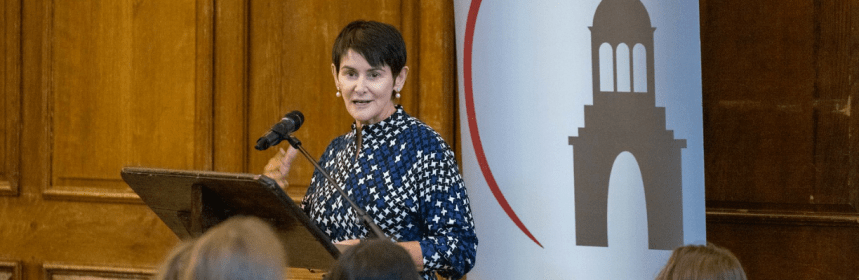
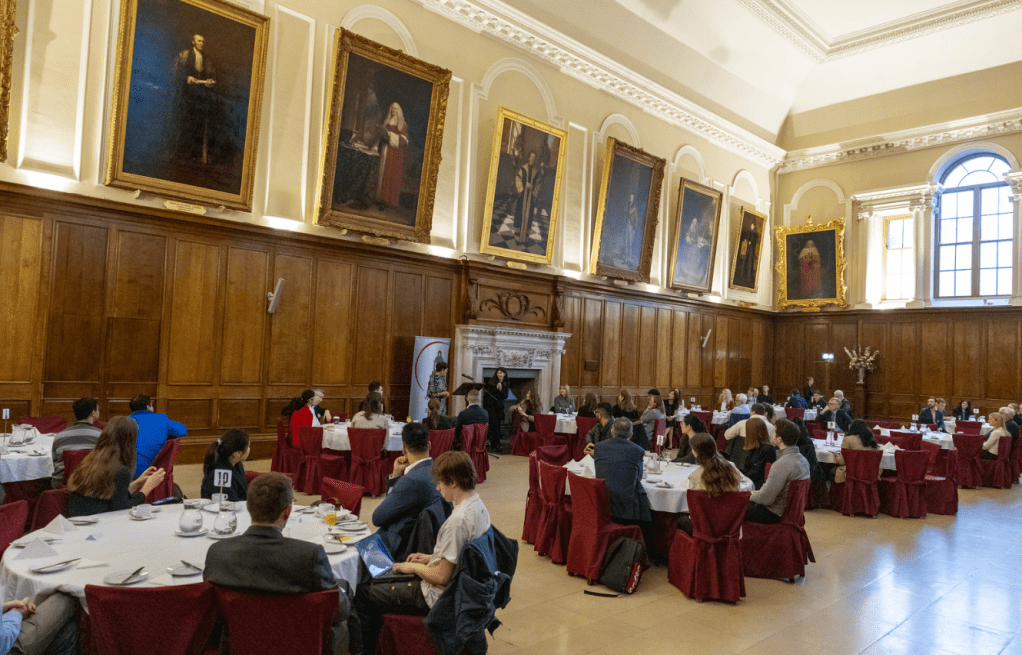
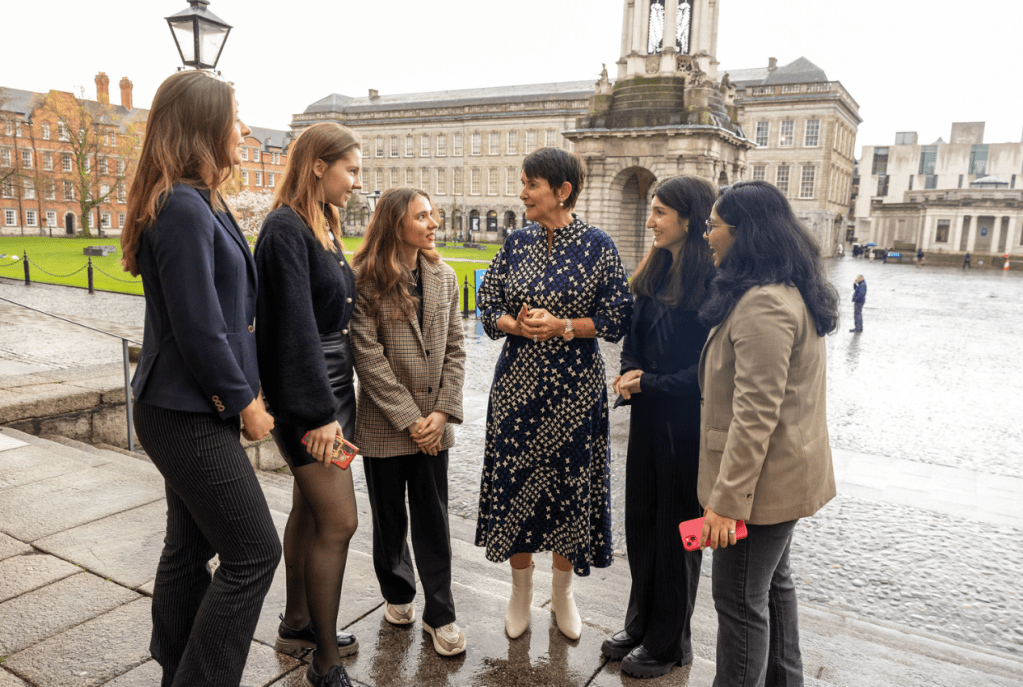
The recent Business Breakfast hosted by TCD Foresight Business Group featured speaker Carolan Lennon, Country Leader at Salesforce Ireland. Ms. Lennon, known for her trailblazing efforts in the tech industry, shared her insights on the transformative power of education, the values that drive Salesforce, and the importance of diversity, equity and inclusion within her speech. Additionally, the breakfast provided a space for getting to know professional Trinity alums who are excelling in their field and were open and ready to help current students with their questions concerning business, the job market and politics. 

In her address to the breakfast attendees, Lennon shared her experiences as a woman in a historically male-dominated field, and the significance of her work in shaping the future of business in Ireland. For those who couldn’t attend, here were Lennon’s main talking points:

Education as a Game Changer

Ms. Lennon emphasised the pivotal role of education as a game changer in her professional journey. Having studied computer science at University College Dublin (UCD) in the 1980s, Ms. Lennon recognised the need to broaden her knowledge base and pursued an MBA at Trinity College Dublin. This proved to be an invaluable decision, equipping her with the skills and mindset necessary for success in the ever-evolving tech industry.

Salesforce’s Customer-Centric Approach

Ms. Lennon shed light on Salesforce’s unique approach as a customer centric company. Since its inception in 1999, Salesforce has been at the forefront of customer relationship management (CRM), revolutionising sales, marketing and commerce. The company prides itself on bringing customers and companies together by fostering trust, promoting equality and championing sustainability. Salesforce’s commitment to social impact is evident through its pledge to donate 1 percent of its profits, time and products to charitable causes, accounting for nearly $800 million USD in donations to date.

Breaking Barriers and Building Networks

Transitioning from the telecommunications industry to technology, Ms. Lennon faced the challenge of rebuilding her professional network. She emphasised the importance of owning one’s career and taking action, advocating for clear communication with superiors about career aspirations. Her experience highlights the significance of not only focusing on learning new technologies but also actively nurturing relationships and seeking opportunities beyond the confines of one’s daily work.

Diversity, Equity, and Inclusion

Ms. Lennon passionately discussed the importance of diversity, equity, and inclusion (DEI) in the workplace. Citing research and results, she underscored the positive impact of diverse teams on performance. She recounted her experience at a previous organisation where she helped in transforming the gender ratio from 9:1 to 1:1. Additionally, she acknowledged the need for greater diversity not only in terms of gender but also in terms of socioeconomic backgrounds, emphasising that true diversity extends beyond surface-level differences.

The Rise of AI and the Future of Business in Ireland

Looking ahead, Ms. Lennon identified artificial intelligence (AI) as the next major technological evolution. While acknowledging the increased interest in AI adoption among CEOs, she highlighted the importance of understanding its ethical implications and ensuring its accessibility and applicability. She also emphasised the need to address biases embedded in AI technologies, which often mirror the biases present in society. The future of business in Ireland, particularly in the tech sector, is heavily influenced by ongoing developments in AI.

Irish Women Breaking Barriers

As a woman diversifying a historically male-dominated field, Ms. Lennon encountered her share of challenges. However, she found a supportive environment at Salesforce, aligning with the company’s values of equity and inclusion. Her advice to aspiring professionals, particularly women, is to actively engage in extracurricular activities such as networking groups and to assertively communicate career aspirations to supervisors. Research on workplace dynamics and statistics on women’s experiences in Ireland can shed further light on the progress and areas for improvement.

The Referendum and the Changing Workplace Landscape

In light of the recent referendum concerning women and working from home, her insights become even more relevant. The evolving workplace landscape demands a renewed focus on equity, flexibility and inclusivity. As Ireland seeks to create a more balanced and empowered workforce, her experiences and perspectives serve as valuable touchstones for progress. 

Conclusion

Throughout the breakfast, Ms. Lennon delved deeply into her journey from telecommunications to technology, exemplifying the power of education, resilience, and a values-driven approach. Her experiences combined with the engaging conversations of Trinity alumni helped foster a sense of community, and a reassurance that yes, other people who went through the similar courses did find light at the end of the tunnel. Thank you to all participants who helped students gain an insight on how to actively pursue career opportunities, and contribute to a more inclusive and innovative future for businesses in Ireland and beyond.

AI’s Power Struggle: Musk, Altman, and the Balance of Ethics versus Innovation

Harry Mealia

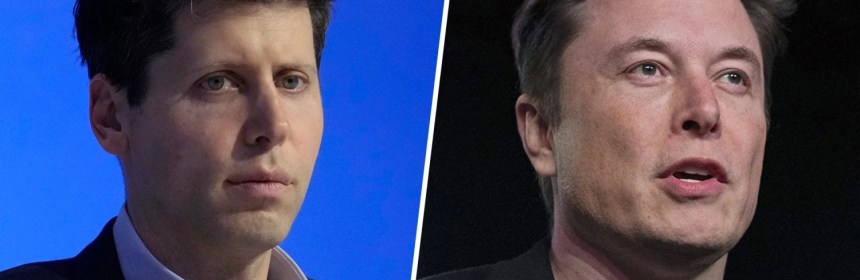
What was once a formidable partnership has now turned toxic; Elon Musk and Sam Altman, former partners and co-founders of Open AI, find themselves embroiled in a public lawsuit. While ChatGPT may have originally brought eyes to the company, it is the new alliance with Microsoft and an 80 billion dollar valuation that has garnered attention once again. OpenAI’s recent ventures and creation of a ‘for-profit’ firm forms the basis of Musk’s legal action. What is not as widely acknowledged however, is the compelling history Musk has with Altman and OpenAI. Their relationship and past dealings display the intricate balance between innovation and ethics in the new world of artificial intelligence.

The Butting Heads of AI

OpenAI started in 2015 as a non-profit AI research company with a mission of ensuring that ‘artificial intelligence benefits all of humanity’. Musk was a part of this team. In a recent blog post, OpenAI explained how they quickly realised that their non-profit structure would see them struggle to raise the necessary capital to meet their goals in generative AI. During discussions of a commercialised arm of the company, Musk leveraged his financial power, suggesting a Tesla merger alongside positioning himself as CEO. While this may have allowed for accelerated growth for the company, it violated the firm’s ethics of giving absolute power to one person. Musk soon left OpenAI and eventually created his own competitor (GrokAI). During this transition however, following Musk’s departure, OpenAI would be met with further personnel complications.

In November 2023, OpenAI announced that Altman would be departing, leaving behind his role as CEO. The company explained a review process concluded that “he was not consistently candid in his communications with the board”. This decision was met with great resistance throughout Silicon Valley, including the threat of existing employees willing to resign if Altman was not reinstated, seen by Greg Brockman, chair of the board, leaving his role as president. The resulting backlash was so strong that Altman was reinstated 5 days later at the conclusion of an external investigation from WilmerHale law firm. The level of volatility and confusion faced by OpenAI during this turbulent period is often attributed to the unique organisational structure of the firm.

New Frontiers for the AI Market

OpenAI now faces new competition in the form of xAI, Musk’s new startup; their new chatbot Grok is similar to the widely known ChatGPT. Grok is advertised as a more flexible alternative with the ability to provide witty answers as well as a willingness to answer controversial questions typically avoided by other chatbots. Their standout offering is that Grok can access X (formerly Twitter), to provide information on current affairs. While competitors Gemini and ChatGPT may not have the same offering, there are questions surrounding how accurate Grok can be seeing as information is drawn from X, a site known to have a colourful history with filtering factual information. On 11th March another update on Grok was released when Musk announced via X that his startup xAI will open source Grok; this means that anyone can access, view and modify the code as they please. This offers increased accessibility and transparency that ChatGPT and Gemini currently do not provide.

Not only is the market for artificial intelligence becoming a highly profitable one, as proved by OpenAI’s valuation, but it is also one that provides serious threats. This has led to several high-profile players joining in such as Google, Microsoft and Facebook. Although Musk and Altman created the headlining OpenAI and ChatGPT that ignited this AI boom, their relationship has now ceased to exist with Musk going as far as saying “Open AI is a lie”. With this conflict, the question now arises for the future of artificial intelligence: is Musk’s lawsuit against OpenAI simply a revenge mission with hopes of eliminating any competition for his own chatbot or is there a genuine concern for protecting against the dangers of AI?

« Older Entries Recent Entries »