Tag Archives: featured

Gradlife with Tom Lynch

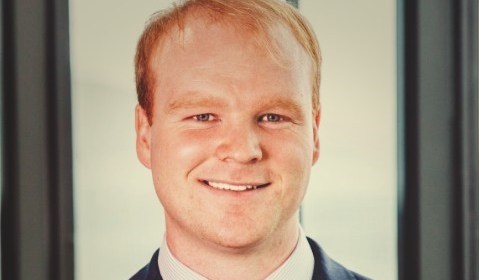
This week on Gradlife, Danny talks to Tom Lynch, a pricing analyst for Avolon, one of the world’s top aircraft lessors. Having completed a Bachelor’s degree in Commerce in UCD, Tom went on to undertake a Masters degree in Aviation Finance, which led to an internship with Avolon. Tom gives us an insight into his role as a pricing analyst in Avolon’s Hong Kong office and also details his involvement in the ‘Project I’ a study around the development of Ireland’s entrepreneurial ecosystem. A quick but fascinating chat with one of Ireland’s top young prospects in aviation.

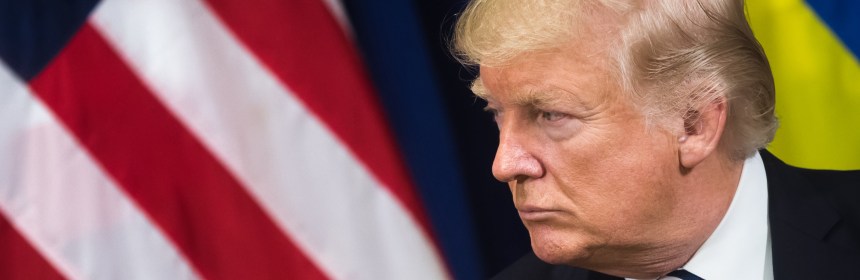
Trump’s predictably divisive presidential pardons

Donald Trump’s administration has recently published a list of 143 presidential pardons on the 45th President’s final day as Commander-in-Chief. The former president’s pardons were touted to include beneficiaries ranging from Trump himself and family members, to his personal lawyer Rudy Giuliani, to the subject of the Netflix series ‘Tiger King’, Joe Exotic. Perhaps because of his constant departure from presidential norms, Trump’s power to grant clemency has attracted abnormal attention.

What are presidential pardons?

Every American president is given the right to grant “Reprieves and Pardons for Offences against the United States, except in Cases of Impeachment”, according to Article II Section 2 of the US Constitution. It was intended to be an executive power that acted as a check and balance on the federal justice system and to afford mercy to offenders whose sentences outweigh the severity of their crime. In 1866, the Supreme Court ruled, among other things, that prospective pardons may also be granted by a president. This means a president can grant clemency to someone before any impending charges are filed. The most famous example of a prospective presidential pardon came in 1974, when Gerald Ford pardoned Richard Nixon after the Watergate Scandal. The potential of prospective pardons contributed to the unprecedented attention surrounding Trump’s pardoning process. It was thought that he would attempt to shield himself, his family and other close allies from myriad potential legal issues that may arise once he loses the protection gifted to him by America’s highest office. However, this did not occur.

Notable absentees

Surprisingly absent from the former president’s list of pardons are his family members, his personal lawyer, Rudy Giuliani, and Republican lawmakers possibly implicated in the breach of the Capitol earlier this month. Trump was convinced by his legal advisors only days before he left office to refrain from pardoning his family. They told him that to do so without citing specific crimes would convey an admission of guilt, leaving him and his family open to future legal difficulties. The Trump team also believe that pardoning Republican lawmakers potentially involved with the Capitol insurrection would result in him feeling the ire of Republican senators set to decide his fate in an impeachment trial next week.

Significantly, Trump has decided against self-pardoning. This course of action came as no surprise, but had been a significant worry throughout Trump’s entire tenure. The former president likely eschewed self-pardoning for the same reasons he didn’t pardon his own family; namely that it may be interpreted as an admission of guilt.  Additionally, the likelihood of a self-pardon being legally robust is quite slim. The presidential power to pardon, “except in Cases of Impeachment” excerpt of the Constitution is commonly interpreted as saying that a president cannot pardon themselves or others associated with their own impeachment. Basically, if Trump self-pardoned, he can still be impeached by Congress and prevented from running for president again. In fact, this would make it more likely for the Senate to confirm his impeachment. Thirdly, presidential pardons only apply for federal offences. Trump does not have the power to prevent state prosecutors from investigating his financial affairs, for example, as is currently happening in New York. The seeming admission of guilt, along with the Senate confirming his impeachment, that would come with a self-pardon are unlikely to help Trump’s state-level cases.

The most outraged responses to Trump’s list have been fuelled by the exclusion of WikiLeaks founder Julian Assange, who is currently imprisoned in Belmarsh Prison and NSA whistleblower Edward Snowden, who has been exiled in Russia since 2013. Both men are lauded as defenders of free-speech. Many see Trump’s omission of the two as, firstly, an attempt to pander Republican senators overseeing his impeachment trial next week and, secondly, as an attack on the free press and journalists attempting to hold officials accountable. Trump’s exclusion of the whistleblowers comes in the aftermath of his decision in December to pardon the Blackwater contractors convicted of killing 14 Iraqi civilians in 2007.

Notable inclusions

Steve Bannon, Trump’s former chief strategist, was granted full clemency. Bannon, who has been described as ‘the most dangerous political operative in America’, was charged last year with illegally extracting funds raised by Trump supporters to privately contribute to a Southern border wall. While Bannon left the administration in 2017 and was subsequently nicknamed “Sloppy Steve”, he and Trump rekindled their relationship in light of the former president’s false accusations of voter fraud. Also pardoned were Elliott Broidy, a Republican Party fundraiser who pleaded guilty to multiple charges of illicit financial activities, and Kwame Kilpatrick, the former Mayor of Detroit who received a twenty-eight year sentence for corruption in 2013. Various other convicted swindlers and criminals have seen their sentences reduced or scrapped in Trump’s final acts as president.

Two headline-grabbing recipients of presidential pardons were rappers Lil Wayne and Kodak Black, who face federal charges for firearm possession and for making a false statement to buy a firearm respectively. Lil Wayne’s pardon seems to have been granted due to his support for Trump during last year’s election campaign, while Kodak Black was praised for his philanthropic work.

Donald Trump’s time as US president has never been bereft of controversy and outrage. One can only admire how little his final pardons deviate from that trend.

The Shebeen and Covid-19 in Ireland

The shebeen (or síbín, in Irish) has seen a quiet revival in Ireland since the pandemic of loneliness accompanying Covid-19 lockdowns reached Ireland in early 2020. It is widely known that the pub is a temple of communal interaction, deeply entrenched in the psyche of many Irish people. Pub closures have left a void in Irish society and particularly in its rural communities, where pubs are not only social hubs, but economic pillars. It appears that some have reverted to the shebeen in an attempt to quell their craving for human contact that social distancing and lockdowns induce.

What is a shebeen?

A shebeen is an illegal, unlicensed pub, usually found in people’s homes or sheds. Their historical origin is in Ireland, but the illicit bars soon made their way around the world, appearing and evolving in countries like South Africa, the US and Canada. Interestingly, while shebeens have long been in decline in Ireland, they became an essential meeting-place for the black people community under apartheid in South Africa and most are now legally operated there. Shebeens have become far less numerous in Ireland, but have made somewhat of a comeback since the onset of multiple Covid-19 lockdowns, which left people craving physical and social interaction. While shebeens are not exclusive to the Covid-19 period, there has been an upsurge in shebeen raids and reports in Ireland since the first lockdown in March.

The problem with shebeens during Covid-19

Shebeens have raised concerns for two main reasons during the Covid-19 pandemic.

Firstly, leaving the pandemic aside, they are illegal. Defined as “unlicensed drinking premises” under the Intoxicating Liquor Act of 1962, to be found attending (or to supply alcohol to) a shebeen is to break the law. It is reasonably difficult to differentiate between a shebeen and a “man-cave” or legal home-bar. Gardaí are provided with vague metrics to instruct their course of action. The Act states that large quantities of alcohol stored on a premises and evidence of frequent consumption are indicators of incriminating behaviour. This allows for substantial variation in the make-up of a shebeen. They may range in sophistication from a crude few taps and some seating to being almost indistinguishable from a licensed pub. In addition, the law states that an unlicensed premises can serve alcohol to the owner, family members, residents, workers and “bona fide” guests. Hence, the distinction between a genuine private gathering space and a shebeen is precarious under this framework. However, these ambiguities are irrelevant in a time of national lockdown, during which household visits are banned.

Consequently, the second issue that the shebeen’s return to relative prominence in Ireland presents is that assembling in a shebeen likely breaks public health rules, even during milder levels of government regulations. Non-adherence to these rules can contribute to the spread of Covid-19, which is economically and physically undesirable, and may result in unnecessary burden being placed on an already inefficient national healthcare service. It can also cause undue tension between citizens making sacrifices to comply with regulations and those using shebeens, which carries its own undesirable ramifications. Likewise, licensed publicans and other business-owners feel aggrieved that their pubs, which must obey public health guidelines when open, have been labelled as virus-spreading “scapegoats” and forced to close while shebeens have become increasingly prevalent. It is important to note that while shebeens have become more pervasive since the outbreak of Covid-19, an Garda Síochána have repeated that their presence does not represent endemic lawlessness. Shebeens have always been in Ireland and probably always will be. The Gardaí have appealed to the public to report any shebeens, and will raid all illicit premises they are alerted to.

Understanding the Irish shebeen renaissance during the pandemic

Social drinking is a unique outlet for Irish people. The swathe of mental health issues that have arisen as a result of lockdowns and social isolation offer a simple explanation of why many have risked breaking the law and public health guidelines. People have become lonely, and one of their primary means of interacting with other humans has been placed off-limits. Generally, shebeens are not in the business of cramming in rabbles or making money. Rather, they are small spaces where a few people meet to satisfy their need for human connection. While the shebeen presents complex moral and legal quandaries, the reasons behind their upswing are as basic as any other human craving.   

The pandemic’s effect on food delivery services

The impact of the pandemic has affected companies in various industries differently. However, food delivery companies, have been on the receiving end of better performance unlike their hospitality peers. In fact, the pandemic completely turned around the situation for certain companies. 

Billions of dollars worth of losses for the food delivery sector were forecasted at the beginning of the year. One of the most notable food delivery businesses, Grubhub, was actually contemplating “putting itself up for sale after losing its foothold on the market.” 

The pandemic has proved to entirely reverse situations like these as more and more restaurants shut down during lockdown periods. As a result, people who were forced to stay indoors turned to food delivery. 

How did Uber respond?

As Uber’s core ride business drastically declined, it heavily focused on its delivery services. Sales for meal delivery increased by 135% in the US alone. With positive trends like this, Uber has planned a $2.65 billion acquisition of Postmates to increase its market share and reduce competition. This will allow Uber to control 37% of the food delivery sector in the United States, second behind DoorDash. The company also tried to merge with Grubhub but JustEatTakeaway beat the company to it, now allowing JustEat an entrance into the US market. Uber has also been focusing on diversifying its service portfolio by launching a grocery delivery service in the US. The idea is to create services that consumers form habits off of, to ultimately continue its boom growth trajectory post-pandemic.

How did DoorDash respond?

DoorDash has been taking full advantage of the soaring appetite of customers for its services and has secured an opportunity for an initial public offering. It was able to secure $2.5 billion in capital to expand from its original food delivery service to offer convenience and grocery store products as well. DoorDash also expanded its product portfolio to create Storefront to support restaurants in listing their stores on DoorDash without the charge of commission on items sold. It also set up Self-Delivery which allows restaurants to be listed on the app but use their own delivery services. DoorDash is aware of the benefits it is receiving from current circumstances and is not ignoring the possibility of its soaring demand potentially decreasing once the pandemic starts to settle. “Warnings in its IPO paperwork [that]… the circumstances that have accelerated the growth of our business stemming from the effects of the Covid-19 pandemic may not continue in the future.” Nevertheless, consumer dependence on such services continues to grow the longer the pandemic prevails, which is why DoorDash is now valued at $38 billion.

The holiday season

Food delivery services are now increasingly focusing on speed of delivery as a key source of competitive advantage – especially as orders increased during the holiday season. For example, Postmates is launching a new business model for retail that allows customers to get “instant delivery from clothing, home, beauty and wellness retailers, and allowing the delivery company to broaden its reach.” It seems as though companies that initially started off in the food delivery sector are now beginning to dip their feet in offering services similar to that of Amazon. Mike Buckley, the senior vice president of Postmates, notes that there has been a shift in consumer habits as they increasingly transition to online shopping. Companies are allowing faster provision of these products as they work to increase the speed of their deliveries.

This shows the new opportunities the pandemic has created for the food delivery industry. The use of digital marketplaces is now being broadened to provide a bridge for customers to virtually shop for both household essentials and recreational products from retailers.

The Murky Business Of Territorial Waters

The thought of international waters conjures images of shady dealings, pirate radio and lawless seas, but the claimed areas of water bordering these oceans have questionable origins, too. Territorial waters appear straight-forward on the surface, but peering into their depths often leads to a sea of murkiness surrounding politics, natural resources and importantly, trade. In a world where natural resources are becoming ever-more depleted and in conjunction with the departure of Britain from the European Union, these waters will become even more important.

Defining Territorial Waters

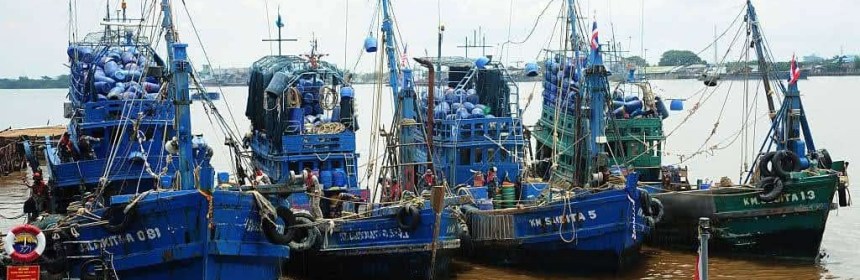
In international law, territorial waters are defined as the areas of water directly adjacent to a state, and are subsequently subject to the jurisdiction of that state. This means that the adjacent state has sovereignty to the water, the seabed below, and the airspace above. Other states may only enter this body of water for “innocent passage”, with foreign aircraft or submarines not permitted to pass through. Due to this, fishing rights are not extended to the trawlers and fishermen of foreign nations, although the Common Fisheries Policy of the E.U. is an exception to this.

While this is perfectly reasonable regarding a nation’s immediate borders, the laws can and have been bent to meet a nation’s needs in a variety of ways. For example, Chile and Peru claim their territorial waters reach as far as their continental shelf: an area of submerged land still connected to the continent with relatively shallow waters, which lies directly before the much deeper ocean floor- much like the steps leading to a deeper swimming pool. This gives these nations an additional 370 kilometers of offshore territory, and more importantly, access and ownership to natural resources such as oil and gas.

Similarly, Russia has made claims that an ocean ridge on its northern coast stretches into the Arctic circle, allowing them to lay claim to the huge reserves of oil and gas estimated at $2 billion, which for millennia had been protected from mankind due to the difficulty in its extraction due to harsh weather conditions in the Arctic. With global warming melting these obstacles to harvesting, Russia has staked its claim to the Arctic seafloor, in the form of a Russian flag being planted by a miniature submarine on the North Pole seabed. This region of the world is very susceptible to ecological harm and any type of oil extraction poses as a serious threat to the climate and wildlife of the region. The indigenous Saami tribe of the area are threatened from the potential claim, with their culture and livelihoods at stake.

Colonial Claims

France’s territorial waters are the largest of any nation with nearly 10,760,500 km2 under the 5th republic’s governance. This initially seems odd, given the size of France (643,801 km2), but taking a look at the country’s colonial history gives an explanation. The embers of a once great French Empire lay scattered across the globe in the form of small inhabited islands, archipelagos and atolls stretching from la France métropolitaine to Réunion Island in the Indian Ocean, further still to Antarctica and across to the Caribbean islands of the French West Indies.  While many of these once subjugated islands were granted independence, many still belong to France, leading to a situation where France’s longest land border lies not with Belgium or Germany, but rather between French Guiana and Brazil, 7,216 kilometers from Paris. These satellite dominions give France a global presence in terms of military activity and natural resource exploitation. The huge swathes of ocean associated with these areas also gives great opportunity to the French fishing industry.

Chinese Island Construction

China has come under fire recently due to its decision to engage in “island-building” in the south China sea in order to bolster its territorial claims. China has built on sandbanks and small uninhabited islands in the region, transforming them from scraps of land into military installations, strengthening its presence in the area. While China isn’t the first to engage in such practices in the region, the rate at which it is aggressively pursuing this course is a cause of concern for many parties. A third of the word’s trade flows through the South China Sea. With China having the potential to effectively control this trade route, many states fear that sanctions may be imposed, and restricted movements enforced by the Chinese government. The actions would cripple industry and business within their respective economies.

How A Small Island Can Play A Huge Role

While the points above highlight the role these island outcrops can play, one could still be forgiven for questioning how important a small island may be on a world-wide scale. One can look toward the small island chain of French Polynesia. The micro-state only possesses a population of 270,000. With the main industries consisting of agriculture and handicrafts, it’s clear that it is far from an industrial powerhouse. However, the importance of French Polynesia is best highlighted in terms of its waters, whose combined area exceeds 4.7 million kilometers2. For context, this is comparable to the entire landmass of the European union.

This ability for small plots of land to hold huge strategic importance can be highlighted a lot closer to home. The basalt outcrop of Rockall has long been a source of contention between the Republic of Ireland and the United Kingdom. The uninhabited rock lies 370 kilometers north of the Donegal coast and 300 kilometers west of the Scottish island of St. Kilda. Officially incorporated into the United Kingdom through an act of Westminster in 1972, following its annexation by the British navy in 1955, Britain’s claim to the island is still yet to be recognized by the Irish government. Presently the fishing rights around Rockall belong to Scotland, and with Britain’s departure from the European Union, the tension surrounding the Rock is bound to escalate further. This is best highlighted in the Scottish Secretary for Economy’s threat to deploy naval vessels to the area to enforce Scotland’s exclusive fishing rights to the waters surrounding Rockall. The fishing industry is vital to County Donegal and many of its fishermen risk being wiped out if they are denied access to fishing in Rockall’s waters, highlighting how large an influence a now-extinct volcanic island can possess.

« Older Entries Recent Entries »