Tag Archives: featured

Re-Envisioning The Beautiful Game

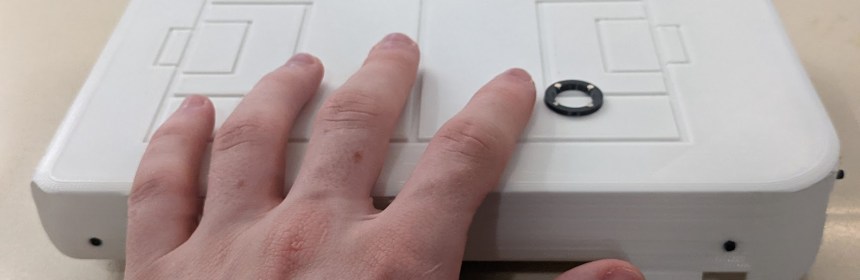
David Deneher, Omar Salem and Tim Farrelly co-founded ‘Field of Vision’, an innovative tech start-up with a powerful social impact agenda that is transforming the match experience for visually impaired and blind soccer fans. Computer Science and Business student at Trinity College and Chief Operations Officer at Field of Vision, David Deneher, discusses the technology behind the cutting-edge device as well as his philosophy for a successful start-up. 

Haptic Technology

As most football fans will agree, there is no better place to experience a game than at the stadium. From a goal scored in overtime to a nail-biting penalty shot, being right at the pulse of the action is incommensurate to following in-stadium commentary. With approximately 55,000 people in Ireland blind or visually impaired, Field of Vision spotted a niche need in the market for a device that could enable visually impaired football fans to be fully immersed into the match experience, leaving the technique of “tracing” a thing of the past.

How is Field of Vision leveraging artificial intelligence to redefine accessibility and inclusivity in sports? Cameras, computer vision technology and specialised algorithms connect to Field of Vision’s tablet-sized device to enable the user to feel the game in real time; from “the swerve of a kick to the power of a tackle”, Field of Vision is offering a more inclusive matchday experience than ever before.

Despite the challenges caused by the pandemic, the speed at which Field of Vision developed its product underscores the digital acceleration that is presently taking place. Advances in technology, many centred on AI, marks the beginning of a “new era of connectivity for assistive technologies and the businesses behind them”. The effect will be “highly impactful” for improving accessibility for persons with impairments. As a “pandemic tech start-up,” Field of Vision’s “entire journey as a company” has been unique.  For David and his co-founders the flexibility of online college offered opportunities to innovate and find their way to the forefront of their industry. Currently the business is planning to expand their technology into sports such as GAA and rugby.

Success

According to David, critical to the success of a tech start-up is harnessing the power of mentorship programmes available to young entrepreneurs. Applying for “anything and everything” has had “positive surprises” for Field of Vision. David’s philosophy is that the “worst that can happen is a no”. Diving straight into the deep end took the team to Qatar Sports Tech, an accelerator program in Doha, UAE. Having recently partnered with Bohemians Football Club and winning first place at the Enterprise Ireland Student Entrepreneur Awards 2021, Field of Vision’s appetite to grow shows no signs of abating.

The Rise of Software as a Service (SaaS) – with a Focus on the Indian Industry

As businesses were forced to incorporate remote working in their business models due to pandemic-induced lockdowns, they needed to invest in softwares that supported this move to online operation. SaaS (software as a service) companies have been able to provide businesses with the tools to assist in this transition. While the pandemic has disrupted multiple industries, SaaS has advanced as organisations espoused digital solutions to make the move from in-person to online. Some of the biggest SaaS companies that have benefited from the pandemic include Zoom, Box, Slack, Okta, and Salesforce. These software and cloud service providers have provided businesses with tools to not only continue their business operations, but also with security to conduct work in a confidential manner.

In India alone, it is predicted that its SaaS industry could be worth $1 trillion in value by 2030 and create nearly half a million new jobs. In addition, this momentum could lead the Indian SaaS industry to win 4-6% of the global SaaS market by 2030. There are already close to 1,000 SaaS companies in India – with 10 already becoming unicorns (a company valued at over $1 billion). In fact, Indian SaaS startups have raised $4.3 billion since 2020. Although India is currently only a small contender in the global market, there is scope for the country to dominate due to the predominance of English speaking developers and the relatively low cost of hiring them. It is estimated that India could have more than 100,000 SaaS developers and more technical talent at a third of the cost available in the US, making India a hotspot for international corporations to invest in. 

The integration of SaaS within business models also appears to stand long term – past its mere necessity due to the pandemic. This is because the success of remote working has pushed companies to decide to permanently implement working-from-home. For example, TCS (Tata Consultancy Services) in India was a company that was sceptical about working remotely and rarely administered the practice due to concerns about productivity. However, its endorsement throughout the pandemic demonstrated a highly positive impact on the corporation. Such benefits included efficiency, a greater diversity in the workforce, an increase in the number of women in leadership roles, and increased productivity due to enhanced labour flexibility. TCS believes this is because remote work offers better work-life balance. The happier employees met all company objectives and even “added nearly 60 new clients and hired 45,000 people.” 

Evidently, the pandemic has created a long-lasting effect on businesses in terms of running their operations technologically. The post pandemic landscape shows evidence that SaaS could potentially even take over the IT industry in terms of valuation by 2030, such that SaaS will cross $1.8 trillion compared to IT services at $1.6 trillion. India’s mark on the SaaS industry has been quick and large. However, while there are challenges, such as the industry needing to boost funding at three to four percent of the current level to reach their potential over the next 10 years, it will be interesting to see how SaaS firms in India use their native competitive advantages to further launch themselves into the global market.

“Hungry for a Kinder World” – Interview with FoodCloud

FoodCloud’s Marketing and Brand Executive, Jessica Greene, discusses the Irish social enterprise that uses innovation to protect the planet and feed the hungry

Did you know that food waste is one of the largest contributors to global climate change?A recent Report by the Food Waste Index identified that approximately 931 million tonnes of food waste was generated globally in 2019 – 61% of which came from households, 26% from food service and 13% from retail. The ugly truth is that our habits as consumers are contributing to a heavy carbon foot print that is detrimental to the environment around us. When food starts to rot in landfills, it releases methane into the atmosphere – a greenhouse gas that is approximately 28 more times powerful than carbon dioxide at warming the earth. This is where the social enterprise ‘FoodCloud’ provides two innovative solutions to redistribute surplus food and reduce the environmental, social and economic impact of food waste. Firstly, FoodCloud’s technology driven solution connects retailers directly with local charities to donate food on a daily basis. Secondly, their warehouse hub solution rescues large volumes of surplus food from manufacturers producers, growers and redistributes it to community groups across Ireland. 

FoodCloud’s Story

FoodCloud was co-founded by Trinity College Dublin alumni Iseult Ward and Aoibheann O’Brien in 2012 as a solution to reduce food waste and increase social inclusion. With over “700 partner charities in Ireland,” FoodCloud provides their service to their network of community group partners ranging from “creches to cancer care facilities to after school youth programmes and addiction centres”. The nature of surplus food is that “the team does not know what products are coming in”. This required the business to be adaptable and agile from its early roots.

Global Vision

Driving social entrepreneurship requires innovation, collaboration and ambition – tactics FoodCloud operationalises regularly to tackle food waste on a global level. FoodCloud’s unique technology platform can complement and enhance the operation of food banks internationally and is used by nearly 3,000 donating supermarkets across Ireland, the UK, Australia and Central Europe. It is clear that FoodCloud’s drive to eradicate food waste is truly global from their commitment to supporting the global achievement of Sustainable Development Goal 12.3 which relates to measuring global food loss and waste and Sustainable Development Goal 2 , the “Zero Hunger” ambition.

Locally, FoodCloud are finding innovative ways to tackle the issue of food waste. For instance, FoodCloud’s gleaning initiative has re-invigorated the “ancient practice of collecting food left over from farmers’ fields and orchards to re-distribute to their network of charity and community group partners”. This practice led to FoodCloud’s first surplus product, FoodCloud Cloudy Apple Juice. Jessica points out that the team is constantly “motivated and excited about exploring possibilities to reduce the environmental impact of food waste”. This initiative demonstrates how social entrepreneurs can use creativity to create a sustainable commercial product.

Throughout the COVID-19 pandemic, “the demand for FoodCloud’s services has more than doubled compared to last year”. For Jessica’s team, the crisis “highlighted that food insecurity can happen to anyone”. To support the challenges faced by vulnerable households during the pandemic, FoodCloud increased their food redistribution from an average of 30 tonnes per week to 60 tonnes per week. Food Cloud continues to work closely with the Irish food industry and retailers to ensure surplus food gets to those who need it, working towards their vision of a world where no food goes to waste.

Volunteering

Interested in contributing to a world where no food goes to waste? FoodCloud offers volunteering opportunities across its three hubs as well as gleaning programmes. You can check them out here. Food for thought .

The Financial Fallout Of The European Super League.

Nearing midnight on the 18th of April, a statement was released, announcing that twelve giants of European football had come together to become founding members of a “European Super League”. This breakaway league would be independent of both European and the world’s football governing bodies (UEFA and FIFA). Although the league is essentially dead in the water now, it remains important not only to understand why such a league would wreak havoc upon the most important aspect of football, the supporters and their clubs, but also to understand what financial implications would come to the fore very quickly.

A Game of Greed

Of the league’s inaugural board (and perhaps last), it’s important to note how two members Joel Glazier and Stan Kroenke, are both American business owners with significant stakes in Manchester United and Arsenal F.C., respectively. Both men are despised by their teams supports groups, most notably due to Glazier’s tactic of leveraging United’s free cash flow to fund his takeover, effectively transferring his debt to the club’s balance sheet. Fans feel their owners are distanced from their clubs, with their interests more focused on raising profits rather than keeping the fans as the focus. This perception of the footballing world as a source of cash crops rather than sporting clubs is further reinforced through the financial rewards associated the European League. The league is set to be funded by J.P. Morgan, who will provide over €4.9 billion to get the league up and running. Much of this funding will go to each of the inaugural members in the form of an ‘infrastructure grant’ worth $430 million. This sum of money highlights the importance the boards of these clubs have put on financial gain. For comparison, the winner of the current European championship (The Champions league) receives only $19 million euro for their achievement itself, which when added to previous rewards throughout the competition, can rise to around €80 million euro. This sum is not even a quarter of the potential investment available to clubs for just becoming members of this rogue league.

Ridding Clubs of their fighting Chance

One could be forgiven for appreciating these breakaway teams’ decision, given the huge gains which can be reaped by entering this league. However, by lining their own pockets, these founding members are condemning their domestic competitors to their financial doom. Much of the funds that football clubs are allocated comes from broadcasting coverage revenue. The broadcaster B.T. has already payed £1.5 billion to broadcast the Champions League between 2021 and 2024, with this revenue being shared among the various teams within the competition; the further a team progresses, the more financial support they earn. This gives lifelines to smaller teams who can secure the vital funding needed for their continued existence.  Even just with qualification to the group stages, a team can secure upwards of 16 million euro, along with teams who fall short in the preliminary rounds still being able to avail of investments worth in the hundreds of thousands. Through the formation of an exclusive European Super League, the broadcasting rights will be shared among a much smaller group of cubs, allowing for much higher individual gains and a much lower collective benefit. Dundalk FC, who are only valued at 3 million euro were awarded €280,000 for advancing to the second qualifying round of the competition. For a team as small as this, this allows the club to continue to be a sanctuary where supports can come together to love and support their team, regardless of if they win, lose or draw. Through the introduction of a super league where some members are exempt from relegation, making it essentially impossible for smaller clubs to progress and earn the possibility to secure their future. Not only is this a tragedy, but with the world’s footballing bodies insisting that participants in this league will be unable to compete domestically, these smaller clubs will lose out on the broadcasting rights revenues and footfall stemming from cup draws and league ties against huge clubs. With the possibility of Dundalk F.C. not being able to contest Arsenal F.C. in London during the Europa League (a secondary Europe-wide competition), or Tottenham F.C.’s stare down with Marine F.C. (worth €300,000) in an F.A. Cup tie becoming a distant memory, these giants of European football have forgone their passion for the sport in light of financial gain.

Mistaking a Football Decision for a Business One

What makes this scenario all the more pitiful is the fact that players and managers have been left in the dark completely on the issue, with many players who would theoretically play in this league voicing their disapproval of the proposal. This decision has been taking with the view that football is to be seen as a business rather than a sport, with the very people instrumental to its success being left in the dark. Some large clubs within Europe have rejected the invitation to join this select group, most notably Borussia Dortmund and Bayern München. In the German league there has been a ’50 + 1 rule’ in place since the late 90’s, stating that in order for a club to compete in the German domestic league, the club must hold a majority of its own voting rights. This for the most part has prevented the trend of takeovers of football clubs my millionaires, who in place of a connection or passion for the club, bring their financial muscle.

Let He Who is Free of Sin cast the First Stone

Any hope of this league coming to fruition seems slight at most, with all English clubs and some continental members already turning back on their decision. Florentino Perez, the league’s inaugural chairman has however brushed aside this change of heart, citing the binding implications of membership to the league and the financial reparations which would have to be paid in regard to a departure.  Even with this victory, UEFA’s 2024 plans to revitalize the Champions league has raised a few eyebrows, with teams which would usually not qualify for the league now having the opportunity to sneak in due to their pedigree in the championship from previous campaigns. The new format to be introduced also increases the number of games to be held by over one hundred matches, raising profits from broadcasting on a large scale. While this certainly seems good for supporters, much is to be said of player welfare due to an increase in travel and game time, further raising the issue as to which truly takes priority: the clubs themselves or their coffers?

How Trinity Start-up ‘Locallee’ plans to save shipwrecked SMEs

The waves of restrictions that have been strangling Irish commerce in order to curve the effects of Covid-19 have wreaked havoc upon all levels of business within our domestic market and further afield. One group which has been particularly affected are the 248 small and 344 medium enterprises within Ireland. Many retailers within this group were left without major footfall, and with only 32% of these retailers having a functioning website, their source of sales dried up, starving them of any opportunity to survive Covid-19. This is where 3rd year Computer Science and Business students Seán Larkin, Franklin Ume Obiekwe and Daniel Grace have come together to design a much-needed platform for small retailers, enabling them to be able to connect with their customers online.

The Team

Seán knows firsthand how much of an impact COVID-19 has had on small business in Ireland. His parents are owners of an SME themselves, and while they have been fortunate enough to weather the hardships, many Irish businesses have had to endure during this time; some of their friends and many others in a similar position have not been as lucky. Seán asked himself what he could do to help small firms not only recover but prosper post-pandemic, and quickly identified the potential power of the internet. E-shopping has skyrocketed in light of restrictions cutting off the chance to shop in person, with Amazon alone seeing profits shoot up over 200% over the course of the pandemic.

The team’s efforts have culminated in ‘Locallee’, which hopes to act as an online shopping centre for local businesses. Locallee hopes to address current small retailer’s challenges by allowing businesses to meet their potential demand online, while also providing a host of online resources to allow retailers to perform to the best of their abilities. Locallee’s potential is obvious; with a model reminiscent of Amazon’s and with Ireland’s S.M.E.s forming the backbone of the Irish economy, Seán, Franklin and Dan are confident in their ability to scale their project as traffic rises. Seán and Franklin already have some experience in this field, having been successful in reaching the knock-out stages of a start-up accelerator competition within Tangent with their commerce app, Digitill. This prior knowledge has been instrumental in creating a product with real potential.

Where They Are Now

Locallee’s sign-up process takes less than thirty minutes providing retailers with little to no e-commerce experience the opportunity to benefit from this mode of trade. No technical experience is required by Locallee users, bridging a skill gap which in many instances can be the death of retailers trying to ply their trade online. Seán highlights how the likes of Squarespace, while allowing retailers to establish a website, lacks the marketing and other business functions needed to create monetary value. Locallee hopes to change this.

The team highlighted the trojan effort taken to get their idea off the ground, the platform is currently in its developmental phase, with focus being placed on creating their ‘minimal viable product’, or the first workable version of their business concept. Dan has been handling the technical side of things, while Franklin has been busy establishing platform features needed to add value to the user experience. Even with well north of one hundred hours of individual work put into the project each, the team also wanted to mention all the help they’ve been glad to receive so far regarding their project. In particular, Tangent’s Joe Lanzillotta and Alison Tracey have been a great help to Seán and Franklin’s previous projects and they are glad to have their expertise and support, as well as that of Tangent’s C.E.O. Ken Finnegan, with this new endeavour also.

Plans For The Future

In the immediate future, the Locallee team will be testing and refining their software and business models in a select group of towns across Ireland. Seán, Frank and Dan are hopeful that before the end of the year, Locallee will be boosting local businesses across Ireland.

During our conversation, the team alluded to the further potential of Localee’s ability to provide not only a platform, but also support to their patrons. They firmly believe that Locallee will also be able to assist businesses using the platform in regard to the fulfilment of orders through the design and provision of an order and delivery model. This scalability is not only restricted to how Locallee can function, but also to where it functions. Small retailers across the globe have all been faced with a lack of customer interaction, and with a meteoric rise in e-commerce, many need to shift the way they operate to stay competitive within the evolving retail climate. Countries within the E.U. and the U.K. are an obvious first choice. In Seán’s view, after expansion throughout Ireland, the allure of the United States economy is not out of the equation further down the line. All of this hope for the platform’s future is validated by the fact that Locallee possesses the ability to enact real positive change to small retailers across the globe.

Get In Touch

You can check out Locallee’s brochure website here, and if you wish to hear more about the project, the team can be contacted at @locallee2021@gmail.com

« Older Entries Recent Entries »