Tag Archives: featured

Bambino: How a Brick Wall Created a Cult Classic for the Dublin Takeaway Market

Sean Smith

For those of us hunting for a quick respite during the lunch hours, or contributing to the all-too-familiar hot honey craze, Bambino has become a household name amongst the Dublin food scene. Known for their quick, by the slice service, the shop has gained a favourable reputation amongst Dubliners for its unique flavours served on a white, paper plate.

TBR’s Editor-in-Chief Sean Smith spoke with Nick DiMaio, co-founder of Bambino, to learn a little more about the pizza joint’s history and the business model that made the shop so successful.

Bambino’s Story: A String of Events

Bambino’s start-up is an untraditional one. Being born in the United States, Nick was no stranger to the New York style slice shop. Moving to Ireland in 2001 to pursue a career in the restaurant industry, with the birth of Dublin favourite Token under his belt, DiMaio would “beat the 3PM slump by getting a pizza slice in any one of the pizza slice shops that were available back then – usually DiFontaines”, sparking a dormant idea for a market in quick-serve pizza.

Fast forward to 2020, this slice shop concept began to materialise. During the pandemic induced lockdowns, Nick met up with a few friends via Zoom, where he got talking with Shane Windrim, the eventual co-founder of Bambino. The two chatted about the potential for a slice-shop in Dublin, and with Shane’s background in fine-dining, the pair started generating inspiration for a future storefront. 

A year later, Nick received a message from a friend with a photo of a piece of paper saying ‘Manager/Business Partner Wanted – Must Have Experience Running Business”, prompting DiMaio to pursue the vague offering out of curiosity. Much to his delight, Nick soon learned the vacancy appeared for a unit on Stephen Street, near facilities he previously owned. With no particular inspiration for the space at the time, Nick viewed the property and it hit him: “…there was a brick wall immediately to my left when I entered the premises. In 5 seconds I said to myself – this is a slice shop. I had seen that brick wall before in so many pizzerias I had been to in my lifetime. It made so much sense. I was in the unit for about 10 minutes, and I had mapped the place out.”

Shortly thereafter, Nick phoned Shane to pitch the idea. The two were sold, preparing the facility for operation and opening toward the latter half of COVID regulations. Facing adversity, as most small businesses during the pandemic did, the pair were met with challenges during construction and denied a startup loan due to the ‘volatility of the hospitality industry”. Nevertheless, Nick and Shane opened the shop and have not looked back, amassing a swiftly loyal customer base. 

A Slice Worth Eating: A New Operating Model for Pizza

Acclimating the Irish market to a slice shop model was not an easy feat, as traditional clientele are often used to full pies in a restaurant setting. “Initially the idea of grabbing & going/eating at a ledge, no bookings, no cutlery, 1 slice of pizza for €4-6, not being ‘full’ after one slice, was a bit foreign to people” DiMaio affirmed. “I think people have gotten used to us, and what we do. Even for us, if we wanted more of a restaurant style pizza experience, we’d definitely just go to an actual restaurant.” 

With such a new operating configuration comes inherent obstacles. Nick cited issues like minimising wait times and handling queues out the door, as unlike their New York counterparts, “Our customer base probably wouldn’t wait outside, especially as it’d more than likely be raining”. As with any SMB, uniformity and a consistent product regardless of customer foot traffic and staffing is a prime goal that the team is striving to cultivate. 

On top of massive demand, Bambino has faced no exemption from the rising costs faced by Dublin businesses at present. While mentioning that the shop’s electricity bills surpass their rent at times, DiMaio maintains an optimistic perspective: “Inflation hasn’t affected us too much, which is why we haven’t raised our prices other than 25 cents per slice to accommodate the recent VAT rate increase…Perhaps it’s positively impacted our sales because what we’ve remained consistent with our pricing as pints, coffees, and other takeaway items have increased quite drastically over the last couple years.” A point of disruption however has presented itself in the form of supply chain issues, as Nick recounted a time when the type of tomato used for Bambino’s renowned sauce became unavailable. The team had to think on their feet, altering their sauce profile with other tomatoes, highlighting their growing concern over consistency.

A Cult Classic: From Tattoos to Tik Tok

Despite any operative challenges, the Dublin food scene has welcomed Bambino with open arms. DiMaio credits the shop’s high customer loyalty to its basic, convenient nature: “It’s just very easy to be a regular customer of ours – the slice is cheap, the wait isn’t too long, there’s a buzz outside the shop, and the quality is high, so we can kind of see how we’ve got a strong following.” Yet despite a convenient customer experience, Bambino has amassed a cult following, with a dozen loyal customers getting the iconic cupid logo tattooed; the owner of the inaugural tattoo received free pizza for life, with subsequent “copycats” as DiMaio puts it receiving a t-shirt and voucher.

In spite of a buzzing consumer base, Nick cites that this is not as a result of the shop’s social media presence. “We are, admittedly, crap at social media and marketing. What we do was always going to be a challenge,” DiMaio said. “We’ve been open for a year and a half and have only posted 40 things, most of which show me holding a slice in one hand and taking the photo with my phone. As before, we want the pizza to speak for itself”. Instead, external promotion has been a substantial driver for Bambino, with the Irish Times and Independent calling the slices the best pizza in Ireland and guests sharing their slices across different social media outlets. Nick even shared his delight at the shop’s Tik Tok fame, admitting “The Cassie Stokes segments where she interviews people in the food industry who have often said Bambino is the best pizza, went from flattering, and then transitioned to hilarity as repetitiveness set in and the memes began. The meme of the microphone being held up to the hole in the beach in Portmarnock with a speech bubble saying ‘gotta be Bambino’ was 10/10.”

For the Bambino cultists among us, fear not; DiMaio hinted at 2024 being a year of growth for the shop and its operations. At present, Bambino has just finished up a refurbishment of their kitchen facilities to streamline its pizza-making. Nick also exclaimed an expansionary project in the works, one that will “See us prepare our dough in a new space with a temperature controlled environment, that will also serve as a small restaurant for whole pies & pitchers of beers with its own slice shop element.” With almost two years of slices achieved, Bambino has solidified itself as a Dublin staple, and we join DiMaio in his excitement for a future full of Hot Pep slices.

The Forgotten Pirates of the Straits of Malacca

Patrick Calma

When envisioning modern piracy havens, the Red Sea often comes to mind, fueled by the infamous Somali pirates depicted in “Captain Phillips” and, more recently, the Houthis’ pirate-like activities. Yet, there is another, lesser-known region that poses a threat to the global supply chain and shipping industry—the Straits of Malacca in South-East Asia. 

To understand the scale of the pirate attacks we must first understand the importance of the region. It shares the same economic importance that can be seen in The Red Sea. It has been in continuous use since antiquity from Roman, Chinese, Indian, and Dutch traders harnessing the natural canal. Today, a third of all worldwide trade traverses through the straits. This accounts for $3.5 trillion of US global trade, two-thirds of China’s maritime trade volume, and 40% of Japan’s maritime trade. By 2030, shipping traffic is expected to exceed the strait’s capacity. Any prolonged disruption can have a big effect. The gadgets we use have their components manufactured in East Asia so long-term disruptions might result in shortages in the West which would not just impact tech companies but also consumers eager to set their hands on the latest gadgets. Moreover, despite East Asian countries relying more heavily on the straits for their energy needs than the West, global oil prices are intricately linked. Any disruption would cause fluctuations in global oil prices. 

There are various factors that allowed piracy to flourish in the straits in the first place. It was culturally accepted with the tradition of piracy dating back centuries. The favourable geography allowed for low-risk detection as the straits forced commercial ships to be closer to the coastlines. The law enforcement was underfunded, and some even collaborated with the pirates due to poor wages. This all changed in 2004 when a multinational approach was pursued with Singapore, Indonesia, Thailand, and Malaysia cooperating to curb piracy. It was effective as from 2015 to 2018, there was a 92% drop. However, it may be on the rise again with sources differing in statistics. The ReCAAP ISC reported 41 incidents between January and June while the International Maritime Bureau released its annual report that highlighted that the straits have become an area of concern with a reported 37 incidents in the entirety of 2023. Nevertheless, it is a worsening trend with other reports revealing that the attacks are getting more violent.

Diverting shipping is one countermeasure. But it would extend voyages by an estimated 4,600km & spiking expenses by 20%. Indeed, with the current events unfolding in the Red Sea, the journey around The Cape of Good Hope adds a further 26 days. This can be further exacerbated by the International Maritime Organisation’s recommendation to have ships speed up through danger zones as pirates normally target easier slow-moving ships. However, it would remain expensive, for instance, it would cost a super-tanker $88,000 per day in added fuel consumption if it increases its speed from 15mph to 20mph. Vessel owners are usually commercially minded, if the cost of rerouting is high, they are unlikely to do it. Additionally, shipping companies are forced to install CCTV and other preventive measures on board their vessels especially since the pirates in the straits are reported to be using advanced technology such as radars and global positioning systems to gain information and allow them to target larger vessels. 

Regardless, cost-effective alternatives are unavailable. Insurance companies encounter key challenges in piracy zones, encompassing cargo, hull, ransom, and war risk.The latter is intriguing as during the peak of the piracy dilemma in the early 2000s, the straits were labelled as an area of war risk by insurance underwriters at Lloyd’s of London. It led to an increase in insurance premiums and shipping companies were forced to pay this enhanced risk. They were expensive with the average premium increasing from $500 to $150,000. In some instances, shipping companies tend to cover the losses out of their own pocket instead of reporting the incident as it could result in their insurance premiums increasing as well as facing long delays due to government investigations. Shipping companies will also be faced with the prospect of paying ransoms. During the height of the crisis, more than $1 million in ransom was paid in 2005. If the trend continues, we may see a repeat of this fiasco. 

Regional nations must sustain collaboration to curb the escalating piracy trend in the straits and prevent further exacerbation of the situation. In the bigger picture, both China and the U.S. have been growing their power in the region. Uncontrolled piracy could provide a pretext for major powers to escalate competition in the straits, potentially heightening tensions and leading to more severe consequences. Similarly, this can be seen in the Red Sea with the U.S. and Iran, any threats of a commercial sea passage may increase geopolitical tensions and further shape the global market dynamics.  Imagine the calamity that will be faced if both the Red Sea and the Straits of Malacca have been rendered unviable.

Insights from a Global Business LaidLaw Scholar: Olamide Obadina’s Journey and Advice

Exploring financial support, transformative experiences, and insights for aspiring scholars.

Petro Visagé

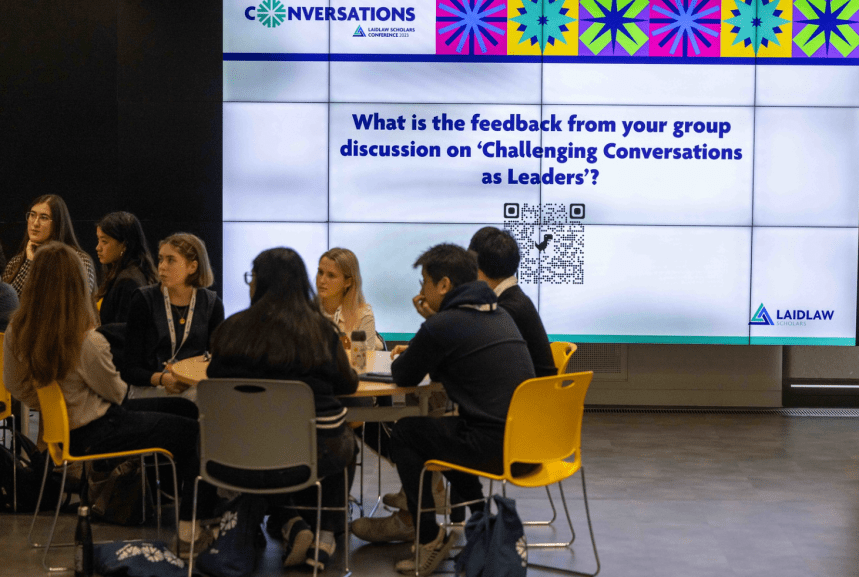
Laidlaw is an unparalleled scholarship initiative financing both research and leadership development for undergraduates with a vision to shape them into global citizens and future leaders. Surpassing €7,000 in total, the financial support extends to additional funding for training sessions, travel grants, and project expenses. This immersive experience cultivates indispensable skills transferable to project management, leadership, communication, and teamwork. Guided by experienced academics, scholars embark on original research projects and partake in a distinctive ‘Leadership-in-Action’ experience. Moreover, integration into an esteemed international Scholar group provides not only a network of like minded students but also profile-raising opportunities, enriching the overall academic and professional  journey.

With the application deadline fast approaching, our TBR editors thought it fitting to interview Olamide Obadina, a current Global Business LaidLaw Scholar, to gain her insights, advice and experience with the programme to highlight its opportunities in the business sphere.

“Receiving the Laidlaw Scholarship truly empowered me to conduct research in an area I am genuinely passionate about. I focused my research on gender, racial, and cultural diversity in the C-suite. This is a topic that  affects so many women globally and will affect me personally as someone coming from a minority background.” Obadina continued to explain that the opportunity has enabled her to gain a broader perspective of the topic and to learn from some of the best in the industry. She was able to explore the challenges women of diverse backgrounds face and how they overcome them. The experience further empowered her to present a research project sharing her findings with others that may be experiencing the same thing she did.

Key Opportunities: 

The programme provides opportunities to further develop leadership skills including: 

  1. Training sessions: 

As part of the programme, scholars attend leadership development training sessions including an Ethical Leadership online workshop with scholars from the UK, Canada and USA. Sessions focus on crucial skills such as  project management, ethical conduct, communication, teamwork, resilience, and cultural awareness. Obadina highlighted the training’s value in enhancing her communication and presentation skills, with her cohort participating in engaging public speaking workshops led by an acting coach. 

  1. Networking 

Laidlaw offers the opportunity to join a global network of scholars through the programme’s dynamic online platform and impactful in-person workshops and conferences. The Laidlaw Global Conference particularly stood out to Obadina. The conference brings scholars across the globe together and features unique networking opportunities and panel discussions. It further provides a platform to interact with a diverse range of individuals, allowing for the sharing of research projects and ideas. This engagement creates a sense of community, which is especially important when undertaking independent project work.

  1. Leadership in action

In the second summer of the programme, scholars engage in a ‘Leadership in Action (LiA) Project’ to apply leadership skills to real world challenges. For the project, scholars have the opportunity to travel abroad and work to improve the lives of people in a community of interest. The project empowers scholars to take ownership of a project, stress-test their leadership skills, gain a deeper understanding of global citizenship through exposure to diverse cultures, and contribute to tangible positive change. This may involve applying their own research or collaborating with NGOs, non-profits, or social enterprises. According to Obadina, the projects vary a lot; some resemble internships within organisations, while others involve hands-on physical projects. Numerous projects are located in Central Africa, offering opportunities to contribute to community fairs and uplift communities in various ways. Similarly, there are diverse projects in South America, including Peru and Colombia, providing a range of options based on individual interests and learning goals. “And what I love about it is that everything is contributing to a better, contributing to a better society, which makes you feel so privileged to be a part of a project that’s actually  impactful,” Obadina explains. 

Applying: 

The initial application consists of an online application form, a proposal for a research project in Summer 1, a proposal for a Leadership-in-action experience in Summer 2, a Leadership statement video and finally, a letter of support from the proposed supervisor(s).

Thereafter, applicants undergo a formal interview. If successful, applicants must draft an 800 word proposal for the research to be done in summer 1 and the potential challenges they may face. 

Advice for applications:

  1. Finding a mentor: 

Obadina explains that finding a mentor/supervisor is one of the hardest obstacles. Her strategy was to make a list of potential mentors in the area. She listed all her lectures, all the subjects she had chosen, and then all the subjects that could relate to her research. Obadina then emailed each in turn explaining the project and research. Interestingly, she noted that many professors may be unfamiliar with LaidLaw, so be prepared to explain the programme’s aim. While Obadina successfully found her mentor with this strategy, she urges applicants that may be struggling to leverage LinkedIn; “I’m sure you have a connection and can connect you to someone who could be your mentor. Really leverage your personal network. I think that’s something that you should do every single year. I love that you’re actually doing that for Laidlaw, because personal connections have been so incredible in pushing my research.” 

  1. Choosing a topic

Obadina advises applicants to choose a topic they are genuinely passionate about. When I did my interview, you could see how passionate I was. They know when you genuinely care about the project and that’s so important because that’s what’s going to motivate you to keep doing this independently over summer.” However, ensure that the research can have a significant impact. “There are a lot of topics you could research that you might be interested in, or they relate directly to your life, but  maybe  in terms of creating a research project, they don’t really transfer to everybody else,” Obadina continues. Thus, the key is striking a balance between personal interest and generalisable, relevant impact. 

  1. Drafting the application:

It is imperative to be clear and concise, Obadina explains: “Know exactly what is going to come out of your research. Be clear about the type of leadership and action projects you want to do in year two. Be clear about potential challenges that you might encounter. Be clear about what you want to gain from the space. That’s something they will really look for. As a person, what do you want to gain from this? What do you really care about?” 

Obadina’s experience:

For Obadina the experience has been beyond rewarding. When asked about her experience she emphasised two main highlights: the global exposure and the growth. 

Through the annual Laidlaw Global Conference, Obadina was able to find a community of passionate scholars from across the globe, each with their own fascinating research to share. The opportunity also empowered her to interview inspiring women in  reputable roles; from entrepreneurs to executives from Canada, the U.S., Malta, France, the U.K. and more.  

To Obadina the most rewarding part was how much she learned from the interview process. She loved hearing stories from people that were mistreated in the C-Suite and how they overcome their challenges in the workplace. The experience also gave her exposure to many different industries and how systematic barriers differ across sectors. She further noted significant personal growth through the experience, as in facing many setbacks throughout the process, Obadina learned to be flexible and adaptable in her approaches and to set realistic goals for progress. 

The experience further enabled Obadina to discover just how passionate she truly was about the topic. “I always knew I was interested in diversity and inclusion, but when you’re actually doing your research, you realise, wow, this is something that I really get here, something I’ll be able to pursue a career in, something that I could do my research in. It gave me a really good view of where I could take this long-term.” 

The deadline is 12:00 Noon, 12th February 2024! Be sure to apply!

Advice to successful candidates

“Approach it with an open mind. At this point, you’ve picked your topic, you’re probably really excited about what you want to do and you’re probably going to plan out everything and make preparations. I would say do that, it’s amazing, but also accept that it will not always work out that way. And that’s not  something negative. I actually see it as an opportunity to pivot. Being flexible and adaptable is going to help you when you solve problems in the future. Don’t overthink it, you’ll learn as you go.” 

Olamide Obadina

Read more on the Laidlaw Scholarship here: https://www.tcd.ie/Careers/students/awards/laidlaw/ 

For more questions on the programme feel free to reach out to Olamide Obadina via LinkedIn: linkedin.com/in/olamideobadina

Internship Spotlight: Companies Hiring Second Year Interns

Anna Lelashvili 

Finding an internship can be difficult, especially when you are not a ‘penultimate student’.  I know this from first hand experience which is why I decided to bring to light top companies hiring non-penultimate students in Dublin, interviewing previous interns about their hiring experiences. From Finance to HR, here are 3 companies to consider applying to if you are in your second year of college.

  1. Deloitte 

Background: Deloitte is one of the Big 4 Accountancy firms with over 3,200 people providing audit, tax, consulting and corporate finance services to public and private clients in Ireland. Deloitte placed 4th in the GradIreland student survey which identified the top 100 graduate employers in Ireland. They hired over 200 summer interns in 2023!

Length of Program: All programs, except Audit & Assurance, are 12 weeks long while Audit & Assurance totals 9 weeks.

Opening Date: Now open!
Closing Date: January 26th 

Roles Available: Audit & Assurance, Consulting, Restructuring Services, Risk Advisory, Tax and Technology

David Dai – Audit Summer Intern 2023

Having an interest in the Big 4 and becoming a Chartered Accountant after graduation, David applied to Audit Summer Intern positions in all the Big 4 firms (Deloitte, EY, KPMG and PWC). Following an application process which consisted of an online application and an interview with a Senior Manager and an Assistant Manager, David received offers from Deloitte and EY. When faced with the choice of spending his summer with either firm, David decided to choose Deloitte. 

“Deloitte had more well-known clients in my area of interest, Aviation Finance, so I would have a chance to serve these clients. I also thought Deloitte was a better place to develop myself.” 

Speaking very highly of his internship experience, David shared an example to really showcase the friendliness he was met with at Deloitte. After being given a task he “had no clue” how to do, David asked the associate on his team for help. Still not 100% sure how to complete the task, David was not afraid to ask for more help and asked someone sitting next to him, whom he did not know, to explain it to him. 

“Everyone was here to help you. In Deloitte, you could go to a Senior Manager or even a Partner and ask them questions and they’ll be happy to answer. It’s a very friendly firm, very good team environment.” 

David was very determined to learn as much as he could during his time in Deloitte and took full advantage of being on a small team. 

“I was asking for a new task right after I finished a task. I was in a small team the whole Summer, with 3 – 5 people in the team, so I worked closely with my senior manager. It was a very steep learning curve but I really had great fun doing my internship in Deloitte” 

  1. Fidelity International 

Background: Fidelity International is an investment management firm, offering investment solutions and retirement expertise to institutions, individuals and their advisers around the world. With roles including Equity Research, Multi Asset, Private Credit, Sustainable Investing, and Sales and Marketing, there’s a role for anyone interested in finance!

Length of Program: 10 weeks

Opening Date: Now open! 

Closing Date: March 3rd

Roles Available: Investment Management

Jane Purcell – Summer Intern 2023

Having received an offer to study in Korea for her third year of college, Jane decided to apply to Summer Internships in order to finance her exchange, as well as to gain professional work experience. Jane described her difficulty in finding internships open to students who were not penultimate year students, until Fidelity International reached out to her, encouraging her to apply. 

“The internship at Fidelity International caught my eye as it offered a rotational programme. I thought it would be cool to get an insight into two areas of interest and find out whether I liked them.”

After filing in the application form and completing online assessments, Jane was told that her application wasn’t being considered. However, a few weeks later, she received an email from Fidelity explaining that they had accidentally rejected her and invited her to a Super Day in 2 days time!

“The Super Day consisted of several interviews, a case study within a group and then an individual synopsis of the case study. It honestly flew by and I found out I had been successful within a few days.”

One of Jane’s highlights was her ability to arrange ‘one on one chats’ with people such as the Head of Product and Head of Currency Management. 

“I really enjoyed my time at Fidelity. There were only 8 other interns so it was nice to have a close team. We all worked on different teams and were given the opportunity to shadow different teams too if we so wished. Overall, it was a great experience to work at Fidelity and to get my first taste of the corporate world.” 

  1. Autodesk 

Background: Autodesk is a global leader in software for architects, builders, engineers, designers, manufacturers, 3D artists and production teams. According to an analysis of reviews on Glassdoor by resume.io, Autodesk ranks 3rd in tech companies to intern with, which was ranked by the percentage of interns that would recommend it to a friend, totalling 97.44% of interns recommending the firm. 

Length of Program: 3 months 

Opening Date: Now Open!
Closing Date: Closing date not advertised

Roles Available: Digital Sales, Software Engineer

Aanya Narang – HR Summer Intern 2023

“Providing a glimpse into my internship journey, I interned at Autodesk Ireland during the summer of 2023 in the capacity of a Human Resources Intern. The internship, overall, turned out to be one of the most enriching experiences of my life. Apart from acquiring invaluable skills in the field of Human Resources, I also made lifelong connections. The commendable company culture left a strong impression on me, with the people being exceptionally welcoming and supportive. I would definitely recommend Autodesk to students seeking internships. For those navigating the application process, I would advise researching the company and the role beforehand and simply presenting your authentic self during the interview process.”

Links to Internship Applications: 

Deloitte: Apply Here! 

Fidelity International: Apply Here! 

Autodesk: Apply Here!

Amazon’s Unfair Play: Exploring the FTC Lawsuit and Exclusive Insights from Dr. Christopher Gopal 

Mariia Kashirina 

Introduction: 

Amazon Inc. is an American multinational technology company ranked the fifth largest in the world by market capitalisation. It positions itself as an online marketplace and is known globally not only for its wide variety of products, quick delivery, and low prices but also for its innovative technology,  efficient supply chains, and data-driven strategies. The company claims to be guided by four principles: a passion for invention, commitment to operational excellence, long-term thinking, and customer obsession rather than competitor focus.

However, when examining the company’s fourth principle,  is Amazon truthfully customer-obsessed rather than competitor-focused? According to the Federal Trade Commission, it is not. 

On 26 September 2023, The Federal Trade Commission, led by Chair Lina Khan alongside 17 state  attorney generals, filed an antitrust lawsuit against the multinational online retail giant, claiming that the corporation is a monopolist that illegally maintains its power through a series of  interconnected, unfair, and anti-competitive tactics.

Why is the FTC going after Amazon? 

Under the current Chair, Lina Khan, the FTC has a more confrontational stance against the influence of  big tech and augmented efforts to break the rooted monopolies held by a few leading firms in sectors like online retail and search engines.

Khan rose to prominence as a legal scholar, primarily through her influential paper in the Yale Law  Journal titled “Amazon’s Antitrust Paradox”.  This pivotal work focused on the concept that consumer  prices were paramount in determining whether a corporation engaged in anticompetitive behavior through Amazon’s lens.  This highly anticipated antitrust lawsuit has just been initiated, with Amazon at its center; the company faces accusations of persistently engaging in unlawful practices that obstruct competition, enabling it to wield monopolistic power. 

According to the lawsuit, Amazon currently dominates the e-commerce sector by dictating prices,  limiting the selection of products, and ensuring that its competitors are unable to gain traction with  buyers and sellers. Its strategies affect an enormous portion of online retail sales, impacting numerous  businesses and millions of shoppers, cementing its stronghold in the market.

The specific allegations outlined in the complaint include: 

• Anti-discounting measures and manipulating other stores into increasing prices

• Forcing sellers to use Amazon’s costly fulfillment service to obtain “Prime” product eligibility

 • Lowering the quality of the user experience through “defect ads”

• Manipulating search results and trapping consumers into paying for Amazon Prime

From here, we can explore Amazon’s role in the competitive market landscape.

Analysis: Amazon’s Supply Chain and Anti-Competitive Tactics

I. Amazon’s Overall Supply Chain and Fulfillment

Amazon’s supply chain process starts with bulk goods dispatched to Amazon Warehousing and  Distribution (AWD) through freight and logistics services. AWD then stores products cost-effectively,  ensuring quick availability at distribution centers. Strategically located warehouses, optimised internally with five storage areas each, enhance product retrieval speed, aligning supply with demand. Goods move from fulfillment centers to customers in the final step.  

Fulfillment is integral to Amazon’s supply chain strategy, and with third-party sellers being responsible  for more than half of all sales made on Amazon, there are two fulfillment options for sellers – Fulfillment  by Amazon (FBA) and Fulfillment by Merchant (FBM).  FBM allows the seller to be in charge of listing  their products on Amazon and handling fulfillment aspects of the process on their own, while with FBA, Amazon takes full control of logistics and customer support while merchants only have to send their  products to them.

Fulfillment by Amazon is one of the central parts of the FTC allegations, as they claim that “Amazon  maintains its monopolies in both customer and seller markets by coercing sellers to use Amazon’s fulfillment service”. Amazon’s fulfillment service allows sellers to fully access Amazon’s substantial  base of shoppers, making it a critical aspect of the marketplace services Amazon offers to sellers.  

While it may seem that Amazon does not force the sellers to use FBA, the ones who will opt for independent fulfillment will have to split their inventory across multiple channels in order to ensure the  next day delivery promised by Prime. Such a strategy artificially stunts the growth of FBM, which prevents competitors from reaching the size necessary to effectively challenge Amazon. 

In addition, it is alleged that sellers who do not utilise the Prime eligibility effectively disappear from the  storefront, making the product almost invisible to consumers, which decreases their sales numbers  significantly.  

II. Amazon Prime 

According to the FTC, Amazon’s internal data reportedly indicates a significant rise in consumer  spending when they commenced Amazon Prime. This surge in spending contributes substantially to  Amazon’s revenue, which reached $35.22 billion in 2022 through Amazon Prime sales. Allegedly, to  maintain these sales figures, Amazon is accused of employing tactics such as deceptive designs to  coerce consumers into recurring subscriptions and making the cancellation process intentionally  complex and lengthy, referred to internally as “Iliad Flow”, drawing parallels to Homer’s extensive epic  poem. These manipulative tactics negatively impact both consumers and law-abiding businesses. 

III. Algorithmic and Contractual Tactics 

It is also alleged that Amazon employs its algorithms to restrict rivals from expanding in the e-commerce  industry by manipulating price competition. A crucial factor for Amazon, these algorithms employ various methods to implement an anti-discounting approach and maintain the perception of offering the lowest prices in the market. 

According to the FTC, Amazon employs its “Competitive Monitoring Team” to monitor the internet for price changes continually. Following that, they utilise this team to enforce new contractual duties and even harsher penalties on third-party marketplace vendors who offer cheaper pricing on other internet stores. An example of such a penalty could be the “Select Competitor – Featured Offer Disqualification” algorithm that has been used by Amazon to enforce its “expectations and policies”. This algorithm removes the seller from the “Buy Box”, where 80%  of all purchases are performed, significantly undercutting vendors’ sales thus forcing them to resist offering lower prices elsewhere.  

In addition, it is claimed that Amazon not only prevents the sellers on their marketplace from offering  lower prices but also has manipulated other stores’ pricing algorithms into increasing prices through  “Project Nessie”, the algorithm whose only purpose is to raise prices for consumers. 

Project Nessie accurately predicted that there was a high chance other internet retailers would imitate  Amazon’s price increases for items they were already making a profit on. It acted at the optimal moment  when the probability of others replicating the price adjustment was at its highest. Through these  manipulations of other stores’ prices, Project Nessie has generated over $1 billion in additional profit for  Amazon from 2016 through 2018, according to their own calculations.

IV. Advertisement and search results 

Additional accusations of unlawful tactics involve Amazon degrading customers’ experience by placing costly, irrelevant advertisements on their platform and skewing search results to favor Amazon’s  products over those of better value. 

According to the FTC complaint, Amazon CEO Jeff Bezos instructed his executives to “accept  more defects” during a key meeting. “Defect Ads” are advertisements that are partially or entirely  irrelevant to the customers’ search. The main idea in placing “Defect Ads” is to nudge the customers  

towards higher priced items. As the space on the platform allocated to sponsored content expands, it  becomes more and more challenging for buyers to find more affordable products. This complicating  factor, in turn, counteracts the effect of inflated prices. 

Despite the compromise between heightened ad earnings and decreased sales due to inferior search  outcomes, Amazon sustains consistent double-digit growth in total sales and hasn’t experienced a  substantial departure of customers to competing platforms.

The decline in user experience doesn’t just end with flawed ads. Amazon exacerbates advertisement concerns by hiding  natural content under recommendation widgets like the “expert recommendation” feature, showcasing  Amazon’s products ahead of others.  Through manipulation of these widgets, Amazon obstructs fair competition against its own products, intentionally concealing details about competing products to artificially boost its own offerings. According to the FTC, Amazon’s ability to conduct this way without  losing a significant portion of customers directly demonstrates its monopoly power.  

Amazon’s response 

In their statement, Amazon responds to the FTC’s allegations by saying that the lawsuit appears to be  misguided and, if successful, would force Amazon to engage in practices that actually harm consumers and the many businesses that sell in their store—such as having to feature higher prices, offer slower or less reliable Prime shipping, and make Prime more expensive and less convenient.

In addition, Amazon argues that its dedication to low pricing, assistance for independent sellers,  Fulfillment by Amazon (FBA), and Amazon Prime are not only pro-competitive but also beneficial to  customers. They plan to fight the case while maintaining its focus on customer pleasure and innovation.  

Criticism of the Allegations 

The main criticism of FTC’s claim is that their allegations against Amazon are misguided. One common  argument is that both sellers and consumers have the option to choose alternative platforms or avenues  if they feel disadvantaged by Amazon’s practices. They can opt for competing platforms like Walmart and Target or create their own distribution networks to avoid reliance on Amazon;similarly, consumers  are not compelled to shop exclusively on Amazon, as they can adjust their behaviour by seeking better  prices or quality elsewhere. 

However, a critical perspective arises when evaluating Amazon’s dominance in the e-commerce  industry. While it may not hold the same level of dominance in the broader retail market, Amazon  overwhelmingly leads the e-commerce sector with a share of 37.6%, followed by Walmart at 6.4%,  Apple at 3.6%, and eBay at 3%.  This context suggests that within the realm of e-commerce, the options  available to both sellers and consumers are significantly limited by Amazon’s dominant market position.  Hence, the argument that they have the freedom to opt for alternatives might not hold true due to  Amazon’s unparalleled presence. 

Another common argument refers to the FTC’s accusation of Amazon punishing sellers who offer  cheaper pricing on other internet stores. In particular, Fortune argues that “sellers offering prices lower  on their websites does not lead to lower prices for consumers, it just allows the sellers to shift the sale  from the Amazon website to their own” and “merchants who attempt this free-riding tactic are the ones  raising consumer prices on Marketplace to try to keep Amazon from making the sale”. 

Although this price tactic might seem effective in preventing free riding by merchants and ensuring the  lowest price to consumers, it still significantly limits competition and innovation in the marketplace. By  enforcing these rules on sellers, Amazon limits the merchant’s ability to dictate their pricing strategies 

and offer better prices on their websites. This, coupled with Amazon’s prioritisation of private label  items over organic content through recommendation widgets, makes it difficult for sellers to compete.  The price parity policy further emphasises this issue, limiting merchants’ pricing flexibility and making it  harder for them to attract customers. Ultimately, these restrictions hinder consumer choice and  undermine the potential benefits that healthy competition can bring, such as lower prices. 

Insights from Dr. Christopher Gopal 

Dr. Christopher Gopal is a well-known figure in the field of global supply chain management, logistics,  and information technologies. With over four decades of experience as a supply chain and operations executive, he has spoken at various international conferences, including but not limited to HBR, IATA,  OECD, and EU Conference on Concentration and Security.  

Dr. Gopal has also held SVP and VP positions in supply chain and operations for major global  corporations like Dell, SAIC, and Unisys, among others. He has written four books on Supply Chain &  Operations, including the latest one titled “Breakthrough Supply Chains: How Companies and Nations  Can Thrive in an Uncertain World”, which was published by McGraw-Hill in June 2023.  

Currently, Dr. Gopal teaches “Supply Chain Management” and “Strategic Cost Management” at the Rady School of Management at the University of California, San Diego. Additionally, he is a member of the  Defense Business Board (DBB), which is a Department of Defense/Pentagon Advisory Body that provides  business perspective advice to the Secretary of Defense and other officials.  

Exclusively for this article, Dr. Gopal shared his opinion on the most pressing topics of the FTC vs Amazon  lawsuit that allows a broader understanding of the ongoing dispute:

First of all, should the Federal Trade Commission go after Amazon? 

Dr. Gopal advocates for the FTC’s intervention towards Amazon. However, he believes the  ongoing lawsuit should not be aimed at destroying Amazon but rather must emphasise the  necessity to employ stricter regulations that would foster healthy competition and prevent  monopolistic practices from being utilised. He points out the prevalent lack of enforcement of  numerous antitrust rules and regulations, indicating a critical need for implementation. He believes that the FTC should actively enforce these regulations upon Amazon to ensure a fair  marketplace and promote a level playing field for all businesses involved. 

Given the accusations, what potential changes or adaptations might Amazon need to make in its operational strategies to comply with antitrust laws? 

Dr. Gopal believes that the most crucial changes that Amazon will need to make are changes in  their pricing models and fulfillment operations to comply with antitrust laws. According to him,  it might be beneficial for Amazon to decouple these services from its own fulfillment network.  

This means allowing suppliers who wish to sell on Amazon to utilise their own fulfillment  services and giving them the freedom to opt for their preferred delivery and distribution  methods. 

At present, some sellers avoid using Fulfilled by Amazon (FBA) because Amazon requires them to  split their inventory across various sales channels. This constraint restricts sellers and potentially  hampers their ability to maximise their sales potential. Instead of imposing such restrictions,  Amazon could empower vendors by providing them with greater flexibility in managing their  inventory across multiple platforms.  

Essentially, Amazon should function more as a platform that facilitates sales rather than imposing its fulfillment services on vendors. 

In addition, he holds the view that the accusations regarding Amazon’s alleged favouritism toward  their private label products within recommendation widgets, along with algorithms that  seemingly exclude sellers from the “Buy Box”, requires immediate rectification. It is evident that  these practices need adjustment to ensure fair competition on the platform. However, there is a  possibility that Amazon might seek alternative approaches to maintain its strategic advantage  despite any corrective actions taken. 

How will these improvements affect operational efficiency and the company’s relationships with third-party vendors? 

According to Dr. Gopal, opting for a change could notably impact efficiency, especially in relation  to Amazon’s hallmark “next-day delivery”. To ensure clarity, if Amazon intends to uphold this  service standard, it should be communicated clearly up front. Yet, sellers should also have the  freedom to specify longer delivery times, aligning with transparency and allowing them to  manage customer expectations effectively. 

In terms of Amazon’s relationship with third-party vendors, transitioning from a fulfillment focused approach to a platform-oriented one will likely attract more vendors. This evolution  would enable vendors to diversify their distribution, not solely relying on Amazon but exploring  other e-commerce platforms. This diversification could reduce Amazon’s monopolistic  tendencies and compel the company to offer more competitive terms to vendors in order to  remain appealing in the market, which would ultimately benefit both vendors and the e-commerce landscape as a whole. 

What is Amazon’s future? Will the FTC succeed? 

Dr. Gopal anticipates a shift in Amazon’s operations post lawsuit, expecting operational  enhancements in the aftermath of legal proceedings. Nevertheless, an alternate viewpoint  surfaces when considering the imminent election and its potential impact on the FTC’s  administration.  

The prospect of a change in the FTC leadership due to the upcoming presidential election offers  a new angle to the narrative. This potential shift in administration might embolden Amazon to  prolong its legal battle, seeking a more sympathetic disposition from the incoming officials.  Hence, the company might persist in its strategic maneuvering, buoyed by the hope of a more  favorable regulatory climate.

While Dr. Gopal foresees some lawsuit outcomes in the near future, he doesn’t expect Amazon  to concede entirely to the FTC’s demands. The company is likely to fortify its position leading up  to the election. 

Interestingly, Dr. Gopal’s conversation with Barry C. Lynn, a liberal American journalist and writer currently advising the Federal Trade Commission on the Amazon antitrust lawsuit, reveals a contrasting perspective. According to him, the FTC is confident in its ability to win on most of the allegations, indicating a strong belief in its case against Amazon. 

Where from Here? 

According to a former Justice Department antitrust official, George Hay, “Amazon has had years — at  least since Lina Khan came to the FTC — to think about this lawsuit and how they’re going to defend  against it.”  Indeed, with Amazon’s lengthy preparation and the FTC’s determination, the stage is set for  a protracted legal showdown. This impending battle signifies just the initial chapter in the FTC’s broader  campaign to dismantle the monopolistic grip exerted by tech giants. As we await the unfolding of  events, the trajectory of this struggle will undoubtedly shape the landscape of the tech industry for  years to come.

« Older Entries Recent Entries »