Category Archives: Uncategorized

The Changing World of Work: Current Employer and Employee demands in the Irish Job Market

Jessica Weld

On a cold November morning, I squeezed through the typical rush to board a packed Irish Rail Commuter service from Sallins & Naas to Dublin Heuston. As I sat on one of the last available seats, I took notice of the other passengers around me. Many of them were fellow college students and the remainder were workers on their way to their respective nine to fives. 

It made me think: Wow, aren’t we supposed to be in an era of remote working? 

With the recent news of the co-working giant WeWork’s move to file for Chapter 11 bankruptcy in the US due to the falling numbers of office attendance, I pondered on the current demands in the job market and its remote working allowances. Some of Dublin’s largest firms have begun to scale back the office space they occupy in the City Centre. Deloitte has announced plans for its new office space in Dublin to have around 1,400 desks for its circa 2,500 employees. To make the comparison black and white, prior to the COVID-19 pandemic, firms had to have desks for every single last one of its employees. Remote working was only a mere fantasy to most workers. Nowadays, it’s almost an expectation.

The question is: What is the consensus amongst employers to allow their employees to work from home? And is the lack of remote working opportunities a deal breaker for workers seeking employment?

To help answer these questions I had a discussion with Chloe Gallagher, a Senior Recruitment Consultant at Dublin based recruitment firm Eirkoo. Chloe recruits on behalf of Eirkoo’s clients in the Financial, Professional and Legal services sectors, possessing a special interest in roles relating to emerging markets in ESG areas. Boasting over four years of experience in the world of recruitment, Chloe has been on the front lines of the employment market both pre and post pandemic, garnering a deep understanding of the changes COVID-19 has inflicted on the workspace. Here is what she had to say:

We hear tales of companies downsizing or closing their office buildings to move their operations fully remote. Have you seen this happening around Dublin?

“Definitely in the tech sector, this has happened. The tech sector had the infrastructure to support this better at the time than other industries. This was big at the start of the pandemic where firms didn’t renew leases on their buildings. Although this isn’t as widespread as people may think. Employers are big on getting their employees in the office at least two days a week. A fully remote role is really difficult to come by at the moment.”

What changes have you seen from Employer’s offerings since the COVID-19 pandemic?

“There has certainly been a more flexible offering across the board with all employers. In 2022 we saw “The Great Breakup” where about 1 million women left their roles due to a lack of flexibility afforded by their employers. Flexible hours is now a lot more wide scale since before the pandemic, for example women can take a few hours off during the day to pick their children up from school and make up the time in the evening.

A development I’ve seen recently is in alternative offerings like Wellbeing Programs and other areas of Corporate Social Responsibility like Diversity and Inclusion initiatives. Support like this can be really important for prospective employees. For example, one of the clients I hired for had a Parent Support Group which proved really attractive to working parents.”

What proportion of the roles you recruit for offer remote working opportunities and what flexibility are employers affording in relation to working hybrid or  fully remote?

“Most roles do offer remote working upon completion of a probation period but as I said, it is very difficult to get a fully remote role in today’s job market, even though the current position of the market is ‘candidate short’ meaning that recruiters everywhere are in headhunting mode, a non-negotiable for firms is office attendance.

I have seen many instances where employees have rejected this, one client I was recruiting for told me that when Covid-19 restrictions eased and offices opened up, one of her staff handed in his notice when he was asked to return to the office.”

Has a lack of remote working been a dealbreaker for any of your candidates?

“It definitely has, of the few fully remote jobs I recruit for, I have seen people take pay cuts of up to €20,000 for the flexibility of fully remote working. Especially when working parents have to consider high childcare costs or if someone’s daily commute can be three hours or more, remote opportunities are very valuable.

Something I’ve observed is that because employees have gotten so used to remote working that they are sometimes anxious about returning to the office. This can sometimes be a reason why candidates are more likely to take up a remote role. 

This is something employers have had to consider to support staff on both sides of the fence, helping employees adapt to working remotely which can be often isolating and also supporting employees in their return to the office environment which can be overwhelming.”

Apart from salary, what else are candidates demanding in roles? Has this changed from pre-pandemic times?

“I’ve noticed that especially amongst the younger generations of workers, wellbeing initiatives have become a key factor in attracting candidates to roles. There has been a huge shift in promoting wellbeing in the workplace and many firms offer benefits like Employee Assistance Programs which can be very attractive. The Wellbeing agenda has been pushed by organisations like IBEC in recent years.

Thinking in comparison to the generation of my parents, back in those days an attractive benefit would be a pension and they wouldn’t expect any more. There has been a big change in this regard. Considering companies like Google and LinkedIn where the facilities and benefits never end because they don’t want you to leave the office!

One benefit that would be almost unheard of before the pandemic is the ability to work from abroad. This is quite rare and is usually only afforded to senior management but if there is an opportunity to work towards this, it can be a strong factor to attract candidates towards an organisation.”

What feedback have you gotten from candidates in remote jobs?

“The feedback overall has been very positive. People have more time to spend with their families, they take up new hobbies and they can get active by getting into walking and running. By not commuting every day, workers have more spare time to enjoy.

A big benefit in management roles is less of a need for work travel for meetings and the flexibility of remote working has allowed mothers to remain in the workplace for the most part as they can work around their families.

There are negatives to remote working of course, many people feel isolated as they can be stuck working in their box room for example. Another issue would be that people sometimes find it hard to disconnect from their work and they are more inclined to work after hours. Having a good company culture and support from your employer is important for a good remote working experience.”

So as it seems, remote working is still around and is here to stay, although I wouldn’t advise that anyone decides to relocate to Inis Oírr anytime soon. A Hybrid model of working seems to be the way forward for most companies and anyone in the market for a new job will be hard pressed to find a role that is fully remote. 

For now, I’ll have to put up with the busy commute and learn to appreciate the joys of being packed in like sardines on the Red Line Luas. Although, it’s not all that grim; I’ll get to look forward to the comforts of being at home two to three days a week and a wellbeing programme by way of dog therapy and free fruit in my future graduate role. It really was high time that working parents were given more flexibility and being in the next generation of workers, which is something that I as a future member of the workforce celebrate. As it seems, compromise is the name of the game in today’s job market, and a proactive stance to the effects of COVID-19 on the workplace is critical.
The Hub: An Interview with Saor Water

Harry Mealia & Kaushalraj Thayumanaswamy

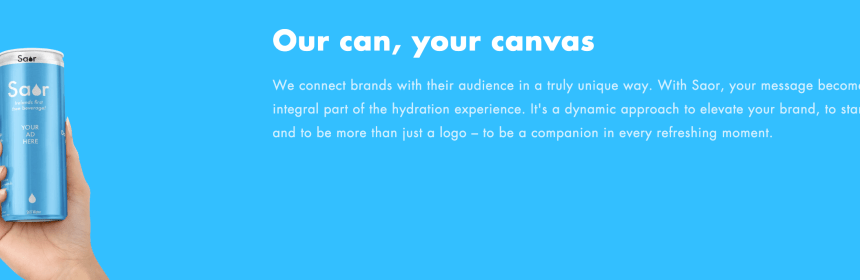
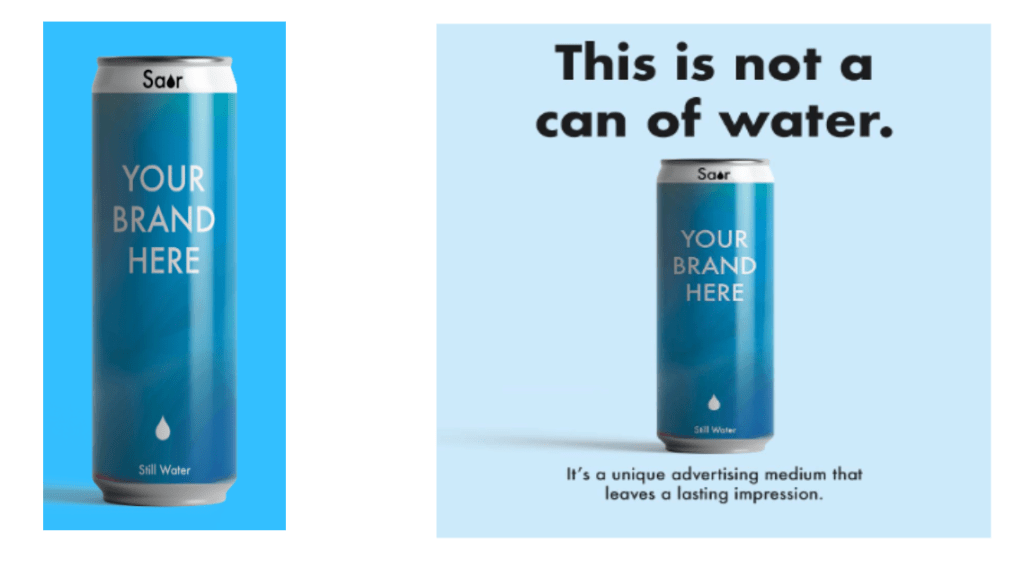
Saor Water founder Ryan Ormonde has a clear vision: to create a distinctive platform that connects brands without overwhelming consumers with ads. As Ireland’s first free beverage company, Saor offers a medium of advertising through their cans in an innovative and sustainable approach to marketing. The idea is that these free drinks are distributed to any location or event that the collaborating brand wishes to advertise at. Founders believe that their product enables brands to connect with consumers through meaningful and authentic connections. This refreshing approach, opposed to typically intrusive advertising, has created a niche market for the company. With sustainability at the heart of the firm, Saor Water is an exciting newcomer to the beverage market. 

The Team

Founder Ryan Ormonde has always had an entrepreneurial mindset, displaying his skills flipping iPhones during his school days. It is clear to see where his head is at considering he claims to “spend more time on LinkedIn than Snapchat”. These atypical traits show his high levels of motivation. This extends to the rest of the team. Jonathan Hoffman, Luke Carroll and recent addition Anthony Walsh all make up a motivated group looking to connect brands with their audience. Individual specialities in marketing, administration and outreach behind the scenes help Saor Water operate effectively. Their motivation coupled with an innovative, sustainable approach to advertising has led to a start-up with serious potential and a bright future. 

Where They Are Now

One year has passed since Saor Water’s inception, and the startup has come a long way in its mission of advertisement-fuelled hydration. Ryan started by designing the company’s website and creating marketing materials, including posters and social media content by himself. He also ensured the establishment of a supply chain for their water cans. The company collaborated with a water can supplier in the UK, who is responsible for filling and packaging the cans before shipping them to Ireland. The process was a steep learning curve for Ryan, who encountered challenges during the first shipment’s importation into Ireland. However, his swift action ensured the timely release of the shipment, enabling distribution at all planned events. 

Today, Saor Water has begun its distribution efforts, with its current target being universities including TUD, TCD, and UCD, and other student-based events. Their partnership with “Roots,” a healthy food restaurant, marks their first collaboration. They have also struck a partnership with Mercedes and will soon be distributing Mercedes-themed water cans at car dealerships, expanding their reach to new markets.

In today’s digital age, the average person is exposed to more than 6000 ads every day. Ryan says that he is consistently working on enhancing the design of their water cans as he recognises that it is essential in order to provide a positive customer experience and make Saor Water a refreshing and appealing choice for consumers.

Plans for the Future

Saor Water’s primary focus remains on students – targeting universities and student-centric events – and plans to expand more in this space. The company is also expanding more into the dealership sector. But Saor Water’s expansion vision does not stop at the Irish shores. The company envisions a future where its sustainable water solution reaches even broader audiences. They have identified the UK as a promising market, offering a multitude of events and businesses to collaborate. An expansion into the UK promises not only new customers but also a streamlined supply chain, enhancing efficiency and growth. 

Increasing Corporation Tax: A Glimpse into the Future of FDI in Ireland. 

Kitty Harburn

It is no secret that Ireland is an attractive tax refuge for multinational corporations. Since 2003, when the corporation tax rate was reduced from 40% to 12.5%, Ireland has seen a huge influx of foreign direct investment. Now the home to over 1,000 internationally recognised MNCs, a favourable corporation tax is one of, if not, the leading factor in Ireland’s corporate attractiveness. 

The Current Stage of Foreign Direct Investment in Ireland

ICTs (Information and communication technologies) are among the leading players in corporate tax revenue, with pharmaceuticals holding a top position in the last couple of years. In 2022, pharmaceutical companies and those in the chemical sector paid 46% more tax than those in the tech sector. Slightly more than three years after the onset of the COVID-19 pandemic, the income of pharmaceuticals has noticeably declined due to the diminishing sales of vaccines. Taking a closer look at  2022 tax receipts, it reveals however that 86.5% of the revenues stream came from foreign-owned MNEs. 

Following the release of the 2024 Budget, there is room for speculation about the future of Irish corporation tax revenues. International regulations set out by the OECD conclude that the minimum corporation tax rate will increase to 15%, from 12.5% currently, in line with the BEPS Pillar two. Following this policy release it is important to think about how might this increase in corporation tax affect the tax revenues obtained by the Irish government? Will MNCs continue to develop and expand in Ireland? With this change, it is important that Ireland stays attractive as a destination for FDI. Not only are there revenue advantages attached to these players in our market, but also socioeconomic benefits, including job creation.  

A quantified expectancy in tax receipts has not yet been speculated, however if Pillar 1 is implemented then the possible increase in net tax may be mitigated by this execution of legislation OECD proposal. 

Looking Ahead

Looking at Ireland’s position in 2023 in relation to corporation tax, Ireland has the third lowest rate in Europe. The increase to 15% will still leave the country in a favourable position, compared to the rest of Europe which has an overall average of 21.5%. However, Ireland relies on CT receipts a lot more than the OECD median, and in the last 10 years alone this reliance has almost doubled. Hence, any departure or decrease of the big players will have a significant effect on many areas, primarily tax budgeting and government expenditure financing. The “€2bn loss to be reached” speculated by officials is nonetheless a cause for concern in Ireland’s current economic environment. 

Although there is a loss of competitive advantage, overall the country still stands in a promising position for FDI and business growth. Aside from Ireland’s favourable tax system, other factors such as the evolved financial sector and skilled workforce are only a small few that make Ireland a desirable destination for business. Brexit has also seen an increase in the number of companies who have begun expansions to Ireland as a gateway to European operations, Stripe being one of the few. Ireland has EU member state benefits, while also being an English-speaking country, breaks down potential barriers and potentially offsetting a rise in corporation taxes. On top of this, Ireland has been ranked 1st In Europe for the ease of paying taxes per PWC’s paying taxes report 2020, highlighting the maintenance of the tax refuge status. 

Innovation has also been a key driver in the country in recent times, with tax policies introduced to support and promote this cause. Per the Budget 2024, the R&D (Research & Development) tax credit which will be increased from 25% to 30%, ensuring that Ireland stays attractive and competitive for FDI. Following reports from Silicon Republic who highlighted that “80% of companies in Ireland plan to increase R&D spending over the next 3 years”,  this tax legislation will ensure adequate benefits to companies who qualify for the credit and will be affected by the Pillar two that otherwise may have seen an increase in their net tax bill, easing concerns for the future of FDI.

Aviation Sustainability: In Conversation with SFS Co-Founder Agnes Thornton

Petro Visage

Introduction:

The aviation industry is responsible for 3% of the world’s carbon emissions – a footprint that could swell to a staggering 27% by 2050 if we were to continue business as usual. In its 77th Annual General Meeting in October 2021, the International Air Transport Association (IATA) passed a resolution for the global air transport industry to achieve net zero carbon emissions by 2050. It is, however, widely acknowledged within the sector that reaching this objective poses a substantial challenge. Balancing emissions reduction with the growing global demand for air travel in a post-COVID-19 era presents a delicate equilibrium to be struck.

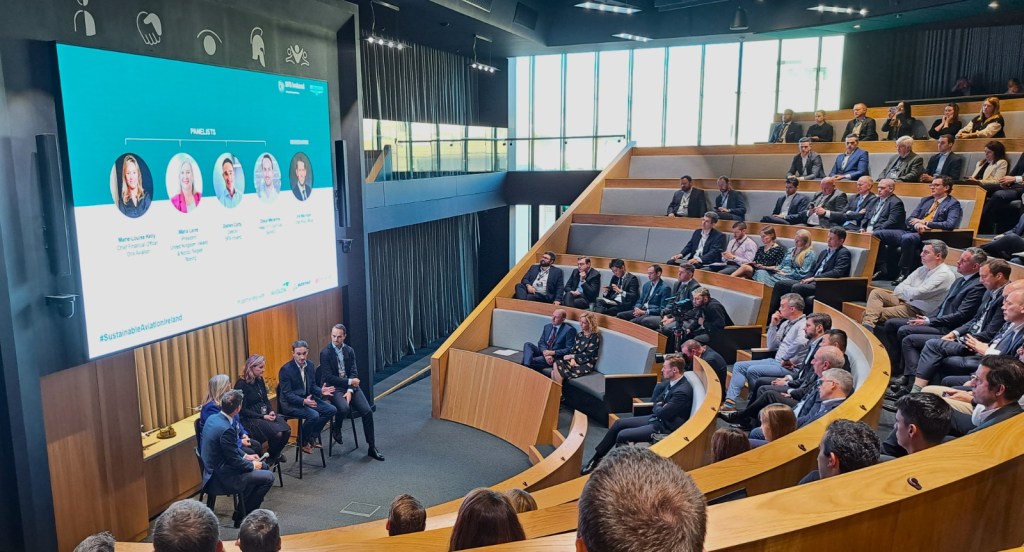
TBR’s Deputy Editor, Petro Visage, sat down with Agnes Thornton, co-founder of Sustainable Flight Solutions (SFS) to explore potential opportunities for sustainable aviation in Ireland.

Sustainable Flight Solutions: Pioneering Sustainable Aviation

Founded by Agnes Thornton and Darren Carty, SFS is an innovative project development company focusing on the production of Sustainable Aviation Fuels (SAFs) in Ireland and abroad. SAFs are alternative fuels used in commercial aviation, capable of reducing CO2 emissions by up to 80%. SAFs can be sourced from various materials, including waste fats, oils, greases, municipal solid waste, agricultural residues, and non-food crops grown on marginal land. This newly developed fuel source is considered sustainable as they do not compete with food crops, require minimal additional resources like water or land, and do not contribute to environmental issues such as deforestation or biodiversity loss. Unlike fossil fuels that release sequestered carbon, SAFs recycle CO2 absorbed by their feedstock biomass during growth, reducing their overall carbon footprint.

The firm’s mission is rooted in a shared responsibility to drive the decarbonization of the aviation sector, both regionally in Ireland and on a global scale. By fostering collaborations with industry partners, academia, and technology providers, SFS is actively engaged in research and development efforts.

The Inspiration Behind SFS: A Journey to Sustainability

SFS was inspired by a shared vision for a more sustainable future in the aviation sector. Both Founders of SFS are airline pilots; during the COVID-19 pandemic, fewer working hours enabled the pair to embark on higher education, focusing their research on SAF Life Cycle Analysis and SAF implementation for industry through a post-graduate Diploma in Sustainable Systems Engineering and an MSc in Aviation Management, respectively. As the team expanded to include expertise in aircraft leasing and financing with the addition of Aidan Bodkin as third director, their collective vision for a more sustainable future for the aviation sector came into sharp focus.

Thornton and Carty understood that the aviation industry needed changing if it were to continue. “Sustainability is imperative for the industry to survive in the long run”, Thornton explains. Knowing this, a concerning observation was that while many studies were done on SAF here in Ireland, there was a gap between academia and industry, with significant interest by firms with minimal information. SFS Ireland then started to bring the needed conversations to the table, starting as an advocacy group to spread awareness on SAF and other sustainable practices. Soon, they hosted workshops with academics and stakeholders across supply chains to spark conversations around potential solutions.

Agnes explains that the road to making aviation more sustainable is long and tedious, but initial, encouraging steps have been taken in Europe and world-wide. SFS believes that Ireland has an important role to play in the development of SAFs and are therefore actively engaged in projects to facilitate the transition, from R&D to feasibility studies and policy discussions.

Feasibility Study with SkyNRG: A Significant Step Forward

One significant milestone in SFS’s journey was a comprehensive feasibility study carried out with SAF producer SkyNRG. This study, conducted in collaboration with industry giants Avolon, Orix Aviation, and Boeing, assessed the commercial viability of a Sustainable Aviation Fuel (SAF) production in Ireland.

The EU’s ReFuelEU initiative presently requires a phased elevation in the inclusion of SAF in aviation fuel at EU airports, commencing at 2% by 2025 and ultimately achieving 70% by 2050. Released last Wednesday, the report found that Ireland has the potential to establish a €2.55 billion annual sustainable aviation fuel (SAF) industry, generating over 1,000 highly skilled jobs by 2050 if it meets these targets.

The study, funded by industry leaders, marks a promising step towards reducing the aviation industry’s environmental footprint.
That being said, the report accentuates the necessity of executing well-structured policy modifications to enable the comprehensive growth of this industry. It advocates for business incentives, such as tax credits and guaranteed pricing, while emphasising research and development funding and planning process reform. Moreover, the report stresses the need for investment in storage and transport infrastructure, along with public-private collaboration. For an actualisation of a prosperous SAF sector in Ireland, industry players must collaborate in establishing and effectively enacting vital policies. In light of these recommendations, it is worth noting that Minister for Enterprise, Trade and Employment Simon Coveney underscored the government’s steadfast commitment to initiatives focused on emissions reduction in air travel when presenting the study last week.

Overcoming Barriers to Sustainability: The Road Ahead

When asked about the challenges in adopting sustainable practices in the industry, Thornton pointed out a variety of measures beyond just SAF, including improved operational procedures, enhanced air traffic management, and the use of fuel-efficient aircraft and engines. These measures are collectively needed to work towards industry-wide emissions reduction goals.

However, significant progress has been made with the recent ReFuelEU proposal, which mandates SAF use, thus providing a clear direction for the industry. This proposal mandates SAF use by putting an obligation on fuel suppliers to blend a certain percentage of SAF into their jet fuel supply, starting with 2% in 2025, and stepping up to reach 70% by 2050 as mentioned prior. A sub-mandate is also relevant to note, which ensures that part of the SAF is of non-biological origin, so called “synthetic fuels”. This agreement is a significant milestone, as it sets out the ambitious targets from the EU and gives more certainty and clarity to investors and SAF producers alike.

The primary hurdles in advancing sustainable aviation fuels (SAF), Thornton explains, include issues related to scalability, feedstock supply, and insufficient investment due to lingering uncertainties, as the implementation of EU policy requires national-level adoption. While the EU agreement marks an initial step, long-term certainty necessitates the establishment of a robust national policy.

To address these challenges, strategies under consideration involve the implementation of an EU SAF mandate and ongoing policy discussions. These discussions are showing promise in instilling confidence among investors, particularly those involved in capital-intensive SAF projects.

Regulatory Changes and Trends: Navigating a Greener Sky

In recent years, there has been significant regulatory changes pushing for sustainability within the aviation sector some of which include:

1. Renewable Energy Directive (RED III): On September 12, 2023, European Parliament members officially passed revisions to the Renewable Energy Directive (RED III), facilitating the adoption of renewable energy across EU member states.

2. ReFuelEU Aviation Initiative: on October 9, 2023, the EU Council approved the ReFuelEU Aviation initiative as a fundamental component of the ‘Fit for 55’ package, initially introduced by the European Commission on July 14, 2021. The primary objective of this package is to reduce greenhouse gas emissions by a minimum of 55% by 2030, ultimately achieving climate neutrality by 2050.

3. CORSIA Implementation: Commencing from 2027, the Carbon Offsetting and Reduction Scheme for International Aviation (CORSIA) will be mandatory in most nations. Differing from the EU ETS, which sets emissions caps, CORSIA permits emissions to rise while mandating compensation through offsets. In 2022, the EU Parliament and European Council mutually agreed to integrate CORSIA into their emission monitoring framework and gradually phase out free aviation allowances by 2027. Ireland took an active step by embracing CORSIA regulations in 2021 during its initial stages.

However, Thornton emphasises the significance of the Climate Action Plan for 2024, expressing hope for a more comprehensive acknowledgment of aviation compared to previous initiatives. “Unfortunately, Ireland has been somewhat lacking in ambition in this regard, but we are encouraged by positive trends and anticipate the integration of Sustainable Aviation Fuels (SAF) in future climate and transportation discussions,” Thornton explains.

The Future of Sustainable Aviation: Collaboration and Consciousness

Thornton strongly believes that a more sustainable aviation industry is achievable. However, she emphasises that this goal can only be achieved through a collaborative and conscious approach by everyone involved. Stakeholders from all sectors need a clear understanding of the environmental impact of air travel, the opportunities presented by sustainable fuels, and the importance of policy support to aid the transition towards a sustainable future for the aviation industry. The future of sustainable aviation is promising but requires a collaborative and conscious effort to properly meet the state of the sector.

Fostering Sustainability in Aviation: Advice for All Stakeholders

Thornton emphasises the various avenues for bolstering a sustainable aviation sector. Some include conscientious travel, participation in Sustainable Aviation Fuel (SAF) procurement programs, and advancing awareness through education.

Businesses, in particular, can play a pivotal role by setting an example, educating their workforce about the environmental impact of air travel, and exploring pathways to minimise their emissions. Firms should explore corporate initiatives to procure SAF for their business travel needs, thereby stimulating SAF production through voluntary contributions.

National policymakers have been given a clear task by the recent ReFuelEU initiative: to demonstrate commitment to a future SAF industry, it is imperative that they swiftly and consistently implement the regulation on a national level.

While success stories from industry frontrunners such as the Lufthansa SAF program, the SAS SAF Program, the IAG SAF Roadmap, and the JetZero Council showcase the economic and competitive advantages achievable through sustainable aviation practices, Thornton cautions against the lurking threat of greenwashing. Maintaining robust governance and transparency remains essential to empower customers to make well-informed decisions regarding their individual contributions.

Read more about SFS initiatives at:

To learn more about SAF:

https://www.iata.org/en/iata-repository/pressroom/fact-sheets/fact-sheet—alternative-fuels/

TES Startup Weekend: A Fresher’s Perspective & Success Story

Daniel O’Brien

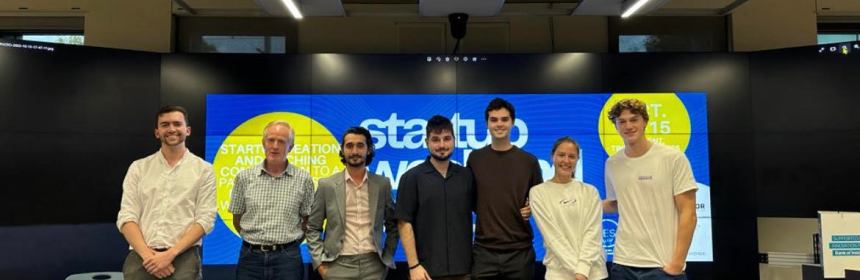
The echo of creative minds at work reverberated through Trinity Business school during the annual TES Startup Weekend last weekend, where a generous €3000 prize awaited the boldest startup pioneers.  TBR correspondent, Daniel O’Brien, plunged headfirst into the event and shares his experience. 

Starting with a bang

Geared toward students interested in entrepreneurship, the weekend began on Friday evening with a high-energy brainstorming session where attendees were divided into groups, each comprising a diverse mix of backgrounds and expertise. The goal of this exercise was to generate innovative business ideas that could potentially solve real-world problems. My group for this activity was nothing short of diverse, including a fourth-year Law and Business student from UCD, a 4th year Electrical Engineering student, a Postgraduate Computer Science student, a Postgraduate Entrepreneurship student, and myself. I was greatly impressed by the seriousness and quality of those in my brainstorming group; the team was active and vocal in sharing their ideas and the problems that they wanted to solve. 

Day one surged ahead with great momentum, as Joseph Lanzillotta took the stage to deliver a captivating discussion on the Trinity entrepreneurship pipeline—an enlightening revelation that held my attention completely. We had a walk-through of the amazing tools Trinity has for those who want to build companies, with the key tool being the Open Incubator – a platform that allows you to plan your business ideas and organize key parts of your business. Mr. Lanzillotta is an entrepreneur himself, having founded a machine learning business related to beekeeping. The particularly enlightening part of his address delved into the transition from problem to solution. It involved reshaping the original problem into a tool that consumers could employ to tackle the issue. The timing of this talk was impeccable, considering I had arrived without a business concept or a problem to tackle. As such, Mr. Lanzillota was really able to get me thinking about what problems I had that I would like to find solutions for, and how to transform these ideas into products. 

After this talk, we had the chance to walk around and meet individuals in other groups. This was particularly enticing as it allowed me to learn about the 16 ideas in the room and the entrepreneurs behind them. During this time, it became clear how diverse the number of ideas were: from physical products like drinks and makeup, to digital products like new tools for consumers and new infrastructure for businesses. This segment was beyond what I had originally conceived for the event, as it offered the opportunity to engage with an idea or group without the need for a fully structured concept. The first day concluded with us finalizing groups. In my case I decided to partner with two people from my brainstorming table, despite most people joining groups and ideas other than the ones that they had initially brainstormed with.

Day 2: Shifting to a higher gear

The second day was all about developing our pitch deck and fleshing out our ideas. These decks were needed to effectively communicate the problem, solution, target market, competitive analysis, revenue model, and the potential impact of our ideas. Personally, I found this to be the most challenging –  grappling with the intricate task of distilling the crucial elements of our idea into a brief 5-minute presentation. Thankfully, we then heard from Anthony Quigley, a serial entrepreneur, speaking about his journey and advice on how to pitch our businesses. His talk featured a long Q&A session, which was a fantastic chance to discuss ideas and skills with someone who is highly acquainted with starting and running a business. Mr. Quigley has been in the process of company creation for 30 years, and I found his insights to be especially relevant to the room. Between his initial talk and the long Q&A session, Mr. Quigley’s ideas played a substantive role in helping my group make decisions on the formulation of our slides. 

Also during the Saturday slide making activity were two mentors, Liam Junkermann and Charles Cullen, who walked around and discussed their experiences with each group. My group had the chance to talk with Mr. Junkerman, discussing both his experiences as a founder of Imprint Esports. This was a fascinating opportunity to glean insights from an entrepreneur’s journey that was catalyzed by the Trinity Entrepreneurial Society.  He also provided valuable insights into the feasibility of my group’s idea along with practical tips on our presentation regarding what to include and how to format it. 

Day 3: The grand finale

The zenith of the weekend came on the third day, with the opportunity to pitch our ideas to a panel of venture capitalists. Each group had 5 minutes to present their pitch, followed by a Q&A session that lasted about 3 minutes. After arriving on the third day, we were introduced to a panel consisting of Joe Gorman, Dick Bourke and Zaur John Unsizadeh. Gorman works at Dogpatch labs, a startup and innovation hub in the Docklands, with Dogpatch being part of a global network of 50 startup hubs supported by Google.  Bourke is the founder of Scorebuddy, an internal tool used by call centers. Unsizadeh is a TCD alumni and now runs the Tangent workspace in the Trinity Business School, working with more than 100 startups on their business models. 

Needless to say, the opportunity to present to such an experienced and connected panel was the cumulative highlight of this weekend, and presented a chance for participants to do something very few first year students get a chance to. As the fourth presenting team among 16, the time had come for my group. We entered the presentation room with a mix of anticipation and nerves, and embarked on our pitch. The panel was very engaged throughout the pitch and followed up with questions covering all parts of the idea – from monetisation to implementation. 

Following the presentation the team awaited the results, with 12 more groups to present; this lasted several hours but was some of the most enjoyable time spent all weekend.  Participants were truly remarkable, and with nothing left to do but wait, it was the perfect time to engage in conversation and further acquaint ourselves with the attendees.

After a few hours of anticipation, it was time for the winners to be announced. The room buzzed with excitement!  Much to our elation, my group emerged victorious and was honoured to receive the coveted €3000 in business expense funding. As the event was wrapping up, it was apparent to me how many of the groups were going to continue with their business ideas, many of whom had no idea of a business problem before the weekend. It was clear that nearly everyone had found an idea that they wanted to pursue further.

Conclusion

For me, the real hidden value in the event was a chance to meet other like minded individuals and spend time thinking and learning alongside them. The array of highly qualified guest speakers really gave participants every chance to build new business skills, and I was especially impressed by how accessible the event was for people without pre-existing ideas, experience, or formulated groups. Overall, I highly recommend attending future TES startup weekends for anyone who has ever had an interest in any form for starting a business.

To find out more about Trinity Entrepreneurial Society, visit https://testrinity.com/

Or, follow them on instagram here: https://www.instagram.com/testrinity/ 

« Older Entries Recent Entries »