Category Archives: Uncategorized

Small Businesses: How Hidden Price Increases Arise from Seemingly Nowhere

Kitty Harburn

Following the recent closures of some favourite local spots, including Kale+CoCo, All My Friends pub and many more, the future is undistinguished for small businesses across the country. With January nearly behind us, the landscape for these SMEs seems to be filled with nothing but ever-rising costs, as business owners face constant uncertainty with price volatility. In 2023, the SME count in Ireland was approximately 309,000 with 91% of these accounting for micro-sized businesses, employing between 1 and 9 people. Yet, according to a survey by PwC in the last quarter of 2023, approximately 650 businesses are expected to close this year due to “market disruption” and rising running costs. 

The ICOB (Increased Cost of Business Grant) for 2024, which entails once off payments to 193,000 businesses, has increased to €257 million following the release of Budget 2024. However, even with these grants, businesses are still struggling to meet ends when it comes to covering the many bills they incur. 

Dublin’s “All my Friends” pub, based in Smithfield is a prime example of the struggles associated with running a small, independent business in the current Irish, commercial environment. The pub opened its doors in the summer of 2022, and less than 2 years following, closure was announced due to the ‘punitive tax system’ as described in their statement, highlighting the ever-increasing costs of running an independent small business in Ireland. Kale + CoCo, another favourite in the Stoneybatter area, closed its doors in December due to similar financial constraints. As reported in the Irish Independent, “Nowadays, it’s not enough to just be a cafe”, with “so little reward”. 

Following the Government debate on 14th February, these increasing costs were noted as Accountancy Ireland recommended a limited increase in the minimum wage due to the increased costs of doing business and inflation. The increasing financial pressure on SMEs is hard to narrow to one specific area. The issue is not unique to Ireland, with many global geopolitical factors at play: shocks to supply chains following Brexit and the crisis in Ukraine are namely impotent, with global circumstances taking their toll on markets across the globe. 

SMEs facing financial difficulties are inevitably raising consumer prices to meet ends’ need, but naturally the overall inflation rate is taking its toll on the economy. The public are now much more aware of their spending habits and their role in keeping businesses flowing, yet increased selling prices are taking their toll on demand. As a college student, a notable change we can all vouch for is the costs of a cup of coffee and a pastry. Two years ago, friends and I would regularly treat ourselves to some of our favourites, most often comprised  of small, independent coffee shops. In the last few months however, this has not been so economically feasible. These small, generally family-run businesses have unfortunately had no other choice but to hike up prices, and the tangible impacts on daily expenses, like the rising cost of coffee, underscores the urgent need for comprehensive solutions to sustain the vital ecosystem of small, independent businesses in Ireland. 

The precarious landscape for small businesses in Ireland mirrors global inflationary challenges, and while the ICOB grant increase offers some relief amongst other actions taken by the government, it falls short of addressing the broader economic issues to which are harder to control. Geopolitical factors, supply chain disruptions, and inflation are just some of the difficulties for SMEs in Ireland today, prompting price hikes that impact consumer habits.

Navigating the Green Economy: Transition Risk, Regulatory Measures, and Investment Opportunities in the Era of Climate Neutrality 

Caoimhe Kennedy

From a corporate perspective, transition risk encompasses the uncertainty surrounding the pace of achieving carbon neutrality. On a broader scale, EU nations aspire to become the world’s first climate-neutral economy and society by 2050, as outlined in the Paris Agreement. Advanced economies must reduce their CO2 emissions from 8.8 to 3.8 tonnes per capita by 2030 to stay within the 1.5°C threshold. Yet, the current trajectory suggests a perilous 3°C increase in global heating. Aligning portfolio structures with evolving EU policies is crucial for financial institutions as they navigate the imperative shift toward a low-carbon economy. This transition holds the potential for substantial ripple effects on financial systems, prompting sudden reassessments of assets. 

The European Central Bank has heightened regulatory measures, compelling financial institutions to disclose climate risks as per the 2023 directives. As such, increasing scrutiny will place growing pressure on portfolio managers to adjust their portfolio exposures. Non-compliance with the new regulations, resulting in a failure to disclose climate information, not only signifies a breach of EU law but also triggers supervisory action. Furthermore, with an expected surge in the size of the wealth management industry due to demographic shifts and rising consumer demands for increased investor involvement in promoting sustainable business practices, financial institutions must reshape their portfolio compositions to contribute to a carbon-neutral world. 

In the realm of financial stability, long-term institutional investors play a pivotal role in the recalibration and redistribution of carbon transition risks. Mitigating the escalating threat of natural disasters is facilitated through the utilisation of hedging instruments, such as catastrophe bonds. Additionally, various financial tools, including green stock indices and green bonds, emerge as valuable mechanisms for redirecting investments towards environmentally sustainable sectors. Furthermore, the world’s excessive dependence on oil, primarily sourced from politically unstable authoritarian regimes, presents a compelling case for the urgent redirection of funds towards renewable energy sectors. Historical patterns reveal that hikes in oil prices frequently precedes recessions. To bolster stability in the financial sector, a strategic shift away from investments tied to oil holds significant benefits. 

The green economy opens a world of opportunities for investors. Climate change, with its far-reaching impact beyond the EU, underscores the need for a global approach. If the green transition remains confined solely to Western nations and China, projections suggest that by 2050, South Asia, Southeast Asia, and Africa could contribute to a staggering 64% of global emissions. This scenario makes the achievement of Paris Agreement goals virtually impossible without substantial investments in green technologies within emerging markets. Notably, a mere 14% of green investments in these burgeoning economies are privately funded, in contrast to the 81% in developed nations. This evolving market, coupled with innovative investment instruments, provides a fresh avenue for investors to generate alpha returns. Simultaneously, it offers the strategic advantage of hedging portfolio risks by diversifying exposure across different global regions.

Bambino: How a Brick Wall Created a Cult Classic for the Dublin Takeaway Market

Sean Smith

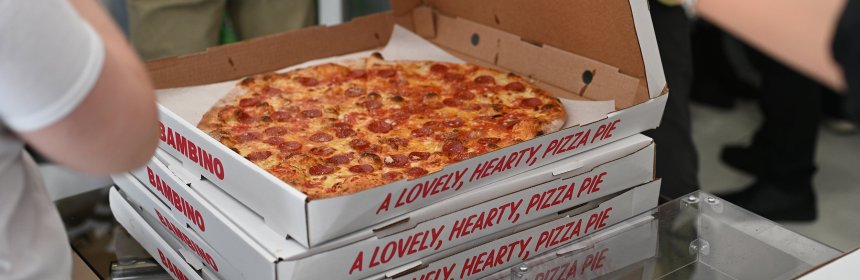
For those of us hunting for a quick respite during the lunch hours, or contributing to the all-too-familiar hot honey craze, Bambino has become a household name amongst the Dublin food scene. Known for their quick, by the slice service, the shop has gained a favourable reputation amongst Dubliners for its unique flavours served on a white, paper plate.

TBR’s Editor-in-Chief Sean Smith spoke with Nick DiMaio, co-founder of Bambino, to learn a little more about the pizza joint’s history and the business model that made the shop so successful.

Bambino’s Story: A String of Events

Bambino’s start-up is an untraditional one. Being born in the United States, Nick was no stranger to the New York style slice shop. Moving to Ireland in 2001 to pursue a career in the restaurant industry, with the birth of Dublin favourite Token under his belt, DiMaio would “beat the 3PM slump by getting a pizza slice in any one of the pizza slice shops that were available back then – usually DiFontaines”, sparking a dormant idea for a market in quick-serve pizza.

Fast forward to 2020, this slice shop concept began to materialise. During the pandemic induced lockdowns, Nick met up with a few friends via Zoom, where he got talking with Shane Windrim, the eventual co-founder of Bambino. The two chatted about the potential for a slice-shop in Dublin, and with Shane’s background in fine-dining, the pair started generating inspiration for a future storefront. 

A year later, Nick received a message from a friend with a photo of a piece of paper saying ‘Manager/Business Partner Wanted – Must Have Experience Running Business”, prompting DiMaio to pursue the vague offering out of curiosity. Much to his delight, Nick soon learned the vacancy appeared for a unit on Stephen Street, near facilities he previously owned. With no particular inspiration for the space at the time, Nick viewed the property and it hit him: “…there was a brick wall immediately to my left when I entered the premises. In 5 seconds I said to myself – this is a slice shop. I had seen that brick wall before in so many pizzerias I had been to in my lifetime. It made so much sense. I was in the unit for about 10 minutes, and I had mapped the place out.”

Shortly thereafter, Nick phoned Shane to pitch the idea. The two were sold, preparing the facility for operation and opening toward the latter half of COVID regulations. Facing adversity, as most small businesses during the pandemic did, the pair were met with challenges during construction and denied a startup loan due to the ‘volatility of the hospitality industry”. Nevertheless, Nick and Shane opened the shop and have not looked back, amassing a swiftly loyal customer base. 

A Slice Worth Eating: A New Operating Model for Pizza

Acclimating the Irish market to a slice shop model was not an easy feat, as traditional clientele are often used to full pies in a restaurant setting. “Initially the idea of grabbing & going/eating at a ledge, no bookings, no cutlery, 1 slice of pizza for €4-6, not being ‘full’ after one slice, was a bit foreign to people” DiMaio affirmed. “I think people have gotten used to us, and what we do. Even for us, if we wanted more of a restaurant style pizza experience, we’d definitely just go to an actual restaurant.” 

With such a new operating configuration comes inherent obstacles. Nick cited issues like minimising wait times and handling queues out the door, as unlike their New York counterparts, “Our customer base probably wouldn’t wait outside, especially as it’d more than likely be raining”. As with any SMB, uniformity and a consistent product regardless of customer foot traffic and staffing is a prime goal that the team is striving to cultivate. 

On top of massive demand, Bambino has faced no exemption from the rising costs faced by Dublin businesses at present. While mentioning that the shop’s electricity bills surpass their rent at times, DiMaio maintains an optimistic perspective: “Inflation hasn’t affected us too much, which is why we haven’t raised our prices other than 25 cents per slice to accommodate the recent VAT rate increase…Perhaps it’s positively impacted our sales because what we’ve remained consistent with our pricing as pints, coffees, and other takeaway items have increased quite drastically over the last couple years.” A point of disruption however has presented itself in the form of supply chain issues, as Nick recounted a time when the type of tomato used for Bambino’s renowned sauce became unavailable. The team had to think on their feet, altering their sauce profile with other tomatoes, highlighting their growing concern over consistency.

A Cult Classic: From Tattoos to Tik Tok

Despite any operative challenges, the Dublin food scene has welcomed Bambino with open arms. DiMaio credits the shop’s high customer loyalty to its basic, convenient nature: “It’s just very easy to be a regular customer of ours – the slice is cheap, the wait isn’t too long, there’s a buzz outside the shop, and the quality is high, so we can kind of see how we’ve got a strong following.” Yet despite a convenient customer experience, Bambino has amassed a cult following, with a dozen loyal customers getting the iconic cupid logo tattooed; the owner of the inaugural tattoo received free pizza for life, with subsequent “copycats” as DiMaio puts it receiving a t-shirt and voucher.

In spite of a buzzing consumer base, Nick cites that this is not as a result of the shop’s social media presence. “We are, admittedly, crap at social media and marketing. What we do was always going to be a challenge,” DiMaio said. “We’ve been open for a year and a half and have only posted 40 things, most of which show me holding a slice in one hand and taking the photo with my phone. As before, we want the pizza to speak for itself”. Instead, external promotion has been a substantial driver for Bambino, with the Irish Times and Independent calling the slices the best pizza in Ireland and guests sharing their slices across different social media outlets. Nick even shared his delight at the shop’s Tik Tok fame, admitting “The Cassie Stokes segments where she interviews people in the food industry who have often said Bambino is the best pizza, went from flattering, and then transitioned to hilarity as repetitiveness set in and the memes began. The meme of the microphone being held up to the hole in the beach in Portmarnock with a speech bubble saying ‘gotta be Bambino’ was 10/10.”

For the Bambino cultists among us, fear not; DiMaio hinted at 2024 being a year of growth for the shop and its operations. At present, Bambino has just finished up a refurbishment of their kitchen facilities to streamline its pizza-making. Nick also exclaimed an expansionary project in the works, one that will “See us prepare our dough in a new space with a temperature controlled environment, that will also serve as a small restaurant for whole pies & pitchers of beers with its own slice shop element.” With almost two years of slices achieved, Bambino has solidified itself as a Dublin staple, and we join DiMaio in his excitement for a future full of Hot Pep slices.

Internship Spotlight: Companies Hiring Second Year Interns

Anna Lelashvili 

Finding an internship can be difficult, especially when you are not a ‘penultimate student’.  I know this from first hand experience which is why I decided to bring to light top companies hiring non-penultimate students in Dublin, interviewing previous interns about their hiring experiences. From Finance to HR, here are 3 companies to consider applying to if you are in your second year of college.

  1. Deloitte 

Background: Deloitte is one of the Big 4 Accountancy firms with over 3,200 people providing audit, tax, consulting and corporate finance services to public and private clients in Ireland. Deloitte placed 4th in the GradIreland student survey which identified the top 100 graduate employers in Ireland. They hired over 200 summer interns in 2023!

Length of Program: All programs, except Audit & Assurance, are 12 weeks long while Audit & Assurance totals 9 weeks.

Opening Date: Now open!
Closing Date: January 26th 

Roles Available: Audit & Assurance, Consulting, Restructuring Services, Risk Advisory, Tax and Technology

David Dai – Audit Summer Intern 2023

Having an interest in the Big 4 and becoming a Chartered Accountant after graduation, David applied to Audit Summer Intern positions in all the Big 4 firms (Deloitte, EY, KPMG and PWC). Following an application process which consisted of an online application and an interview with a Senior Manager and an Assistant Manager, David received offers from Deloitte and EY. When faced with the choice of spending his summer with either firm, David decided to choose Deloitte. 

“Deloitte had more well-known clients in my area of interest, Aviation Finance, so I would have a chance to serve these clients. I also thought Deloitte was a better place to develop myself.” 

Speaking very highly of his internship experience, David shared an example to really showcase the friendliness he was met with at Deloitte. After being given a task he “had no clue” how to do, David asked the associate on his team for help. Still not 100% sure how to complete the task, David was not afraid to ask for more help and asked someone sitting next to him, whom he did not know, to explain it to him. 

“Everyone was here to help you. In Deloitte, you could go to a Senior Manager or even a Partner and ask them questions and they’ll be happy to answer. It’s a very friendly firm, very good team environment.” 

David was very determined to learn as much as he could during his time in Deloitte and took full advantage of being on a small team. 

“I was asking for a new task right after I finished a task. I was in a small team the whole Summer, with 3 – 5 people in the team, so I worked closely with my senior manager. It was a very steep learning curve but I really had great fun doing my internship in Deloitte” 

  1. Fidelity International 

Background: Fidelity International is an investment management firm, offering investment solutions and retirement expertise to institutions, individuals and their advisers around the world. With roles including Equity Research, Multi Asset, Private Credit, Sustainable Investing, and Sales and Marketing, there’s a role for anyone interested in finance!

Length of Program: 10 weeks

Opening Date: Now open! 

Closing Date: March 3rd

Roles Available: Investment Management

Jane Purcell – Summer Intern 2023

Having received an offer to study in Korea for her third year of college, Jane decided to apply to Summer Internships in order to finance her exchange, as well as to gain professional work experience. Jane described her difficulty in finding internships open to students who were not penultimate year students, until Fidelity International reached out to her, encouraging her to apply. 

“The internship at Fidelity International caught my eye as it offered a rotational programme. I thought it would be cool to get an insight into two areas of interest and find out whether I liked them.”

After filing in the application form and completing online assessments, Jane was told that her application wasn’t being considered. However, a few weeks later, she received an email from Fidelity explaining that they had accidentally rejected her and invited her to a Super Day in 2 days time!

“The Super Day consisted of several interviews, a case study within a group and then an individual synopsis of the case study. It honestly flew by and I found out I had been successful within a few days.”

One of Jane’s highlights was her ability to arrange ‘one on one chats’ with people such as the Head of Product and Head of Currency Management. 

“I really enjoyed my time at Fidelity. There were only 8 other interns so it was nice to have a close team. We all worked on different teams and were given the opportunity to shadow different teams too if we so wished. Overall, it was a great experience to work at Fidelity and to get my first taste of the corporate world.” 

  1. Autodesk 

Background: Autodesk is a global leader in software for architects, builders, engineers, designers, manufacturers, 3D artists and production teams. According to an analysis of reviews on Glassdoor by resume.io, Autodesk ranks 3rd in tech companies to intern with, which was ranked by the percentage of interns that would recommend it to a friend, totalling 97.44% of interns recommending the firm. 

Length of Program: 3 months 

Opening Date: Now Open!
Closing Date: Closing date not advertised

Roles Available: Digital Sales, Software Engineer

Aanya Narang – HR Summer Intern 2023

“Providing a glimpse into my internship journey, I interned at Autodesk Ireland during the summer of 2023 in the capacity of a Human Resources Intern. The internship, overall, turned out to be one of the most enriching experiences of my life. Apart from acquiring invaluable skills in the field of Human Resources, I also made lifelong connections. The commendable company culture left a strong impression on me, with the people being exceptionally welcoming and supportive. I would definitely recommend Autodesk to students seeking internships. For those navigating the application process, I would advise researching the company and the role beforehand and simply presenting your authentic self during the interview process.”

Links to Internship Applications: 

Deloitte: Apply Here! 

Fidelity International: Apply Here! 

Autodesk: Apply Here!

Good Morning Japan: BOJ Gearing up for Economic Change?

Kate Pusch

On Tuesday 31st October the Bank of Japan discarded a strict price ceiling on 10-year bond yields, one of the Bank’s monetary policies guarding against deflation. The policy change, a result of rising inflation, has instigated analyst discussion over whether or not the BOJ will finally tighten fiscal policy after nearly three decades of economic stagnation. 

Contextual Factors

In the wake of Japan’s economic bubble burst in the late 1980s, laxed monetary policy caused the Japanese Yen to dramatically decline against the US Dollar. If the Yen’s trade value (currently at 148.24) dips below 151.94, it will reach a 33-year low against the US dollar. While this has significantly increased export profits for many of Japan’s largest companies, executives have adopted an increasingly risk-averse attitude towards investing, causing  a large cash hoard to build up in Japan’s banks. Conversely, faced with higher import costs, corporations have been determined to keep other production costs down. Leniency with worker wage hikes, being one such example, has decreased Japanese purchasing power, driving down local demand and creating more stagnant economic conditions for smaller Japanese businesses to grow under.

Corporate reluctance to boost worker wages, despite mounting profits and the upward trend in inflation, presents a challenge for the BOJ who remains steadfast in its decision to withhold policy tightening measures until Japan achieves a stable 2% inflation rate. Although Japan’s inflation rate has surged notably in recent months, this is primarily due to external market shocks and the sustained devaluation of the Yen against the US Dollar. Meanwhile the absence of wage hikes has kept internal demand flat, if not on a decline. 

What Next?

As such, Japanese consumer demand is not the contributing factor to inflation the BOJ needs. The emergence of labour shortages resulting from Japan’s plateauing labour force, however, is putting pressure on companies to reconsider employee wages as an incentive strategy to attract and retain more employees. Such a change could kickstart a long-awaited price and wage growth cycle that would give the economy the boost it so desperately needs. 

More overall changes in policy will likely be indicated sooner by the BOJ’s updated inflation forecast – currently at 1.7% –that is to be published in January. Although it is unlikely the bank will follow up on its projections with action until April (when new wage negotiations are due to solidify), investors are still hopeful that it will indicate the BOJ’s direction for economic policy in the fiscal year 2024. 

Needless to say market watchers are holding their breath to see whether Japan seizes this chance to finally awaken from its long economic slumber.

« Older Entries Recent Entries »