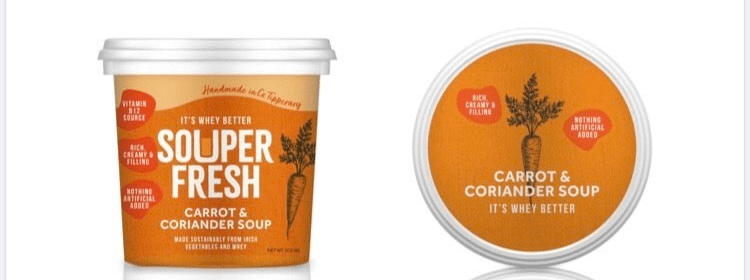
MSISS students and Souper Fresh founders, James and Daniel Buckley, have transformed the by-product of cheese-making—whey—into a remarkable solution for waste management in farmhouse cheese factories. The dynamic duo’s innovative approach involves converting whey into a high-quality soup stock, creating both a highly nutritious and delectable product.
The Founders
Hailing from a background deeply rooted in the cheese industry, Daniel and James Buckley honed their craft working in their grandparents’ cheese factory. Witnessing the staggering amount of whey, a by-product comprising 90% of milk, being discarded, they recognised the need for a sustainable solution. In large production centres whey is dried to make products such as whey protein; however, at smaller scales this process is not as profitable. In smaller farmhouse cheese factories the whey is typically disposed of at a cost or used as field fertiliser, but excess whey can disrupt soil PH balance and harm vegetation. The Buckley brothers seized the opportunity and devised a creative remedy: transforming this waste liquid into a soup stock. This strategic move not only addresses environmental concerns but also provides Souper Fresh with a competitive edge, enabling them to craft top-notch soups at more affordable prices compared to competitors who produce their own stock. Other competitors typically have to buy animal bones to produce their stock; this increases the cost of production and results in a stock with a large salt content.
Where are They Now?
Since its inception at the Enactus ideation summit a year ago, Souper Fresh has established a kitchen near the cheese factory in Cooleeney Co. Tipperary. After securing €10,000 worth of funding from Tangent, the company has now become a fully-fledged business that employs a skilled cook to craft their unique soups. Souper Fresh products are currently available in 3 shops across Ireland, priced at €3 per serving. Rigorous testing has revealed their soups to be rich in essential nutrients such as B12, making Souper Fresh the perfect product for someone who wants to get a nutritious meal as well as protecting the environment. The Buckley brothers recently took their talents to the Enactus world cup where they, along with fellow Trinity startup Vapebox, placed in the top 16 globally. Enactus is an international organisation that seeks to encourage social entrepreneurship around the world. Enactus was a great experience for the brothers and they strongly encourage everyone to get involved.
Future Expansion Plans
Looking ahead to the New Year, Souper Fresh has ambitious plans for expansion. The company aims to introduce its soups in fresh supermarkets nationwide, as well as Centra on Pearse Street: make sure to keep an eye out for them next January! Furthermore, the socially conscious brand intends to donate one in every ten pots to food charities, aligning with their commitment to combating food waste. They have already donated 300 pots to the local food bank in Clonmel, and going forward social responsibility is very important for their company. Globally, 50% of whey currently goes unused, highlighting Souper Fresh’s pioneering role in not only creating innovative products but also contributing to a more sustainable and conscientious approach to food production.
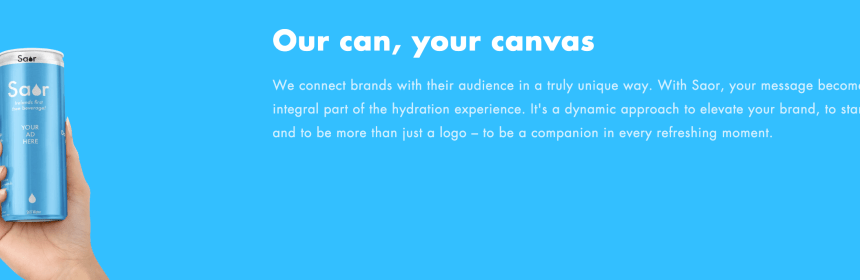
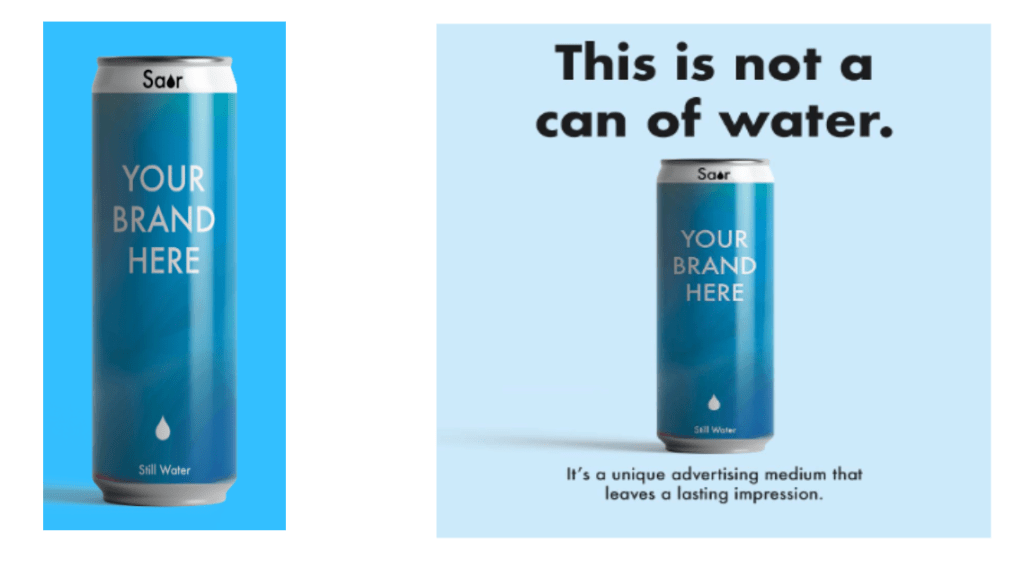
Saor Water founder Ryan Ormonde has a clear vision: to create a distinctive platform that connects brands without overwhelming consumers with ads. As Ireland’s first free beverage company, Saor offers a medium of advertising through their cans in an innovative and sustainable approach to marketing. The idea is that these free drinks are distributed to any location or event that the collaborating brand wishes to advertise at. Founders believe that their product enables brands to connect with consumers through meaningful and authentic connections. This refreshing approach, opposed to typically intrusive advertising, has created a niche market for the company. With sustainability at the heart of the firm, Saor Water is an exciting newcomer to the beverage market.
The Team
Founder Ryan Ormonde has always had an entrepreneurial mindset, displaying his skills flipping iPhones during his school days. It is clear to see where his head is at considering he claims to “spend more time on LinkedIn than Snapchat”. These atypical traits show his high levels of motivation. This extends to the rest of the team. Jonathan Hoffman, Luke Carroll and recent addition Anthony Walsh all make up a motivated group looking to connect brands with their audience. Individual specialities in marketing, administration and outreach behind the scenes help Saor Water operate effectively. Their motivation coupled with an innovative, sustainable approach to advertising has led to a start-up with serious potential and a bright future.
Where They Are Now
One year has passed since Saor Water’s inception, and the startup has come a long way in its mission of advertisement-fuelled hydration. Ryan started by designing the company’s website and creating marketing materials, including posters and social media content by himself. He also ensured the establishment of a supply chain for their water cans. The company collaborated with a water can supplier in the UK, who is responsible for filling and packaging the cans before shipping them to Ireland. The process was a steep learning curve for Ryan, who encountered challenges during the first shipment’s importation into Ireland. However, his swift action ensured the timely release of the shipment, enabling distribution at all planned events.
Today, Saor Water has begun its distribution efforts, with its current target being universities including TUD, TCD, and UCD, and other student-based events. Their partnership with “Roots,” a healthy food restaurant, marks their first collaboration. They have also struck a partnership with Mercedes and will soon be distributing Mercedes-themed water cans at car dealerships, expanding their reach to new markets.
In today’s digital age, the average person is exposed to more than 6000 ads every day. Ryan says that he is consistently working on enhancing the design of their water cans as he recognises that it is essential in order to provide a positive customer experience and make Saor Water a refreshing and appealing choice for consumers.
Plans for the Future
Saor Water’s primary focus remains on students – targeting universities and student-centric events – and plans to expand more in this space. The company is also expanding more into the dealership sector. But Saor Water’s expansion vision does not stop at the Irish shores. The company envisions a future where its sustainable water solution reaches even broader audiences. They have identified the UK as a promising market, offering a multitude of events and businesses to collaborate. An expansion into the UK promises not only new customers but also a streamlined supply chain, enhancing efficiency and growth.
The aviation industry is responsible for 3% of the world’s carbon emissions – a footprint that could swell to a staggering 27% by 2050 if we were to continue business as usual. In its 77th Annual General Meeting in October 2021, the International Air Transport Association (IATA) passed a resolution for the global air transport industry to achieve net zero carbon emissions by 2050. It is, however, widely acknowledged within the sector that reaching this objective poses a substantial challenge. Balancing emissions reduction with the growing global demand for air travel in a post-COVID-19 era presents a delicate equilibrium to be struck.
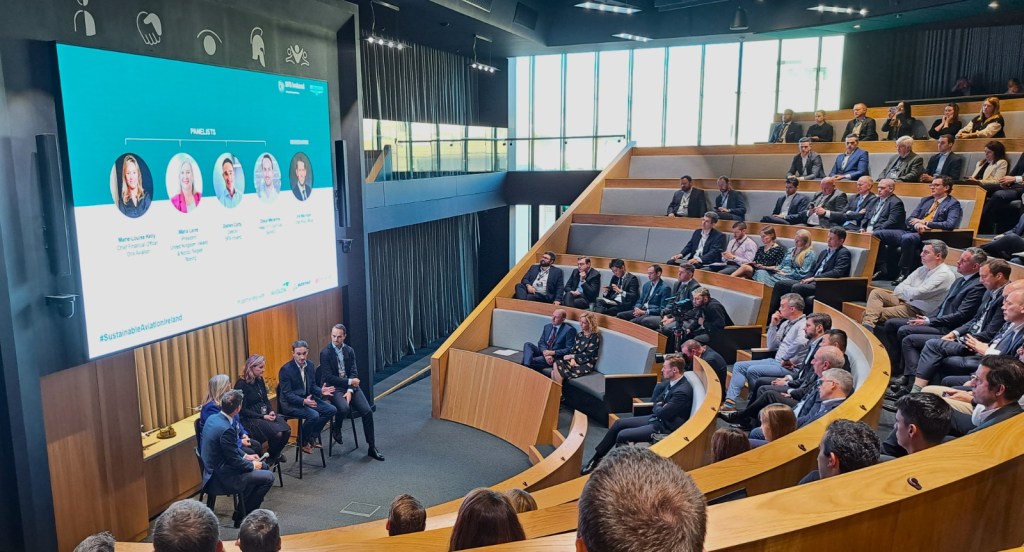
TBR’s Deputy Editor, Petro Visage, sat down with Agnes Thornton, co-founder of Sustainable Flight Solutions (SFS) to explore potential opportunities for sustainable aviation in Ireland.
Founded by Agnes Thornton and Darren Carty, SFS is an innovative project development company focusing on the production of Sustainable Aviation Fuels (SAFs) in Ireland and abroad. SAFs are alternative fuels used in commercial aviation, capable of reducing CO2 emissions by up to 80%. SAFs can be sourced from various materials, including waste fats, oils, greases, municipal solid waste, agricultural residues, and non-food crops grown on marginal land. This newly developed fuel source is considered sustainable as they do not compete with food crops, require minimal additional resources like water or land, and do not contribute to environmental issues such as deforestation or biodiversity loss. Unlike fossil fuels that release sequestered carbon, SAFs recycle CO2 absorbed by their feedstock biomass during growth, reducing their overall carbon footprint.
The firm’s mission is rooted in a shared responsibility to drive the decarbonization of the aviation sector, both regionally in Ireland and on a global scale. By fostering collaborations with industry partners, academia, and technology providers, SFS is actively engaged in research and development efforts.
The Inspiration Behind SFS: A Journey to Sustainability
SFS was inspired by a shared vision for a more sustainable future in the aviation sector. Both Founders of SFS are airline pilots; during the COVID-19 pandemic, fewer working hours enabled the pair to embark on higher education, focusing their research on SAF Life Cycle Analysis and SAF implementation for industry through a post-graduate Diploma in Sustainable Systems Engineering and an MSc in Aviation Management, respectively. As the team expanded to include expertise in aircraft leasing and financing with the addition of Aidan Bodkin as third director, their collective vision for a more sustainable future for the aviation sector came into sharp focus.
Thornton and Carty understood that the aviation industry needed changing if it were to continue. “Sustainability is imperative for the industry to survive in the long run”, Thornton explains. Knowing this, a concerning observation was that while many studies were done on SAF here in Ireland, there was a gap between academia and industry, with significant interest by firms with minimal information. SFS Ireland then started to bring the needed conversations to the table, starting as an advocacy group to spread awareness on SAF and other sustainable practices. Soon, they hosted workshops with academics and stakeholders across supply chains to spark conversations around potential solutions.
Agnes explains that the road to making aviation more sustainable is long and tedious, but initial, encouraging steps have been taken in Europe and world-wide. SFS believes that Ireland has an important role to play in the development of SAFs and are therefore actively engaged in projects to facilitate the transition, from R&D to feasibility studies and policy discussions.
Feasibility Study with SkyNRG: A Significant Step Forward
One significant milestone in SFS’s journey was a comprehensive feasibility study carried out with SAF producer SkyNRG. This study, conducted in collaboration with industry giants Avolon, Orix Aviation, and Boeing, assessed the commercial viability of a Sustainable Aviation Fuel (SAF) production in Ireland.
The EU’s ReFuelEU initiative presently requires a phased elevation in the inclusion of SAF in aviation fuel at EU airports, commencing at 2% by 2025 and ultimately achieving 70% by 2050. Released last Wednesday, the report found that Ireland has the potential to establish a €2.55 billion annual sustainable aviation fuel (SAF) industry, generating over 1,000 highly skilled jobs by 2050 if it meets these targets.
The study, funded by industry leaders, marks a promising step towards reducing the aviation industry’s environmental footprint. That being said, the report accentuates the necessity of executing well-structured policy modifications to enable the comprehensive growth of this industry. It advocates for business incentives, such as tax credits and guaranteed pricing, while emphasising research and development funding and planning process reform. Moreover, the report stresses the need for investment in storage and transport infrastructure, along with public-private collaboration. For an actualisation of a prosperous SAF sector in Ireland, industry players must collaborate in establishing and effectively enacting vital policies. In light of these recommendations, it is worth noting that Minister for Enterprise, Trade and Employment Simon Coveney underscored the government’s steadfast commitment to initiatives focused on emissions reduction in air travel when presenting the study last week.
Overcoming Barriers to Sustainability: The Road Ahead
When asked about the challenges in adopting sustainable practices in the industry, Thornton pointed out a variety of measures beyond just SAF, including improved operational procedures, enhanced air traffic management, and the use of fuel-efficient aircraft and engines. These measures are collectively needed to work towards industry-wide emissions reduction goals.
However, significant progress has been made with the recent ReFuelEU proposal, which mandates SAF use, thus providing a clear direction for the industry. This proposal mandates SAF use by putting an obligation on fuel suppliers to blend a certain percentage of SAF into their jet fuel supply, starting with 2% in 2025, and stepping up to reach 70% by 2050 as mentioned prior. A sub-mandate is also relevant to note, which ensures that part of the SAF is of non-biological origin, so called “synthetic fuels”. This agreement is a significant milestone, as it sets out the ambitious targets from the EU and gives more certainty and clarity to investors and SAF producers alike.
The primary hurdles in advancing sustainable aviation fuels (SAF), Thornton explains, include issues related to scalability, feedstock supply, and insufficient investment due to lingering uncertainties, as the implementation of EU policy requires national-level adoption. While the EU agreement marks an initial step, long-term certainty necessitates the establishment of a robust national policy.
To address these challenges, strategies under consideration involve the implementation of an EU SAF mandate and ongoing policy discussions. These discussions are showing promise in instilling confidence among investors, particularly those involved in capital-intensive SAF projects.
Regulatory Changes and Trends: Navigating a Greener Sky
In recent years, there has been significant regulatory changes pushing for sustainability within the aviation sector some of which include:
1. Renewable Energy Directive (RED III): On September 12, 2023, European Parliament members officially passed revisions to the Renewable Energy Directive (RED III), facilitating the adoption of renewable energy across EU member states.
2. ReFuelEU Aviation Initiative: on October 9, 2023, the EU Council approved the ReFuelEU Aviation initiative as a fundamental component of the ‘Fit for 55’ package, initially introduced by the European Commission on July 14, 2021. The primary objective of this package is to reduce greenhouse gas emissions by a minimum of 55% by 2030, ultimately achieving climate neutrality by 2050.
3. CORSIA Implementation: Commencing from 2027, the Carbon Offsetting and Reduction Scheme for International Aviation (CORSIA) will be mandatory in most nations. Differing from the EU ETS, which sets emissions caps, CORSIA permits emissions to rise while mandating compensation through offsets. In 2022, the EU Parliament and European Council mutually agreed to integrate CORSIA into their emission monitoring framework and gradually phase out free aviation allowances by 2027. Ireland took an active step by embracing CORSIA regulations in 2021 during its initial stages.
However, Thornton emphasises the significance of the Climate Action Plan for 2024, expressing hope for a more comprehensive acknowledgment of aviation compared to previous initiatives. “Unfortunately, Ireland has been somewhat lacking in ambition in this regard, but we are encouraged by positive trends and anticipate the integration of Sustainable Aviation Fuels (SAF) in future climate and transportation discussions,” Thornton explains.
The Future of Sustainable Aviation: Collaboration and Consciousness
Thornton strongly believes that a more sustainable aviation industry is achievable. However, she emphasises that this goal can only be achieved through a collaborative and conscious approach by everyone involved. Stakeholders from all sectors need a clear understanding of the environmental impact of air travel, the opportunities presented by sustainable fuels, and the importance of policy support to aid the transition towards a sustainable future for the aviation industry. The future of sustainable aviation is promising but requires a collaborative and conscious effort to properly meet the state of the sector.
Fostering Sustainability in Aviation: Advice for All Stakeholders
Thornton emphasises the various avenues for bolstering a sustainable aviation sector. Some include conscientious travel, participation in Sustainable Aviation Fuel (SAF) procurement programs, and advancing awareness through education.
Businesses, in particular, can play a pivotal role by setting an example, educating their workforce about the environmental impact of air travel, and exploring pathways to minimise their emissions. Firms should explore corporate initiatives to procure SAF for their business travel needs, thereby stimulating SAF production through voluntary contributions.
National policymakers have been given a clear task by the recent ReFuelEU initiative: to demonstrate commitment to a future SAF industry, it is imperative that they swiftly and consistently implement the regulation on a national level.
While success stories from industry frontrunners such as the Lufthansa SAF program, the SAS SAF Program, the IAG SAF Roadmap, and the JetZero Council showcase the economic and competitive advantages achievable through sustainable aviation practices, Thornton cautions against the lurking threat of greenwashing. Maintaining robust governance and transparency remains essential to empower customers to make well-informed decisions regarding their individual contributions.
Diglot dispatches with traditional methods of language education and makes language-learning fun, engaging and effective for beginners. The company creates books that weave foreign words into English sentences so that readers can learn languages while reading classic novels like The Great Gatsby, Sherlock Holmes or Pride and Prejudice. Evan McGloughlin and Cian McNally, Diglot’s co-founders, discuss the story behind the language-learning start-up.
The Team
Evan and Cian live five minutes down the road from one another in Skerries. They played rugby together as children and, after going their separate ways for a few years, found themselves back together again as teenagers in the Institute of Education. They both went on to study at Trinity – Cian in psychology and Evan in neuroscience – where the idea of Diglot began to form towards the end of their penultimate year. The team came up with the business name as well as the concept of their first book, Learn Spanish with Sherlock Holmes, which was published in June 2020. By the end of the year, they had launched the Diglot website and sold over 500 books.
Cian has always been interested in language-learning; he recalls how one evening he began talking with a linguist at a party, who told him about research projects taking place in South Africa. These projects showed that the best way for children to learn languages in a classroom setting is for a teacher to speak in different languages. Following on from further research into the study, Cian found that the best way to learn languages is to read novels that mix languages together. However, the problem is that this method of language-learning is not available to beginners. Cian sees language-learning as simple for intermediate or advanced learners; all they must do is read a book or watch a movie which ‘will get you insanely good, insanely quick’. Meanwhile, beginners must study lists of vocabulary, memorise grammar rules, and read small sentences instead of stories. This led to the idea of Diglot, which aims to bridge this gap and cut out the textbook form of language-learning. As Evan says, Diglot is about ‘making language learning accessible to people who maybe traditionally do not like language learning’ by allowing them to acquire language subconsciously through reading a book.
Where They Are Now
The Diglot team spent the past five months in Spain, where they were able to keep their burn rate low whilst delving into Spanish culture. The base location of the company is subject to change depending on different programmes and projects. As Evan says, Diglot is a ‘very multicultural company so it makes sense for us to travel around the place’. Cian agrees that ‘we can be anywhere in the world working away, which is a real privilege’.
There are ‘a lot of pieces to put together’ in creating a Diglot book. The novels Diglot use are all public domain and out of copyright, which makes the script easily accessible online. The text is sent through an in-house algorithm, which was developed by Diglot’s Head of Research and Development, Oisín Morrin. This produces a script weaved with foreign words, with the percentage of weaving dependent on the difficulty level of the book. This script is then sent to a translator who restores the nuance and ‘beauty of the language’ and is edited and proof-read several times before being sent back to the team. The design process is usually carried out by Evan, who arranges the chapter headings and grammar lists in accordance with a prescribed template. This script is then sent to a cover designer, who designs the front cover and back page of the book. Once this is completed, the script and cover are uploaded to a book publisher who manufactures and distributes the book.
In terms of marketing and promotion, the Diglot team are of the view that they were ‘pretty lucky early on’. The books got ‘unbelievable promotion’ from the ‘bookstagram’ community on Instagram. This community is made up of influencers with between 20,000 and 100,000 followers that share books on their account. This created a ‘very positive-sum relationship’, as Diglot were able to get great promotion and the bookstagram influencers were able to get engaging and innovative content.
In February 2021, Diglot secured a spot in Tangent LaunchBox Accelerator, a competitive summer programme run by Trinity which provides mentorship, funding and a collaborative environment to Trinity students with a start-up business. Evan says that the advantages of the programme are ‘insane and incalculable on multiple dimensions’. Although the team is awarded funding, this is ‘secondary’ to the connections and the network that they build. Not only were they able to get free legal advice that was ‘unbelievably beneficial’, but they were also able to access business mentors that they were able to consult with and talk to each week. As Cian notes, one person or one piece of advice can ‘fundamentally change your business’. The entrepreneurial environment provided by LaunchBox also had a positive impact on the Diglot team. Evan talks of the ‘constant positive reinforcement’ from being around like-minded people, reminding that ‘you can actually build something and have an impact on the world’. Cian agrees that having that support and group of friends has had a positive impact on his mindset and that ‘mindset is everything’ when it comes to running a start-up.
Evan says that one of the most challenging aspects of the start-up has been ‘figuring out leadership, how to manage people, and how to get the most out of people’. With 80 translators in over 20 countries around the world, leadership and management is ‘really important’ for the Diglot team. The style and tone of leadership plays into what the business represents and what it seeks to accomplish. It is important to manage people in an effective way but also in a way which enables them to excel, grow and learn. Evan identifies this as the ‘biggest challenge’, especially in the current online environment; organising people and managing relationships over Zoom is ‘challenging’ and ‘hard to get right’. When asked about the key success factors of the business, Cian recognises the importance of having software to manage people. The Diglot team utilises Notion, a project-management software which helps to take cognitive energy off the team. This has helped the company to automate all cognitive work and manage the multi-part production process at Diglot.
Plans For The Future
Diglot is expanding its book titles and languages every week. The team currently have books in Arabic, Hindi, Mandarin and Japanese in production. For the first time, a person will be able to pick up the Great Gatsby and at the same time pick up a few words of Japanese or Mandarin. As Evan says, ‘that is just not a thing that has existed up until now’. The Diglot team also plan to work directly with authors and weave their books in some exciting projects they have coming up. They also hope to expand into audio books, so that a person will be able to listen to their favourite story in English with foreign words weaved into the audio. The goal of the company is that a person will be able to bring any book, either fiction or non-fiction, and weave the book using Diglot’s system. That person would be able to nominate their language and difficulty level and then start reading from day one. It will be exciting to see how Diglot will continue to reimagine language learning and make it more accessible, engaging and fun for beginners.
Over 30 million people around the world are registered on Depop; a ‘community-powered fashion ecosystem’ where users can buy and sell pre-loved clothing. 90% of these active users are under the age of 26, reflecting Generation Z’s interest in sustainable style and vintage fashion. Most Irish users will be familiar with The Doyle Twins, who pride themselves on being ‘sustainable as well as affordable’. In 2020, the account became one of the first verified Depop sellers in Ireland and has continued to grow in popularity with 39 thousand followers as of October 2021. Speaking with Isabel and Emily-Jane, Trinity Business Review gains insight into the story, success, and future of The Doyle Twins.
The Team
The Doyle Twins is managed by twins, Isabel and Emily-Jane, who became interested in vintage fashion in their teens. In 2018, the twins decided to clear out their wardrobe and sold some old items on their account. Within a few months, they found themselves regularly selling clothes on Depop and by 2019, the twins were buying with the ‘exclusive aim of promoting sustainable vintage fashion and selling for a profit on Depop’. It was initially the look of vintage clothes which sparked the twins’ interest in pre-loved fashion. However, as they became aware of the negative impact the fast-fashion industry is having on the environment, the twins committed to buying only second-hand clothes. Although they did not set out to build a business, Isabel and Emily-Jane soon recognised the business opportunity before them and began to consciously build their brand: The Doyle Twins.
When asked about the popularity of Depop amongst young adults and students, the twins attribute the growth of the platform to a few things. Firstly, an increased awareness of the adverse impact the fast-fashion industry is having on the environment. Secondly, Isabel comments that there has been ‘a societal shift towards second-hand and vintage clothing being embraced as trendier’. Although people may have veered away from wearing charity shop buys ten years ago, now it is considered ‘the epitome of cool’. Isabella Vrana is a big style icon for the twins, and people often joke that they dress like Mary-Kate and Ashley Olsen (which they take as a compliment!). Thirdly, the Covid-19 pandemic and prolonged periods of lockdown have driven consumers towards online shopping platforms, especially Depop. Although these factors have contributed to the ‘natural development’ of the business, the key driver behind the success of The Doyle Twins is the team’s constant ambition and innovation.
Where They Are Now
The Doyle Twins is currently based between the twins’ family home in Rathmines and their student accommodation on campus (which is conveniently located just around the corner from the post office). As both twins are in final year, Isabel in law and business and Emily-Jane in physiotherapy, they ‘try not to let the work build up’ by spreading it out evenly across the week. The divvying up of tasks depends on how busy the twins are; this flexibility highlights the brilliant teamwork which exists between the pair. When Isabel is working, Emily-Jane can fill in; and when Emily-Jane is on placement, Isabel can step up.
In the start, they thrifted all their stock in Ireland. However, the restrictions to in-person shopping brought about last year forced the twins to alter their supply chain and now the business sources approximately 50% of its stock from the UK. The Doyle Twins has a structured system in place. All newly purchased and unlogged stock is stored in specific boxes on arrival. Most days the twins photograph new items together for the account. Once photographed and logged, these items are then moved to a separate box or rail. Once an item is sold, it is moved to the “to be posted” box before being sent off to its new wardrobe. Twice a week, one or both of the twins package and post the items of clothing. Usually, Isabel takes on the biweekly post office trips, whilst Emily-Jane manages the online activity of the business. However, the work often does not exceed an hour a day and the twins make sure to take the odd day off!
When asked about the impact Working From Home and Covid-19 has had on the business, the twins are of the view that the pandemic definitely had a positive impact on The Doyle Twins. Emily-Jane comments that the growth of the business can be directly related to people being forced to buy online as in-person retail closed. Nonetheless, when the economy began to re-open, the twins retained business and customers due to the strong brand they had established.
However, the business journey has not been without its challenges. Over summer 2021, the business faced ‘a period of tension’ when both twins moved out of home and away from the office. Emily-Jane was living full-time in Cavan and on placement in Monaghan; Isabel was living on the other side of the city working over 40 hours a week in an office job and ‘madly training’ for the national rowing championships (which her team won!). Despite the difficulties faced running the business during this period, the twins got through it and are now back together living on campus.
In light of the busy year ahead, the twins emphasise the importance of ‘having a routine’ and ‘good time-management’. When asked about the key factors to The Doyle Twins’ success, Isabel is of the view that their price point resonates strongly with buyers, especially students. They recognise that people may be dissuaded from buying sustainable fashion pieces by hefty price-tags, opting for cheaper and poor quality fast-fashion items. However, The Doyle Twins make sure to offer sustainable and high-quality clothing at a relatively low price point. Isabel also notes that their brand name, The Doyle Twins, is ‘very strong and quite recognisable’.
Plans for the Future
When asked about the future of the business, Isabel comments that they are ‘taking it one day at a time’. Emily-Jane is considering a career as a chartered physiotherapist, whilst Isabel may pursue a career as a solicitor. However, the twins have also discussed taking time out after college to focus on the business. The aim would be to organically scale the shop and bring the account as close as possible to larger sellers, based in the US and UK. When asked about other Depop accounts, Emily-Jane says that ‘the top sellers on Depop have an amazing community’ and frequently ask each other questions or give advice. The Depop market would appear to be relatively uncompetitive compared with other business environments. However, the twins have yet to see where the business takes them. Emily-Jane comments that the only thing they know for certain is that they cannot predict what the future has in store. Nonetheless, they are unlikely to see business slow down any time soon as sustainable and vintage style continues to stay in fashion.
Get In Touch
For further information (or fashion inspiration), get in touch with The Doyle Twins on Instagram or Depop.






 Trinity Business Review