Author Archives: TBR Team

Leading AI: What’s Next for Nvidia? 
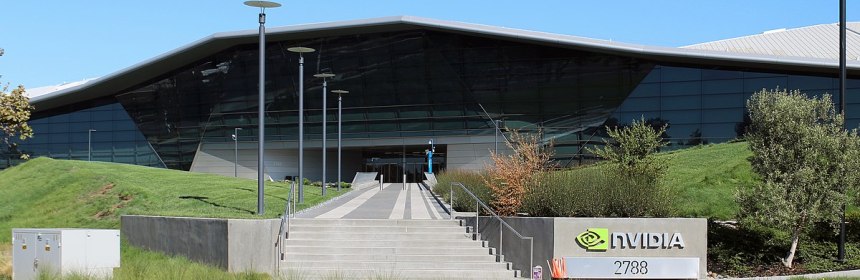
Sean Gleeson 

In recent years, artificial intelligence (AI) has completely transformed our way of living, from how we learn to how we work. AI has been especially attractive to students; stressing over a convincing email for an assignment extension or thinking of a new business idea for a social innovation class has now become automated. But how did this all come about?

Background

Nvidia, a company dominating the AI world, is largely responsible for the rapid rise and recognition of AI. Founded in 1993 by current CEO Jensen Huang, Nvidia has been described as the ‘world leader in chipmaking’, explaining their control of just under 90% of the AI market. 

Nvidia manufactures graphics processing units (GPUs), which today are in soaring demand as they are the key feature of countless generative AI applications and models. These GPUs are more energy efficient and better able to handle sophisticated computing demands than CPUs (the traditional form of computing), making them suitable for AI applications like ChatGPT. At the heart of this chip manufacturing are enormous factories in Taiwan, the size of several football pitches that alone produce almost 90% of the world’s chips. TSMC (Taiwan Semiconductor Manufacturing Company), currently the world’s 9th largest company,  has a very close relationship with Nvidia as the manufacturer of its microchips. 

With these data centres and such an extensive roster of chips, Nvidia has gained more than just an edge over its competition through its pricing power. This has allowed its domination in the chip market as a B2B company, climbing to become the one of the most valuable corporations globally. Despite their massive growth and success, many consumers still have not heard of Nvidia, even when the company’s value matches other tech giants that have been dominating markets for decades. 

Scaling & Growth

Nvidia’s rapid rise in recent years makes it difficult to predict its next steps – most experts predict that a smaller level of growth will be maintained and that Nvidia will establish itself as one of the long-term stalwarts of the tech world and stock market alike. In the last 5 years, the company’s market value has shot up by 700% since the uptake of generative AI in early 2021. 

This type of rapid growth is extremely rare and should be handled with caution; such intense growth behaviour is unsustainable and could end in millions of lost investor equity. Indeed, in 2024 it has been easily the most volatile stock of the large companies on the market, with some citing the stock as more volatile than Bitcoin. Share price plunged by 23% during the last 3 weeks of July amid regulation breach allegations, and on the 5th of September Nvidia’s stock value declined by 9.5%, described as one of the worst days in the history of the stock market. 

Competition, or Lack Thereof?

As in any market, the company’s future success also depends on the actions of its competitors. With Nvidia’s positioning, the market is rather monopolistic. However, with companies like AMD recently forming an alliance with Intel and Cisco to develop an open standard for high-speed communications between AI chips, the competitive landscape is growing. The fact that three companies of such scale are coordinating to try to catch up is telling of how far ahead Nvidia lies in the AI world. 

Companies like Amazon and Meta are now looking at developing their own chips, putting massive capital expenditures into AI research and development. Nvidia will most likely benefit from some collaboration here; Microsoft, Meta, Amazon and Alphabet (owner of Google) make up 40% of Nvidia’s total revenue. With industry reliance comes a great deal of power, which can become excessive in the wrong hands. It may not necessarily be a good thing for AI development if Nvidia continues to be the dominant, monopolistic leader. With an investigation from the US Department of Justice for acquiring startup run.ai, Nvidia’s subtle yet aggressive business model could inhibit R&D efforts and healthy competition in the AI sphere.

The greatest issue facing Nvidia’s momentum now does not necessarily lie in its competition, but rather its supply and demand. Demand for chips is sky-high; companies that Nvidia sell to at mass scale, including Amazon and Meta, require hundreds of thousands of chips for their operations. Despite the size of the Taiwanese data centres and factories, and the efficiency of them, it is naturally difficult to meet such demands in a timely fashion. The capabilities of the suppliers must keep up with demand trends, a difficult task considering increased consumer expectations.

Where Next?

A potential influence on future performance for Nvidia lies in the political landscape. From a demand side, there may be further US barriers to Taiwan-imported chips to promote the use of domestic production, something former-president Trump has alluded to implementing if he wins the upcoming election. European countries are also looking at implementing such trade barriers. Additionally, from Taiwan’s side, their proximity to China could be a threat in the future, as China too is looking to mass-produce chips in the future.

At the moment, Nvidia certainly has the right blend of operations and strategy to thrive as the AI market leader. Its relationship with TSMC provides remarkable efficiency in the supply of products, and despite difficulty to meet the demands of tech companies, few other providers have the propensity to come close to supplying what is needed. With 88% of the world’s GPUs and a dominant strategy, change is unlikely unless regulators intervene heavily. From an AI development perspective, broader choice and lower costs would be desirable, however Nvidia investors will be happy to stake their claim if no serious competition surfaces. It seems fair to say that, despite the turbulence and volatility, the stock is a favourable choice for returns; strong revenues look set to continue, and even if growth declines, a small level of sustainable growth appears to be easily attainable. So, it seems that what Goldman Sachs strategists have called the most important stock of the year will continue to thrive in the future despite its challenges.


Shifting Consumer Habits and the Fall of Ireland’s Suburban Retail Hubs

Jessica Weld

The noble Irish shopping centre seems to be a dying breed, especially in suburban areas. The Irish Independent has reported that a deal has been struck for the sale of The Square shopping centre in Tallaght by its current owner Oaktree Capital Management for €130m –  a dramatic drop from the €250m that Oaktree bought it from NAMA for just six years ago. When reading this news, it made me think about how commercial retail property previously held so much significance in the economic development of communities around Ireland. 

Shaping Tallaght: The Square as a Retail Landmark

Anytime I think of The Square specifically, I remember my mother telling me about how enamoured she was by it when it opened. She grew up in a small village in rural County Wicklow and to her, The Square was like nothing she had ever witnessed before. This new concept of a “shopping mall” that she had only seen on American TV shows was an extravagance that she never imagined would make its way to Ireland in the 80s and 90s.

For something that at the time may have seemed like an Americanised gimmick, The Square boosted economic and community development in Tallaght at a rapid pace. Being the first major development in the Dublin suburb, it kickstarted the domino effect which grew Tallaght into the sprawling community it is today, studded with institutions like Tallaght University Hospital and the TUD Tallaght campus. 

Aside from the economic development of the town, The Square helped to shape a community in Tallaght. It provides employment and a third space for people of all ages to hang out. You’ll find that the people of Tallaght are immensely proud of The Square too. One time in a conversation with a Tallaght native, I made the ill-fated throwaway remark “There’s nothing really in The Square, is there though?” – Oh was I wrong! The site sits as more than just a shopping centre, but rather a cultural landmark of sorts.

A Changing Brick-and-Mortar

This may look like it’s turning out to be a love letter to Tallaght. It’s not. In an environment where residential property values are running high and inflation is crippling, it’s baffling to see that an established commercial retail property like The Square taking a 48% hit in value. 

One of the main contributors to this has been the overall change in consumer habits post-Covid-19 pandemic. Online shopping comes with the benefits of wider choice, hassle-free returns and of course the comfort of shopping from home, the office, or the Dargan lecture theatre (we’ve all done it). With such convenience on offer, less and less consumers are opting for traditional retail. 

In other words, the rise in online shopping accompanied with lower footfall due to changing lifestyle habits such as remote working offers little incentive for consumers to shop in brick-and-mortar locations. In a June 2024 report from Dublin Economic Monitor, Dublin city centre is still 20% behind on footfall in comparison to 2019. With such little footfall in the bustling city centre compared to pre-Covid times, I imagine that suburban areas must be feeling the same (if not worse) effect. 

The Future of Irish Retail

The current state of the economy and consumer worries are also playing a part in the decline in demand and subsequent fall in value of commercial retail property. PwC’s 2023 Irish Consumer Insights Pulse survey reported that 45% of Irish consumers are very concerned about their personal financial situation. Furthermore, It is expected that consumers will curb any discretionary spending that they can. For me personally, this means avoiding the likes of Penneys and Zara at all costs.

While Dublin city centre’s retail districts will survive through these trends to an extent, it’s plain to see that smaller suburban hubs probably won’t fare as well through this trend. As many shopping centres like The Square dramatically fall in value, the outlook on commercial retail in Ireland looks bleak and disappointing. This does not just mean a loss of places to shop but small gradual losses in the foundations of communities across Ireland.

What Anna Delvey’s Ankle Monitor Can Teach Us About Marketing Strategies

Chloé Asconi Feldman

At this stage, it is unlikely that one is active online or in the pop culture sphere without knowledge of the convicted con-artist-turned-socialite Anna Delvey. Recently making her debut on Dancing with the Stars with her bedazzled ankle monitor, Anna Sorokin, known familiarly as Anna Delvey, is known for posing as an upper-class heiress to the New York elite and swindling hundreds of thousands of dollars, eventually finding herself in jail for almost four years on the charge of grand larceny. Despite her criminality, Anna Delvey has been taken on by the general public as a new socialite, featuring on magazine covers and even gaining support from the “Eat the Rich” movement. The narrative surrounding Delvey is fascinating in itself, but her recent rebrand from con to dancer can also offer valuable insights into effective marketing strategies.

Scheming to Streaming: Swindling Scarcity

I had never given much thought to the television series Dancing with the Stars, but upon learning that Delvey would feature in the upcoming season, I found myself suddenly intrigued. This is because Delvey holds an air of alluring exclusivity; with her jail time and limited public appearances, seeing her on a television series increases the appeal of tuning in and engaging with show material. This phenomenon resembles the scarcity principle of marketing, a strategy where marketers urge customers to engage with a good or service based on its finite nature, whether numerically limited or seasonal. 

A brand notorious for its scarcity marketing is Hermès and its infamous Birkin bag. Social media frequently showcases celebrities carrying their Birkins as everyday bags; however, if one tries to buy one in a Hermès store they are met with a waiting list with an indefinite length. This scarcity of the product is what makes the Birkin so notorious, compared to other high-end designer bags – consumers are willing and able to wait to obtain a status indicator. This technique encourages customers to buy a product or service because it feels exclusive. In the case of Delvey and her limited public appearances, this comes in the form of television viewership.

Influencer Marketing: Controversy or Commonality? 

As controversial as she may be, Delvey proves once again how successful influencer marketing can be. Reaching just over a million followers on Instagram, the brands that Delvey partners with inevitably reach a wide audience. Yet what differentiates Delvey from other influencers is her status as an ex-con artist and her blurry public image. What makes influencer marketing especially differentiable is when an influencer with an indefinable allure posts about a product, compared to the typical state of the influencer world, which is plagued with fast-fashion and superficiality. 

As a brand, choosing Delvey to promote your product may seem controversial and ill-advised as she is an ex-con artist, but there is no denying the reach and influence that her posting about products would have. By simply bedazzling her ankle monitor, the concept has gone viral on social media with many claiming Delvey as their Halloween costume inspiration. By crafting a sensationalist, American-dream presenting image, Delvey stands out among influencers and those interested will seemingly follow along. 

Embracing Infamy: Brand Personas

Another marketing strategy that Delvey has executed to improve her personal brand is by embracing her controversy rather than ignoring it. While her story went viral when she was arrested in 2017, the Netflix series Inventing Anna, which documented the story of Delvey and her arrest, made it practically impossible to know about Delvey without associating her with scamming, scandal and fraud. Instead of shying away from this track record, Delvey’s Instagram bio states, “this is not financial advice”, and her bedazzled ankle monitor seems to embrace her criminal past rather than sweeping it under the rug. 

This strategy is nothing new to the world of brand management; in recent times, companies are more willing to face their criticism head-on. Ryanair for instance is a champion in the social media sphere for being bold and abrasive when considering promotion and CRM. However, this has only augmented the attention the airline receives over social media, as their cavalier remarks are in line with the brand’s persona – bare, no-frills and to the point. For Delvey, the choice to lean into and accept her criminal past creates a more authentic personal brand that invites discussion and publicity, whether good or bad. Whether talking about a convicted conwoman or an airline, there is truth in the effectiveness of using humour and marketing to address criticism rather than sugarcoating it.

Overall, Delvey’s rebrand –and her ankle monitor– offer insights into contemporary marketing strategies. She has been able to maintain the spotlight while capitalising on her controversial past and creating a personal brand, whether you love it or hate it. By using influencer partnerships, the principle of scarcity, and embracing her past, Delvey has demonstrated that even the most unexpected elements may play a significant role in the marketing narrative, including a bedazzled ankle monitor and a dance routine.

Leveraging AI in Digital Marketing

Anirudh Singh

As technological and social advancements sweep the globe, the digital marketing industry is expanding rapidly. Every day new developments in the industry appear, and artificial intelligence is no exception. AI has revolutionised the path for digital marketers; by leveraging AI in digital marketing, professionals can employ data-driven strategies, enhanced personalisation and customer targeting, improved efficiency, and cost-effectiveness, gaining real-time data insights for campaigns. Therefore, understanding the role of AI in digital marketing has become incredibly significant not only for marketing professionals but also for firms to gain a competitive edge.

Artificial Intelligence: A Background

Before delving into the application of AI in digital marketing, it is first important to highlight its history. Putting it in very colloquial terminology as many know, AI is a form of technology that has the potential to think and act like humans and complete assigned tasks in mere seconds– those which humans may take hours to complete. The evolution of AI in digital marketing is not an earth-shattering development; the phenomenon can be dated back to the 1950s when researchers applied linear programming and game theory concepts to predict consumer trends, transforming into neural networks in the 1970s. In the late 1990s and early 2000s, the boom of the Internet and E-Commerce opened the door for online marketing and advertising. From 2010 onwards, the advancement of machine learning, big data, the Internet of Things, and SAAS have changed digital marketing algorithms completely; now, marketers can leverage AI such as Chat GPT, Copilot, and many other AI-driven tools to complete tasks that would previously require many hours of labour.

Impact of AI in Digital Marketing

The impact of AI in digital marketing is very profound and visible in nearly every corner of the industry. For instance, AI has impacted the process of social listening and target marketing, especially using software like Emplify where marketers garner insights and data under one roof to streamline data management. Similarly, for search engine optimisation and content creation, AI can extract metrics from search engine databases in turn helping in the creation of content for target audiences. To enhance effectivity, AI also has a profound impact on email marketing and paid Google, Meta, Instagram and LinkedIn advertisements by formulating crafted content to audiences via optimisation of ad bidding strategies based on factors like behaviour, device type, and location. 

Benefits of Using AI in Digital Marketing

Before discussing the challenges and ethical considerations of the technology, it’s important to discuss the benefits of using AI in digital marketing. As much of the industry is aware, AI has many benefits for digital marketing; some of the most significant, however, are as follows. All of these benefits need to be properly acknowledged before a deeper discussion on the topic moves forward.

Prediction of Client Behaviour

For any business to grow, it is incredibly important to understand the behaviour of its client. Here, AI plays a vital role by making these efforts simpler and more cost-effective for marketers. AI tools can use statistical decision trees to understand customer behaviour, review past data, and suggest the best marketing strategy for marketers to better understand current and potential consumer patterns .

Customer Engagement

Understanding customer engagement is a challenging task for any marketer or agency;  it is frequently said that customer acquisition cost is far more than retention cost. Using AI-driven tools, marketers can scope out which customer segments they have to target to get the maximum acquisition. AI can also help them to track what each customer wants based on behavioural patterns, thus providing a blueprint for effective engagement that appeals to emotions.

Target Audiences

Selling a good or service to an unknown consumer is a very challenging and frustrating task. Traditional marketing saw the analysis of data and consumer preferences manually to target customers and sell their products; however, with the advancement of AI targeting customers and strategically segmenting them has become less time-consuming and more cost effective. Seemingly, all marketers need to do is feed their consumer data into AI which in turn generates tailored content, preferences and strategies to target the different segments who are interested in buying the product, thus broadening possibilities for marketers to strategise. 

Automation of Repetitive Tasks 

AI not only helps marketers and companies to engage the customer and target audiences but also helps to automate repetitive tasks. Through AI, marketers now automate pay-per-click (PPC), content for email marketing, search engine optimisation (SEO) and potentially social media content, which could have been traditionally laboursome and repetitive prior to AI’s initiation.

Customer Relations

Customer Relationships are all about loyalty and customer support, and AI has proven itself a strong candidate in maintaining these relationships. With AI assistance companies can gauge customer relationships that would require human capital traditionally. For instance, many companies have employed AI as the preliminary feature for aiding consumer queries in a format similar to texting. Although beneficial for cutting costs in many regards, employing AI for managing customer relations must be dealt with in a conscientious manner, as consumers often prefer human contact and possess queries that go beyond the scope of artificial means.

Overcoming Challenges and Ethical Considerations

One of the biggest challenges with AI’s use in marketing is the issue of transparency. In 2018, Amazon came under backlash when its AI recruitment platform collected the details of male and female candidates and favoured male candidates. Later on, Amazon relinquished that particular AI tool, but its use raises questions about transparency and bias in recruitment. If companies are using AI to collect data, they should remain transparent and inform people well ahead in advance about the purpose and application of their data collection.

Another challenge of using AI is privacy. Before collecting data to be used by AI, customers have the right to know how their data will be used and if they want to step out from this data collection. For instance, in 2020 Google was under attack when it collected the details of children under the age of 13 from YouTube without their parental consent and was fined 170 million dollars from the Federal Trade Commission. For marketers to employ AI, they must do so in a way that promotes accountability and ethical practices.

Bias is another common limitation to artificial intelligence. For instance, AI can be biassed if a marketer feeds the biassed data into it, which in turn yields untrue results which may be employed in a misconstrued way. Additionally, creators of AI software may possess inherent biases which in turn is implemented into the behaviour of their platform. For instance, AI’s use in creating photographs has perpetuated stereotypes, as seen in advertisements from EPIC museum in Dublin. Fact hallucination, reasoning errors, and use in creative sectors less driven by numeric data are all considerations that must be addressed and accounted for by marketers employing AI effectively. As such, knowledge of the technology’s limitations at the same level of its strengths is paramount to leveraging its use in marketing successfully. 

Future Trends and Challenges of AI in Digital Marketing

To conceptualise the future for AI and digital marketing, one can turn to the words of a key researcher in its field. “When it comes to how AI is shaping the future of digital marketing we need to understand its current role in digital marketing. AI not only helps us to understand consumer behaviour or enables tailored content, it’s also a great tool that enables marketers like us to anticipate future trends and needs.  But challenges are always there and will always remain there such as data privacy and biases and therefore to strike a balance between them and to ensure we remain on the right path is the hour of need for every digital marketer”, says Dr. Eamonn O’ Raghallaigh, PhD and Digital Strategist at Trinity College Dublin. As such, employing AI in a way that keeps the consumer at the heart of operations in an ethical manner can be extremely beneficial for garnering a competitive edge in the evolving marketing landscape. By employing its usage in relevant and ethical spheres while acknowledging and diverting its disadvantages, marketers can improve ROIs, provide valuable insights, and better target their consumers.

Foresight Business Breakfast: Insights from Carolan Lennon & Pioneering Equity in the Tech Sector

Ayesha Ahmed & Michael D. Mooney 

The recent Business Breakfast hosted by TCD Foresight Business Group featured speaker Carolan Lennon, Country Leader at Salesforce Ireland. Ms. Lennon, known for her trailblazing efforts in the tech industry, shared her insights on the transformative power of education, the values that drive Salesforce, and the importance of diversity, equity and inclusion within her speech. Additionally, the breakfast provided a space for getting to know professional Trinity alums who are excelling in their field and were open and ready to help current students with their questions concerning business, the job market and politics. 

In her address to the breakfast attendees, Lennon shared her experiences as a woman in a historically male-dominated field, and the significance of her work in shaping the future of business in Ireland. For those who couldn’t attend, here were Lennon’s main talking points:

Education as a Game Changer

Ms. Lennon emphasised the pivotal role of education as a game changer in her professional journey. Having studied computer science at University College Dublin (UCD) in the 1980s, Ms. Lennon recognised the need to broaden her knowledge base and pursued an MBA at Trinity College Dublin. This proved to be an invaluable decision, equipping her with the skills and mindset necessary for success in the ever-evolving tech industry.

Salesforce’s Customer-Centric Approach

Ms. Lennon shed light on Salesforce’s unique approach as a customer centric company. Since its inception in 1999, Salesforce has been at the forefront of customer relationship management (CRM), revolutionising sales, marketing and commerce. The company prides itself on bringing customers and companies together by fostering trust, promoting equality and championing sustainability. Salesforce’s commitment to social impact is evident through its pledge to donate 1 percent of its profits, time and products to charitable causes, accounting for nearly $800 million USD in donations to date.

Breaking Barriers and Building Networks

Transitioning from the telecommunications industry to technology, Ms. Lennon faced the challenge of rebuilding her professional network. She emphasised the importance of owning one’s career and taking action, advocating for clear communication with superiors about career aspirations. Her experience highlights the significance of not only focusing on learning new technologies but also actively nurturing relationships and seeking opportunities beyond the confines of one’s daily work.

Diversity, Equity, and Inclusion

Ms. Lennon passionately discussed the importance of diversity, equity, and inclusion (DEI) in the workplace. Citing research and results, she underscored the positive impact of diverse teams on performance. She recounted her experience at a previous organisation where she helped in transforming the gender ratio from 9:1 to 1:1. Additionally, she acknowledged the need for greater diversity not only in terms of gender but also in terms of socioeconomic backgrounds, emphasising that true diversity extends beyond surface-level differences.

The Rise of AI and the Future of Business in Ireland

Looking ahead, Ms. Lennon identified artificial intelligence (AI) as the next major technological evolution. While acknowledging the increased interest in AI adoption among CEOs, she highlighted the importance of understanding its ethical implications and ensuring its accessibility and applicability. She also emphasised the need to address biases embedded in AI technologies, which often mirror the biases present in society. The future of business in Ireland, particularly in the tech sector, is heavily influenced by ongoing developments in AI.

Irish Women Breaking Barriers

As a woman diversifying a historically male-dominated field, Ms. Lennon encountered her share of challenges. However, she found a supportive environment at Salesforce, aligning with the company’s values of equity and inclusion. Her advice to aspiring professionals, particularly women, is to actively engage in extracurricular activities such as networking groups and to assertively communicate career aspirations to supervisors. Research on workplace dynamics and statistics on women’s experiences in Ireland can shed further light on the progress and areas for improvement.

The Referendum and the Changing Workplace Landscape

In light of the recent referendum concerning women and working from home, her insights become even more relevant. The evolving workplace landscape demands a renewed focus on equity, flexibility and inclusivity. As Ireland seeks to create a more balanced and empowered workforce, her experiences and perspectives serve as valuable touchstones for progress. 

Conclusion

Throughout the breakfast, Ms. Lennon delved deeply into her journey from telecommunications to technology, exemplifying the power of education, resilience, and a values-driven approach. Her experiences combined with the engaging conversations of Trinity alumni helped foster a sense of community, and a reassurance that yes, other people who went through the similar courses did find light at the end of the tunnel. Thank you to all participants who helped students gain an insight on how to actively pursue career opportunities, and contribute to a more inclusive and innovative future for businesses in Ireland and beyond.

« Older Entries Recent Entries »