Author Archives: TBR Network

The Skill of Getting a Seat on the Train – How Will it Help Once You Graduate?

Eva Rapkauskaite

All of us at least once in our lifetime had to run for a train or a bus, and 100% had to look for a seat wherever it be on: a train, a bus or on an airplane.
So how will this stress help YOU later in life?

  1. Firstly, and probably the most important reason is that you will know how to be faster and think quicker.
  2. You will have your own strategy of getting a seat.
  3. Sometimes YOU will be ruthless and will get a seat before someone else.
  4. Understand people’s body language and calculate the situations.
  5. Be nice and give up your seat to older people/people who needs it – genuine and empathy
  6. Don’t care what anyone else thinks!

What makes a successful Managing Director (MD) or Chief Executive Officer (CEO) of the company? Definitely not just a nice, black suit but something more… like ability to empower others, showing competence and being comfortable with chaos. So, listen up:

Critical thinking is one of the most important abilities in the business world. Someone with ability to think critically and quickly can separate not useful data from the important one and make a use of it. This helps to solve the problems faster and more efficiently, and that’s what the world of work wants.

  • Once you are on the bus, just paid with your Leap card and well now it’s the time for a seat and you being a lazy student don’t want to be standing for the next 20 minutes, also it’s the rush hour!
  • So, what do you do? You look around and bingo there is a seat at the very end of the bus, you think fast and quickly walk to that seat before anyone else does and BRAVO you just thought critically!

Having a strategy is also very important and knowing how to plan and take care of your business is what will make YOU and your company successful. Those CEOs and leaders that recognized the value of having a strategy and made the commitment of time and resources to manage its execution – improved their company performance by a lot.

  • How does it link back to getting a seat on the train? Well once you buy a train ticket in a rail station and you did not book a seat online, you are already thinking: ‘Will I get a seat?’. Go over your choices: you have four coaches, so which one will be the fullest? Which one will be the emptiest? You choose coach D and BRAVO you do get a seat using your strategy – relax and enjoy the trip!

It’s often said that the most respected leaders are considered by many to be ruthless and heartless. Great leaders have to be tough and decisive. Most of the time their decisions will displease many, but they can’t effectively lead if every decision is the result of democracy (or can they?). It’s very easy to stay popular when you listen to everyone, but rarely will this drive a large company to success. Leaders must make the decisions taking all the data and information to an account. At the end of the day – they have to lead the way or step aside.

  • We are once again on the bus or the train and guess what you got the seat ten seconds before someone else did, so now they are standing, and you are sitting. Happy times for you, sad times for them. This is a cruel world after all…

One of the most important part of communicating is body language, it makes up most of what we use to communicate and is generally much more accurate a judge of meaning than are the words. This is one of the first things people will notice when they meet you. Believe it or not, being able to read body language can help in life, especially in business world. Have you ever taken a moment to think about what you are saying with your body language?
If you haven’t, then now is the time:

  • Smile and be confident
  • Be interested and listen carefully
  • Direct eye contact
  • Sit up straight
  • Nod when listening to someone speak
  • Relax
  • Keep your head up
  • Do no cross your hands!
  • When you get on the bus, you look around and see some people are standing and some people are sitting, you read the body language of others and understand when it is the time to move and get that seat of yours.

Surprisingly to be a good leader, you need to have empathy and be understandable. When you are at the top of the pyramid, it’s hard to find people who you can trust, so being nice always helps. Start by learning the names of people that you work with, it might be hard at first, but it will show that you are genuine and a good leader. Being nice will also empower others!

  • You are on the bus, having your well-deserved seat after all the strategies, critical thinking and understanding the body language of others. And you see an older lady standing on the bus as there is no more seats left… will you let her stand? No, you will be kind and understandable, and you will give up your seat, that’s what good leaders do.

And lastly, leaders just don’t care what everyone else thinks. They are too confident for that. They do decisions that they know will give advantage to the company’s performance as well as themselves:

  • Their decision made someone mad? They don’t care.
  • Someone thinks their strategies are bad? They don’t care.
  • Their decision brought success to the company? They do care.

So, don’t worry if you did not get that golden seat, you still have time in the future to become the best. (with the help of trains and busses stress of course)


Elon’s Galactic Distraction


Rory Gaffney


The Business Benefits of Participating in the Fight Against Climate Change

Ellen Quigley

climate-change-money_1_orig

The science behind global warming, and the general trend of climate change, was first discovered by an amateur scientist some 81 years ago. Since it was widely accepted by scientists as being a side effect of human activity in the midst of the 20th century, numerous international treaties and protocols have been agreed upon in an attempt to reduce global greenhouse emissions and waste.

We, as individuals, have been told to ‘reduce, reuse, recycle’ and to cut down on our energy use in an attempt to reduce the negative impacts of human activity. Unfortunately, at an individual level, the impact of our attempt to reduce emissions is relatively small. A recent study published in the journal of climate change revealed that just 90 companies produce a whopping 63% of man-made global warming emissions. Numerous studies have revealed that the fight against climate change could be boosted significantly at a macro level if businesses, who produce the wasteful products we as consumers use, actively made an effort to change production habits, alongside the actual products they sell.

In recent years, the Irish government has introduced more stringent regulation on how businesses should operate in an eco-friendly manner, such as fining businesses for disposing of recyclable waste in non-recycling bins.  However, it appears the general attitude among business owners is that these regulations are necessary evils that must be followed, rather than beneficial rules for the business and society as a whole. A recent survey conducted by Bord Gáis through RED C revealed that half of Irish businesses do not have a formal environmental policy, and that only 40% of businesses encourage employees to be energy efficient in the workplace. When the numerous benefits to businesses of actively participating in the fight against climate change are considered, it’s difficult to understand the apathy of Irish business owners in combating waste and pollution.

In introducing waste reducing methods, businesses save big on costs. Waste reduction can be implemented in all stages of the development, production and sale processes, as well as reducing packaging used on the finished product. The most significant example of this can be seen in Nestlé, who in 2014 removed 175 tonnes of plastic packaging from their Easter eggs. This reduced production costs for the firm significantly, whilst also aiding in the company’s image in the public eye, as the move attracted significant publicity from most major news outlets.

Reducing emissions throughout a firm also has significant benefits. When M&S in the UK introduced its “Plan A” sustainability programme in 2007, it was believed that it would cost more than £200m in the first five years. However, the initiative had generated £105m by 2011/12 according the company’s annual report. Many industry leaders such as Tesco and Sainsbury’s are now following suit, and have now committed to introducing environmental impact programmes, not out of the goodness of their heart, but in order to increase profits and reduce their costs.

Coupled with improving a firm’s image among consumers, the explicit benefits of reducing costs and increasing revenue in the long term should be enough to drive businesses to introduce methods of reducing their environmental impact. By employing waste and emission reducing methods, business can help lead the global effort in the fight against climate change

Fundamental Guidelines For Public Speaking – A Skill That Will Make You Stand Out For Life

Eva Rapkauskaite
There are a lot of skills in the world that one can learn, however some of them are more important than the other ones.

• What are the skills employers are looking from the graduates?
• How can YOU learn those skills and become a better candidate for an internship or a job?
• Most important question: How all these skills will help you in becoming a millionaire?

Imagine Lego, there are a lot of different parts of it, that we use to build something that we want, it might be a robot, a car or a house, who knows? So now imagine, that one skill is one Lego part and with all these parts we are building a house – a person. Skills makes us who we are and who we want to become. Different skills build different characters.

And one of the most important skills is….Public Speaking

I know I know it’s very hard to speak up, especially when there are 300 heads looking at you in Ed Burke and you just forgot your question. But don’t worry there are some tips that will help you:

Key Points
Chances are that you’ll sometimes have to speak in public as part of your work or internship. While this can seem intimidating, the benefits of being able to speak well outweigh any perceived fears. So use the following strategies:
 Plan appropriately.
 Practice.
 Engage with your audience.
 Pay attention to body language.
 Think positively.
 Cope with your nerves.
 Watch recordings of your speeches.

Memorize concepts, not content
Learning the content world-for-world can create a lot of problems for speakers. Memorizing everything, not only makes YOU sound not natural, but also if your mind goes blank during the presentation, you will probably lose your place and create an awkward silence. We don’t want that! So instead of memorizing the content, focus on the concepts.
Start by writing down the bullet points of all the data and key takeaways.
Speak naturally about them!
If you forget some of this information, don’t worry, just move on to another point!

Chat with the audience before the presentation 
Meeting with people before your speech will:
Makes you feel more comfortable
Warms them up to you
It lets you to note what kind of humour they have, so later during your presentation you know what jokes to use.
Allows you to use the audience as an example, it creates the intimacy with the audience and makes them more engaged.

Flip your mindset to ease your nerves
Sadly, but even the most experienced speakers get nervous prior to presenting. But don’t worry it gets easier over time, just keep practising!
The most effective way to take the pressure off yourself is to change the mindset and say: ‘I can do it!’ Think about your audience, remember that you are there to provide them with interesting and useful information in the best and quickest way.

Get interactive
This makes you feel less isolated as a speaker and keeps everyone involved with your message.
If appropriate, ask leading questions targeted to individuals or groups, and encourage people to participate and ask questions.

One of the best speakers was Jim Rod. He was a very successful entrepreneur, at one time being a Vice President of a sales company, Nutri-Bio. During his presentations, he has the audience repeat key messages back to him or make gestures back of the takeaway points of his speech. This keeps the audience involved. Rod was a wise businessman and managed to impart much of this wisdom into others.
“If you don’t design your own life plan, chances are you’ll fall into someone else’s plan. And guess what they have planned for you? Not much.” – Jim Rohn

NOTE: Stop in the middle of the speech to ask the audience members to throw out examples of ideas that you are presenting.

Pay attention to how you’re speaking
If you’re nervous, you might talk quickly. This increases the chances that you’ll trip over your words or say something you don’t mean.
Force yourself to slow down by breathing deeply.
Don’t be afraid to gather your thoughts; pauses are an important part of conversation, and they make you sound confident, natural, and authentic.

Don’t defer answering questions
If a question pops up in the middle of your presentation, that’s amazing: Someone is listening!
So, take the opportunity. If you would have addressed the answer in a later slide, skip ahead.  The best presentations feels like a conversations, even if one-sided, so never ignore the opportunity to foster that sense of interaction.

If you are still feeling that you are not fully confident
Just go to the Phil debate room or The Hist and listen to some intense, boiling debates… or… you can always join the debate trainings. (recommend!)
If you are not in the mood for debates and want some classes where you will learn how to get better at public speaking – book a public speaking course in Dublin!

The link: https://www.publicspeaking.ie/
So here it is, the skill that will help you to become a millionaire -Thank me later.

The War Against Plastic: Wasteful Consumers and Inefficient Regulation Have Allowed the Plastic Problem to Persist, but Who Else is to Blame?

Malcolm Sheil


war-on-plastic_1_orig.jpg


Contrary to popular belief, it wasn’t Europe that began the war on plastic. In reality, it all started at the turn of the century in Asia. The eighth most populated country in the world, Bangladesh faces devastating floods every monsoon season. In the early 2000’s, a severe flooding led government officials to discover that almost all of the country’s sewage system was clogged and to their surprise, the main reason for the clogging were plastic bags. Less than a year later, Bangladesh became the first country in the world to ban their use completely and by doing so, it paved the way for several nations to follow suit. Today, the movement has been taken up by non-governmental organizations, retailers and large-scale brands all over the world.

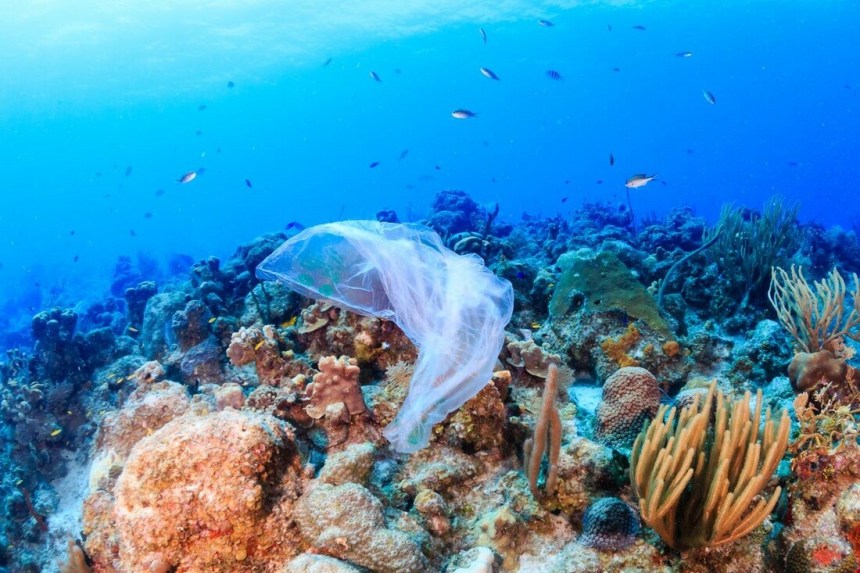
More recently, the fight against plastic was brought to the frontline of the environmental cause thanks to a turtle that made news in mid-2018 for having a straw stuck in its nostril. Though it seems logical that after the news broke many brands and supporters begun to announce plans for straw bans, research shows the problem is much larger. In fact, plastic straws account for less than 0.5% of the 5.25 trillion pieces of plastic that end up in oceans. Because of this, when put into perspective one sees that the plans put forward by companies like Disney and Starbucks feel like pretend concern. Of course, there are obvious positive externalities that will arise when the changes are put in place, but such large companies could without a doubt be involved in much larger efforts.

Most countries in Europe, the United States and Canada have yet to completely ban single-use plastic bags but have implemented a charge for the bags. Theoretically, the charge system allows for a new stream of revenue for the government while also keeping the consumers’ freedom of choice in mind. In reality, this system is far outdated and works similar to a Band-Aid on a bullet hole. It assumes that consumers will recycle the plastic bags after use but research has proven that less than 10% of plastic bags ever get recycled correctly. Furthermore, at this point in time, recycling is clearly not enough anymore.
Not to be misunderstood here, the blame should not lie solely on the wasteful consumer, but shared with the corporations that continue to put out plastic items and then demand that consumers solve the environmental crisis their products have caused. Numerically speaking, these great corporations have produced over 8 billion tonnes of plastic waste since the 1950’s, a number projected to grow to 34 billion before we reach 2050. Not only that, the World Economic Forum projects that if drastic change is not taken, the quantity of plastic in the oceans will outweigh that of fish by the same year.

These alarming rates should be enough for nations to impose a complete ban on plastic bags and to form legislation that prevents more plastic from being produced, rather than focusing merely on the customer side of things. As consumers, there is little recycling can accomplish without bigger and more extreme measures from local and international authorities. While countries like Costa Rica and India have become frontrunners in the race against a plastic-filled world, it begs to question why most of the developed nations are still struggling to stand up against corporate greed and to ban single-use plastic items.

« Older Entries Recent Entries »