Author Archives: TBR Network

Could SHEIN Become London’s Biggest IPO?

Chloé Asconi-Feldman

In November 2023, SHEIN, the controversial fast-fashion Singapore-based brand filed an initial public offering (IPO). While initially planning on listing shares in New York, the UK chancellor has recently met with the SHEIN executive chair and it is now rumoured that SHEIN will become a listing in London. What is the reason for this sudden change, and what does this mean for LSE?

Why London?

The switch from New York to London may be in part due to the unlikeliness that the US Securities and Exchange Commission would approve its IPO. Despite the great efforts the company has made to shift its reputation in Washington and beyond, by spending millions of dollars on lobbying and meeting privately with lawmakers, it is predicted that the US will not approve its IPO. This is because of Shein’s supply chain and its ties to the Chinese Communist Party; Senator Marco Rubio stated in a letter to the Securities and Exchange Commission (SEC) that they should enhance disclosures when dealing with SHEIN compared to the protocol with an average company, and urged them to protect U.S. investors by blocking SHEIN’s offer. 

Founded in China, SHEIN has been accused of using forced labour to produce their clothing where costs start as low as a couple of dollars for a t-shirt. With manufacturing focused in the Xinjiang region, the company continues to deny these allegations, claiming they have a zero-tolerance policy for forced labour. Although the company is considering Hong Kong and Singapore as potential markets, the benefits of a Western stock listing in London would position the company differently in the eyes of investors, implying higher levels of transparency and corporate governance. 

Economic Impact: SHEIN Revitalising the LSE?

According to data compiled by Bloomberg, last year the UK raised about $1 billion through IPOs which has been the lowest level in decades. Struggling to stay afloat as a global financial centre after leaving the European Union, the majority of the companies that have come to market are trading below their IPO prices. A major cause for this is due to companies leaving the London Stock Exchange in favour of the Nasdaq in New York for its lower listing fees and constraints. Due to this decline, there have been developing reforms to boost the UK as a destination for listing, making it easier for companies to list more quickly, and in the case of SHEIN, go through less scrutiny than they would in New York. Despite the steady decline, there is still significant value in the market, having a wave of private equity takeovers of UK-listed companies. 

If SHEIN were to go ahead in London, this could be huge for the city and the country’s standing as a global financial centre. Such a listing could even place the IPO in record books, as Bloomberg reports that the company would raise more than $10.7 billion by selling shares to the public, distinguishing it as the biggest British IPO ever. With such a title, this could profit both London as a financial centre and SHEIN as a company, increasing the amount of companies that may choose to list in London by augmenting confidence in non-Western firms looking to enter new markets.

Navigating the Green Economy: Transition Risk, Regulatory Measures, and Investment Opportunities in the Era of Climate Neutrality 

Caoimhe Kennedy

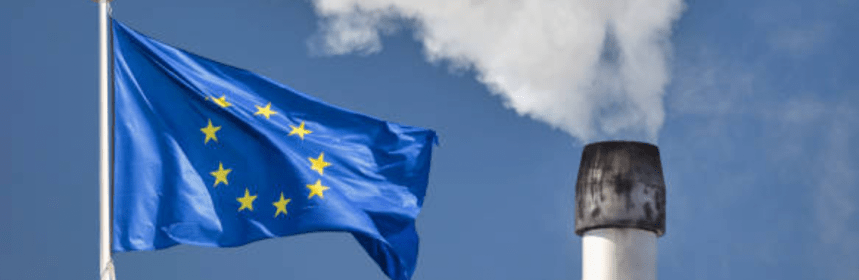
From a corporate perspective, transition risk encompasses the uncertainty surrounding the pace of achieving carbon neutrality. On a broader scale, EU nations aspire to become the world’s first climate-neutral economy and society by 2050, as outlined in the Paris Agreement. Advanced economies must reduce their CO2 emissions from 8.8 to 3.8 tonnes per capita by 2030 to stay within the 1.5°C threshold. Yet, the current trajectory suggests a perilous 3°C increase in global heating. Aligning portfolio structures with evolving EU policies is crucial for financial institutions as they navigate the imperative shift toward a low-carbon economy. This transition holds the potential for substantial ripple effects on financial systems, prompting sudden reassessments of assets. 

The European Central Bank has heightened regulatory measures, compelling financial institutions to disclose climate risks as per the 2023 directives. As such, increasing scrutiny will place growing pressure on portfolio managers to adjust their portfolio exposures. Non-compliance with the new regulations, resulting in a failure to disclose climate information, not only signifies a breach of EU law but also triggers supervisory action. Furthermore, with an expected surge in the size of the wealth management industry due to demographic shifts and rising consumer demands for increased investor involvement in promoting sustainable business practices, financial institutions must reshape their portfolio compositions to contribute to a carbon-neutral world. 

In the realm of financial stability, long-term institutional investors play a pivotal role in the recalibration and redistribution of carbon transition risks. Mitigating the escalating threat of natural disasters is facilitated through the utilisation of hedging instruments, such as catastrophe bonds. Additionally, various financial tools, including green stock indices and green bonds, emerge as valuable mechanisms for redirecting investments towards environmentally sustainable sectors. Furthermore, the world’s excessive dependence on oil, primarily sourced from politically unstable authoritarian regimes, presents a compelling case for the urgent redirection of funds towards renewable energy sectors. Historical patterns reveal that hikes in oil prices frequently precedes recessions. To bolster stability in the financial sector, a strategic shift away from investments tied to oil holds significant benefits. 

The green economy opens a world of opportunities for investors. Climate change, with its far-reaching impact beyond the EU, underscores the need for a global approach. If the green transition remains confined solely to Western nations and China, projections suggest that by 2050, South Asia, Southeast Asia, and Africa could contribute to a staggering 64% of global emissions. This scenario makes the achievement of Paris Agreement goals virtually impossible without substantial investments in green technologies within emerging markets. Notably, a mere 14% of green investments in these burgeoning economies are privately funded, in contrast to the 81% in developed nations. This evolving market, coupled with innovative investment instruments, provides a fresh avenue for investors to generate alpha returns. Simultaneously, it offers the strategic advantage of hedging portfolio risks by diversifying exposure across different global regions.

The Hub: An Interview with Saor Water

Harry Mealia & Kaushalraj Thayumanaswamy

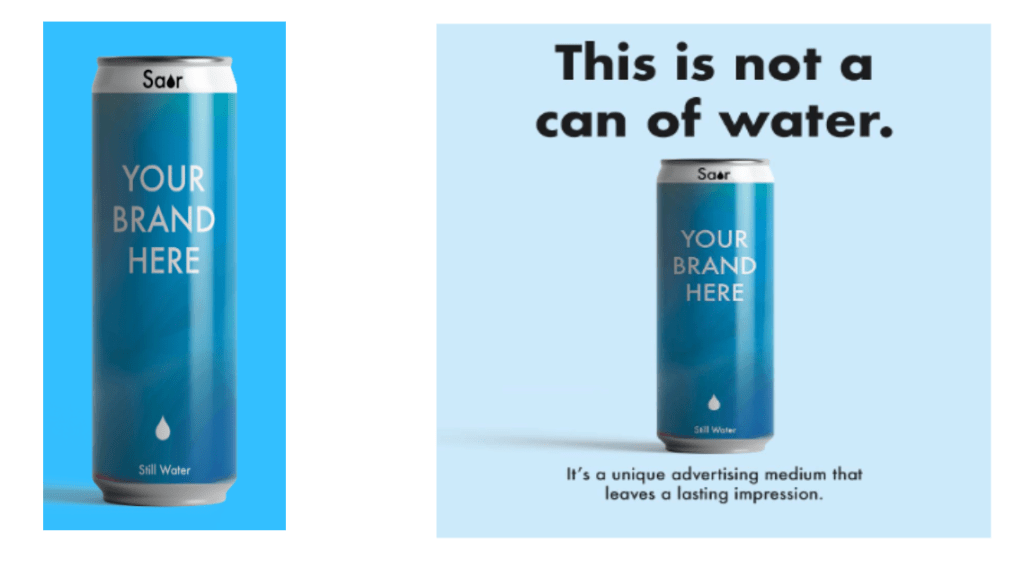
Saor Water founder Ryan Ormonde has a clear vision: to create a distinctive platform that connects brands without overwhelming consumers with ads. As Ireland’s first free beverage company, Saor offers a medium of advertising through their cans in an innovative and sustainable approach to marketing. The idea is that these free drinks are distributed to any location or event that the collaborating brand wishes to advertise at. Founders believe that their product enables brands to connect with consumers through meaningful and authentic connections. This refreshing approach, opposed to typically intrusive advertising, has created a niche market for the company. With sustainability at the heart of the firm, Saor Water is an exciting newcomer to the beverage market. 

The Team

Founder Ryan Ormonde has always had an entrepreneurial mindset, displaying his skills flipping iPhones during his school days. It is clear to see where his head is at considering he claims to “spend more time on LinkedIn than Snapchat”. These atypical traits show his high levels of motivation. This extends to the rest of the team. Jonathan Hoffman, Luke Carroll and recent addition Anthony Walsh all make up a motivated group looking to connect brands with their audience. Individual specialities in marketing, administration and outreach behind the scenes help Saor Water operate effectively. Their motivation coupled with an innovative, sustainable approach to advertising has led to a start-up with serious potential and a bright future. 

Where They Are Now

One year has passed since Saor Water’s inception, and the startup has come a long way in its mission of advertisement-fuelled hydration. Ryan started by designing the company’s website and creating marketing materials, including posters and social media content by himself. He also ensured the establishment of a supply chain for their water cans. The company collaborated with a water can supplier in the UK, who is responsible for filling and packaging the cans before shipping them to Ireland. The process was a steep learning curve for Ryan, who encountered challenges during the first shipment’s importation into Ireland. However, his swift action ensured the timely release of the shipment, enabling distribution at all planned events. 

Today, Saor Water has begun its distribution efforts, with its current target being universities including TUD, TCD, and UCD, and other student-based events. Their partnership with “Roots,” a healthy food restaurant, marks their first collaboration. They have also struck a partnership with Mercedes and will soon be distributing Mercedes-themed water cans at car dealerships, expanding their reach to new markets.

In today’s digital age, the average person is exposed to more than 6000 ads every day. Ryan says that he is consistently working on enhancing the design of their water cans as he recognises that it is essential in order to provide a positive customer experience and make Saor Water a refreshing and appealing choice for consumers.

Plans for the Future

Saor Water’s primary focus remains on students – targeting universities and student-centric events – and plans to expand more in this space. The company is also expanding more into the dealership sector. But Saor Water’s expansion vision does not stop at the Irish shores. The company envisions a future where its sustainable water solution reaches even broader audiences. They have identified the UK as a promising market, offering a multitude of events and businesses to collaborate. An expansion into the UK promises not only new customers but also a streamlined supply chain, enhancing efficiency and growth. 

How an Irish Med-Tech Company Could Change the World

By Evan Henry

When it became obvious that COVID-19 was to utterly change how we live, few would have predicted that a company from Galway could play an instrumental role in returning life across the world to normality. Aerogen, an Irish medtech company, produces a drug distribution system that delivers medicine through aerosols in acute hospital settings. John Power, Aerogen’s CEO, formed Cerus Medical in 1997 when he recognised a major gap in the technologies used to deliver drugs in hospitals. While life-support machines were among the most advanced medical technology used in hospitals, the drug-delivery systems that assisted these machines were developed over fifty-years ago. Power believed there were better ways to target the delivery of drugs, and it was common knowledge that drugs are efficiently administered by ingestion through the lungs. Cerus Medical merged with Aerogen Inc. in 2000 and launched its first nebulisation product, the Aerogen Pro shortly afterwards. Twenty years on and the company exports to more than 70 countries and their products are used in 60 of the top one-hundred hospitals in the world, benefitting over ten million patients. Its clients include Medtronic, GE Healthcare and Philips Healthcare.

Aerogen and COVID-19 So Far

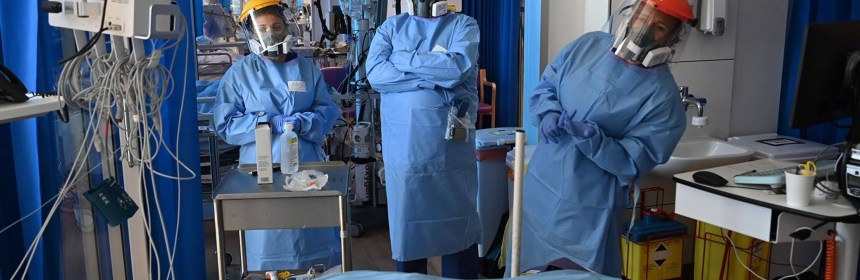
Aerogen was overrun when COVID-19 broke out, given the huge demand created for ventilators by the respiratory illness. In fact, Aerogen’s products were in greater demand  than those of competitors because they are the largest producer of closed-circuit nebulisation system devices on the market. A closed-circuit nebulisation system is one that delivers gaseous drugs to patients while leaving ventilation uninterrupted (Medical-aerosols), ensuring that healthcare workers are not exposed to any gases exhaled by the patient (patient-generated Bio-aerosols). Closed-circuit nebulisation devices are far safer and more efficient than conventional nebulisation devices. Aerogen is also working with various hospitals and research groups to adapt ventilators unsuitable for COVID-19 patients. Along with this, the company is involved with more than 20 drug companies and research institutions that deliver antivirals and drugs to patients in ICUs. Power has predicted that Aerogen will move around four million units this year, up from two million in 2019. But despite the outstanding role played by Aerogen in the treatment of COVID-19, the delivery of its cure could be the company’s true magnum opus. 

An Emerging Alternative to Liquid Vaccines

The race for a COVID-19 vaccine has left the pharmaceutical industry in a frenzy, with dozens of companies and research groups competing to produce the immunisation treatment. While a vaccine could potentially be produced by the end of 2021, the timeline is still unclear. The only certainty surrounding the vaccine is that demand for it will exceed supply, likely by a substantial margin. However, Aerogen claims to have the solution to this problem. On RTÉ’s The Business programme, Power revealed that Aerogen is also working with “a leading [unnamed] pharmaceutical company” to produce and distribute an aersolised vaccine. If successful, this will reduce the quantity of dosage required per patient, because drugs ingested through the lungs are generally absorbed more efficiently by the body.

How would aerosolisation address the supply-demand inequity that will occur when a vaccine is finally approved? The inequity will be caused by two things: an insufficient number of doses and an inability to accommodate massive numbers of people gathering to seek vaccination. Should Aerogen’s efforts bear fruit, they will provide meaningful solutions to the issues facing both sides of the market. The first piece of the mass vaccination puzzle Aerogen hopes to solve involves providing enough doses to meet demand. The company predicts that their partners will produce around 500 million liquid doses by the end of 2021, which is a far cry from the amount required to eradicate the virus. However, if a liquid vaccination can be aerosolised, Aerogen predicts that only a fifth of the amount of medicine will be required to treat the patient. If their estimates are accurate, the result would be two and a half billion doses available by the end of 2021. This number will not result in universal immunisation, but it would nonetheless reduce the virus’ rate of spread. The outcome would be fewer new cases, fewer deaths and reduced pressure on healthcare systems worldwide. However, from the initial solution to vaccine shortages springs another challenge: distribution. How can two and a half billion people be vaccinated in a safe, timely and cost-effective manner? Speed of delivery is imperative the alleviation of not only suffering, but also of pressure on healthcare systems. Aerogen claims to have found the answer to this inevitable complication.  The company has developed a station for the aerosolisation of a vaccine which will allow patients to be vaccinated in a quick and orderly fashion. If the station is employed, their estimates, based on data collected from Chinese COVID-19 treatment procedures, predict that 2.5 billion people could be vaccinated in 39 days if ten-hour shifts are worked at 55,000 centres. Such rapid and systematic delivery of a COVID-19 vaccination is as much as anyone could hope for.

Can It Be Done?

The size and scale of Aerogen’s ambitions are clear. They hope to have roughly one-third of the world’s population vaccinated by the end of 2021. Of course, any discussion of a COVID-19 vaccine and its distribution is a mother lode of suspicion and further questions. Will a vaccine even be produced at all, never mind by the end of 2021? If so, can it be aerosolised? Will aerosolisation really require only a fifth of a liquid dose’s quantity? Will aerosolisation prove to be more or less effective than liquid vaccinations? Can other countries work as efficiently as the Chinese in their administration of a vaccine? Will the vaccine be affordable? All of these questions raise valid points and will undoubtedly be the subject of future debate. The honest answer to most of them for now is that we simply do not know. What we do know is Aerogen is one company making substantive strides towards returning life to something like its pre-COVID configuration. Time will tell us whether or not it succeeds.

Striking the Balance: Will Hindsight Lead the Way?

By Sinéad Flynn

Overview

Innovation and technology are the most prominent buzz words for firms and corporations around the world. The next big idea, next invention, and next discovery are waiting to emerge. Society has evolved from the 1880s, where it was once thought by Commissioner of US Patent Office Charles Duell that “everything that can be invented has been invented” to new advances exploding at our fingertips without limits. FinTech has received a great deal of attention, and it’s only in its infant stages.  Marc Andressen notes that ‘internet companies might end up in 180 countries before they have 180 employees.’ Globalisation and technology have had a huge impact on markets, and the role of Fintech is just a new stimulation.

What is Fintech?

Fintech is a financial technology that aims to compete with traditional financial methods. Fintech can take the shape of crowdfunding, cryptocurrencies, or blockchain, and notably is expanding into new markets rapidly. While online banking has been prevalent for years, fintech adds a new dimension to the payment’s services. Within seconds, users are sending and receiving money faster than ever before. Fintech has begun to dominate our everyday lives where it is commonly seen with those who use Apple Pay or Samsung Pay or those that have sent funds via GoFundMe. The limits to what may be considered Fintech can be unlimited, where most start-ups are embracing technology to create innovative products and services. FinTech is emerging throughout trading, insurance, and risk management as well, which has appeared quite disruptive to these industries that haven’t changed for quite some time.

Opportunity or Threat?

While business may be booming, and the financial crash seems to be forgotten, how does commercial law interact with this fast-paced business environment? It is argued that fintech firms receive a competitive advantage and create an attractive space for investors when they comply with regulations. Cryptocurrency companies and those that are an unregistered seller of securities have been hit hard in the US by the Security and Exchange Commission. These fines have diminished confidence in these certain start-ups and created financial loss through settlements and fines. There are concerns that fintech firms are utilising their institutions to harbour illegal assets utilised for criminal activity. While fintech firms have been embraced for their revolutionary growth and modern methods to business in this age of technology, it must be approached with caution due to poor ethical choices being made at times.

Striking the Balance

Countries such as Ireland that rely on a great deal of foreign direct investment must adequately strike the right balance between attracting new business, but also ensuring the system is not abused. Research shows that there is no specific legislation designed to regulate certain services that fall under this broad FinTech category, besides those concerning the Central Bank of Ireland and minimal EU Regulations. Ireland is a lucrative location for start-ups and businesses looking to set up a European hub, as they have more freedom to do so while then receiving this passport into the European market. Diversity in our financial markets reflects this growing desire to explore alternative mechanisms to enhance society. While research is ongoing for the limitations and effects FinTech firms bring to the table, these initiatives are looking primarily to law firms to structure and protect their interests.

A Closer Look

If one narrows the analysis of Fintech into electronic payment companies, the Payment Services Regulation 2018 will apply. This Regulation has effectively created a more level playing field for fintech start-ups to enter the market and develop their technology services further with an overall aim to increase competition for the benefit of consumers. At the moment, it is argued here that the EU is fully embracing these innovative and competitive practices. If one assumes that the market will regulate itself and that the legislature should be more laissez-faire, then more relaxed regulations should be welcomed. While this may be worrisome to those that appreciate the traditional style of banking and finance, this is ultimately a positive step, as time and time again, traditional banking models and financial institutions of the past have failed multiple sectors leading to dire losses.

Has the Balance Been Struck?

The right balance must be struck in order to protect investors, but also to facilitate this necessary development. The Central Bank of Ireland is conscious that there is a lack of legislation specific to Fintech entities, and that it has assumed the role as the main regulator where able. This leaves investors and innovators in a precarious spot. In one regard, there is little law guiding their activities, but in turn, this allows them to receive the freedom necessary to develop and surpass imaginable limits on their ventures. While the Payments Services Regulation may increase accountability and reporting, this may not be enough to accurately analyse how these institutions are operating.

What Next?

The embrace of the change in the financial markets may be a positive step, and a mechanism that may prevent future economic crashes and downturns as new perspectives and ways of managing the financial sector are introduced. Consumers must be wary for that this partially unregulated ecosystem may produce detrimental effects that hindsight may prove useful.

« Older Entries Recent Entries »