
Driving Sustainability in SMEs: A Conversation with PlasTrak Co-Founder Finn Howley
Petro Visagé
As small and medium enterprises (SMEs) grapple with the growing demands of corporate sustainability reporting, PlasTrak, an innovative Irish startup, has carved out a niche by demystifying complex EU regulations. This initiative provides SMEs with tailored, easily digestible guidance to enhance their sustainability reporting practices. Deputy Editor Petro Visagé sat down with Finn Howley, co-founder of PlasTrak, to unpack the origins of this transformative tool, the challenges they faced and their impact on the Irish SME sector.
Can you give a brief overview of what PlasTrak does. How does PlasTrak specifically address the needs and challenges of SMEs in becoming more sustainable?
Howley: The mission of PlasTrak is to guide Irish SMEs through the transition to full plastic waste reporting and measurement. SMEs, by 2028, will have to track a huge amount of data points in relation to their sustainability footprint under CSRD. While not directly in scope of the directive, SMEs will be affected by the upstream and downstream reporting requirements of corporations above them in the value chain. For instance, for Musgraves to be able to comply with the directive, they will need to provide data on things like packaging waste that goes out the front door of every retailer that they supply to. Thus, there is a massive challenge for SMEs to start developing the infrastructure to record and report on their sustainability impact. What we do is provide SMEs with their reporting requirements in simple and digestible terms, in stark contrast to a 200 page EU document that is full of legalistic and technical language. We know that time is the most valuable resource for small businesses, so our aim is to create value for them by saving them hours and hours spent understanding their requirements under CSRD.
Could you tell us more about the origins of PlasTrak?
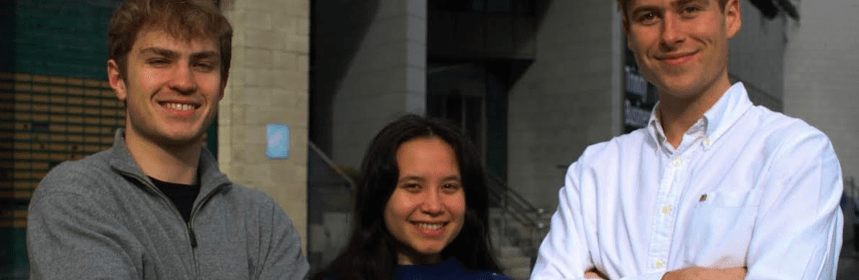
Howley: So, we started working together as a trio in October 2023 when our lecturer paired up Robert and I with Maïlé because of our similar research interests in our capstone. It’s a very practical capstone where the first semester is spent doing primary research on a challenge, and the second semester is all about implementing solutions to that challenge. We were all interested in the implications of the new CSRD legislation so when we went and carried out our research, our biggest finding was that Irish SMEs needed help in the transition to sustainability reporting. So, when it came to taking action in January this year, the PlasTrak Initiative for Irish SMEs was born based on that finding.
Could you tell us more about the founders?
Howley: I’m from Balbriggan in North County Dublin, Robert’s from Ashbourne in County Meath and Maïlé’s from Bali, Indonesia. Robert and I have been close friends since we were 12 years old, having gone to the same secondary school and playing rugby together in CUS. We’re both studying BESS, while Maïlé is in Computer Science & Business.
What inspired PlasTrak and how did your personal and professional experiences shape the company’s mission?
Howley: So we were inspired to start PlasTrak when we were nudged by an Audit Partner that we interviewed in one of the Big 4 firms to look into Europe’s new sustainability reporting regulation, the CSRD. He described it as the “biggest change in company reporting in 40 years”, and when we did look into it, we found it to be a really interesting opportunity.
From a personal point of view, we’re all passionate about sustainability. Robert and I have been involved in our local tidy towns committees for a number of years and Maïlé was part of the Bali’s Big Clean Up while at school in Bali. We’ve also all done internships in financial services firms, and studied in financial reporting modules, so I think we all kind of had an interest in the technical side of sustainability reporting – the whole aim of the CSRD is to bring sustainability reporting up to the same level of credibility and usefulness as financial reporting.

In launching a sustainability-focused startup, what were some of the biggest challenges you faced, and how did you overcome them?
Howley: I think that growing the initiative at the beginning was challenging as people didn’t take us seriously, perhaps we were initially perceived as inexperienced university students attempting to tell business owners how to run their businesses. This might have been the viewpoint of the people we intended to work with but declined our help. We moved away from the identity of college students working on a project, which might carry connotations of temporariness and lack of practical experience. Instead, we positioned ourselves as informed experts in the field of CSRD, letting on that we could “walk the walk” and not just talk about it. This repositioning helped in building trust and respect in the business community.
How important are partnerships and collaborations to PlasTrak, and can you share examples of successful collaborations?
Howley: Partnerships played a huge role in our initiative, we couldn’t have done it without our industry, government and academic partners. We collaborated with businesses across the sectors of healthcare, agriculture, construction, clothing retail, and food and beverage. Collaborating with Honey Truffle was a really fun experience, Eimer (Chef and Owner) is so nice. She gave up a lot of time out of her day and provided us with a lot of helpful feedback.
In terms of the government side, the initiative was supported by the Department of Enterprise, Trade and Employment. They invited us to Local Enterprise Office events where we were able to network. We met a really cool entrepreneur at one of the events who then became one of our SME website users. We also collaborated with TBS faculty to share our insights and to both give and receive feedback.
What are some of the biggest challenges currently facing the sustainability sector, and how is PlasTrak addressing them?
Howley: Well certainly the first things that come to mind are costs and regulation, which is exactly where our business model fits. There’s no doubt that most business owners welcome the idea of sustainability but the question is to what extent are they willing to implement sustainable processes within their businesses? Sustainability initiatives often require substantial upfront investment. For instance, transitioning to renewable energy sources, upgrading facilities to reduce emissions, or adopting advanced recycling technologies can be expensive initially. The financial return on investments in sustainability could take several years to realise and the long payback period can deter businesses who prioritise meeting short-term demands.
I think the initial success of PlasTrak stems from us providing our service for free. Our toolkit was created out of passion for the SMEs that keep the Irish economy ticking. By removing the cost barriers, we make it feasible for even small to medium enterprises to adopt sustainability measures that they would otherwise deem too expensive. Additionally by educating both the business community and students about the long-term cost savings and brand enhancement benefits of sustainability we encourage investing in sustainable practices and being prepared for the regulatory changes down the road.
What are the lessons you learned through this experience and what advice would you give to entrepreneurs looking to start a sustainability-focused business?
Howley: We’ve learned so much already but to boil it down to key points:
- You’d be surprised how willing people are to help if you just take the first step and ask.
- Being a college student makes for a great opportunity to use the free time you have to help others who are time and resource constrained with their challenges. It’s also a great chance to bridge the gap between the theory you learn in the classroom and the real challenges like climate change that are taking place in the world.
- Resilience is key – the more comfortable you are with rejection and setbacks early on the better. It was the setbacks in our initiative that allowed us to step back and rethink. Being resilient actually allowed us to expand the initiative in new ways as we stopped worrying so much about following our plan so precisely.


 Trinity Business Review