Author Archives: Fiachra Mooney

An Interview with Clive Bourke, EMEA & APAC President of Daon 
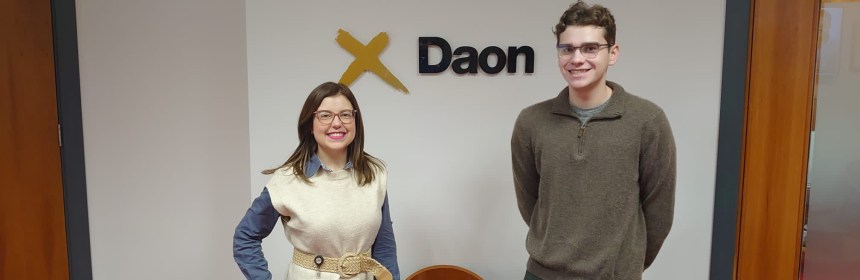
Fiachra Mooney

About Daon 

Nestled in Dublin’s eminent Docklands one can find Daon, a digital identity trust company. Focusing on the Business-to-Business-to Customer (sometimes even B2B2B2C) and Business-to-Government-to-Customer sectors, it provides the backbone for many of the services you likely use on a regular basis. 

You would be forgiven for not being too familiar with Daon, as you’re unlikely to see their brand name plastered around the internet. It generally provides the software and processes for its customers to integrate into their own apps and websites. Daon instead grows through its reputation of excellence and referrals and word of mouth from happy customers. TBR’s Chief Strategy Officer and Editor-in-Chief Sean Smith sat down with Daon’s EMEA & APAC president, Clive Bourke, to learn a little more about the firm and its contributions to the growing identity proofing and authentication industry and its implications for the future business landscape. 

Origins of Daon 

Daon derives its name from the old Irish word for person, similar to the modern word for people, daoine. The company was started in order to predict and provide the technology necessary to bring biometric authentication to the masses and reduce the need to memorise complex pins for multiple services and accounts. 

Clive spoke about the importance that Enterprise Ireland (EI) played in helping the company to expand its global operations. EI missions in Japan and the United States offered a great pathway to meeting potential clients and partners, and to help the company maintain sustainable foreign expansion. 

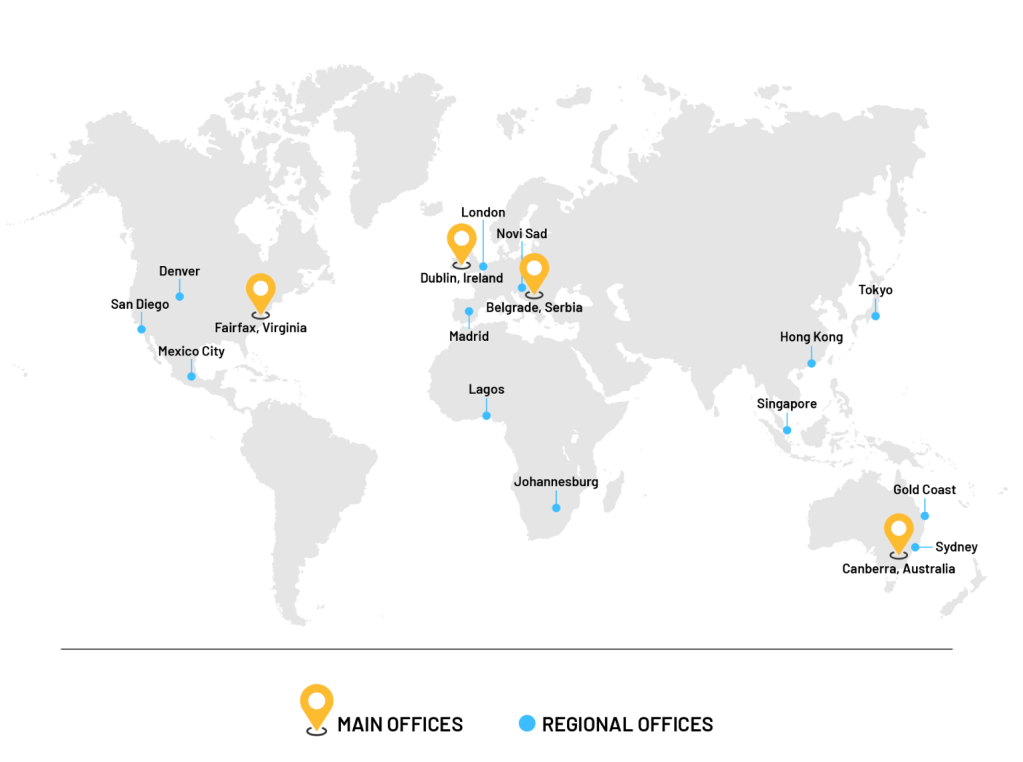
What started off as a small company in Dublin’s IFSC at the turn of the millennium has grown to a global operation with 17 offices spread throughout the world. Daon now has offices from Virginia right across to Canberra. While it is now a global operation, their headquarters and R&D remains in Ireland, as does their Chief Technology Officer. Their office in the IFSC remains the headquarters for EMEA. 
Bread & Butter 

Daon’s services provide the security underpinning for many financial institutions personal banking apps, enabling biometric authentication to facilitate new customer account opening and secure transactions for existing customers. There can be up to 50-100 different identity workflows between a customer and their service provider such as a bank. In the past, B2C firms would have had to design and implement all of these identity journeys themselves, but now Daon can provides a low code platform with configurable workflows that don’t require a lot of software development for not only financial institutions, but areas like travel and hospitality, telecommunication and social platforms.

Emerging Challenges & Areas of Interest 

Voice to text 

Clive discussed the popularity of voice commands that Amazon Alexa brought posed a new challenge for biometric authentication. If people wanted to conduct shopping with their Alexa devices, a problem arises as to how banks would be able to authenticate the purchase without forcing the customer to go onto another computing device. Voice commands for payments on home devices proved not to be as prolific as was originally expected however.

Deepfakes 

Another relevant phenomenon for Daon, as Clive noted, is the advance of deepfakes in recent news. Despite the development of this deceptive AI over the last few years being rapid, their risk to biometric authentication certainty is minimal thanks to the work of companies like Daon. Firstly, deepfakes require a screen to be displayed, and Daon’s software can recognise when a picture is being shown on a screen. And while phones can be broken apart, and devices used to trick the phone into thinking that a deepfake is coming directly from the phone’s own camera (so called injection attacks), the multi-factor authentication imposed by Daon has limited the possibility of such a breach being successful in committing fraud for a long time. As such, consumers can rest easy knowing biometric multi-factor authentication is a fortified wall of security against deepfakes being used to access personal information. 

AI 

While AI has become THE technology of 2024, Clive said that prior to the current onslaught, Daon had already seen a 3-4-fold increase in accuracy of models in machine learning. This has also been seen with facial recognition systems, run at airports and by agencies like Homeland Security at border crossings to quickly confirm a person’s identity. 

COVID 

One of the ways you have probably interacted with Daon’s service unknowingly was via their VeriFLY service during the pandemic. Developed with limited time, it allowed the return of international travel by allowing online check-in that verified and kept up to date with COVID vaccination certificate rules between countries. Over sixteen million people used the service successfully, and it gave Daon experience in dealing directly with consumers and building consumer facing apps. This was the closest that Daon had gotten to being a directly consumer facing Software-as-a-Service (SaaS) business, and they carried out about a thousand updates to the apps in the space of two years, which wasn’t a possibility in their previous products. 

But lessons from this B2C experiment have enabled Daon to launch their new TrustX platform. A cloud-native SaaS-based identity continuity platform, which is enabled by AI and ML, it enables businesses to integrate the software directly into their own products, featuring a no-code orchestration layer for rapid deployment and customisation to enhance user journeys. While maintaining full regulatory compliance, TrustX supports identity proofing and authentication which in turn will enable quick biometric authentication set up and recovery. 

Customer Base: Where Operations Take Place 

Facial biometric use for financial transactions is an arena that Daon has seen considerable growth in the last few years. With the proliferation of online purchasing and banking apps, biometric authentication has come to the masses; while biometrics have taken on a new importance, multi-factor authentication, with another factor e.g. possession or knowledge, remains a safeguard. A new area of research is enabling certain smaller purchases based on your behaviour. 

In terms of geographic breakdown, Daon operates in most parts of the world. Clive also points out that the framework of the EU’s GDPR is a well adopted well understood framework with provisions for biometric data which enables the broader adoption of biometrics for consumer protection use cases such as opening accounts, account access, payment confirmation, account recovery etc. Outside of the EU differing legislation and regulatory environments to be considered.
Students Interested in Pursuing a Career in the Industry 

For business, computing and mathematical students interested in a career with Daon and in the biometric authentication sphere, Clive suggests studying how AI would help improve cyber-attack detection. This area is an ongoing field of research, and is the main task in preventing presentation attacks, where fraudsters use imitations of a person’s biometric characteristics to verify their identity. This can be with expensive Mission Impossible style masks or full deep fake videos such as ones that made the news recently.


We wish to thank Clive for his time and for Daon’s support to TBR this year. For more information on Daon, visit their website www.daon.com and for careers visit http://www.daon.com/careers

Is this turning into Apple’s most challenging year yet?

Apple has been through a rough patch lately. With regulators and governments around the world
turning their ire against the tech giant and a litany of technical faults plaguing their latest phone –
will 2023 be Apple’s most onerous year yet?

iPhone 12
On Tuesday, 12 September, French regulators halted the sale of the iPhone 12 – on a charge that
the radiation levels emitted contravened safety guidelines. France’s ANFR found the phone’s specific
absorption rate (SAR) was 5.74 watts per kilogram, well above the 4 watts per kilogram EU standard
for such tests. While Apple has issued a software update to attempt to rectify the problem, issues
surrounding health and safety live long in consumer memories, as Samsung experienced with their
Galaxy Note 7 explosive battery debacle.

iPhone 15
Amidst these challenges, Apple needed the launch of this year’s iPhone 15 to go off without a hitch.
However, early reviews and impressions have resulted in a host of technical issues with the device.
Apple’s launch of the phone touted unrivalled performance from a phone, yet it appears this
computing power is resulting in serious overheating issues. Customers report iPhones that become
uncomfortable to hold due to overheating – with an iPhone 15 Pro Max reportedly reaching 112˚ F.

Further issues emerged from users attempting to transfer data between iPhones. The iPhone 15
reportedly becomes unresponsive, displaying what has been described as the ‘Apple logo of death,’
as it struggles to transfer data. While Apple issued a software update to try and resolve the issue,
many users claim not to have received it. When similar issues plagued LG’s G4 flagship, the company
never truly recovered, forcing the company to close its mobile phone division a few years later in
2021.

Apple was also forced to again return to Qualcomm for the modem in the iPhone 15, despite a five-
year drive to develop their own chips. iPhone’s have traditionally used Intel modems, but their
performance lacked behind those of Qualcomm, which manufactures the majority of high-end
processors for the Android market. This performance prompted Apple to purchase Intel’s modem
division in 2019, but Apple has proven unable to match Qualcomm’s current level of sophistication.

Regulatory Intervention
While the setbacks listed so far have been technological, and confined to the iPhone, Apple is facing
problems on all fronts. The EU has forced Apple to adopt USB Type-C on all future iPhones, in an effort to force more
standardisation and put to an end Apple’s proprietary, and lucrative, lightning cable.


Both Apple and Google have come under intense scrutiny from regulators for their so-called ‘walled
garden’ app stores. Regulators are working to force Apple and Google to allow competing app
stores, such as the Amazon App Store, to be used for downloading applications on iOS and Android.
Currently, Apple’s walled garden allows it to charge a 15-30% fee on all transactions conducted
through apps downloaded in the App Store. The tech giants have been hit with fines and action from
regulators in Europe and the US, and Fortnite developer Epic Games brought the iPhone maker to
court over its refusal to allow Epic Games to circumvent the fees.

Apple also faces hurdles in one of its most lucrative markets, China. Apple has bucked the trend among non-Chinese smartphone manufacturers, by managing to have a sizable presence in a country traditionally hostile to foreign companies. As in much of the world, Apple products are a growing status symbol among China’s growing middle and upper classes.

But international tension between the People’s Republic of China and the democratic western
powers has begun jeopardising this relationship. Apple, like many other companies, has begun
opening new assembly plants in South-East Asian countries like Vietnam, as rising labour costs and
the possibility of sanctions and conflict has compromised China’s status as the ‘Manufacturer of the
World’s Goods.’ Additionally, this vSeptember the Chinese government announced a crackdown on
‘unregistered apps’ within the Apple App Store. This push is likely to see the operation of several
social media apps including Facebook, Instagram and X (formerly Twitter) curtailed, in an effort to
stop the spread of ‘misinformation.’

Pivoting
Many of the adversity Apple faces surrounds its iPhone. While the iPhone remains Apple’s main
revenue generator (accounting for nearly half of the company’s total revenue) the company has
been making efforts to reduce its reliance on traditional hardware products, and is increasingly
entering the services industry. Apple Music and Apple TV are some examples of the strides into new
sectors that Tim Cook has steered the trillion-dollar company. There is also a plan for an Apple Car in
the pipeline – which may be just the revitalization Apple needs to stay relevant and to prevent issues
in its traditional operations from affecting the company’s overall performance.

Windsor Framework: A Brighter Future for Northern Ireland?

Rishi Sunak has claimed that the Windsor Framework will make Northern Ireland the “world’s most exciting economic zone”, resulting in access to both the UK and the EU single market. The deal essentially attempts to return to the trading terms Northern Ireland had in place before the UK voted to leave the Single Market. At that time, tariffs and customs checks in the Irish Sea and along the border were not a factor. Since Brexit however, Northern Ireland has continued in an awkward middle-ground. In an attempt to prevent a hard border, Northern Ireland has essentially remained in the EU single market, resulting in checks on imports from the UK.  

The Framework

The Windsor Framework will bring into force Red and Green channels. The Red Lane will constitute goods from the UK destined for the Republic of Ireland or the EU Single Market travelling through Northern Ireland. These will face increased customs checks and standards in order to protect the Single Market. Green Lane goods are those from the UK which are to stay in Northern Ireland. 

To enter the Green Lane companies will need to register as ‘Trusted Traders’, with the British government promising support for smaller businesses. There is hope that improving technological advancements will enable the EU and the UK to monitor goods more seamlessly, with IT systems and databases shared. It is hoped this should reduce checks to 5% of the current levels by 2025. For retail, now only a single general certificate will be required for mixed loads, cutting down on bureaucracy and administration for retail operators and hauliers. 

Medicines will now be “automatically” and permanently available at the same time in Northern Ireland as they were in the rest of the UK. Previously, the EU needed to make exemptions for the supply of medicines. Areas surrounding state aid have also been clarified, as the EU feared UK state aid might be used to undercut EU firms. 

The UK government will now be able to set VAT rates below the EU minimum rates for immoveable goods that are not at risk of entering the Single Market. This will include items such as heat pumps and some other goods for retrofitting houses, such as solar panels. 

Political Certainty

As with everything Brexit-related, the political unease is likely to outshine economic concerns. Along with the usual joint bodies and governance councils between the UK and EU, an emergency mechanism known as the “Stormont brake” will come into force. This mechanism can be triggered at the request of 30 MLAs in the Stormont Assembly from at least two parties. It will allow the UK government, as an act of last resort and in extreme circumstances, to amend or replace aspects of EU provisions if they feel it will have a “significant and lasting impact specific to the everyday lives of communities” in the North. 

The House of Commons voted overwhelmingly to adopt the Windsor Framework on the 22nd of March. Five hundred and fifteen MPs voted in favour of the agreement, with only twenty-nine descents, consisting mostly of the DUP and a few rebel Conservatives, including notable Tories such as Sir Iain Duncan Smith, Boris Johnson, Jacob Rees-Mogg, Priti Patel and Liz Truss. 

Those voting against the deal were concerned that Northern Ireland remains divided from Britain economically, and that EU courts will still have some, if diminished, jurisdiction. However, even among supporters of the deal, there was anger about the preferential treatment Northern Ireland is to receive in contrast to other regions of Britain, and the overall economic illogicality of Brexit. 

Labour MP and chair of the Labour Movement for Europe, Stella Creasy, criticised Sunak for championing the new arrangement for Northern Ireland, while “denying those same benefits to  businesses struggling in the rest of the UK.” The Liberal Democrats foreign affairs spokesperson, Layla Moran, accused the Conservatives of “patting themselves on the back for reversing some of the damage done by their disastrous deal.”

Will it make Northern Ireland the ‘Most Exciting’ Economic Zone in the World?

Northern Ireland has tended to lag behind the UK economically. Traditional industries such as manufacturing and shipbuilding have seen significant decline due to increased competition from cheaper Asian rivals. Harland and Wolff, whose Goliath and Samson cranes define Belfast’s Titanic quarter, hasn’t built a ship since the Anvil Point, a Ministry of Defence ferry built in 2003. Having moved towards building infrastructure such as offshore wind turbines, it is only now seeing the return of shipbuilding with a contract to fabricate replenishment-at-sea support ships for the Royal Navy’s Royal Fleet Auxiliary. 

The CSO estimates that in 2022, Irish GDP will grow by about 12.2%. This contrasts to the modest increase of 2.6% to 3.1% predicted by PwC for Northern Ireland, half a percentage point behind the rest of the UK. 

Northern Ireland has typically had a disproportionately large public sector, funded by subsidies from Westminster. Three of the top ten largest Northern Irish firms are statutory corporations, such as Translink (Northern Irish equivalent the Republic’s CIÉ) and NI Water. This compares to the Republic, where the ESB is the only statutory corporation in the top ten by revenue. 

Northern Ireland does though enjoy cheaper costs than the rest of the UK and then the Republic. Average house prices for the final quarter of 2022 were about €200,000, compared to average house prices of around €310,000 in the Republic of Ireland, €217,000 in Scotland, €250,000 in Wales and €360,000 in England. By home-ownership prospects being better and wages remaining comparatively lower, Northern Ireland is attractive for multinationals looking for European bases.

The Windsor Framework however, focuses on streamlining the trade of physical goods, and does not really change the playing field for Northern Ireland in terms of services. Talk of a ‘Singapore of Europe’ might be premature. Yet there is hope that international firms looking for access to both EU and UK markets with access to an English-speaking workforce and low costs could result in increased FDI into the region, especially with firms mindful of tight housing and office supplies in the Republic. 

Given the DUP’s opposition thus far to the agreement and the subsequent decision of the Orange Order to reject it, the future of the agreement is anything but certain. Firms looking to invest want certainty. 

The Sur: Implications and Challenges in a Modern South America

Brazil and Argentina have recently unveiled plans to create a common currency. The move would see a monetary union between the world’s twelfth and twenty-seventh largest economies respectively, and the two largest on the South American continent.

With plans to later expand to neighbouring countries, it could create the world’s second largest currency bloc, second only to the Euro. The eurozone currently accounts for 14 per cent of global GDP, while a currency union involving all Latin American nations would account for 5 per cent. 

As the euro was for the European Union in 1999, the currency may serve as the unifying economic force for the Mercosur trading union. The ‘sur’ (meaning ‘south’) would initially run in parallel to the Brazilian real and Argentine peso, and would help in removing reliance on the US dollar.

Confusion 

Originally, Argentine Minister of the Economy Sergio Massa announced the currency as a common currency, akin to the Euro or the CFA Franc. Such a currency would see Brazil and Argentina abandon their own currencies, the real and Peso respectively, and see them both adopt the sur, which would be overseen by a new form of Central Bank. 

President da Silva of Brazil later said that what is planned for now is not a move towards a common currency, but rather a “trading currency,” so that transactions between them could move from peso, to sur, to real, rather than peso to USD to real. This would aid both countries, particularly Argentina to sever its reliance on the USD and would prevent fluctuations in the USD’s value relative to either currency affecting trade, essentially streamlining trade between the countries and giving them greater control. 

The original announcement of a common currency was met with surprise by many investors and financial analysts. While Brazil continues to grow and is set to become one of the world’s preeminent powers, Argentina continues to be stricken with high debt, high inflation, and a struggling economy with a weak industrial base. 

Argentina’s Continuing Woes

A common currency would see the largest economy on the continent shackled to one of the continent’s most troubled. Last year, Argentina had the sixth worst inflation rate in the world, behind only Zimbabwe, Lebanon, Venezuela, Syria and Sudan. 

Argentina has been wracked with financial difficulties for decades, and has been largely restricted from access to international markets following its 2020 default. Inflation now stands at 100% and depositors continue to abandon the peso in favour of more reliable currencies like the USD, weakening the peso further.

Argentine Government debt in September 2022 was 238% of nominal GDP. Successive governments have failed to tackle spiralling prices and continue to borrow and spend. Instead of taking the necessary actions required to control inflation, this worsens the situation. Argentina is now in negotiations with the International Monetary Fund to prevent further default, as it seems unlikely it will be able to meet its 2023 goals for foreign currency reserves, taking into account the war in Ukraine and a drought effecting large exports like soy and meat.

Realignment

The move is part of President Lula de Silva’s attempt to reassert Brazil’s influence in the region and reaffirm ties, which had been strained under the tenure of his predecessor, Jair Bolsonaro. Bolsonaro had a strained relationship with Argentina’s left-wing President, Alberto Fernández. The announcement came at a conference to encourage further economic integration in the region. The sur is seen as a possible means to bolster this integration, while helping Argentina in its struggle to replenish its Dollar reserves. 

Argentina is Brazil’s third largest export partner and fourth largest import partner, behind only China and the United States. Meanwhile, Brazil is Argentina’s largest export market, and largest import market. The sur would allow Argentina to continue purchasing Brazilian industrial goods, by better controlling the purchasing power of the peso relative to the real.  

Many believed that the announcement was nothing more than a theoretical project doomed to fail, given the disparity between the two nations. Even with the less ambitious plans for a trading currency, there are significant challenges. Brazil and Argentina proposed a similar currency in 1987 called the ‘gaucho.’ That plan never went passed the declaration.