Author Archives: Connor Leonard

The Hub: MSISS Students Turn Whey Waste into Nutritious Soups, Redefining the Game

Connor Leonard

MSISS students and Souper Fresh founders, James and Daniel Buckley, have transformed the by-product of cheese-making—whey—into a remarkable solution for waste management in farmhouse cheese factories. The dynamic duo’s innovative approach involves converting whey into a high-quality soup stock, creating both a highly nutritious and delectable product.

The Founders

Hailing from a background deeply rooted in the cheese industry, Daniel and James Buckley honed their craft working in their grandparents’ cheese factory. Witnessing the staggering amount of whey, a by-product comprising 90% of milk, being discarded, they recognised the need for a sustainable solution. In large production centres whey is dried to make products such as whey protein; however, at smaller scales this process is not as profitable. In smaller farmhouse cheese factories the whey is typically disposed of at a cost or used as field fertiliser, but excess whey can disrupt soil PH balance and harm vegetation. The Buckley brothers seized the opportunity and devised a creative remedy: transforming this waste liquid into a soup stock. This strategic move not only addresses environmental concerns but also provides Souper Fresh with a competitive edge, enabling them to craft top-notch soups at more affordable prices compared to competitors who produce their own stock. Other competitors typically have to buy animal bones to produce their stock; this increases the cost of production and results in a stock with a large salt content.

Where are They Now?

Since its inception at the Enactus ideation summit a year ago, Souper Fresh has established a kitchen near the cheese factory in Cooleeney Co. Tipperary. After securing €10,000 worth of funding from Tangent, the company has now become a fully-fledged business that employs a skilled cook to craft their unique soups. Souper Fresh products are currently available in 3 shops across Ireland, priced at €3 per serving. Rigorous testing has revealed their soups to be rich in essential nutrients such as B12, making Souper Fresh the perfect product for someone who wants to get a nutritious meal as well as protecting the environment. The Buckley brothers recently took their talents to the Enactus world cup where they, along with fellow Trinity startup Vapebox, placed in the top 16 globally. Enactus is an international organisation that seeks to encourage social entrepreneurship around the world. Enactus was a great experience for the brothers and they strongly encourage everyone to get involved.

Future Expansion Plans

Looking ahead to the New Year, Souper Fresh has ambitious plans for expansion. The company aims to introduce its soups in fresh supermarkets nationwide, as well as Centra on Pearse Street: make sure to keep an eye out for them next January! Furthermore, the socially conscious brand intends to donate one in every ten pots to food charities, aligning with their commitment to combating food waste. They have already donated 300 pots to the local food bank in Clonmel, and going forward social responsibility is very important for their company. Globally, 50% of whey currently goes unused, highlighting Souper Fresh’s pioneering role in not only creating innovative products but also contributing to a more sustainable and conscientious approach to food production.
No Credit in the Bank

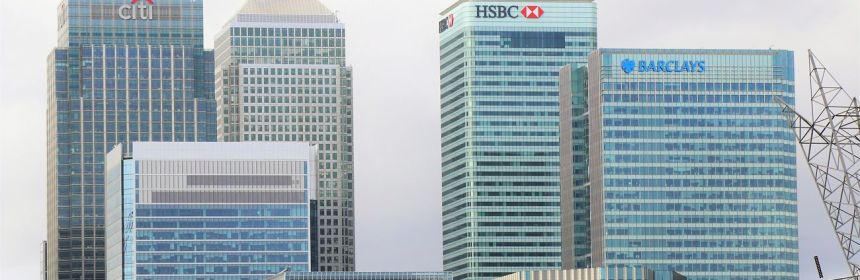
In a shocking turn of events, Credit Suisse – the second largest lender in Switzerland – has been acquired by UBS in a shotgun marriage on March 19, 2023. The failure of Credit Suisse has been attributed to a spill over of market fear caused by the default of regional banks in America, notably Silicon Valley Bank. Investors turned their attention to the European market, speculating on which bank would be the next to falter. With numerous scandals plaguing the Swiss lender, it was an easy target for speculators.

Credit Suisse had tried to transition into the investment banking styles found in the US and UK but this has only resulted in a series of scandals. The bank has been accused of allowing drug dealers to launder money, of giving loans to corrupt government officials in Mozambique, and more recently of allowing a massive data leak in 2022. Notably, Credit Suisse participated in an absurd situation where they surveilled former executive Iqbal Khan after he joined rival UBS. Due to the acquisition, Mr. Khan is now attempting to keep Credit Suisse bankers for UBS.

However, many banks of this size experience their fair share of scandals. What worried investors most was Credit Suisse’s underperformance – its revenues have fallen roughly 50% in the last ten years. This, coupled with rising interest rates and a general lack of confidence in the bank’s new management, made it an easy target. All eyes turned to the Saudi National bank, 9.9% shareholders of Credit Suisse. Ammar Al Khudairy, chairman of the Saudi National bank was asked if they would provide liquidity or further investment if Credit Suisse experienced more problems, to which Mr. Al Khudairy responded ‘absolutely not’. This seemed to be the straw that broke the camel’s back as Credit Suisse’s stock began to tumble after this interview.

Swiss regulators stepped in to force UBS to acquire Credit Suisse hoping to salvage as much value as possible from the failing banks as well as trying to reduce spill over effects. As part of the acquisition Swiss regulators promised common shareholders some form of compensation. Alternative Tier 1 (AT1) bonds were rendered worthless as a result of this ruling, which caused controversy among bondholders because it appeared to deny the widely held belief that debt is given priority over equity in bankruptcy. The central bank of the UK has condemned this decision and assured AT1 bondholders that they will hold preference over common equity in the event of a failure of a British bank. However, the Swiss regulators defended their decision citing the fact the AT1 bonds were created to absorb losses in this type of scenario.

The failure of Credit Suisse has shattered investors’ hopes that the banking crisis was limited to US regional banks. Attention has now turned to finding the next victim of the liquidity crisis. Deutsche Bank has come under fire but seems to have weathered a nervous period where its stock had dropped over 8% on one Friday. The stock rebounded over 4% on the following Monday. Central banks across Europe have also come out in defence of their banks citing the stricter regulations they adhere to compared to US banks. The ECB have also raised interest rates by 50 basis points. Although this may create further strain on the banking system, it is also a show of confidence that the banks can handle another hike in interest rates.

Why are American Investors Buying European Football Clubs?

The FSG have announced that they are in talks to sell Liverpool football club to a U.S. based investor at a profit of around $4 billion. Earlier this year the Todd Boehly Consortium acquired Chelsea football club, Mr.Boehly said that ‘football is the biggest sport in the world’, he has echoed the American sentiment that football’s commercial value has been underexploited. These stories of American investors in football are becoming more common each year. The American market view football clubs as media companies being run inefficiently and available for purchase at a bargain.

Perhaps the best example of this opportunism is the Fenway sports group acquisition of Liverpool. FSG paid £300 million pounds ($490 million inflation adjusted) for Liverpool in 2010, while other premier league clubs were run in a traditional way, FSG adopted a data-driven model inspired by their success in American sports. After 12 years, FSG have announced that they are willing to sell Liverpool with Forbes valuing the club at $4.45 billion, which would be a 20% annualised return on their original investment. This profitability is mirrored by other owners such as the Glazer family who have made an 8% annualised return over 17 years as well as extracting $1.1 billion from Manchester United.

Football teams are viewed by American investors as underperforming media corporations. It is easy to see why they think this when you compare the NFL to the Premier league. Despite having a smaller target market, the NFL claims that 6.16 billion hours of NFL content was consumed just last year, Statista reports that the NFL reaches revenue of $17.2 billion from this content. In comparison, the premier leagues viewers consumed just 1 billion hours of content and generated just $6.2 billion. American investors believe that they can boost these revenue figures and get a huge return on their investments.

There is also a lower barrier to entry with European football clubs when compared to the American sports industry. While joining the NFL will cost an investor hundreds of millions of dollars, they may purchase a mid-table premier league team for a reasonable price. There is also the option of taking a lower league side through promotion; this option can produce massive returns on investment. This option does not exist in the American sports scene where promotion and relegation do not exist.

However, this does present a problem for American investors. The threat of relegation means that their investment could be massively devalued. It also makes the leagues more competitive, in American leagues there is no threat of relegation so the main focus of sports teams is to make money. While in football, regardless of how profitable a team is, their value will still drop dramatically if they are demoted.

Despite this risk, American investors still believe that they are entering an under-valued asset class and with streaming services entering the sports entertainment industry it seems the potential for growth, and therefore American interest, is set to continue.

Billionaire is ‘Going Purpose’ by Donating $3 Billion Company to the Earth

5 years after claiming that ‘We’re in business to save our home planet’, Patagonia founder Yvon Chouinard has followed through on his promise by donating his company to the earth. Chouinard founded Patagonia in 1973, and his values have always been central to the company. The company also donates 1% of its profits to charity each year and promotes an environmentally friendly business model, even going so far as to encourage customers not to buy Patagonia clothing new and instead reuse old ones.

In his open letter to stakeholders, it was clear that in selling the company Chouinard wanted to ensure both the financial success of the company and the charitable success of his donations. According to Chouinard, ‘there were no great options available to us, so we created our own.’

Chouinard decided to sell his businesses to two different entities. The first entity, the Patagonia Purpose Trust, received all off the voting stock which is equivalent to 2% of the company. The Chouinard family received nothing from this sale and paid $17.5 million in taxes.

However, by doing this Chouinard believes he and his family can ‘maintain our values’. The Patagonia Purpose Trust’s board will include the Chouinard family as well as directors equally committed to the success of the company and the planet.

As well as this, 100% of the non-voting shares will go to the Hold Fast Collective. These shares are equivalent to 98% of the company and will receive 100% of the profit. The Hold Fast Collective is a non-profit organization that advocates for clause and political candidates that fight for the environment. Patagonia expects to generate $100 million in profit to help the Hold Fast Collective.

Chouinard closed his statement with a message of hope: ‘Despite its immensity, Earths resources are not infinite, and it is clear we’ve exceeded its limits. But it’s also resilient. We can save our planet if we commit to it.’ Chouinard has set an example for all companies and governments, and one can only hope that his example is followed in time.

Truss’s first act as UK Prime Minister promises to save the public, but she threatens the value of the pound

Lizz Truss enters no. 10 Downing Street during high-stakes wars; both within her party, and on the Eastern borders of Europe. However, her first battle as prime minister will be tackling the energy bill crisis. This daunting task is made ever more difficult by Truss’s commitment to a low tax economy.

The cost of a cap on energy bills depends largely on its form. A targeted plan to help the most vulnerable households, such as £650 for those on means-tested benefits, would be cheaper. However, it would be difficult to implement quickly and effectively and it would leave families just above the threshold in a precarious position. A blanket tax break would benefit richer households with disposable income, and would cost substantially more.

Furthermore, the cost of the energy cap will likely be increased by factors outside of Truss’s control. Putin has taken a stance against western sanctions by extending the closure of Nord Stream 1. This will increase the price of gas as well as the cost of Truss’s relief plan. As well as this, a relief package of this scale will increase public spending in a demand charged inflation spike, spurring a further rise in interest rates.

With a public debt to GDP ratio of 96%, investor confidence in the UK is low. Couple this with extensive high-interest rate borrowing, Truss will need to provide extensive assurances on payment plans in order to attract foreign investment. However, as of yet all she has done is ensure that taxes will be slashed.

If Truss decides to increase taxes, either approach will be politically difficult. A general tax would be a rejection of her low-tax promise, which could be seen as a return to the laissez-faire approach to policy integrity endured during the Johnson administration. However, a long-term repayment of tax breaks could cut vulnerable households adrift, which would be detrimental to the economy.

With a worryingly high cap on costs, and no real plan to raise funds for repayments, investor confidence is at a worryingly low level. On Monday, Shreyas Gopal of Deutsche Bank claimed the UK could be on a “balance of payments crisis”. Although unlikely in a G7 economy, the risk of a balance of payments crisis is no longer negligible. Therefore, in order to attract foreign investment and fund her relief package, Truss will have to depreciate the value of Sterling substantially, with Deutsche Bank claiming that a devaluation of 30% may be required to attract foreign investment into Britain.