Tag Archives: featured

Big Tech: The Precarious Balance Between Algorithmic Governance and Democratic Accountability

by Rachel Carr

Over the past months Amazon and Alphabet have reported phenomenal earnings for the second quarter of 2021. These figures were largely driven by Google skyrocketing advertising revenues, which grew by 69%, along with Amazon’s advertising income which increased by 87% from the year ago quarter. These results reflect the central role that social media and technology have played in society over the last year, not only in offering a much-needed escape from the boredom of COVID-19 lockdowns but also in their newfound role as public forums. Last April, when the Italian Prime Minister decided to address the nation on the latest lockdown measures, he elected Facebook as his chosen medium of communication. Similarly, the British government requested Amazon’s assistance in distributing emergency medical supplies and Google leaped at the chance to assume its role as a mouthpiece for public services announcement across the globe. 

However, as the “Gordian Knot” that entangles Big Tech with its societal consequences tightens further, we should consider the motivations behind the growing presence of these tech heavyweights in our lives. What exactly are these  tech giants selling to their customers and what are the potential consequences?

To understand what triggered the phenomenal rise of Big Tech superpowers we must first cast an eye back to April 2000, when eager dot com investors watched in horror as the stock market imploded and the value of their portfolios plummeted. As the mirage of many of Silicon Valley’s superstar valuations began to evaporate, it became clear that in a text-book case of irrational exuberance, venture capitalists had been so blinded by the lure of the internet’s potential, that they had wildly overestimated the intrinsic value of their investments. 

Surviving tech firms, struggling to justify their value to furious investors, began to search desperately  for a port in the storm as the turmoil raged. Amongst them was Google, today’s search-engine giant,  which had been incorporated a mere two years prior. According to Shashona Zuboff, the Harvard Business School professor and author of ‘The Age of Surveillance Capitalism,’ the dot com bubble triggered Google’s understanding that its true value lay not in the licensing deals it had been selling, but rather in its vast stores of behaviourally rich data. Despite the company’s founders previously condemning search engine advertising as “inherently biased towards the advertisers and away from the needs of consumers”, the firm went on the capitalize on just that, with Facebook, Amazon and Twitter soon following suit.

Zuboff has coined this commoditization of the data of individuals into behavioural products that can be sold in ‘predictive futures markets’, as surveillance capitalism. In recent years the cautionary tale of “if you aren’t paying for a product you likely are the product” has been widely circulated. Of this the general public seems to be reasonably cognizant: an hour spent on Skyscanner will likely flood your feed with holiday advertisements and a trip to the ASOS homepage will litter your desktop’s ad space with outfit ideas. However, it was what the “FAANGS” discovered next, and the lucrative source of the last decade’s soaring tech valuations, that is likely to induce the most surprise. Google and its peers deduced that while it could use its data to predict the future behaviour of users with reasonable accuracy, the easiest way to guarantee the precision, and thus value of those predictions, was to influence the behaviour of users to match the algorithm’s forecasts.

An example of the application of this insight was the addition of a number of emotional reactions to Facebook’s ‘like’ button. While this modification poses as a harmless quirk designed  to allow users to further engage with the platform’s content, it also assists Facebook’s algorithms in accurately identifying and collating data on human emotions. The opportunities resulting from the utilization of this data are massive. Users can be shown posts designed to induce feelings of discomfort or sadness, followed by sponsored content intended to take advantage of this vulnerability. Along a similar vein, Google has been known to display ads for a specific restaurant and then reroute a user’s map  journey to take them past the suggested establishment: a perfect example of the use of surveillance  and behavioural modification to maximise profits at the expense of individual autonomy.

The implications of these privacy infringements extend beyond the encouragement of the occasional impulse purchase. In 2017 the autonomous hoover ‘Roomba’ came under fire when the company announced its proposal to sell floor plans of customers’ homes, scraped from the device’s mapping capabilities. Later that same year the curtain fell on the infamous Cambridge Analytica scandal, revealing the role the data analytic firm had played in manipulating the data of 87 million Facebook users to manipulate the outcomes of both Trump’s 2016 Presidential the Brexit vote. This proof of intentional cyber manipulation, designed to promote the so-called ‘splinternet’, revealed the power of Big Tech behavioural nudging to distort democratic processes. In fact, in 2019 Mark Zuckerberg’s former advisor Roger McNamee publicly criticized Facebook for its relentless pursuit of  customer data through increasingly illicit means claiming that the company’s algorithms were, ‘’honed to manipulate user engagement with practices that were eventually commandeered by bad actors to infiltrate the national (US) consciousness and disfigure political discourse.” Earlier this year Zaboff subtitled her New York Times article with the ominous statement, “We can have democracy, or we can have a surveillance society, but we can’t have both.”

Whilst the extent of the influence of Big Tech on the democratic process is yet to be determined, it is undeniable that  tech companies have amassed vast stores of behavioural data which can spell danger in the wrong hands. As a result, there is an argument for putting certain social obligations on companies with such data privileges; in other words, “With great power comes great responsibility” . Covid-19 revealed Big Tech for what it truly is: a 21st century public forum. Due to their wide-reaching social impacts, large technology companies should be answerable to the governance of regulatory bodies. If banks, electricity, water and utilities companies are regulated because of the impact of these services on a nation’s citizens, then there is reason for Big Tech to no longer be able to evade such scrutiny.

Creative Destruction: Gaining in strength?

Perhaps one of Schumpeter’s most revered theories is that of creative destruction. His argument that capitalism never stands still, with long-standing, inefficient processes decaying in the wake of newer, superior ones has stood the test of time well, and in the aftermath of a global pandemic, appears to continue in this light.

WFH – a trend, an improvement, or both? 

A more obvious impact of the pandemic-induced lockdowns was the ‘Work From Home (WFH)’ situation, which many workers and students found themselves in. While evidence suggests that students and young graduates certainly wish for a return to an in-person normality, the technology, flexibility and heightened global interconnection that accompanied this WFH trend can be seen as a form of creative destruction. This is due to the replacement of older, less efficient, less flexible practices undertaken by offices with more productive, collaborative ones. With meeting participation increasing by over 2900% over the course of the Pandemic, the rise of Zoom neatly epitomises this creative destruction. Existing for almost a decade prior to the pandemic, Zoom’s overtaking of Skype, and other lower quality, more complicated platforms, coupled with a rise in global interconnectivity from which it prospered, illustrates that the foundations for creative destruction had been in place. However, it was the catalyst of the Pandemic that fuelled the eventual ousting of these inefficient processes.

Miracle Advances in Healthcare

Being a crisis in healthcare, the impacts of Covid-19 on the sector were always going to be large. As the world locked down, the personal profit from vaccines became huge, with many viewing vaccine development as the only sustainable way out of the crisis. Furthermore, for big pharma businesses, net profits from development were promising, as BioNtech’s expected revenues of €15.9 billion for this year illustrate. Thus, the fastest vaccine development in history (previously held by the mumps vaccine, which took four years to develop) followed, hailing what scientists proclaim as a new era of vaccine research. Much like the Work from Home technology, the knowledge of mRNA, alongside the ability to accelerate the testing and approval processes had been around for decades, yet a lack of funding and cooperation meant that such techniques and pace never came to fruition. Thus, the catalyst of a global pandemic rendered inefficient processes useless, in favour of more productive research techniques. While admittedly this research was far better funded than in the past, the lessons learned within the immunisation research sector, alongside the new-found ability to produce vaccines at such pace, and with new techniques, means that the creative destruction ought to last within the industry. This should heighten the efficiency and productivity of future research.

Similarly, the speed of drug development processes to aid those seriously ill with Covid-19 underwent rapid increases during the pandemic. Like with the vaccines, much of this came from the regulation-side, with approval and testing processes being fast-tracked, and the removal of unnecessary paperwork (recognised as inefficiency-inducing ‘sludge’) aiding this. Additionally, cooperation and parallel experimentation again played its part in heightening efficiency in the sector, a rise in productive techniques that many scientific researchers think will remain in a post-Covid world, further illustrating the impact of the pandemic on inducing creative destruction.

Online Shopping’s Anticipated Breakthrough

Where the biggest acceleration (rather than initiation) of creative destruction can be seen is in the retail sector, as many began relying solely on online shopping for everything from food to clothes to newspapers. Additionally, HSBC’s UK head of network noted that the closure of eighty-two of their branches between April and September 2021 was a result of the trends away from branch banking that were underlying pre-Coronavirus, with a decrease in footfall by a third in the last five years, and 90% of contact being completed remotely. This illustrates direct creative destruction at work in the retail banking sector. Furthermore, this shift to online shopping and banking has increased price and competitor transparency, meaning that allocative efficiency has heightened, bringing the market closer to its societal equilibrium, and meaning that firms must react to market trends to remain competitive – therefore increasing the sustainability of this creative destruction into the future.

Key Take-Aways 

The above processes illustrate creative destruction at work, reacting to the shock event of a global pandemic. The requirement in this instance of an event – Covid-19 – to accelerate, or even to consolidate and finalise this creative cycle could signal that Capitalism’s competitive processes were existent, yet running slow prior to the Pandemic. Taking a wider view, the extension of creative destruction to the public sector, notably with the impacts on healthcare and administrative/bureaucratic processes, ought to introduce a healthy level of heightened innovation and competition to sectors where this has previously been lacking. Whether the impacts of Covid-19 on heightened efficiency here will last remains to be seen, not-least for some areas of clinical research have been negatively impacted by the disruption of the Pandemic, yet many researchers, notably within immunology and drug development, are confident that the streamlined and productive lessons learned will be here to stay.

Furthermore, the sudden requirement for private firms to react and innovate, not only to compete, but in this case to stay financially viable means that lasting effects on firms includes an obligation to be sustainably efficient and inventive, with a new focus on pro-activity rather than re-activity to the next crisis, in order to remain profitable.

Re-Envisioning The Beautiful Game

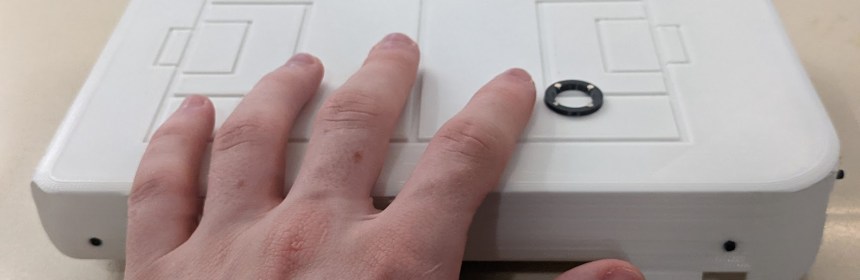
David Deneher, Omar Salem and Tim Farrelly co-founded ‘Field of Vision’, an innovative tech start-up with a powerful social impact agenda that is transforming the match experience for visually impaired and blind soccer fans. Computer Science and Business student at Trinity College and Chief Operations Officer at Field of Vision, David Deneher, discusses the technology behind the cutting-edge device as well as his philosophy for a successful start-up. 

Haptic Technology

As most football fans will agree, there is no better place to experience a game than at the stadium. From a goal scored in overtime to a nail-biting penalty shot, being right at the pulse of the action is incommensurate to following in-stadium commentary. With approximately 55,000 people in Ireland blind or visually impaired, Field of Vision spotted a niche need in the market for a device that could enable visually impaired football fans to be fully immersed into the match experience, leaving the technique of “tracing” a thing of the past.

How is Field of Vision leveraging artificial intelligence to redefine accessibility and inclusivity in sports? Cameras, computer vision technology and specialised algorithms connect to Field of Vision’s tablet-sized device to enable the user to feel the game in real time; from “the swerve of a kick to the power of a tackle”, Field of Vision is offering a more inclusive matchday experience than ever before.

Despite the challenges caused by the pandemic, the speed at which Field of Vision developed its product underscores the digital acceleration that is presently taking place. Advances in technology, many centred on AI, marks the beginning of a “new era of connectivity for assistive technologies and the businesses behind them”. The effect will be “highly impactful” for improving accessibility for persons with impairments. As a “pandemic tech start-up,” Field of Vision’s “entire journey as a company” has been unique.  For David and his co-founders the flexibility of online college offered opportunities to innovate and find their way to the forefront of their industry. Currently the business is planning to expand their technology into sports such as GAA and rugby.

Success

According to David, critical to the success of a tech start-up is harnessing the power of mentorship programmes available to young entrepreneurs. Applying for “anything and everything” has had “positive surprises” for Field of Vision. David’s philosophy is that the “worst that can happen is a no”. Diving straight into the deep end took the team to Qatar Sports Tech, an accelerator program in Doha, UAE. Having recently partnered with Bohemians Football Club and winning first place at the Enterprise Ireland Student Entrepreneur Awards 2021, Field of Vision’s appetite to grow shows no signs of abating.

The Rise of Software as a Service (SaaS) – with a Focus on the Indian Industry

As businesses were forced to incorporate remote working in their business models due to pandemic-induced lockdowns, they needed to invest in softwares that supported this move to online operation. SaaS (software as a service) companies have been able to provide businesses with the tools to assist in this transition. While the pandemic has disrupted multiple industries, SaaS has advanced as organisations espoused digital solutions to make the move from in-person to online. Some of the biggest SaaS companies that have benefited from the pandemic include Zoom, Box, Slack, Okta, and Salesforce. These software and cloud service providers have provided businesses with tools to not only continue their business operations, but also with security to conduct work in a confidential manner.

In India alone, it is predicted that its SaaS industry could be worth $1 trillion in value by 2030 and create nearly half a million new jobs. In addition, this momentum could lead the Indian SaaS industry to win 4-6% of the global SaaS market by 2030. There are already close to 1,000 SaaS companies in India – with 10 already becoming unicorns (a company valued at over $1 billion). In fact, Indian SaaS startups have raised $4.3 billion since 2020. Although India is currently only a small contender in the global market, there is scope for the country to dominate due to the predominance of English speaking developers and the relatively low cost of hiring them. It is estimated that India could have more than 100,000 SaaS developers and more technical talent at a third of the cost available in the US, making India a hotspot for international corporations to invest in. 

The integration of SaaS within business models also appears to stand long term – past its mere necessity due to the pandemic. This is because the success of remote working has pushed companies to decide to permanently implement working-from-home. For example, TCS (Tata Consultancy Services) in India was a company that was sceptical about working remotely and rarely administered the practice due to concerns about productivity. However, its endorsement throughout the pandemic demonstrated a highly positive impact on the corporation. Such benefits included efficiency, a greater diversity in the workforce, an increase in the number of women in leadership roles, and increased productivity due to enhanced labour flexibility. TCS believes this is because remote work offers better work-life balance. The happier employees met all company objectives and even “added nearly 60 new clients and hired 45,000 people.” 

Evidently, the pandemic has created a long-lasting effect on businesses in terms of running their operations technologically. The post pandemic landscape shows evidence that SaaS could potentially even take over the IT industry in terms of valuation by 2030, such that SaaS will cross $1.8 trillion compared to IT services at $1.6 trillion. India’s mark on the SaaS industry has been quick and large. However, while there are challenges, such as the industry needing to boost funding at three to four percent of the current level to reach their potential over the next 10 years, it will be interesting to see how SaaS firms in India use their native competitive advantages to further launch themselves into the global market.

“Hungry for a Kinder World” – Interview with FoodCloud

FoodCloud’s Marketing and Brand Executive, Jessica Greene, discusses the Irish social enterprise that uses innovation to protect the planet and feed the hungry

Did you know that food waste is one of the largest contributors to global climate change?A recent Report by the Food Waste Index identified that approximately 931 million tonnes of food waste was generated globally in 2019 – 61% of which came from households, 26% from food service and 13% from retail. The ugly truth is that our habits as consumers are contributing to a heavy carbon foot print that is detrimental to the environment around us. When food starts to rot in landfills, it releases methane into the atmosphere – a greenhouse gas that is approximately 28 more times powerful than carbon dioxide at warming the earth. This is where the social enterprise ‘FoodCloud’ provides two innovative solutions to redistribute surplus food and reduce the environmental, social and economic impact of food waste. Firstly, FoodCloud’s technology driven solution connects retailers directly with local charities to donate food on a daily basis. Secondly, their warehouse hub solution rescues large volumes of surplus food from manufacturers producers, growers and redistributes it to community groups across Ireland. 

FoodCloud’s Story

FoodCloud was co-founded by Trinity College Dublin alumni Iseult Ward and Aoibheann O’Brien in 2012 as a solution to reduce food waste and increase social inclusion. With over “700 partner charities in Ireland,” FoodCloud provides their service to their network of community group partners ranging from “creches to cancer care facilities to after school youth programmes and addiction centres”. The nature of surplus food is that “the team does not know what products are coming in”. This required the business to be adaptable and agile from its early roots.

Global Vision

Driving social entrepreneurship requires innovation, collaboration and ambition – tactics FoodCloud operationalises regularly to tackle food waste on a global level. FoodCloud’s unique technology platform can complement and enhance the operation of food banks internationally and is used by nearly 3,000 donating supermarkets across Ireland, the UK, Australia and Central Europe. It is clear that FoodCloud’s drive to eradicate food waste is truly global from their commitment to supporting the global achievement of Sustainable Development Goal 12.3 which relates to measuring global food loss and waste and Sustainable Development Goal 2 , the “Zero Hunger” ambition.

Locally, FoodCloud are finding innovative ways to tackle the issue of food waste. For instance, FoodCloud’s gleaning initiative has re-invigorated the “ancient practice of collecting food left over from farmers’ fields and orchards to re-distribute to their network of charity and community group partners”. This practice led to FoodCloud’s first surplus product, FoodCloud Cloudy Apple Juice. Jessica points out that the team is constantly “motivated and excited about exploring possibilities to reduce the environmental impact of food waste”. This initiative demonstrates how social entrepreneurs can use creativity to create a sustainable commercial product.

Throughout the COVID-19 pandemic, “the demand for FoodCloud’s services has more than doubled compared to last year”. For Jessica’s team, the crisis “highlighted that food insecurity can happen to anyone”. To support the challenges faced by vulnerable households during the pandemic, FoodCloud increased their food redistribution from an average of 30 tonnes per week to 60 tonnes per week. Food Cloud continues to work closely with the Irish food industry and retailers to ensure surplus food gets to those who need it, working towards their vision of a world where no food goes to waste.

Volunteering

Interested in contributing to a world where no food goes to waste? FoodCloud offers volunteering opportunities across its three hubs as well as gleaning programmes. You can check them out here. Food for thought .

« Older Entries Recent Entries »