Tag Archives: currentaffairs

Truss’s first act as UK Prime Minister promises to save the public, but she threatens the value of the pound
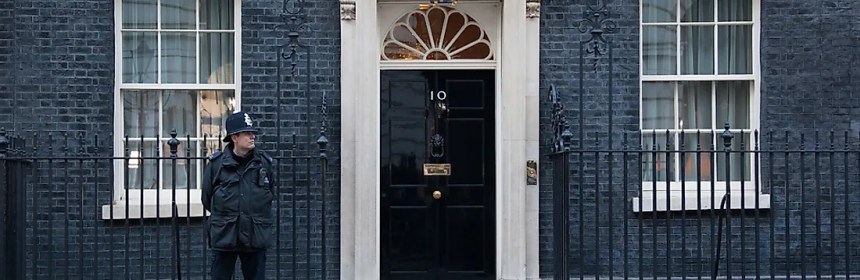
Lizz Truss enters no. 10 Downing Street during high-stakes wars; both within her party, and on the Eastern borders of Europe. However, her first battle as prime minister will be tackling the energy bill crisis. This daunting task is made ever more difficult by Truss’s commitment to a low tax economy.

The cost of a cap on energy bills depends largely on its form. A targeted plan to help the most vulnerable households, such as £650 for those on means-tested benefits, would be cheaper. However, it would be difficult to implement quickly and effectively and it would leave families just above the threshold in a precarious position. A blanket tax break would benefit richer households with disposable income, and would cost substantially more.

Furthermore, the cost of the energy cap will likely be increased by factors outside of Truss’s control. Putin has taken a stance against western sanctions by extending the closure of Nord Stream 1. This will increase the price of gas as well as the cost of Truss’s relief plan. As well as this, a relief package of this scale will increase public spending in a demand charged inflation spike, spurring a further rise in interest rates.

With a public debt to GDP ratio of 96%, investor confidence in the UK is low. Couple this with extensive high-interest rate borrowing, Truss will need to provide extensive assurances on payment plans in order to attract foreign investment. However, as of yet all she has done is ensure that taxes will be slashed.

If Truss decides to increase taxes, either approach will be politically difficult. A general tax would be a rejection of her low-tax promise, which could be seen as a return to the laissez-faire approach to policy integrity endured during the Johnson administration. However, a long-term repayment of tax breaks could cut vulnerable households adrift, which would be detrimental to the economy.

With a worryingly high cap on costs, and no real plan to raise funds for repayments, investor confidence is at a worryingly low level. On Monday, Shreyas Gopal of Deutsche Bank claimed the UK could be on a “balance of payments crisis”. Although unlikely in a G7 economy, the risk of a balance of payments crisis is no longer negligible. Therefore, in order to attract foreign investment and fund her relief package, Truss will have to depreciate the value of Sterling substantially, with Deutsche Bank claiming that a devaluation of 30% may be required to attract foreign investment into Britain.                                                                                                                                                                      

Budget 2021: What We Know So Far

By Paul Ralph

  • Minister announces no changes to PAYE, USC or PRSI.
  • Central Bank Governor Gabriel Makhlouf calls for path to “sustainable debt” and a focus on building resilience to future shocks.
  • IBEC lobbies for gradual tapering of business supports into 2021 as opposed to a “cliff-edge” end.

Last Wednesday, the Minister for Finance Paschal Donohoe confirmed that there would be no changes to income tax, USC or PRSI. At a press briefing he explained that cabinet had agreed that increases in taxation would be counterproductive. The Minister wants to “give confidence to those earning income or who a have level of deposits in our economy” in a time of “heightened economic uncertainty”. The main focus of the government is the management of the Covid-19 crisis and the looming prospect of a no-deal Brexit at the end of the year. This was made clear when the Minister explained that only “future budgets” would be guided by the commitments made in the Programme for Government agreed between the three governing parties. 

Minister Donohoe declined to rule out any possible changes to welfare payments.

Donohoe’s Fianna Fáil counterpart, Minister for Public Expenditure and Reform Michael McGrath said that government spending this year would be 23% higher than forecasted due to the unprecedented scale of government intervention in the economy due to the Covid-19 pandemic.   

The unpredictability of the current crisis is adding to the difficulty of planning a budget. Speaking to RTÉ news on Wednesday, Minister McGrath said he was currently working with officials to ascertain how much extra spending will be required next year for schools, the health service, new college places and the additional costs of reduced capacity public transport.   

On the same day, the Governor of the Central Bank Gabriel Makhlouf wrote to the Minister for Finance in his pre-Budget letter outlining what policy needs to focus on. In the letter, the Governor outlined three goals of policy:

  • Policy should focus on “supporting the productive capacity of the economy”.
  • Path to lower and sustainable debt will eventually have to be forged.
  • Continued “focus on building resilience to future shocks”.

Regarding the first point, Minister Donohoe has yet to introduce any labour market activation policies such as new training programmes. He is instead opting for the continuation of a reduced Pandemic Unemployment Payment scheme until the end of the year. This has received condemnation from the opposition with Sinn Féin’s housing spokesperson Eoin Ó Broin calling for the reintroduction of the €350 weekly payment in light of increased restrictions.  

The Central Bank Governor also advised against supporting loss-making enterprises, arguing that it was “not in the community’s interest”. However, it will be difficult for the government to distinguish what firms had an unsustainable business model entering this recession given its nature. The Governor recommended that the Government make provisions for business support grants. Also, he expects that debt will be an unattractive prospect for many SMEs because of the “scarring effect” of the previous crisis, banks’ reduced lending appetite and any debt overhang during the recovery. So far, the government has not yet hinted at any changes for the whole economy after Level 3 restrictions were introduced in Dublin last Friday. Nonetheless, the government committed to an extra €30 million in aid for businesses in the Capital.    

Covid-19 restrictions have hit SMEs extremely hard. The Government’s current emergency supports are due to end in the first half of 2021. In IBEC’s pre-budget submission they call for provisions to be made for the tapering of supports to avoid a cliff edge for thousands of businesses. The group said that the package of supports would need to be in the region of €6 billion on top of the €20 billion that will have been spent by the government on business supports by the first half of 2021.

According to IBEC’s chief economist, Ger Brady, who was speaking at the launch of the group’s pre-budget submission, the Government will run a deficit this year of about €30 billion. To give this figure more context, in 2019 there was a small surplus of €1.5 billion. The last time the deficit was so large was in 2011 when it hit €30.5 billion, starkly illustrating the extent to which the Irish economy is now reliant on government stimulus. 

Recent Entries »