Category Archives: Uncategorized

Qatar: A Controversial World Cup Host

We are less than one month away from the beginning of the latest edition of the FIFA World Cup. The hosts to follow the well debated Russian successful bid in 2018 is the wealthy Gulf state of Qatar. Thirty-two nations and over 1.5 million fans are set to descend on Qatar over the month of World Cup action. It should be a time where we celebrate football’s unique ability to bring us all together. However, scepticism over Qatar’s suitability for its role of World Cup host abounds. 

Shoddy labour protection, deaths of migrant workers, the general disdain Qatar holds for the LGBTQIA+ community along with practical concerns such as those over accommodation and leisure have cumulated in unprecedented criticism for the Gulf state and FIFA.  

Scandals of bribery have rocked FIFA over its 2010 decision to make Russia and Qatar consecutive World Cup hosts, with former FIFA President Sepp Blatter banned from football until 2027.  Alas, Qatar remains the host. The nation state has fully committed to their unique opportunity to boost its “soft power and to add to its political influence” by spending over $200bn to act as host. Eight stadia have been refurbished or entirely constructed along with the creation of a new public transport system and international airport to meet the prerequisites for accommodating the tournament. Although Qatar’s oil reserves have made it a wealthy country, an outlay of $200 billion is immense for a country of only 3 million inhabitants.  

Initial projections by the Qatari government of potential revenues generated by the World Cup amounted to $20bn. However, projections have already been revised downwards to approximately $17bn. Financial outlays by former World Cup hosts have not seen the economic returns that were projected, with many financial experts noting the limited economic benefit of hosting a football tournament. The costs simply outweigh the potential financial benefits. However, there is an interesting pattern emerging in the previous hosts of the World Cup since 2010. Qatar, like Russia, South Africa and Brazil beforehand, have all experienced weakened soft power and concerns over political stability. This World Cup acts as a potential public relations boon, and that is what Qatar seeks.  

The image Qatar is trying to project, and the reality, appear very different indeed. According to the Guardian, 6500 migrant workers have died in the Gulf state since 2010. Amnesty International has joined mounting pressure to renumerate workers abused by the unlawful practices in the construction of stadia for the World Cup. Amnesty believes a figure of $440mn would be appropriate to compensate these individuals and their families. This, coupled with Qatar’s prohibition of many activities we have grown accustomed to, has exacerbated concern regarding Qatar’s suitability. These include the consumption of alcohol and tobacco, photography and reading non-Muslim religious texts.  

This all culminates in a situation where Qatar’s bet on this World Cup represents a significant risk.  

Backlash to the World Cup has been noteworthy with commercial sponsors ‘disliking’ the choice of Qatar as host. However, their dislike has not warranted much action as many continue to support the Qatari World Cup. One benefactor has emerged as an exception to this pattern. Danish football team sponsors Dankse Spil and Arbejdernes Landsbank have surrendered their sponsorship position on the Danish jerseys. They have replaced their brands with a series of human rights messages. The Danish Football Association and their sponsors believe they can draw attention to their reservations through powerful symbolism on the Danish football jerseys.  

This stance has been widely lauded by fans across the globe. However, Ricardo Fort, a well-established marketing executive, believes many companies will remain silent about issues in Qatar unless it impacts their companies directly.  

The projected soft power gains and increased tolerance of the Qatari regime will only succeed if we allow it to, by collectively ignoring the reality of those suffering at the hands of the Qatari state. 

We must raise our concerns against a homophobic, abusive regime hosting a tournament that is meant to celebrate our collective differences. As Lewis Hamilton said, “Cash is King”. The sponsors of this tournament will follow our collective morals regarding this contest. This may seem bleak as sponsors merely follow the trends of the time; however, I think this gives ordinary people the power to influence change. As we watch our favourite footballers throughout the month of footballing mania, keep those who have suffered and those who continue to suffer under the Qatari regime in your mind.  
Unpacking the Ethics of Sustainable Food Shopping – Ireland’s ’30 under 30′, Laura Brennan and Lara Páirceir discuss their business ‘EthiCart’

 “Green”, “eco-friendly,” “sustainable,”   “climate neutral”, “ethical” – sound familiar? These terms are just some examples of words that have inundated product packaging to appeal to eco-conscious consumers. Yet, the shift towards a more environmentally educated and knowledgeable consumer base does not always translate into the purchase of sustainable products. In reality, eco-labels can result in the provision of confusing, misleading and contradictory information to consumers. 

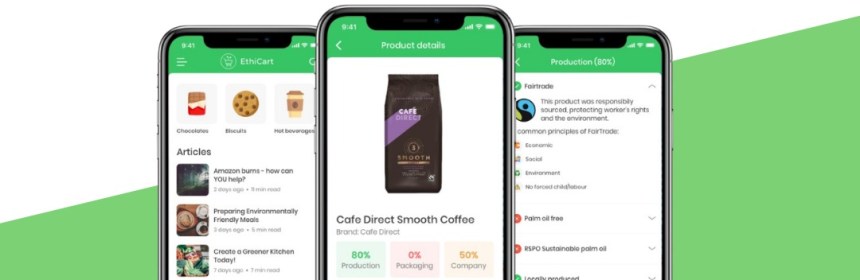
 EthiCart, an app developed by Trinity Computer Science and Business alumnus Laura Brennan and current Trinity Sociology and Social Policy Student, Lara Páircéir, bridges the gap between the sustainable and ethical food standards demanded by the majority of millennials and what brands are delivering. A desire to “help the everyday person who cares about climate change but does not know where to start” motivated the entrepreneurs to create EthiCart. With a simple scan of a product’s barcode, users can quickly avail of easy to understand information regarding a food product’s sustainability and ethical standards. The main goal of EthiCart is to remove confusion around the myriad of certifications and terminology used on packaging by explaining them clearly. This enables EthiCart users to not only become more sustainability-conscious but it also affords them with a large degree of purchasing power. 

The Product Development Process

The product development process is essential for an idea to transition into a viable product. What did the journey look like for the entrepreneurs? Laura and Lara describe Tangent, Trinity’s Ideas Workplace,  as a “crucial base” that allowed EthiCart to springboard into the market. After receiving € 10, 000 in funding to work on their idea the entrepreneurs could successfully begin their business endeavours. Lara describes how “Tangent is very well-connected within Ireland” to point student entrepreneurs in the direction of mentors and resources that match their needs. The entrepreneurs also took part in the “Women Who Wow” programme which connected them with female industry professionals. 

The first steps in the product development process involved a “tonne of market research to understand the problem” they were trying to solve and who they were trying to solve it for. Laura mentions how she and Lara “surveyed hundreds of people”, spending a considerable amount of time “researching sustainable food”. To better understand the challenges faced by their target market, Laura and Lara attended the same events as socially conscious consumers.

The entrepreneurs then built a minimum viable product with the Computer Science School in Trinity which ended in the launch of a pilot version of the App within Trinity College in 2020. This involved Laura and Lara collaborating with the Trinity Communications team to develop a go-to-market strategy and the launching of a college-wide campaign giving students the power to vote for sustainable products to be stocked on campus. Laura described the launch as a “key learning moment”, and the team will be launching the latest version of EthiCart in 2022, incorporating the feedback from the first version. 

Entrepreneurship 

Entrepreneurship for sustainability isn’t just a buzzword, Laura describes it as “a business that thinks beyond just profits and helps the planet. It involves innovating and creating new methods to battle climate change. Most importantly, at an intrinsic level, it is about building a positive impact on how a business makes money, not just having sustainability as an add-on”. Since first developing EthiCart, the entrepreneur’s priorities shifted with the onset of the Covid-19 pandemic. For Laura, change has been a natural part of the process since “graduating and moving country”. When her business partner moved to the USA, the challenge of being in different time zones and countries required the entrepreneurs to reassess how they could develop EthiCart. The entrepreneurs continue to develop their idea with the support of students from the Enactus Society which helps them to manage their workload alongside the rest of their responsibilities. 

Similarly to many entrepreneurs around the Globe, the entrepreneurs felt the disruptive effect of the pandemic on their business. Laura describes how the pandemic “impacted a funding opportunity” that her team was relying on to kick-start the app’s initial development. However, the entrepreneurs were determined not to let this setback from launching EthiCart on time for the return to college, and went on to secure funding from UPS, Trinity’s Sustainability partner, who were “massively supportive throughout the entire process”.

Opportunities 

The entrepreneurs have enjoyed the challenge of starting their enterprise, For Laura, the most exciting part of owning a business was getting to “see something go from just an idea in your head to something that actually positively impacts people”. Laura and Lara enjoy the feeling of receiving positive feedback from consumers that credit EthiCart with helping them “take a step towards a more sustainable lifestyle”. Laura also mentions how EthiCart has provided her with the opportunity to meet “many passionate, driven and creative individuals”, which has given her a chance to support others “who are starting on the same journey” that the entrepreneurs went through. 

Challenges

Laura and Lara agree that the biggest challenge of entrepreneurship is “getting comfortable with the fact that there will always be problems to fix”.  The nature of this challenge is constantly fluctuating, “whether one month it’s funding, or the next its product data”, Laura considers it essential to “adapt and accept the challenges because nobody else is going to fix the problems for you”. Lara also mentions that life as an entrepreneur for sustainability requires a balancing act. Sustainability is not always a clear cut idea, while “working with different stakeholders is a very rewarding aspect of the business” it is also challenging to make sure they have “the best solution for people on the market”.

Advice

After recently being recognised as two of “Ireland’s 30 under 30: The Best and Brightest of Ireland’s Rising Business Starts”, Laura and Lara share some advice for students seeking a career as entrepreneurs. Laura’s advice is to “throw yourself into it, what do you have to lose?” Organisation and time management are key to avoiding burnout. She also recommends reaching out to a mentor who does “something similar to what you want to do”. Pivotal to “making the experience a thousand times more enjoyable” is “choosing the right partner who complements your skillset and who you can work well with”. 

As a recent graduate, Laura can empathise with students who may feel “unsure” about their next career steps. She recommends embracing the “unknown, learn as much as you can and don’t put too much pressure on yourself to have it all figured out”.  For any student seeking to learn from a range of inspiring entrepreneurs, Laura recommends tuning into Gary Fox’s podcast ‘The Entrepreneur Experiment’ or picking up a copy of Phil Knight’s ‘Shoe Dog’‘The Subtle Art of Not Giving a F*ck’ by Mark Manson, and ‘The Lean Startup’ by Eric Ries. Lara opines that “surrounding yourself with existing entrepreneurs whether student or not is a great way” to get your business started. She advises student entrepreneurs to “join the Trinity Entrepreneurial Society to learn more about what others are doing and how they have gone about it”.  

Shoring up Businesses in the Face of Inflationary Pressures

Annual inflation hit its highest point in twenty years in November 2021, with consumer prices up 5.3% year-on-year. EY reckon this trend could be lasting, with inflation expected to average 3.3% next year. Considering the EU target inflation rate of 2%, the severity of these figures is clear. Similar statistics are seen internationally, with the European Central Bank (ECB), Federal Reserve (Fed) and Bank of England all preparing to quash inflationary pressures over the coming months. For example, the Bank of England recently announced increased interest rates to 0.25% , the Fed has signalled to end their bond purchases (heightened during the Pandemic) in March and plan to enact three interest rate rises during 2022. In a differing response, the ECB will continue bond purchases for at least 10 months, before scaling back the procedure. They also ruled out raising interest rates next year, illustrating the ECB’s viewpoint that inflation should fall in 2022. With these actions taken by various central banks in mind, businesses ought to prepare to minimise the potential costs of inflation.

Reasons Behind the Rise 

McVities’ recent announcement that some family favourites such as Hobnobs, Jaffa Cakes and Penguins could see price increases of up to 5% illustrates the direct impact of these inflationary pressures on consumers’ pockets. The UK Managing Director at Pladis Global, owner of McVities, attributed this to Covid-induced staff absences and the rise in input costs, with double digit percentage increases on ingredients such as cocoa beans, alongside higher labour costs.

The vaccine rollout and the economic recovery is also releasing pent-up demand from the pandemic, causing demand to outstrip supply in the economy and prices to rise; this is also known as demand-pull inflation. Another view, as McVities shows, suggests that weakened supply due to labour shortages, aggravated by Covid-19 induced absenteeism and the new Omicron variant, could be driving inflation. Other supply-side issues include the rising costs of core ingredients, perhaps due to supply chain disruption (as a result of the pandemic). This is known as that cost-push inflation, whereby an increase in the costs of wages and raw materials is passed onto consumers in the form of higher prices, is boosting inflationary pressures even further. The rise in inflation can be viewed from both the demand and supply-sides, illustrating its pervasiveness.

Costs of Inflationary Pressures on Firms 

Rising costs due to inflationary pressures means rising uncertainty amidst a backdrop of an already unstable trading environment. This means that firms are less likely to invest in research and development, alongside technological changes for longer term production, hence negatively impacting long run growth rates. Furthermore, the impact on profit margins is ambiguous, and dependent on whether firms will be able to pass higher input costs on to consumers. The more price elastic a good/service is (i.e. if consumers reduce their demand a lot, given a small price increase), then the less likely a firm will be able to pass their rise in costs onto consumers. In this event therefore, profit margins for businesses are likely to fall, a clear cost of inflation on business owners. Additionally, the current business environment, with large staff shortages and absenteeism, means employees have stronger negotiating power regarding their wages. Therefore, despite both the Bank of England and the ECB suggesting there is little current risk of a wage price spiral, labour costs for firms could rise, thus aggravating this fall in profit margins. Ultimately, the costs for firms encompasses the uncertainty of the trading environment, and the resulting impact on long-term growth, alongside the potential fall in profit margins – the extent of which is dependent on the price sensitivity of their consumers. 

Shoring up Businesses

With inflation clearly upon us, it is vital for firms to be aware of their business’ sensitivity to price changes. Despite being a challenge to accurately calculate, awareness of a products’ price elasticity, alongside forecasted and current inflation means that firms can be better placed to react to any price changes and minimise the impact on profit margins. Additionally, awareness of competitors can also help firms respond to rising inflation; if the competition raises their prices, it becomes easier for smaller firms to increase their prices without losing too much demand. Thus, awareness of the competition’s actions, alongside a focus on the business’ unique selling point to make it stand out from the competition, are vital to reduce the impact of inflation. With much of inflation because caused by shortages on the supply side, international diversification can reduce supply chain risk and diminish the impact of rising costs. Indeed, the evaluation of supply chain risk alone, alongside analysing the necessary responses to these risks, can help prepare firms, enabling them to better respond to crises once they arise.

Furthermore, issuing debt can allow firms to diversify their financial portfolios in a way that reduces the impact of rising prices. Since inflation erodes the real value of money, businesses ought to reduce their cash holdings and instead buying capital assets or equipment that promote long-term growth and help businesses ride through the uncertainty. The ability to take out a loan to fund these investments depends on interest rates. Despite the Bank of England’s announced rise in interest rates to combat inflation, rates still remain low; the ECB, for instance, has thus far decided to keep rates at their low. Hence, as long as rates do not rise further to combat the inflation, businesses will be able to pay back their loan cheaper relative to what they borrowed it at. If this loan is used to promote long-run growth through solid investments, then businesses could use inflationary pressures to their favour. Furthermore, stockpiles could be used as long-term buffers, better preparing firms for the rise in inflation. Additional long-term buffers could be sought through locking-in long term contracts at current prices – taking advantage of futures markets to reduce the costs of inflationary pressures.

Ultimately, for businesses to respond well to the current pandemic-induced inflation pressures, forecasting and preparing for all scenarios, alongside acknowledging their competition, price sensitivity, and reassessing their investments is crucial to shore themselves up against rising prices.

“Hungry for a Kinder World” – Interview with FoodCloud

FoodCloud’s Marketing and Brand Executive, Jessica Greene, discusses the Irish social enterprise that uses innovation to protect the planet and feed the hungry

Did you know that food waste is one of the largest contributors to global climate change?A recent Report by the Food Waste Index identified that approximately 931 million tonnes of food waste was generated globally in 2019 – 61% of which came from households, 26% from food service and 13% from retail. The ugly truth is that our habits as consumers are contributing to a heavy carbon foot print that is detrimental to the environment around us. When food starts to rot in landfills, it releases methane into the atmosphere – a greenhouse gas that is approximately 28 more times powerful than carbon dioxide at warming the earth. This is where the social enterprise ‘FoodCloud’ provides two innovative solutions to redistribute surplus food and reduce the environmental, social and economic impact of food waste. Firstly, FoodCloud’s technology driven solution connects retailers directly with local charities to donate food on a daily basis. Secondly, their warehouse hub solution rescues large volumes of surplus food from manufacturers producers, growers and redistributes it to community groups across Ireland. 

FoodCloud’s Story

FoodCloud was co-founded by Trinity College Dublin alumni Iseult Ward and Aoibheann O’Brien in 2012 as a solution to reduce food waste and increase social inclusion. With over “700 partner charities in Ireland,” FoodCloud provides their service to their network of community group partners ranging from “creches to cancer care facilities to after school youth programmes and addiction centres”. The nature of surplus food is that “the team does not know what products are coming in”. This required the business to be adaptable and agile from its early roots.

Global Vision

Driving social entrepreneurship requires innovation, collaboration and ambition – tactics FoodCloud operationalises regularly to tackle food waste on a global level. FoodCloud’s unique technology platform can complement and enhance the operation of food banks internationally and is used by nearly 3,000 donating supermarkets across Ireland, the UK, Australia and Central Europe. It is clear that FoodCloud’s drive to eradicate food waste is truly global from their commitment to supporting the global achievement of Sustainable Development Goal 12.3 which relates to measuring global food loss and waste and Sustainable Development Goal 2 , the “Zero Hunger” ambition.

Locally, FoodCloud are finding innovative ways to tackle the issue of food waste. For instance, FoodCloud’s gleaning initiative has re-invigorated the “ancient practice of collecting food left over from farmers’ fields and orchards to re-distribute to their network of charity and community group partners”. This practice led to FoodCloud’s first surplus product, FoodCloud Cloudy Apple Juice. Jessica points out that the team is constantly “motivated and excited about exploring possibilities to reduce the environmental impact of food waste”. This initiative demonstrates how social entrepreneurs can use creativity to create a sustainable commercial product.

Throughout the COVID-19 pandemic, “the demand for FoodCloud’s services has more than doubled compared to last year”. For Jessica’s team, the crisis “highlighted that food insecurity can happen to anyone”. To support the challenges faced by vulnerable households during the pandemic, FoodCloud increased their food redistribution from an average of 30 tonnes per week to 60 tonnes per week. Food Cloud continues to work closely with the Irish food industry and retailers to ensure surplus food gets to those who need it, working towards their vision of a world where no food goes to waste.

Volunteering

Interested in contributing to a world where no food goes to waste? FoodCloud offers volunteering opportunities across its three hubs as well as gleaning programmes. You can check them out here. Food for thought .

Learning Lights: A Candle-Making Start-Up With A Twist

A candle-making start-up with a twist. This plucky young start-up was founded with the aim of helping students from low-income backgrounds afford third-level education. The business model is simple. The start-up manufactures and sells a range of scented candles and then invests the majority of the business’s profits into an endowment fund. The endowment fund, which will be managed by a third-party investment manager, follows a dedication strategy, investing primarily in high-grade investment bonds. Jody, the company’s founder believes that “the benefit of investing in an endowment fund instead of distributing the profits directly to qualifying students is that it gives greater stability. If the profits were to be distributed directly, the distributable amount would fluctuate greatly with yearly sales. By investing in an endowment fund this volatility can be reduced”.

The Founder

Learning Lights was founded by Jody Murphy, a third-year business student who is heavily involved in societal life at Trinity. He believes that the private sector could do more to improve equality of opportunity particularly with regards to the financial accessibility of third-level education, and so he decided to take action.

The Candles

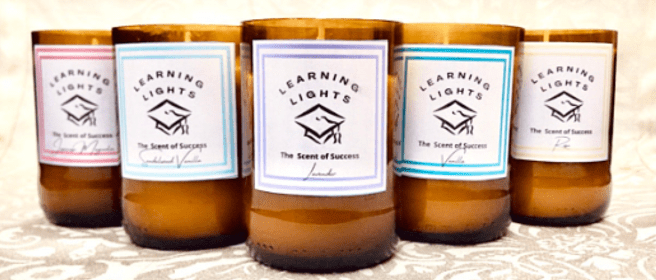
Learning lights not only helps students, it also helps the environment, through its sustainability agenda. All candles are made from natural soy wax and are set in recycled glass bottles. In addition to this, all the  candles are handmade and dispatched within 2 days of purchase. Currently, there are five scents (Vanilla, Rose, Sandalwood-Vanilla, Lavender, and Japanese Magnolia)  available in two sizes (13.5 oz, and 8.5 oz).

Plans for the Future

Within the first 24 hours of trading, Learning Lights had sold all of its inventory. It was anticipated that there would be a slump in sales after the initial launch, however, the revenue from the launch has brought cash into the business that has allowed Learning Lights to continue to improve its online presence as well as fund more inventory. Within the next week, Learning Lights will become available in several locations throughout Monaghan and Dublin.

“Thankfully, there haven’t been any major issues so far, just some minor start-up hiccups,’ says Jody.

In the coming months, the Learning Lights Alliance Initiative will come into action. This involves businesses that burn candles on their premises, such as salons, cafés, restaurants and hotels, becoming Learning Lights Allies by purchasing and burning Learning Lights.

Trinity Society Involvement

Jody credits the business societies at Trinity for helping him take the first steps in launching this venture. In his second year at Trinity, he became an ambassador for the TES incubator programme. By engaging in this programme, he not only learned a great deal about developing a start-up, but also gained valuable exposure to start-ups that were involved in the incubator programme.

Jody is also part of the Trinity Business Review team and is currently the Secretary and Chief Strategy Officer. In this role, Jody has gained confidence and gained significant knowledge of the Irish business environment.

Check Learning Lights out at

Etsy: LearningLights on Etsy

Shop in Ireland: Shop in Ireland | Gifts for all occasions | Irish handmade |

Instagram: Learning Lights (@learninglights_candles)

« Older Entries Recent Entries »