Category Archives: Deep Dive

How an Irish Med-Tech Company Could Change the World
By Evan Henry

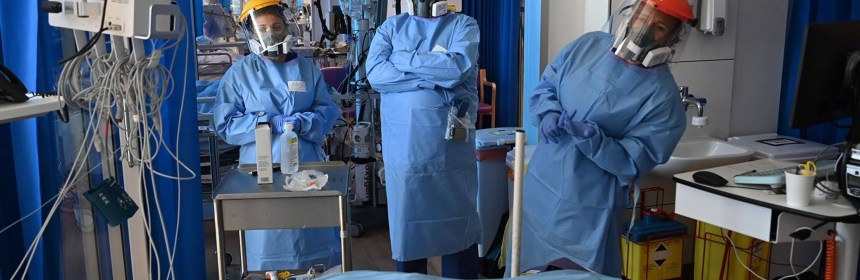
When it became obvious that COVID-19 was to utterly change how we live, few would have predicted that a company from Galway could play an instrumental role in returning life across the world to normality. Aerogen, an Irish medtech company, produces a drug distribution system that delivers medicine through aerosols in acute hospital settings. John Power, Aerogen’s CEO, formed Cerus Medical in 1997 when he recognised a major gap in the technologies used to deliver drugs in hospitals. While life-support machines were among the most advanced medical technology used in hospitals, the drug-delivery systems that assisted these machines were developed over fifty-years ago. Power believed there were better ways to target the delivery of drugs, and it was common knowledge that drugs are efficiently administered by ingestion through the lungs. Cerus Medical merged with Aerogen Inc. in 2000 and launched its first nebulisation product, the Aerogen Pro shortly afterwards. Twenty years on and the company exports to more than 70 countries and their products are used in 60 of the top one-hundred hospitals in the world, benefitting over ten million patients. Its clients include Medtronic, GE Healthcare and Philips Healthcare.

Aerogen and COVID-19 So Far

Aerogen was overrun when COVID-19 broke out, given the huge demand created for ventilators by the respiratory illness. In fact, Aerogen’s products were in greater demand  than those of competitors because they are the largest producer of closed-circuit nebulisation system devices on the market. A closed-circuit nebulisation system is one that delivers gaseous drugs to patients while leaving ventilation uninterrupted (Medical-aerosols), ensuring that healthcare workers are not exposed to any gases exhaled by the patient (patient-generated Bio-aerosols). Closed-circuit nebulisation devices are far safer and more efficient than conventional nebulisation devices. Aerogen is also working with various hospitals and research groups to adapt ventilators unsuitable for COVID-19 patients. Along with this, the company is involved with more than 20 drug companies and research institutions that deliver antivirals and drugs to patients in ICUs. Power has predicted that Aerogen will move around four million units this year, up from two million in 2019. But despite the outstanding role played by Aerogen in the treatment of COVID-19, the delivery of its cure could be the company’s true magnum opus. 

An Emerging Alternative to Liquid Vaccines

The race for a COVID-19 vaccine has left the pharmaceutical industry in a frenzy, with dozens of companies and research groups competing to produce the immunisation treatment. While a vaccine could potentially be produced by the end of 2021, the timeline is still unclear. The only certainty surrounding the vaccine is that demand for it will exceed supply, likely by a substantial margin. However, Aerogen claims to have the solution to this problem. On RTÉ’s The Business programme, Power revealed that Aerogen is also working with “a leading [unnamed] pharmaceutical company” to produce and distribute an aersolised vaccine. If successful, this will reduce the quantity of dosage required per patient, because drugs ingested through the lungs are generally absorbed more efficiently by the body.

How would aerosolisation address the supply-demand inequity that will occur when a vaccine is finally approved? The inequity will be caused by two things: an insufficient number of doses and an inability to accommodate massive numbers of people gathering to seek vaccination. Should Aerogen’s efforts bear fruit, they will provide meaningful solutions to the issues facing both sides of the market. The first piece of the mass vaccination puzzle Aerogen hopes to solve involves providing enough doses to meet demand. The company predicts that their partners will produce around 500 million liquid doses by the end of 2021, which is a far cry from the amount required to eradicate the virus. However, if a liquid vaccination can be aerosolised, Aerogen predicts that only a fifth of the amount of medicine will be required to treat the patient. If their estimates are accurate, the result would be two and a half billion doses available by the end of 2021. This number will not result in universal immunisation, but it would nonetheless reduce the virus’ rate of spread. The outcome would be fewer new cases, fewer deaths and reduced pressure on healthcare systems worldwide. However, from the initial solution to vaccine shortages springs another challenge: distribution. How can two and a half billion people be vaccinated in a safe, timely and cost-effective manner? Speed of delivery is imperative the alleviation of not only suffering, but also of pressure on healthcare systems. Aerogen claims to have found the answer to this inevitable complication.  The company has developed a station for the aerosolisation of a vaccine which will allow patients to be vaccinated in a quick and orderly fashion. If the station is employed, their estimates, based on data collected from Chinese COVID-19 treatment procedures, predict that 2.5 billion people could be vaccinated in 39 days if ten-hour shifts are worked at 55,000 centres. Such rapid and systematic delivery of a COVID-19 vaccination is as much as anyone could hope for.

Can It Be Done?

The size and scale of Aerogen’s ambitions are clear. They hope to have roughly one-third of the world’s population vaccinated by the end of 2021. Of course, any discussion of a COVID-19 vaccine and its distribution is a mother lode of suspicion and further questions. Will a vaccine even be produced at all, never mind by the end of 2021? If so, can it be aerosolised? Will aerosolisation really require only a fifth of a liquid dose’s quantity? Will aerosolisation prove to be more or less effective than liquid vaccinations? Can other countries work as efficiently as the Chinese in their administration of a vaccine? Will the vaccine be affordable? All of these questions raise valid points and will undoubtedly be the subject of future debate. The honest answer to most of them for now is that we simply do not know. What we do know is Aerogen is one company making substantive strides towards returning life to something like its pre-COVID configuration. Time will tell us whether or not it succeeds.


The Demise Of Dairy

The Unstoppable Rise of the Alternative Milk and what it means for the Dairy Industry

By Eleni O’ Dwyer

It is hard now to imagine a time when you couldn’t go into your local coffee shop and order yourself an oat milk flat white. It seems impossible now, but before the age of almond milk cappuccinos, for the unfortunate lactose intolerants around us, there was no alternative to cow’s milk other than to simply not drink it.

As recently as ten years ago, the only real alternative to cow’s milk was soya milk, and even that required searching in rare health-food shops. Today, however, the alternative milk industry is estimated to be worth approximately €14 billion globally. UK plant milk sales have grown by 30% since 2015, and nearly half of all consumers in the US are now opting for non-dairy milks.

In the sea of alternative milks ranging from hazelnut to cashew to coconut milks, almond milk remains the most bought, making up two thirds of all plant milks sold. However, oat milk is the fastest-growing category of alternative milk. From April 2018 to April 2019, the Swedish oat milk brand Oatly grew by 222%. The rapid transformation of Oatly from a little-known, obscure health brand to the dairy alternative of choice surprised even CEO Toni Petersson, saying; “[h]ow do we supply when the growth is crazy?”.

This ‘crazy’ growth has been a result of an overwhelming increase in health-consciousness. The rise of vegetarian and vegan diet choices, and the general societal push for sustainability, has undeniably changed consumer habits. The surge of the wellness movement across all facets of society has created what Oatly has labelled the “post-milk generation” as Millennial and Generation Z consumers account for more and more of the overall market. Research has shown that UK teenagers now consider cow’s milk less healthy than dairy alternatives; a phenomenon that David Dobbin, former chairman of Dairy UK, has described as “a demographic time bomb”.

But alternative milks are not a purely modern phenomenon. In 1981, Philippe Vandemoortele, a Belgian food technician, used a new packing technology, the Tetra Brik, to sell his own soya milk which he called Alpro. His local supermarket refused to stock it. Today, Vandemoortele’s Alpro is owned by Danone, and in 2017 had a turnover of more than £183 million.

Meanwhile, the superfood reputation of cow’s milk is under pressure due to ever-growing concerns around animal cruelty and the dairy industry’s environmental impact. This is accompanied by an increase in lactose intolerance diagnosis, and new links between dairy products and hormone-related conditions, such as acne and premature puberty, according to Dr. Michael Greger, author of the book “How Not to Die”. For Ireland’s agriculturally dependent
economy, this presents valid fears for the future of dairy.

The dairy industry accounts for around €1.2 billion of the Irish economy annually, with the average Irish family consuming over 6 litres of milk per week. Domestic milk intake in 2019 was just shy of 8 billion litres of milk, according to the Central Statistics Office. This was in fact 400 million litres more than the 7.6 billion litres of milk recorded for the previous year. Moreover, the EU saw a 0.5% jump in milk intake in 2019.

As countless industries have been stifled over the course of the COVID-19 pandemic, the Irish dairy industry has had room to grow. A survey of over 2,000 adults in June 2020 showed that almost 40% of Irish consumers under the age of 35 increased their milk, cheese and yoghurt consumption since the outbreak of the pandemic, with people seeking familiarity and quality during uncertain times. Even pre-pandemic, 90% of plant milk buyers still purchased other dairy products, such as cheese, yoghurt and ice cream, all of whom are seeing increases in demand.

So, it seems that the milk traditionalists of the dairy industry do not have much cause for worry. While the alternative milk industry has gained huge traction, in reality, it is not superseding the dairy industry. Rather, the two are working alongside one another, both growing year on year. Instead of one milk emerging triumphant, the ambit of what consumers look to for milk simply expands to encompass all.

Are The Days Of The Traditional Workweek Numbered?

By Ruadhán Glover

In recent months, COVID-19 has given rise to economic disaster for countless companies across the globe. Millions of people have lost their jobs, while those businesses who have managed to survive the economic crash thus far face the daunting challenge of controlling and mitigating the upset to all facets of their operations. However, amidst the huge disruptions to workplace and societal norms brought on by COVID-19, the potential for increasingly flexible models of work has been inadvertently highlighted. The idea of a four-day workweek is one such model which is currently shifting from the fringes to the mainstream with growing momentum. New Zealand Prime Minister Jacinda Ardern recently endorsed the idea of a shorter workweek as a method of increasing employee welfare and productivity in these trying times. Likewise, the results of a survey published by the Four Day Week Ireland campaign this week revealed that over three-quarters of people would support the government researching the potential of a four-day work week. But what exactly does a four-day workweek entail, and is it really possible to increase productivity by working less?

What is a four-day workweek?

Many common misconceptions surround the model of a four-day workweek, predominantly that it merely involves the compressing of a forty-hour workweek into four days rather than five. An authentic four-day workweek involves employees reducing, rather than compressing, their number of hours worked per week by approximately eight, in the hope of driving productivity out of such flexibility. Furthermore, progressive models of the shortened workweek should not include any reductions of salaries. If, as a result of greater productivity stemming from a shortened workweek, an employer’s bottom line is actually improving, then it is arguably unreasonable to cut the wages of those responsible for the increase in efficiency. A trial of the shorter workweek model by Microsoft in their Japan base in August 2019 reported a 40% increase in productivity during this period. With greater control over when and how they work, employees are more concentrated on the quality of their tasks, and less on how frequently they are working.
The recent momentum behind the concept of the four-day workweek has come on the back of workers need for flexible work arrangements during the Covid-19 crisis. However, this is not the first time in history that the length of a typical workweek has seen a drastic reduction.

In the final decade of the 19th century, it was estimated that an average factory floor employee in the US worked 100 hours per week. However, by the mid-20th century, a mere 60 years later, this had been reduced to the current standard 40-hour workweek. When put in such context, the reduction of our workweek by eight hours isn’t nearly as extreme as first seemed.


Additional Employer Benefits

Employees are not the only beneficiaries of a shortened workweek. In addition to the aforementioned increase in productivity that can be obtained through the model, a four-day workweek presents employers with the opportunity to diversify their pools of talent by attracting those who cannot, for various reasons, work the traditional five-day workweek. Furthermore, employers can safeguard their future talent through the provision of flexible work arrangements. Now, more than ever, young working professionals are placing great emphasis on their own wellbeing. Millennials are drawn to employment perks such as flexible working hours in addition to traditional pension and bonus benefits. The implementation of a four-day workweek can consequently greatly enhance an employer’s ability to attract and maintain the best and brightest workers in the industry.


Additional Societal Benefits

In addition to the aforementioned benefits to both productivity and employee wellbeing, a four-day workweek also has the positive effects of promoting both equality in the workplace and a more positive carbon footprint. The pressure to abide by gender roles and to take responsibility for household welfare sees many women excluded from the workplace. According to Gender Pay Gap research, the largest barrier for women in paid employment across the board is the struggle to balance work with family responsibilities. A four-day workweek would encourage the sharing of these responsibilities among partners, while allowing workers to balance their work commitments and family responsibilities. Furthermore, from an environmental perspective, a four-day workweek would have a more
positive effect on the national carbon footprint. The use of office spaces for shorter periods of time would result in a lower output of energy, while removing just one day of worker commutes could greatly assist in the reduction of damaging carbon dioxide emissions. Indeed, Microsoft Japan’s one-month trial saw their electricity costs alone decrease by 25%.


Will we see any change?

It is quite feasible that when Covid-19 passes, we may plead to return to work five days a week in order to regain a sense of normality. However, if nothing else, this pandemic has presented employers with both the business reasons and the opportunity to transition to shorter work weeks. By creating a company that values employee wellbeing and productivity over hours put in, businesses can reap the rewards of working less hours. If we all finally give up on the idea that working longer will result in greater standards of business and life, the four-day work week could well become the latest shake up in a long list of changes to workplace and societal norms brought on by Covid-19. Indeed, maybe some good will finally come of this crisis.

Sustainability in Business, Sustainability as Business

By Ciarán Quinn

Before the pandemic consumed the eyes and ears of the world, the cry for the halt to climate change and destruction caused by the world’s economy was a silent wave coming to its peak. Whether it was a schoolgirl from Sweden being awarded Time Magazine’s Person of the Year for her efforts to raise awareness on the issue, or the hundreds of school strikes organized around the globe, a wary eye was cast once again on the efforts companies are making to heed these warnings. There are plenty of examples of companies who have blatantly disregarded their environmental responsibilities in the past. Take Volkswagen’s ‘Diesel gate’ or the continued deforestation of the Amazon by the likes of Costco and Walmart. It is clear from the profile of these companies, an auto industry powerhouse and the world’s largest company by revenue in 2019, that thus far sustainability is not something they feel is vital to the present and future success of their businesses. The likes of Ryanair have introduced a voluntary ‘carbon footprint offset fee’, which seems to try and give back through environmental schemes, rather than tackling or reducing the issue head-on. This all begs the question, is sustainability within business achievable? And is the notion of sustainability as a core business element constituent only possible as an allusion?


There are examples of hope to contrast the examples of doom mentioned above. Many household companies have embraced sustainability and the chances it creates, with different approaches to the issues allowing for innovation and creativity in this field. This has led to disruption and new improvements across all aspects of business. Whether it be supply chain or the product itself, sustainability is slowly being embraced across the board, although some companies have shown great agility in their conversion to sustainable practices also.


Adidas have concentrated on creating a greener supply chain, with a focus on reducing energy used and importantly water consumption- which has historically played a huge role in the fabric-dyeing process. This has been made possible through the reconfiguring of their production process with the implementation of ‘Drydye’ technology. Another project by Adidas is their collaboration with Parley, a non-profit organization to commit to creating shoes from 100% recycled polyester. This will be possible through a material called ‘primeblue’, which the two have collaborated on creating from plastics and polyesters recycled from the ocean. Another lifestyle-clothing stalwart is Nike, who have
focused on the introduction of recycled and reconstituted materials in their products. Most notably, 75% of the products produced by Nike partially contain some recycled material. This effort has culminated in the release of Nike’s ‘space hippie’ collection, which combines sustainability with radical design. The result is a fashionable sports lifestyle shoes made from between 85-90% recycled materials. Furthermore, Companies have focused on logistics to drive improvements. British supermarket Tesco have invested to improve rail systems to shift a portion of their distribution
network from road to the more environmentally friendly rail network. It’s clear that these firms see sustainability as an important issue in their profitability and future growth. While the companies mentioned above have begun to adopt sustainability as a core element of their businesses, there are several companies that have sustainability as a core constituent since their inception. Patagonia is a clothing company which puts the environment and sustainability above all else, whether it be through their ‘don’t buy this jacket’ campaign or use of 70% recycled materials across their range. Tesla have shifted their product focus to machines that build a future foundation for the firm, where the use of fossil fuels is eliminated through their groundbreaking technology.


None of Tesla’s vehicles have tailpipe emissions and the company have revolutionised how homes can be fueled through their intuitive solar roof technology. The potential for advancement through renewable energy and sustainability can be seen here, with the opportunity for solar energy to charge a customer’s car at home rather than having to stop at a petrol station. With every advancement in sustainable fields such as renewable energy for Tesla, even more innovation is demanded, and the likes of Tesla are delivering.


Another company taking an approach similar to Tesla’s, but within the fashion industry is the brand SAYE. SAYE is a start-up founded in Barcelona, which has incorporated sustainability across all its activities from the start. Their shoes are made from a host of ecological and recycled materials. The leather comes from European farms, which have been vetted as respecting environmental stewardship standards. The laces are produced from organic cotton, allowing them to easily integrate back into the cycles of the earth for future generations. The insoles are produced from PU foam, repurposed from the by-products of the European car industry. The company has also ensured all packaging is made entirely from recycled materials and promises to plant two trees for each pair of their shoes sold, with 90,000 trees planted to date. With their production facilities located in northern Portugal, the company guarantees fair wages and working hours, with worker friendly policies concerning overtime and conditions. With sustainability underpinning the ethos of the company, SAYE are in the best position to take advantage of the many opportunities and innovation stemming from this vital and growing sector.


The struggle between sustainability and profitability has long been a source of contention within business regarding its achievability. Too many companies have given lip service, but few up until now have made it a real purpose. Today’s world of Greta Thunberg and climate activism doesn’t see this issue as it once did and demands that real change be made. Patagonia, SAYE and Tesla have risen to the challenge. The idea of sustainability as business is clear from these companies making honest change, and the success of these businesses is reflective of that.

Why Can’t Entrepreneurs Ignore Geopolitics?

Today’s top entrepreneurs are always learning to deal with fast and inevitable changes. All the entrepreneurs or startup firms are expected over time to adjust entry mode and mode of service when resolving market dynamics and regional & global parameters. The various situations of global geopolitics, according to several analysts’ claims, would allow diverse startups and innovators to work together to counter multiple geopolitical uncertainties and risks. For the growth and advancement of an entrepreneurial venture, other than geographical position and time, global factors involve many other items such as world population distribution, the effects of international developments such as the cold war, post-cold war results, regionalisation, and so on. Related effects happen for some significant events, such as changing state relationships, foreign trade disputes etc. Thus, the diverse dynamics in geopolitics may be clustered in several lines to construct a global model in terms of the potential for innovation and entrepreneurship.

To illustrate, a significant geopolitical change was observed in the post-cold war period with the fall of the USSR and the democratisation of Eastern Europe. The transition offered tremendous opportunities for creativity and entrepreneurship. This is an age we are living every small and big entrepreneur are concerned about geopolitical risks and opportunities. For instance, concerning various geopolitical situations, Israel has concentrated on numerous developments in different sectors, including defence, security, cybercrime, and software; thus a considerable amount of development has occurred in the entrepreneurial ecosystem of the nation. In such a geopolitical environment, with the help of numerous government policies, VC investment schemes, systemic developments continued to take place, contributing to the rapid growth of technical entrepreneurship, particularly in Tel Aviv.

Furthermore, in the current scenario, globalisation is another critical aspect of making a geopolitical decision. The economic effect of interconnectivity, resulting in new trading partners, monetary and labour movements, and global governance, especially in this field of globalisation. To assess the reach of innovation and entrepreneurship worldwide, especially in emerging markets, a proper study is needed through the lens of geopolitical variables such as global globalisation, intergovernmental institutions, ever-changing political structures, etc. The value of understanding the notion of globalisation should be taken into account when relating geopolitics and business practices.
The definition of globalisation often raises the scope of the market environment worldwide, and therefore, there is often a risk of rising uncertainty. Therefore, careful consideration of the benefits and challenges from globalisation is necessary for long-term viability to fuel creativity or build a model for startup growth. Globalisation leads to more vigorous competition in the industry. It is a dominant geopolitical dimension which is shaping the worldwide scenario of entrepreneurship.

Therefore, in the modern world, geopolitics related questions are very significant. For any international entrepreneurship opportunity, various geography-related questions are specifically relevant. Such enquiries are supposed to provide a framework in terms of exploring the extensive nature of geography and how it could create impacts on environment-oriented variables like cultures or local politics.

In brief, it will not be wrong to say that in the upcoming future, various geopolitical changes are going to influencing entrepreneurship scenario worldwide. For instance, after the current geopolitical shock, i.e. Covid-19 pandemic, it is expected that the world could experience a wave of innovation by the efforts of various entrepreneurs.

« Older Entries Recent Entries »