Category Archives: Current Affairs

The Implications of Tech Giant Microsoft’s Acquisition of Blizzard

Earlier this year, Microsoft announced its acquisition of Activision Blizzard, a leading company in “game development and interactive entertainment content publisher,” for $68.7 billion – which is the biggest gaming industry deal to date. Microsoft’s motives in this deal lie in the gaming industry being “the most dynamic and exciting category in entertainment across all platforms today,” and its participation in developing metaverse platforms. After Facebook transformed into Meta Platforms to increase its efforts in virtual reality, other tech companies have now followed suit in placing bets on the metaverse. Microsoft acquiring Activision plays a key role in its involvement in the “metaverse arms race.” It will also bolster Microsoft’s venture to grow its gaming business across different platforms such as mobile, PC, console and cloud. 

Phil Spencer, the CEO of Microsoft Gaming, states that together with Activision, they will be able to “build a future where people can play the games they want virtually anywhere they want.” Activision has released some of the most successful and well known games on the market, including Candy Crush, Call of Duty, and World of Warcraft. Bobby Kotick, CEO of Activision Blizzard, notes that Activision’s “world class talent and extraordinary franchises,” married with “Microsoft’s technology, distribution, access to talent, ambitious vision, and shared commitment to gaming and inclusion will help ensure [their] continued success in an increasingly competitive industry.” 

            Although the prospect of furthering the metaverse and making games more accessible to individuals on more platforms are positive in the advancement of the tech sector, there are antitrust and competition hurdles that Microsoft must jump in order for this acquisition to succeed. The Competition and Markets Authority (CMA), Britain’s antitrust regulator, acknowledges that Microsoft is disposed to be successful in cloud gaming given its leading cloud platform in Azure, PC operating system in Windows OS, and Xbox. However, these strengths combined with ownership of Activision’s games “could damage competition in the nascent market for cloud gaming services.”  If Microsoft refuses competitors’ access to Activision’s games, the gaming industry could be struck with serious damage – which is why the deal requires approval in several major jurisdictions including the United States, China and the EU. 

            The antitrust concerns lie greatly in how the deal would impair game console creators such as Sony and entrants to the new market of gaming subscription services and cloud gaming. Open competition would be severely harmed if Microsoft gains the ability to refuse rivals access to Activision games or provide them on worse terms. The Phase 1 investigation conducted by the CMA requires Microsoft to address its concern over the control the company would gain over popular games post-acquisition. If Microsoft fails to offer remedy solutions, the CMA would initiate its Phase 2 wherein an independent panel would carry out an in depth analysis and examination of competition implications. 

            In response, Microsoft released a statement in an attempt to appease regulators by saying that Call of Duty would not become an exclusive Microsoft Xbox game and would continue to be available on other companies’ game consoles. The company wants to remain committed in its mission to provide people with “more access to games, not less.” Analysts believe that Microsoft should provide specifications around these exclusivities in writing to demonstrate more credibility and legitimacy in its pledges. 

            Microsoft has painted a very exciting picture of its desire to “embrace choice,” for games to “reach the billions of players where they are and no matter what device they play on,” through this expansion. Their Game Pass subscription option and cloud game streaming technology to bring more games to mobile platforms would allow the company to “open up mobile gaming, create new distribution opportunities for game developers outside of mobile app stores and deliver compelling and immersive experiences for players using the power of cloud.”  However, the stricter antitrust regulations, especially on tech giants, stretches out the period of time between the announcement of a deal and its completion – thus increasing the threat of the transaction disintegrating. Microsoft’s response to the antitrust concerns over its acquisition will set an important example and no doubt offer guidance to future mergers and acquisitions, especially in the tech industry where monopolies are scrutinised to prevent giants from gaining and abusing unfettered power. 
Truss’s first act as UK Prime Minister promises to save the public, but she threatens the value of the pound

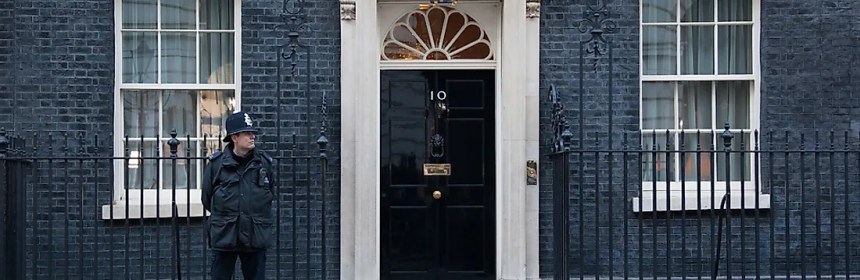
Lizz Truss enters no. 10 Downing Street during high-stakes wars; both within her party, and on the Eastern borders of Europe. However, her first battle as prime minister will be tackling the energy bill crisis. This daunting task is made ever more difficult by Truss’s commitment to a low tax economy.

The cost of a cap on energy bills depends largely on its form. A targeted plan to help the most vulnerable households, such as £650 for those on means-tested benefits, would be cheaper. However, it would be difficult to implement quickly and effectively and it would leave families just above the threshold in a precarious position. A blanket tax break would benefit richer households with disposable income, and would cost substantially more.

Furthermore, the cost of the energy cap will likely be increased by factors outside of Truss’s control. Putin has taken a stance against western sanctions by extending the closure of Nord Stream 1. This will increase the price of gas as well as the cost of Truss’s relief plan. As well as this, a relief package of this scale will increase public spending in a demand charged inflation spike, spurring a further rise in interest rates.

With a public debt to GDP ratio of 96%, investor confidence in the UK is low. Couple this with extensive high-interest rate borrowing, Truss will need to provide extensive assurances on payment plans in order to attract foreign investment. However, as of yet all she has done is ensure that taxes will be slashed.

If Truss decides to increase taxes, either approach will be politically difficult. A general tax would be a rejection of her low-tax promise, which could be seen as a return to the laissez-faire approach to policy integrity endured during the Johnson administration. However, a long-term repayment of tax breaks could cut vulnerable households adrift, which would be detrimental to the economy.

With a worryingly high cap on costs, and no real plan to raise funds for repayments, investor confidence is at a worryingly low level. On Monday, Shreyas Gopal of Deutsche Bank claimed the UK could be on a “balance of payments crisis”. Although unlikely in a G7 economy, the risk of a balance of payments crisis is no longer negligible. Therefore, in order to attract foreign investment and fund her relief package, Truss will have to depreciate the value of Sterling substantially, with Deutsche Bank claiming that a devaluation of 30% may be required to attract foreign investment into Britain.                                                                                                                                                                      

The ever growing power of SpaceX in today’s space race

The space race has one clear dominator: SpaceX. Elon Musk’s competitor, Jeff Bezos, makes the claim that they “could end up with monopolistic control of US deep space exploration.” It is impressive how quickly the company has risen to the top, launching its own rocket into orbit only 13 years ago. Elon Musk has the ultimate goal of giving humans the means to live on other planets, with the current focus being Mars. The soaring cost of such a venture is what led Musk to found SpaceX and develop a “low-cost, reusable rocket capable of making multiple trips.” Falcon 9 now regularly commutes to the International Space Station, transporting both people and cargo. The focus now lies on developing and gaining clearance for Starship, the rocket that will be used to fulfil Musk’s goal of one day “establishing a human colony on Mars.”

How did SpaceX reach its Current Position?

The company’s financial plan, along with the reusable Falcon 9 rocket, have both been key to the success of SpaceX and its Starship venture. 

The intensive prioritisation of the low-cost and reusable criteria are the foundation of Falcon 9’s success. One of the most expensive parts of the rocket, its engine, is efficiently designed and created using 3-D printing and its boosts are made to be reused – which are both critical cost saving factors. It is estimated that SpaceX was able to decrease its costs tenfold by taking an alternative route from traditional government contracting. Instead, the company designed and manufactured its own rocket components, rather than outsourcing from suppliers, and took on testing risks itself, rather than relying on payments from NASA. SpaceX’s finance plan, in conjunction with Tesla, of having access to cheap capital has allowed the company to raise over $6.5bn from the private equity market due to the high valuation investors have given to Musk’s business.

SpaceX against Blue Origin

This funding advantage has become the source of some competitors’ complaints; they lack access to similar financial benefits, which they claim has stifled scaling and pushed them out of the market. One of SpaceX’s main competitors is Jeff Bezos’ Blue Origin. In 2012 – around the same time that Musk was still solving issues with his Tesla launch, and before he could concentrate on SpaceX- Bezos had grand plans for Blue Origin.

So how has SpaceX so quickly and indubitably outperformed Blue Origin? 

The most obvious and widely discussed answer to this question is SpaceX’s strict cost minimising objective. Any company purchase exceeding $10,000 has to be personally approved by Musk, whereas Blue Origin is “riddled with poor cost estimating.” Management consultants discovered that the two companies had very differing cultures and leadership styles. SpaceX has a highly motivated workforce with “relentless 24/7 operation with 80-hour workweeks.” The engineers do not complain about these conditions, but rather are inspired and result-focused. They may earn lower salaries than those at Blue Origin, but are rewarded with stock options for top performance. In contrast, Blue Origin is a “ghost town on weekends,” and engineers complain about the “rigid hierarchy,” which does not favour innovative ideas. There is also an unsustainable focus on speed, which prevents the company from properly addressing problems and finding the best solutions. The high involvement of Musk with his engineers and openness to unorthodox ideas has been a catalyst to the firm’s success.

There is clear rivalry between Bezos and Musk. In the race to bring Internet connection from space to Earth, Blue Origin recently challenged SpaceX’s application to modify its plan. SpaceX responded to this challenge by stating that the competitor’s track record “amply demonstrates that as it falls behind competitors, it is more than willing to use regulatory and legal processes to create obstacles designed to delay those competitors from leaving Amazon even further behind.” Amazon condemned Musk’s attitude towards regulations, asserting their perspective as: “rules are for other people, and those who insist upon or even simply request compliance are deserving of derision and ad hominem attacks.” 

The race to extend life on and explore space continues to advance, but also appears to be developing into a personal competition between two billionaires.

Biden sanctions Russia over belligerent foreign policy

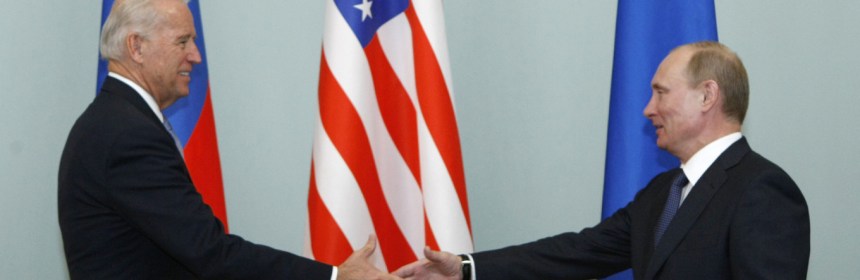
Last Thursday, the White House announced that sanctions are to be placed on Russia for its “harmful foreign activities”, interference in US elections and sweeping cyber-attacks on US government and corporations. The impositions also follow strong international condemnation of Russia’s heavy military deployment at the Ukrainian border. The actions target 32 Russian entities and involve the expulsion of certain diplomats. Biden’s sanctions align with his rhetoric in recent months, during which he has promised to make Putin “pay” for attempting to undermine the American democratic process and accused the Russian government of poisoning Alexei Navalny. The sanctions also sharply contrast from recent American policy towards Russia, a period during which Donald Trump rarely criticised Russia or Putin’s belligerent behaviour on the world stage.

What do the sanctions entail?

The wide-ranging sanctions imposed by Biden’s executive order includes “long-feared” restrictions that ban U.S. financial institutions from participating in the primary market for Russian sovereign debt, effective from June 14th. Once news of the sanctions broke, Russian bonds suffered their largest fall in value for months and the rouble dropped by 2.2%, before making a slight recovery later in the day. Still, a large sell-off of Russian assets was sparked. Nonetheless, one senior Russian official said that the new debt restrictions were the “least painful” option, as they will not affect the secondary debt market, while others have said that a reciprocal response is “inevitable”.

In addition to this, 32 entities and individuals have been sanctioned by Biden’s order. The list includes Russian government and intelligence officials, as well as six Russian companies involved in the Kremlin’s hacking activities. Ten Russian diplomats in Washington are also to be expelled. Some worry that the expulsion of diplomats will worsen intergovernmental dialogue between the two nations, but Putin is still thought to be considering Biden’s offer of a US-Russia summit in the near future.

National Security Advisor Jake Sullivan says that the measures taken by the White House are “proportionate” and that their goal is “to provide a significant and credible response but not to escalate the situation”. Indeed, Biden’s sanctions are consistent with America’s handling of Russian transgressions since its annexation of Crimea in 2014: to punish illegal Russian behaviour but not to escalate tensions further, particularly given the anxiety surrounding Russia’s military build-up at the Ukrainian border.

What has inspired the sanctions?

The US has threatened to place additional sanctions on Russia for a throng of misdeeds over recent years. However, the introduction of these specific restrictions has occurred in close proximity to a recent US intelligent report confirming attempts by the Russian government to rig the 2020 presidential election. Additionally, the order follows a review, ordered by Biden, into other key areas of concern with Russian behaviour that include reports of Russian bounties on U.S. soldiers in Afghanistan, the historic SolarWinds cyber-attack and the poisoning of Putin’s pro-democracy rival Alexei Navalny.

The sanctions are viewed as a single, sweeping response to these various Russian wrongdoings, rather than to one particular incident. This is likely the case for two main reasons. Firstly, the US does not wish to escalate tensions with Russia, but rather wishes to signal that the Biden administration has adopted a harder line than his predecessor. Secondly, devising an individual response to the major SolarWinds cyber-attack would be politically difficult for Biden. Some members of Congress described the attack as “an act of war”, while some highlighted that the US conducts similar operations abroad. Treating Russia’s various offences with a single package of sanctions has allowed Biden to maintain his election promise of a strong stance on Russia while avoiding an image of hypocrisy (i.e., sanctioning Russia for activities similar to those that the US partakes in).

Will Biden’s order result in further US-Russia divergence?

The extent to which the sanctions will damage US-Russo diplomatic relations is still unclear. Many believe that overly harsh sanctions on Russia would be inconsistent with Biden’s offer to hold a summit and normalise relations between the two countries. Given that the sanctions are not disastrously severe, and that Putin is still thought to be mulling over the prospect of a US-Russia summit, it seems that relations between the White House and Kremlin will remain similarly strained. However, Biden signalling a firmer approach to Russia than Trump is not a welcome prospect for the Kremlin, and will likely reduce the belief that they can act with impunity. Indeed, a Kremlin spokesman seemed to explain the increased Russian military activity on its Ukrainian border as a kind of bargaining tool in the case of US action, like sanctions.

Overall, it is difficult to know how the sanctions will affect US-Russo relations. If they are enough to prevent Putin from joining Biden at a summit, then they will have had a clearly negative effect. Otherwise, even in the case of roughly equivalent Russian retaliation, the two countries’ relationship will likely remain as it has been over recent years: strained.

“Nowhere close” to enough climate action?

A new report from the United Nation’s Framework Convention on Climate Action (UNCCF) has announced that the world’s nations are doing “nowhere close” enough to keep the global temperature increases well below 2°C above pre-industrial levels and meet the goals of the Paris Climate Agreement.

What does the report show?

The initial Nationally Determined Contributions (NDC) Synthesis Report measures the progress of national climate action plans. The report described the findings, based on 75 countries that account for roughly 30% of the world’s emissions, as falling “far short” of what is required to meet the goals of the Paris Agreement and marking a “red alert” for the planet. Countries were required to submit their reports by the end of 2020, though many failed to do so due with Covid-19 further backlogging civil services. For this reason, the UNFCCC Executive Secretary insists that the report is just a snapshot, and that a clearer picture will have emerged before the COP26 climate summit in November.

Of those countries that did submit reports, the majority did indeed commit to lowering their emissions by 2030. However, the totality of the 75 countries’ current commitments would result in an estimated 1% total drop by 2030 compared to 2010 levels. The UN’s Intergovernmental Panel on Climate Change predicts that to meet Paris Agreement’s lower-bound of 1.5°C above pre-industrial temperatures, the cumulative reduction should be around 45%.

Why is it important that countries do meet the Paris Agreements standards?

The historic Paris Climate Agreement, signed in 2015, is a legally binding international agreement that mandates signatories to do their part in the common effort to limit global warming. Its goal is to limit global temperature increases to well below 2°C above pre-industrial levels, and preferably only 1.5°C above these.

If temperature levels are allowed to increase by more than this, experts predict that serious and likely irreversible harm will be done to many of the earth’s natural and human systems. While the risks will not be felt equally everywhere in the world, the difference between 1.5°C and 2°C above pre-industrial temperature levels is likely to be significant. These facts are what have urged the UN and many of its members to call for more meaningful commitments from the Paris Agreement’s signatories.

Will 2021 see improvements from the initial report?

The UN’s General Secretary, António Guterres, called 2021 a “make or break” year for global climate action, stressing that global emissions must be reduced by 45% from 2010 to reach the 1.5°C goal, with the landmark COP26 climate summit taking place in Glasgow this November.

The inclination to imagine that reducing emissions by 45% compared to 2010 levels seems unlikely is understandable, given the report’s findings. Three of the world’s largest greenhouse gas emitters failed to submit their NDC reports on time. It is still unclear if China and India will submit reports before the COP26 summits. Additionally, countries such as Japan, South Korea, New Zealand, Switzerland and Australia, failed to improve upon their 2015 plans’ commitment to emission reduction. Meanwhile, Brazil’s plan made no commitment to reducing emissions by 2030.

However, despite the dreary premonitions that the UNCCF’s report may arouse, seeds of hope can be found in the dynamic, if not rocky, field of global climate action politics. The EU27 is the only one of the world’s four largest emitters to submit a plan on time, but Joe Biden’s American government, which has re-joined the Paris Agreement, is expected to submit an NCD plan by April. It is thought that strong American action to reduce emissions will signal to the world that green commitment is the future.

China has also promised to reach carbon neutrality by 2060. Many critics are understandably sceptical of the authoritarian regime’s commitment to the global attempt to mitigate climate change, given the behemoth scale of their brown investment. However, there are others who believe that the Chinese government’s changing rhetoric is not merely verbose signalling, but rather a recognition of the world’s (and its profit-seeking investors’) desire for trustworthy investments that will truly contribute to the fight against climate change.

With this in mind, 2021 may well be a “make or break” year for the effort to reduce global emissions.

« Older Entries Recent Entries »