Category Archives: Current Affairs

IBM’s New Cloud Computing Restructure Plan
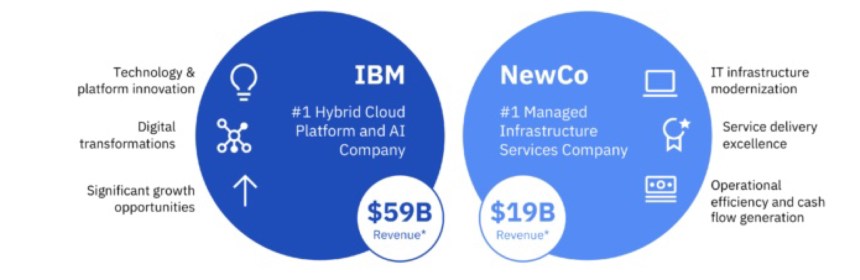
IBM, a 109 year old tech veteran, has revealed its decision to split into two companies in order to properly focus on its hybrid cloud and AI ventures. Cloud computing has recently become a buzzword as the industry has seen exponential growth in recent years. Gartner forecasts that the global cloud computing market will grow by 6% in 2020 to a total of $257.9 billion.

What is cloud computing?

Cloud computing essentially offers services such as storage, processing power, servers, analytics, intelligence, databases, and more, over the internet. It takes away the aspect of needing to be in the vicinity of computer hardware to access certain services, and instead allows for accelerated innovation and readily available resources. 

In this way, firms can rent cloud infrastructure and pay for exactly what they need instead of financing the costs of creating and constantly updating their own IT infrastructure. These services need consistent maintenance due to how software can go obsolete as technology rapidly improves. Companies that specialise in offering these services are responsible for these updates as it would create unnecessary expenditure for small businesses to hire a skilled workforce to take this function on – in supplement to what they already produce. IT trends indicate a “growing reliance on external sources of infrastructure, application, management and security services.” It is predicted that 50% of global enterprises currently availing of cloud services will have fully integrated this service into their business models by 2021. Suppliers of cloud computing services and their B2B model reap the benefits of large economies of scale by providing their services to multiple firms and customers.

The catalyst to IBM’s restructuring decision

IBM’s strategic acquisition of Red Hat for $34 billion in July 2019 was the most important step in the organisation’s move today to reinvent itself. Red Hat, a provider of open hybrid cloud technologies, along with IBM’s industry expertise and sales leadership work together to offer a “next-generation hybrid multi-cloud platform”.

Hybrid cloud amalgamates public cloud, used to control various databases, and private cloud, used to safeguard confidential data, to provide all the benefits of cloud computing in the most secure manner. IBM identified and seized the market opportunity of businesses increasingly transitioning their operation to the cloud as they aim to reduce costs, innovate with agility, and grow efficiently by using only essential resources. Red Hat’s leading hybrid cloud technology in partnership with IBM will allow this innovation to reach a wider audience. 

IBM and NewCo

Presently, IBM’s Managed Infrastructure Services unit will now be transferred in 2021 to a new public company that is temporarily named NewCo. This will allow IBM to “laser focus on the $1 trillion hybrid cloud opportunity.”  IBM’s Executive Chairman, Ginni Rometty, believes “IBM will accelerate clients’ digital transformation journeys, and NewCo will accelerate clients’ infrastructure modernisation efforts. This focus will result in greater value, increased innovation, and faster execution for our clients.” NewCo will not only encompass IBM’s traditional services, but it will also include “testing, assembly, product engineering and lab services,” to modernise digital transformation. In addition, NewCo will focus on a $500 billion market opportunity to manage client-owned infrastructure. 

IBM will act on the growth of their clients’ needs for the hybrid cloud platform and AI capabilities. Their approach, founded on Red Hat’s OpenShift, “will drive up to 2.5 times more value for clients than a public cloud only solution.” Analysts believe this will allow IBM to invest into growing and more profitable business areas. The distinct companies will undoubtedly allow increased value for their different customers and shareholders. This proves how cloud computing has become a significant buzzword in the technology industry.


How Covid-19 Has Affected Amazon

By Udita Gulati

COVID-19 has drastically changed the dynamic of businesses and the economy. Ecommerce is a sector that has experienced an interesting impact due to how consumer behaviour has adapted in response to the world-wide lockdown. Consumers have turned to online shopping in order to fulfil their needs from home. Businesses that cater to essentials in the healthcare industry such as facemasks and hand sanitizers, and online grocery shopping have experienced a dramatic spike in demand. Amazon is a company that has strategically taken advantage of this consumer demand and reacted accordingly to make provisions for these new needs. 

Negative impacts of COVID-19 

According to Fortune, Amazon was met with an enormous upsurge of orders as customers resorted to online shopping to acquire essential supplies. It had to enlarge its workforce and recruit an additional 175,000 employees in order to meet these demands.  Subsequently, the company faced a labour crisis as workers complained about the lack of adequate safety measures in warehouses. Amazon was quick to implement stronger precautions to keep its employees safe, and hence had to increase its costs. It spent US$4 billion on protective equipment, COVID-19 testing, and increased salaries for frontline workers. 

In addition, Amazon’s USP of prompt delivery was impaired – especially for Prime customers who specifically signed up for one day delivery – thus hurting its reputation. The surge of orders consequently caused its sellers to suffer. For a period of time, Amazon was forced to prioritise medical supplies and household staples at its warehouses. It temporarily discontinued FBA (Fulfilment By Amazon), a service that aids sellers with shipping logistics by sending products directly to an Amazon warehouse, for sellers with nonessential items. Small businesses, that make up 58% of its third-party sellers, were especially vulnerable due to this decision as they struggled to cut costs and re-evaluate their business plans. This left third-party sellers feeling helpless as Amazon failed to provide them with a contingency plan. 

Positive impacts of COVID 

Amazon braved these initial challenges by tackling the issues COVID-19 posed and has, as Time believes, emerged stronger than ever. It announced record sales and profit in spite of the world being in a pandemic. Its website traffic jumped to 2.54 billion visits in March and its revenue increased by 40% compared to a year before from US$89.9 billion to $122 billion. 

As brick-and-mortar stores were forced to shut down, consumers turned to Amazon’s diverse online marketplace to satisfy their needs. After Amazon resolved its operational strain and lifted the restrictions on FBA, customers began to increasingly rely on the wide array of products that could meet their needs in a speedy fashion. Economies of scale and efficiency have allowed the company to quickly adjust to the new external business environment – which works as the catalyst for moving past COVID-19 hurdles faster and stronger than its competitors. 

Not only did Amazon’s B2C model progress, but the B2B model also experienced growth. The company’s cloud business, Amazon Web Services (AWS), faced a higher demand as companies such as Netflix, Zoom, Facebook, Twitter, and Epic Games (developers behind Fortnite) that run on AWS faced a surge in traffic as people spent more time indoors. The rise in working and studying remotely resulted in the demand for cloud services to substantially increase. Amazon’s Twitch in particular has been popular in the digital entertainment industry as professional basketball and football players now stream themselves playing video games due to the hiatus live sports has taken. 

How might COVID affect Amazon’s future? 

As the pandemic prevails, Amazon will continue to reap the benefits of changing consumer habits becoming increasingly dependent on technology. As users spend more time online, they could be inclined to subscribe to other Amazon services such as Prime Video or Audible. The diversity of its product portfolio, ability to continually meet consumer needs, and methods of excelling in its supply chain management – amidst one of the most trying periods businesses have ever faced – bolsters its aggressive hold on customers and aggressive position against rivals. 

That being said, this power comes with its own predicaments. Amazon founder and CEO Jeff Bezos has had to previously partake in an investigation regarding online platforms and market power wherein he was questioned if “in the age of Big Tech, how big is too big?”. Amazon’s drastic growth may push the firm further in this undesirable direction. Its increasing market share and the world’s dependence on it alarms policymakers and makes them question whether the company is too powerful and thus behaving in a monopolistic and anti-competitive manner. 

What the EU Court Ruling On The Apple-Ireland Tax Case Means

By Isha Neurgaonkar

On 15th July, the European General Court in Luxembourg ruled that the Republic of Ireland did not give Apple illegal state aid, reversing the decision of the European Commission. In 2016, the Commission stated that Ireland broke EU state aid rules by granting undue tax benefits to Apple. It had ordered the Irish government to collect €13.4 billion of unpaid taxes from 2003–2014.
    
What happened? 
Ireland has one of the lowest corporate tax rates in the EU (12.5%). It is Apple’s base for Europe, the Middle East and Africa. In 2016, the European Commission said that Ireland had allowed Apple to attribute nearly all of its EU earnings to an Irish head office that only existed on paper, thereby avoiding paying tax on EU revenues. The Commission declared this constituted illegal aid given to Apple by the Irish state. The Irish government argued that Apple should not have to repay the taxes, deeming that its loss was worth it to make the country an attractive home for large companies.


In 2014, Apple’s Irish structure consisted of two subsidiaries, Apple Operations Ireland (AOI), an Irish-registered holding company and the Apple Sales International (ASI) an Irish-registered subsidiary of Apple Operations Europe (AOE). Apple did not follow the Double Irish structure by using two separate Irish companies but instead used two separate branches inside one single company, ASI. The EU Commission alleged this was illegal state aid. This structure was not offered to other multinationals in Ireland, which had used the traditional “two separate companies” version.


The Commission argued that the rulings allowed Apple to make most of its European sales through an employee-less head office, which was non-resident for tax purposes. Only the activities of the Irish branches within the same units were subject to tax in Ireland. The intellectual property behind Apple products lay inside these Irish branches, signifying that most of the profits were taxable by Revenue. Apple argued that it was held outside the branches and controlled by the group headquarters. 


What next? 
A report from the OECD predicts that the rate of Foreign Direct Investment (FDI) internationally may fall by 30-40% as companies re-evaluate their strategies post the COVID 19 pandemic. FDI has been an integral part of the Irish economic strategy since the 60s. To this day, the Irish economy is still reliant on FDI. Eduardo Baistrocchi, a professor of tax law at the London School of Economics, described Ireland as a “non-G20 hub in the international tax system” to DW. He then explained that Non-G20 hubs are “a group of countries that connect multinational enterprises (MNEs) with market jurisdictions to minimise the tax entry and tax exit costs of the MNEs. Ireland connected Apple with markets across all continents. Baistrocchi also remarked that “in 2014, for every $1 million of profit that Apple earned from its European operations, Apple paid $50 tax in Europe: an effective tax rate of 0.005%.”

According to both Baistrocchi and Liz Nelson at the Tax Justice Network, this problem is global. Baistrocchi comments that the tax-hub model is not prohibited by the international tax regime. Thus, the international tax regime is “broken” due to the power and influence of big multinationals like Apple. While the General Court said that there were “inconsistencies” and “defects” with Revenue’s approach, the Commission failed to show that the outcome was flawed and that Apple paid less tax than it should have. The ruling of the court has since been appealed by the European
Commission before the Court of Justice of the European Union, the EU’s highest court.

In the current global politico-economic scenario (where all countries are fighting to gain more in an environment of uncertain economic globalisation), abiding by the rules of geopolitical organisations like the EU and implementing strong FDI policies are both important factors for the growth trajectory of relatively smaller economies like Ireland. Ultimately, balancing these factors correctly could help both national and global economies and businesses thrive.

Budget 2021: What We Know So Far

By Paul Ralph

  • Minister announces no changes to PAYE, USC or PRSI.
  • Central Bank Governor Gabriel Makhlouf calls for path to “sustainable debt” and a focus on building resilience to future shocks.
  • IBEC lobbies for gradual tapering of business supports into 2021 as opposed to a “cliff-edge” end.

Last Wednesday, the Minister for Finance Paschal Donohoe confirmed that there would be no changes to income tax, USC or PRSI. At a press briefing he explained that cabinet had agreed that increases in taxation would be counterproductive. The Minister wants to “give confidence to those earning income or who a have level of deposits in our economy” in a time of “heightened economic uncertainty”. The main focus of the government is the management of the Covid-19 crisis and the looming prospect of a no-deal Brexit at the end of the year. This was made clear when the Minister explained that only “future budgets” would be guided by the commitments made in the Programme for Government agreed between the three governing parties. 

Minister Donohoe declined to rule out any possible changes to welfare payments.

Donohoe’s Fianna Fáil counterpart, Minister for Public Expenditure and Reform Michael McGrath said that government spending this year would be 23% higher than forecasted due to the unprecedented scale of government intervention in the economy due to the Covid-19 pandemic.   

The unpredictability of the current crisis is adding to the difficulty of planning a budget. Speaking to RTÉ news on Wednesday, Minister McGrath said he was currently working with officials to ascertain how much extra spending will be required next year for schools, the health service, new college places and the additional costs of reduced capacity public transport.   

On the same day, the Governor of the Central Bank Gabriel Makhlouf wrote to the Minister for Finance in his pre-Budget letter outlining what policy needs to focus on. In the letter, the Governor outlined three goals of policy:

  • Policy should focus on “supporting the productive capacity of the economy”.
  • Path to lower and sustainable debt will eventually have to be forged.
  • Continued “focus on building resilience to future shocks”.

Regarding the first point, Minister Donohoe has yet to introduce any labour market activation policies such as new training programmes. He is instead opting for the continuation of a reduced Pandemic Unemployment Payment scheme until the end of the year. This has received condemnation from the opposition with Sinn Féin’s housing spokesperson Eoin Ó Broin calling for the reintroduction of the €350 weekly payment in light of increased restrictions.  

The Central Bank Governor also advised against supporting loss-making enterprises, arguing that it was “not in the community’s interest”. However, it will be difficult for the government to distinguish what firms had an unsustainable business model entering this recession given its nature. The Governor recommended that the Government make provisions for business support grants. Also, he expects that debt will be an unattractive prospect for many SMEs because of the “scarring effect” of the previous crisis, banks’ reduced lending appetite and any debt overhang during the recovery. So far, the government has not yet hinted at any changes for the whole economy after Level 3 restrictions were introduced in Dublin last Friday. Nonetheless, the government committed to an extra €30 million in aid for businesses in the Capital.    

Covid-19 restrictions have hit SMEs extremely hard. The Government’s current emergency supports are due to end in the first half of 2021. In IBEC’s pre-budget submission they call for provisions to be made for the tapering of supports to avoid a cliff edge for thousands of businesses. The group said that the package of supports would need to be in the region of €6 billion on top of the €20 billion that will have been spent by the government on business supports by the first half of 2021.

According to IBEC’s chief economist, Ger Brady, who was speaking at the launch of the group’s pre-budget submission, the Government will run a deficit this year of about €30 billion. To give this figure more context, in 2019 there was a small surplus of €1.5 billion. The last time the deficit was so large was in 2011 when it hit €30.5 billion, starkly illustrating the extent to which the Irish economy is now reliant on government stimulus. 

Coronavirus Worries Sink Stock Markets Worldwide

Stock markets tumbled on Monday as the number of Coronavirus (now officially known as COVID-19) cases increased across the world.

As the centre of the outbreak of the virus, China continues to suffer more than anywhere else. The overwhelming majority of the worldwide cases are still in China, forcing authorities into a frenzy. People are unable to travel for work and millions are stuck in quarantine. American companies with a large presence in China, such as Apple and Nike, are failing to meet revenue projections and are bringing the struggles in China over to U.S. markets.

In such a globalised world, both the health and economic impact of the virus has spread very quickly. Other Asian countries such as Japan, Singapore, and South Korea are growing in fear of what the Coronavirus may bring. Outbreaks in Iran and Italy have shown that the virus is not as well-contained as had previously been thought. Italy’s inclusion in the borderless Schengen Area also plays into fears about the further spread of the virus. Although they have stated it is not a pandemic yet, the WHO has said that the world should prepare for one. Such a statement can only worsen the attitudes of investors.

Analysts believe that the decline in markets is due to the shock in the global supply chain. For example, in the case of companies like Apple and Nike, an absence of manufacturing in China has led to lower production of iPhones or sneakers, interfering with what otherwise would have been a greater number of products to transport and sell across the world. Because there are so many companies that can be involved in any supply chain, negative effects of the virus are being felt all over the business world.

The Nikkei 225, the main stock market index in Japan, closed down 3.34% on 25 February. The FTSE 100 Index in London had its worst single-day performance on Monday since the 2016 Brexit referendum. In New York, the NASDAQ-100 Index NDX opened the week down nearly 400 points (4%) from its closing on Friday the 21st. The Dow Jones has fallen over 1,400 points over the course of both Monday and Tuesday.

While the equity markets have fallen worldwide, investors have flocked to much safer assets. The prices of gold and bonds have risen suddenly as investors have moved their money to prevent any further losses. The rising prices of “safe-haven” assets have coincided with the yield of the 10-year U.S. Treasury note, a benchmark in the pricing of fixed-income securities, falling to a record low on Tuesday.

The shift towards safe-haven assets demonstrates a lack of trust in the stock market amidst the uncertainty of the Coronavirus. There are many that worry that this could be the beginning of the end of nearly a decade of strong growth worldwide. It is still far too early to tell if the world economy is actually entering a decline but providing that authorities, particularly in China, can contain and relieve the anxiety around the virus, stock markets should return to growth. However, if the virus is harder to contain than thought and it takes several more months to subdue, the damage may be too much for economies to overcome. Regardless of how the virus is to be handled going forward, it is nearly impossible to know that there is a recession until it is too late.

« Older Entries Recent Entries »