
Small Businesses: How Hidden Price Increases Arise from Seemingly Nowhere
Kitty Harburn
Following the recent closures of some favourite local spots, including Kale+CoCo, All My Friends pub and many more, the future is undistinguished for small businesses across the country. With January nearly behind us, the landscape for these SMEs seems to be filled with nothing but ever-rising costs, as business owners face constant uncertainty with price volatility. In 2023, the SME count in Ireland was approximately 309,000 with 91% of these accounting for micro-sized businesses, employing between 1 and 9 people. Yet, according to a survey by PwC in the last quarter of 2023, approximately 650 businesses are expected to close this year due to “market disruption” and rising running costs.
The ICOB (Increased Cost of Business Grant) for 2024, which entails once off payments to 193,000 businesses, has increased to €257 million following the release of Budget 2024. However, even with these grants, businesses are still struggling to meet ends when it comes to covering the many bills they incur.
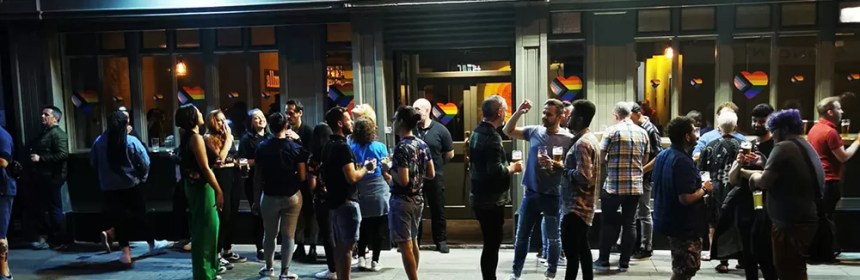
Dublin’s “All my Friends” pub, based in Smithfield is a prime example of the struggles associated with running a small, independent business in the current Irish, commercial environment. The pub opened its doors in the summer of 2022, and less than 2 years following, closure was announced due to the ‘punitive tax system’ as described in their statement, highlighting the ever-increasing costs of running an independent small business in Ireland. Kale + CoCo, another favourite in the Stoneybatter area, closed its doors in December due to similar financial constraints. As reported in the Irish Independent, “Nowadays, it’s not enough to just be a cafe”, with “so little reward”.
Following the Government debate on 14th February, these increasing costs were noted as Accountancy Ireland recommended a limited increase in the minimum wage due to the increased costs of doing business and inflation. The increasing financial pressure on SMEs is hard to narrow to one specific area. The issue is not unique to Ireland, with many global geopolitical factors at play: shocks to supply chains following Brexit and the crisis in Ukraine are namely impotent, with global circumstances taking their toll on markets across the globe.
SMEs facing financial difficulties are inevitably raising consumer prices to meet ends’ need, but naturally the overall inflation rate is taking its toll on the economy. The public are now much more aware of their spending habits and their role in keeping businesses flowing, yet increased selling prices are taking their toll on demand. As a college student, a notable change we can all vouch for is the costs of a cup of coffee and a pastry. Two years ago, friends and I would regularly treat ourselves to some of our favourites, most often comprised of small, independent coffee shops. In the last few months however, this has not been so economically feasible. These small, generally family-run businesses have unfortunately had no other choice but to hike up prices, and the tangible impacts on daily expenses, like the rising cost of coffee, underscores the urgent need for comprehensive solutions to sustain the vital ecosystem of small, independent businesses in Ireland.
The precarious landscape for small businesses in Ireland mirrors global inflationary challenges, and while the ICOB grant increase offers some relief amongst other actions taken by the government, it falls short of addressing the broader economic issues to which are harder to control. Geopolitical factors, supply chain disruptions, and inflation are just some of the difficulties for SMEs in Ireland today, prompting price hikes that impact consumer habits.
 Trinity Business Review