
Insights from a Global Business LaidLaw Scholar: Olamide Obadina’s Journey and Advice
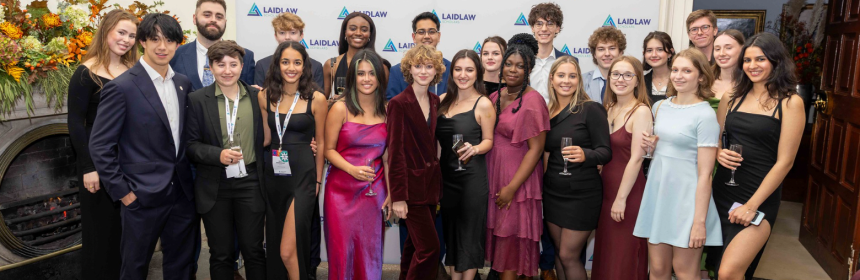
Exploring financial support, transformative experiences, and insights for aspiring scholars.
Petro Visagé
Laidlaw is an unparalleled scholarship initiative financing both research and leadership development for undergraduates with a vision to shape them into global citizens and future leaders. Surpassing €7,000 in total, the financial support extends to additional funding for training sessions, travel grants, and project expenses. This immersive experience cultivates indispensable skills transferable to project management, leadership, communication, and teamwork. Guided by experienced academics, scholars embark on original research projects and partake in a distinctive ‘Leadership-in-Action’ experience. Moreover, integration into an esteemed international Scholar group provides not only a network of like minded students but also profile-raising opportunities, enriching the overall academic and professional journey.
With the application deadline fast approaching, our TBR editors thought it fitting to interview Olamide Obadina, a current Global Business LaidLaw Scholar, to gain her insights, advice and experience with the programme to highlight its opportunities in the business sphere.
“Receiving the Laidlaw Scholarship truly empowered me to conduct research in an area I am genuinely passionate about. I focused my research on gender, racial, and cultural diversity in the C-suite. This is a topic that affects so many women globally and will affect me personally as someone coming from a minority background.” Obadina continued to explain that the opportunity has enabled her to gain a broader perspective of the topic and to learn from some of the best in the industry. She was able to explore the challenges women of diverse backgrounds face and how they overcome them. The experience further empowered her to present a research project sharing her findings with others that may be experiencing the same thing she did.
Key Opportunities:
The programme provides opportunities to further develop leadership skills including:
- Training sessions:
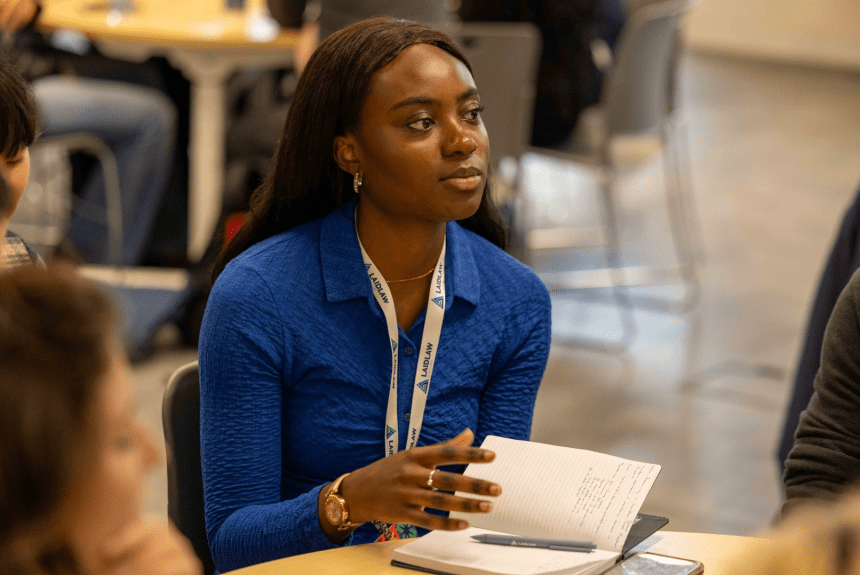
As part of the programme, scholars attend leadership development training sessions including an Ethical Leadership online workshop with scholars from the UK, Canada and USA. Sessions focus on crucial skills such as project management, ethical conduct, communication, teamwork, resilience, and cultural awareness. Obadina highlighted the training’s value in enhancing her communication and presentation skills, with her cohort participating in engaging public speaking workshops led by an acting coach.
- Networking
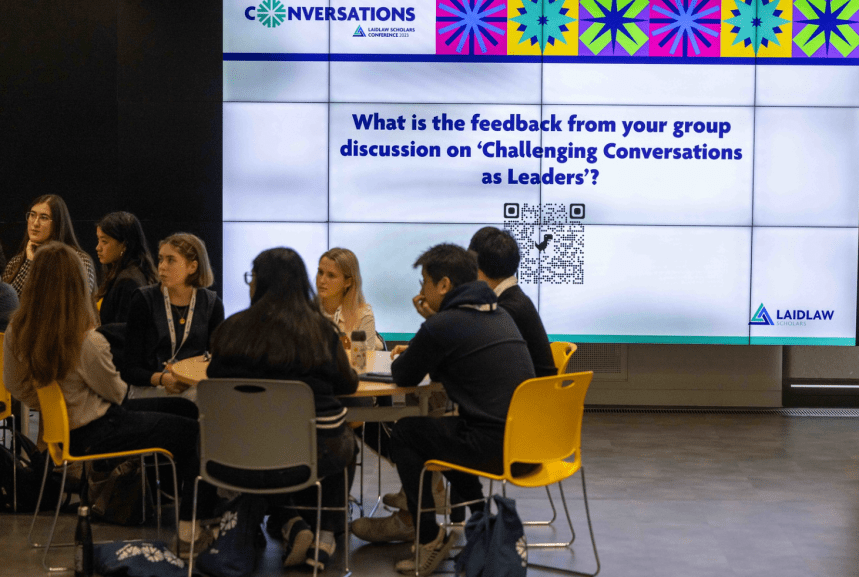
Laidlaw offers the opportunity to join a global network of scholars through the programme’s dynamic online platform and impactful in-person workshops and conferences. The Laidlaw Global Conference particularly stood out to Obadina. The conference brings scholars across the globe together and features unique networking opportunities and panel discussions. It further provides a platform to interact with a diverse range of individuals, allowing for the sharing of research projects and ideas. This engagement creates a sense of community, which is especially important when undertaking independent project work.
- Leadership in action
In the second summer of the programme, scholars engage in a ‘Leadership in Action (LiA) Project’ to apply leadership skills to real world challenges. For the project, scholars have the opportunity to travel abroad and work to improve the lives of people in a community of interest. The project empowers scholars to take ownership of a project, stress-test their leadership skills, gain a deeper understanding of global citizenship through exposure to diverse cultures, and contribute to tangible positive change. This may involve applying their own research or collaborating with NGOs, non-profits, or social enterprises. According to Obadina, the projects vary a lot; some resemble internships within organisations, while others involve hands-on physical projects. Numerous projects are located in Central Africa, offering opportunities to contribute to community fairs and uplift communities in various ways. Similarly, there are diverse projects in South America, including Peru and Colombia, providing a range of options based on individual interests and learning goals. “And what I love about it is that everything is contributing to a better, contributing to a better society, which makes you feel so privileged to be a part of a project that’s actually impactful,” Obadina explains.
Applying:
The initial application consists of an online application form, a proposal for a research project in Summer 1, a proposal for a Leadership-in-action experience in Summer 2, a Leadership statement video and finally, a letter of support from the proposed supervisor(s).
Thereafter, applicants undergo a formal interview. If successful, applicants must draft an 800 word proposal for the research to be done in summer 1 and the potential challenges they may face.
Advice for applications:
- Finding a mentor:
Obadina explains that finding a mentor/supervisor is one of the hardest obstacles. Her strategy was to make a list of potential mentors in the area. She listed all her lectures, all the subjects she had chosen, and then all the subjects that could relate to her research. Obadina then emailed each in turn explaining the project and research. Interestingly, she noted that many professors may be unfamiliar with LaidLaw, so be prepared to explain the programme’s aim. While Obadina successfully found her mentor with this strategy, she urges applicants that may be struggling to leverage LinkedIn; “I’m sure you have a connection and can connect you to someone who could be your mentor. Really leverage your personal network. I think that’s something that you should do every single year. I love that you’re actually doing that for Laidlaw, because personal connections have been so incredible in pushing my research.”
- Choosing a topic
Obadina advises applicants to choose a topic they are genuinely passionate about. “When I did my interview, you could see how passionate I was. They know when you genuinely care about the project and that’s so important because that’s what’s going to motivate you to keep doing this independently over summer.” However, ensure that the research can have a significant impact. “There are a lot of topics you could research that you might be interested in, or they relate directly to your life, but maybe in terms of creating a research project, they don’t really transfer to everybody else,” Obadina continues. Thus, the key is striking a balance between personal interest and generalisable, relevant impact.
- Drafting the application:
It is imperative to be clear and concise, Obadina explains: “Know exactly what is going to come out of your research. Be clear about the type of leadership and action projects you want to do in year two. Be clear about potential challenges that you might encounter. Be clear about what you want to gain from the space. That’s something they will really look for. As a person, what do you want to gain from this? What do you really care about?”
Obadina’s experience:
For Obadina the experience has been beyond rewarding. When asked about her experience she emphasised two main highlights: the global exposure and the growth.
Through the annual Laidlaw Global Conference, Obadina was able to find a community of passionate scholars from across the globe, each with their own fascinating research to share. The opportunity also empowered her to interview inspiring women in reputable roles; from entrepreneurs to executives from Canada, the U.S., Malta, France, the U.K. and more.
To Obadina the most rewarding part was how much she learned from the interview process. She loved hearing stories from people that were mistreated in the C-Suite and how they overcome their challenges in the workplace. The experience also gave her exposure to many different industries and how systematic barriers differ across sectors. She further noted significant personal growth through the experience, as in facing many setbacks throughout the process, Obadina learned to be flexible and adaptable in her approaches and to set realistic goals for progress.
The experience further enabled Obadina to discover just how passionate she truly was about the topic. “I always knew I was interested in diversity and inclusion, but when you’re actually doing your research, you realise, wow, this is something that I really get here, something I’ll be able to pursue a career in, something that I could do my research in. It gave me a really good view of where I could take this long-term.”

The deadline is 12:00 Noon, 12th February 2024! Be sure to apply!
Advice to successful candidates
“Approach it with an open mind. At this point, you’ve picked your topic, you’re probably really excited about what you want to do and you’re probably going to plan out everything and make preparations. I would say do that, it’s amazing, but also accept that it will not always work out that way. And that’s not something negative. I actually see it as an opportunity to pivot. Being flexible and adaptable is going to help you when you solve problems in the future. Don’t overthink it, you’ll learn as you go.”
– Olamide Obadina
Read more on the Laidlaw Scholarship here: https://www.tcd.ie/Careers/students/awards/laidlaw/
For more questions on the programme feel free to reach out to Olamide Obadina via LinkedIn: linkedin.com/in/olamideobadina
 Trinity Business Review