
Aviation Sustainability: In Conversation with SFS Co-Founder Agnes Thornton

Petro Visage
Introduction:
The aviation industry is responsible for 3% of the world’s carbon emissions – a footprint that could swell to a staggering 27% by 2050 if we were to continue business as usual. In its 77th Annual General Meeting in October 2021, the International Air Transport Association (IATA) passed a resolution for the global air transport industry to achieve net zero carbon emissions by 2050. It is, however, widely acknowledged within the sector that reaching this objective poses a substantial challenge. Balancing emissions reduction with the growing global demand for air travel in a post-COVID-19 era presents a delicate equilibrium to be struck.
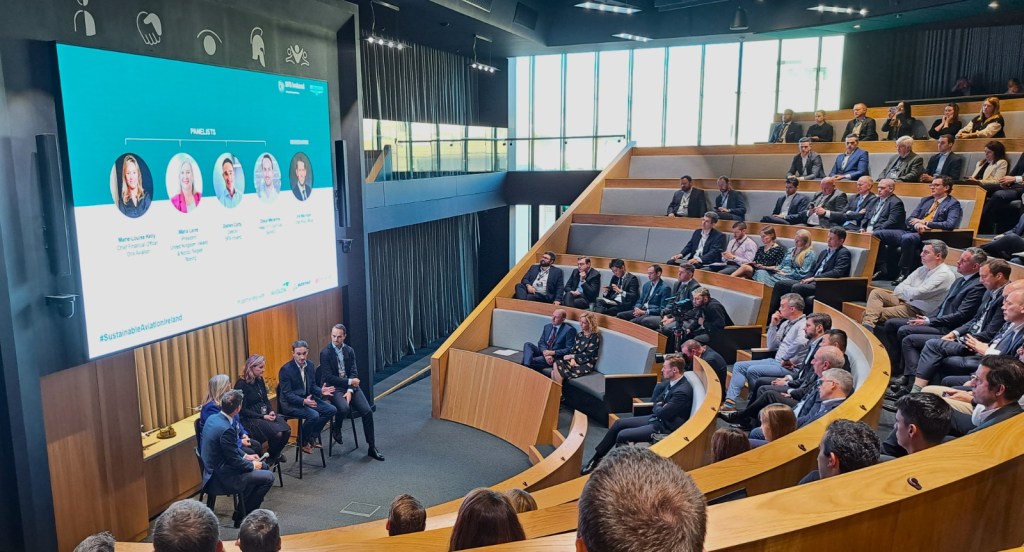
TBR’s Deputy Editor, Petro Visage, sat down with Agnes Thornton, co-founder of Sustainable Flight Solutions (SFS) to explore potential opportunities for sustainable aviation in Ireland.
Sustainable Flight Solutions: Pioneering Sustainable Aviation
Founded by Agnes Thornton and Darren Carty, SFS is an innovative project development company focusing on the production of Sustainable Aviation Fuels (SAFs) in Ireland and abroad. SAFs are alternative fuels used in commercial aviation, capable of reducing CO2 emissions by up to 80%. SAFs can be sourced from various materials, including waste fats, oils, greases, municipal solid waste, agricultural residues, and non-food crops grown on marginal land. This newly developed fuel source is considered sustainable as they do not compete with food crops, require minimal additional resources like water or land, and do not contribute to environmental issues such as deforestation or biodiversity loss. Unlike fossil fuels that release sequestered carbon, SAFs recycle CO2 absorbed by their feedstock biomass during growth, reducing their overall carbon footprint.
The firm’s mission is rooted in a shared responsibility to drive the decarbonization of the aviation sector, both regionally in Ireland and on a global scale. By fostering collaborations with industry partners, academia, and technology providers, SFS is actively engaged in research and development efforts.
The Inspiration Behind SFS: A Journey to Sustainability
SFS was inspired by a shared vision for a more sustainable future in the aviation sector. Both Founders of SFS are airline pilots; during the COVID-19 pandemic, fewer working hours enabled the pair to embark on higher education, focusing their research on SAF Life Cycle Analysis and SAF implementation for industry through a post-graduate Diploma in Sustainable Systems Engineering and an MSc in Aviation Management, respectively. As the team expanded to include expertise in aircraft leasing and financing with the addition of Aidan Bodkin as third director, their collective vision for a more sustainable future for the aviation sector came into sharp focus.
Thornton and Carty understood that the aviation industry needed changing if it were to continue. “Sustainability is imperative for the industry to survive in the long run”, Thornton explains. Knowing this, a concerning observation was that while many studies were done on SAF here in Ireland, there was a gap between academia and industry, with significant interest by firms with minimal information. SFS Ireland then started to bring the needed conversations to the table, starting as an advocacy group to spread awareness on SAF and other sustainable practices. Soon, they hosted workshops with academics and stakeholders across supply chains to spark conversations around potential solutions.
Agnes explains that the road to making aviation more sustainable is long and tedious, but initial, encouraging steps have been taken in Europe and world-wide. SFS believes that Ireland has an important role to play in the development of SAFs and are therefore actively engaged in projects to facilitate the transition, from R&D to feasibility studies and policy discussions.
Feasibility Study with SkyNRG: A Significant Step Forward
One significant milestone in SFS’s journey was a comprehensive feasibility study carried out with SAF producer SkyNRG. This study, conducted in collaboration with industry giants Avolon, Orix Aviation, and Boeing, assessed the commercial viability of a Sustainable Aviation Fuel (SAF) production in Ireland.
The EU’s ReFuelEU initiative presently requires a phased elevation in the inclusion of SAF in aviation fuel at EU airports, commencing at 2% by 2025 and ultimately achieving 70% by 2050. Released last Wednesday, the report found that Ireland has the potential to establish a €2.55 billion annual sustainable aviation fuel (SAF) industry, generating over 1,000 highly skilled jobs by 2050 if it meets these targets.
The study, funded by industry leaders, marks a promising step towards reducing the aviation industry’s environmental footprint.
That being said, the report accentuates the necessity of executing well-structured policy modifications to enable the comprehensive growth of this industry. It advocates for business incentives, such as tax credits and guaranteed pricing, while emphasising research and development funding and planning process reform. Moreover, the report stresses the need for investment in storage and transport infrastructure, along with public-private collaboration. For an actualisation of a prosperous SAF sector in Ireland, industry players must collaborate in establishing and effectively enacting vital policies. In light of these recommendations, it is worth noting that Minister for Enterprise, Trade and Employment Simon Coveney underscored the government’s steadfast commitment to initiatives focused on emissions reduction in air travel when presenting the study last week.
Overcoming Barriers to Sustainability: The Road Ahead
When asked about the challenges in adopting sustainable practices in the industry, Thornton pointed out a variety of measures beyond just SAF, including improved operational procedures, enhanced air traffic management, and the use of fuel-efficient aircraft and engines. These measures are collectively needed to work towards industry-wide emissions reduction goals.
However, significant progress has been made with the recent ReFuelEU proposal, which mandates SAF use, thus providing a clear direction for the industry. This proposal mandates SAF use by putting an obligation on fuel suppliers to blend a certain percentage of SAF into their jet fuel supply, starting with 2% in 2025, and stepping up to reach 70% by 2050 as mentioned prior. A sub-mandate is also relevant to note, which ensures that part of the SAF is of non-biological origin, so called “synthetic fuels”. This agreement is a significant milestone, as it sets out the ambitious targets from the EU and gives more certainty and clarity to investors and SAF producers alike.
The primary hurdles in advancing sustainable aviation fuels (SAF), Thornton explains, include issues related to scalability, feedstock supply, and insufficient investment due to lingering uncertainties, as the implementation of EU policy requires national-level adoption. While the EU agreement marks an initial step, long-term certainty necessitates the establishment of a robust national policy.
To address these challenges, strategies under consideration involve the implementation of an EU SAF mandate and ongoing policy discussions. These discussions are showing promise in instilling confidence among investors, particularly those involved in capital-intensive SAF projects.
Regulatory Changes and Trends: Navigating a Greener Sky
In recent years, there has been significant regulatory changes pushing for sustainability within the aviation sector some of which include:
1. Renewable Energy Directive (RED III): On September 12, 2023, European Parliament members officially passed revisions to the Renewable Energy Directive (RED III), facilitating the adoption of renewable energy across EU member states.
2. ReFuelEU Aviation Initiative: on October 9, 2023, the EU Council approved the ReFuelEU Aviation initiative as a fundamental component of the ‘Fit for 55’ package, initially introduced by the European Commission on July 14, 2021. The primary objective of this package is to reduce greenhouse gas emissions by a minimum of 55% by 2030, ultimately achieving climate neutrality by 2050.
3. CORSIA Implementation: Commencing from 2027, the Carbon Offsetting and Reduction Scheme for International Aviation (CORSIA) will be mandatory in most nations. Differing from the EU ETS, which sets emissions caps, CORSIA permits emissions to rise while mandating compensation through offsets. In 2022, the EU Parliament and European Council mutually agreed to integrate CORSIA into their emission monitoring framework and gradually phase out free aviation allowances by 2027. Ireland took an active step by embracing CORSIA regulations in 2021 during its initial stages.
However, Thornton emphasises the significance of the Climate Action Plan for 2024, expressing hope for a more comprehensive acknowledgment of aviation compared to previous initiatives. “Unfortunately, Ireland has been somewhat lacking in ambition in this regard, but we are encouraged by positive trends and anticipate the integration of Sustainable Aviation Fuels (SAF) in future climate and transportation discussions,” Thornton explains.
The Future of Sustainable Aviation: Collaboration and Consciousness
Thornton strongly believes that a more sustainable aviation industry is achievable. However, she emphasises that this goal can only be achieved through a collaborative and conscious approach by everyone involved. Stakeholders from all sectors need a clear understanding of the environmental impact of air travel, the opportunities presented by sustainable fuels, and the importance of policy support to aid the transition towards a sustainable future for the aviation industry. The future of sustainable aviation is promising but requires a collaborative and conscious effort to properly meet the state of the sector.
Fostering Sustainability in Aviation: Advice for All Stakeholders
Thornton emphasises the various avenues for bolstering a sustainable aviation sector. Some include conscientious travel, participation in Sustainable Aviation Fuel (SAF) procurement programs, and advancing awareness through education.
Businesses, in particular, can play a pivotal role by setting an example, educating their workforce about the environmental impact of air travel, and exploring pathways to minimise their emissions. Firms should explore corporate initiatives to procure SAF for their business travel needs, thereby stimulating SAF production through voluntary contributions.
National policymakers have been given a clear task by the recent ReFuelEU initiative: to demonstrate commitment to a future SAF industry, it is imperative that they swiftly and consistently implement the regulation on a national level.
While success stories from industry frontrunners such as the Lufthansa SAF program, the SAS SAF Program, the IAG SAF Roadmap, and the JetZero Council showcase the economic and competitive advantages achievable through sustainable aviation practices, Thornton cautions against the lurking threat of greenwashing. Maintaining robust governance and transparency remains essential to empower customers to make well-informed decisions regarding their individual contributions.
Read more about SFS initiatives at:
To learn more about SAF:
https://www.iata.org/en/iata-repository/pressroom/fact-sheets/fact-sheet—alternative-fuels/
 Trinity Business Review