
Irish Food in Japanese Kitchens: Ireland’s Agricultural Partnership with Japan
By Reece Hickey
In April 2025, Taoiseach Micheál Martin officially opened Ireland House Tokyo, the headquarters for Irish-Japanese trade and diplomacy in Japan. It houses the offices of various Irish organisations and state agencies such as the Irish Embassy, Bord Bia, Enterprise Ireland and IDA Ireland (Industrial Development Agency Ireland). The opening of Ireland House Tokyo has demonstrated the importance of the Japanese export market to Irish trade, particularly in the agricultural sector.
Why do Japanese Consumers like Irish Food?
Irish agricultural trade has become increasingly popular in Japan, with Japan now being the third largest consumer of Irish agri-food exports outside of Europe – Irish beef and pork, seafood, dairy and whiskey all highly sought after. In 2024 alone, €162 million worth of Irish food and drink products were exported to Japan. There are various reasons for this.
Irish produce is considered among the highest quality in the world, particularly dairy and beef. Ireland’s mild and moist climate allows for a year-round grass-based agricultural system. This means that cows can graze on Ireland’s lush grass pastures for most of the year, making Ireland’s grass-fed meat and dairy especially flavourful and nutritious.
Irish agri-food products are largely sustainably produced as well. Bord Bia has been a key player in recent years in ensuring that Irish produce is of high quality and is produced through environmentally sustainable means. This is done through auditing farms and food processing plants, as well as labelling their products with the Bord Bia Quality Assurance Mark. Irish produce carrying this mark indicates that it is safe, sustainably produced and fully traceable.
These factors strongly appeal to Japanese consumers as they heavily prioritise the quality and freshness of their food. The aging population of Japan is also notably health-conscious and is willing to pay a premium price for high quality, safe and reliable food: a market niche well suited for Irish produce.
The Success of Irish Food and Drink in the Japanese Market.
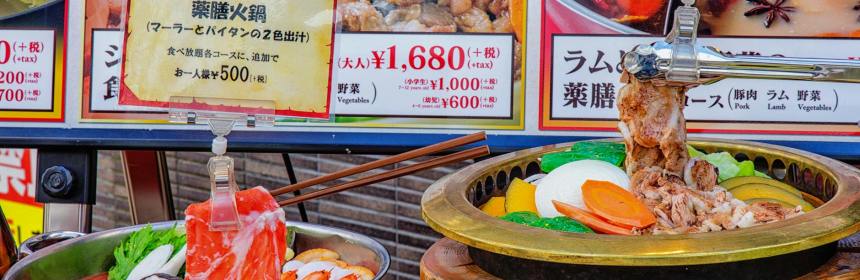
One of the best performing Irish food exports in Japan has been beef offal (edible organs). Unlike in the Irish market, offal is a common sight on Japanese menus, with Irish beef tongue becoming quite a popular delicacy in Japan. One of the key customers for Irish beef tongue is restaurant chain “Negishi”, who sell it in over 40 restaurants across Japan, catering to approximately 100,000 customers each week. Last year, three high-end Japanese chefs were inducted into Bord Bia’s exclusive Chefs’ Irish Beef Club (CIBC).
The CIBC is composed of chefs working in top restaurants and culinary institutions worldwide who share a passion for Irish beef. It already includes high-end chefs from across Europe and the Middle East. The CIBC has played a pivotal role in promoting Irish beef as a premium product in Japan. Inductee Chef Yuki Inoue, Head Chef at Ristorante La Bisboccia in Tokyo, said: “I’ve been using Irish beef at La Bisboccia for six years. We have served beef from all over the world, but Irish grass-fed beef stands up as the best, and our customers love it”.
Irish whiskey brands such as Jameson, Redbreast and McConnell’s have also found success in Tokyo’s bars. In 2020, there were just 55,000 cases of Irish whiskey sold in Japan, a figure that has risen to more than 200,000 cases in 2024. The Irish Whiskey Association participated in a trade mission organised by the European Commission in Tokyo in June 2025. “Japan is a very exciting country for Irish whiskey, something that many companies are now discovering. There is a huge interest in the product, and a great affinity for Ireland”, said Eoin Ó Catháin, Director of the Irish Whiskey Association.
Infrastructure, Legislation and Trade Missions – Groundwork for Success.
The Irish state purchased a site in Tokyo in 2017 for a centre of Irish trade and diplomacy, prior to the signing of the EU-Japan Economic Partnership Agreement in 2019, which removed the majority of Japanese tariffs imposed on the EU. This site is now home to Ireland House Tokyo. With establishment costs totalling over €21 million, Ireland House Tokyo is the most expensive capital project the Irish state has ever invested in, outside of Ireland. This is justified, however, as bilateral trade between Ireland and Japan is now worth more than €21 billion per year and the volume of trade has doubled over the past decade.
Accompanying the opening of this site was an extensive trade mission led by Bord Bia and Irish government ministers, which involved initiatives such as the aforementioned Chefs’ Irish Beef Club and participation in trade shows such as Foodex Japan, Japan’s biggest food and beverage exhibition. This trade mission established vital partnerships between Irish organisations and the Japanese agri-food sector. Another major part of the trade mission was Ireland’s participation at World Expo Osaka, where months of activities at the Expo were held to increase Ireland’s presence and visibility in Japan.
2025 was a landmark year for the development of Irish-Japanese commerce. With key relationships built, crucial infrastructure constructed and vital trade agreements established, it is now time for Ireland to reap the benefits of its long-term investment in the Japanese market.
 Trinity Business Review