Tag Archives: featured

DeepSeek vs. ChatGPT: Reshaping NVIDIA, the US-China Tech Rivalry, and the Global AI Landscape
Connor Leonard, Rachel Ranjith & Zara Pribicevic

Artificial intelligence has evolved into more than a mere scientific advancement; it has transformed into a competitive arena for efficiency and worldwide dominance. Central to this evolution is ChatGPT, previously the preeminent leader in conversational AI, now confronted by a significant rival: DeepSeek. With its efficiency-driven approach and open-source architecture, DeepSeek heralds a shift in AI development, raising questions about the balance between adaptability and specialisation.

However, the ramifications extend beyond artificial intelligence models. NVIDIA, the leader in AI chip manufacturing, has experienced a challenge to its supremacy as DeepSeek demonstrates the availability of alternatives. Meanwhile, as the U.S.-China AI rivalry increases, innovation has turned into a geopolitical hotspot. With dynamic changes in the AI realm, how does DeepSeek contest ChatGPT, and what influence are felt by NVIDIA? How is the overarching AI weapons race changing global power dynamics?

The ChatGPT Phenomenon

A true marvel of modern invention, ChatGPT, the golden child of OpenAI’s GPT architecture, has become the standard for conversational AI. Alongside its ability to generate human-like text, answer complex questions and assist with tasks, ChatGPT’s ability to provide personal and professional responses have exponentially multiplied its user base, ranging from students to suburban moms to 9-5 workers. We can trace the success of this model back to its scale; trained on vast amounts of data, it uses a generalist approach to handle a wide array of tasks. Like any true everyday hero, it can write your college essay, debug your code or help you draft a breakup text.

However, the unfortunate downfall of this ‘everything-tool’ lies in its defining generalist approach. While ChatGPT excels at breadth, it, more often than not, struggles with depth, especially in specialised domains. Its reliance on pre-2021 data for GPT-3 also limits usability. These limitations, along with increasingly high subscription prices, highlight a growing tension in AI development. Will ChatGPT manage to stay relevant while the pendulum of user demand swings back and forth between versatility and expertise?

DeepSeek: A New Challenger

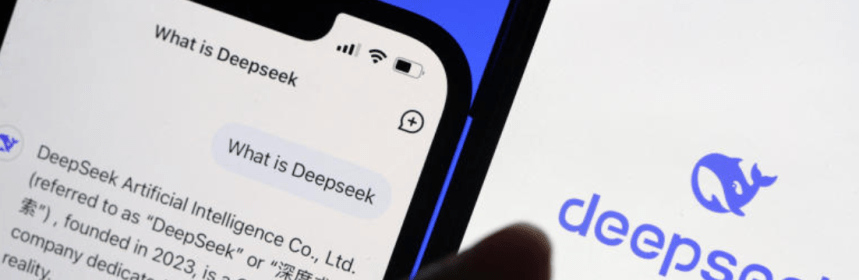
Cheaper and better products from China never come as a surprise, and yet, the advent of DeepSeek seemed to shock U.S. AI oligarchs. Capable of ChatGPT-esque speech (since they share the same foundational technology) while also offering a broader spectrum of knowledge, DeepSeek distinguishes itself through a more focused approach. DeepSeek is designed to prioritise efficiency and precision, often excelling in cases where ChatGPT’s generalism might fall short. However, once again, the strengths of this model are also its downfall, as DeepSeek’s narrower focus comes with trade-offs. By optimising specific tasks, it may lack the versatility that has made ChatGPT so popular. 

DeepSeek’s emergence suggests a growing recognition that one-size-fits-all solutions may not be sufficient as AI applications become more diverse and complex. However, this shift toward specialisation also risks creating a fragmented AI ecosystem, where users must navigate multiple tools for different tasks, rather than relying on a single, unified platform. The challenge for DeepSeek, then, is to prove that its targeted approach can deliver enough value to justify the added complexity.

Differences, Implications and Competitive Advantages

A key asset of DeepSeek’s groundbreaking reveal was its computational efficiency. While ChatGPT and other US AI oligarchs invest billions in AI chips for model training, DeepSeek achieves almost superior performance using only a quarter of the AI chips required for ChatGPT. This efficiency causes a ripple effect in multiple spheres. It significantly reduces cost of operations. For an increasingly climate conscious consumer, this efficiency results in a lower resource footprint that could serve as a major competitive advantage. Additionally, the reduced requirement for expensive state-of-the-art AI chips significantly lowers the barrier to entry, making it easier for smaller businesses to access the necessary hardware for deploying advanced AI models.

Another key differentiator is DeepSeek’s open-source nature. This is contrasted by OpenAI’s proprietary model which, ironically enough, started off open-source (lending to the brand name, OpenAI). DeepSeek’s openness of a superior model strips some competitive advantage from ChatGPT, as it enables broader access to creating models of similar intelligence. It must be stated, however, that an open-source model is not without fault. Without centralised oversight, there may be significant challenges in maintaining consistency, preventing misuse, quality control, security, and ensuring ethical standards.

The implications of DeepSeek are understandably widespread and have both erased and created competitive advantages on both sides of the competition. The impact can also be seen in industries adjacent to AI, such as NVIDIA, the lead supplier of coveted AI chips.

NVIDIA: An Overview

NVIDIA has been one of the most remarkable success stories in the stock market over the past few years. The company, originally known for manufacturing high-performance graphics processing units (GPUs) for gaming, has transformed itself into an artificial intelligence (AI) powerhouse. This pivot has driven NVIDIA’s stock price to unprecedented levels, with its market capitalisation surpassing $1 trillion in 2023, making it one of the most valuable tech companies in the world.

A key driver behind this explosive growth has been the surge in demand for AI-related computing power. NVIDIA’s cutting-edge chips, particularly its H100 and A100 GPUs, are essential for training and deploying large AI models. This dominance in AI infrastructure has led to exponential revenue growth, allowing NVIDIA to post record-breaking earnings and maintain its stronghold in the semiconductor industry.

AI has become inseparable from advanced semiconductor technology. Training large-scale AI models, such as OpenAI’s GPT-4 and Google’s Gemini, requires vast computational resources. NVIDIA’s GPUs, with their parallel processing capabilities, are the gold standard for AI workloads, significantly outperforming traditional central processing units (CPUs).

The reliance on NVIDIA’s technology for AI development has made the company indispensable to major tech firms. However, the company is also reliant on AI firms continuing to use their chips. An analyst from UBS estimated that Microsoft, Meta, Amazon, and Alphabet collectively make up 40% of NVIDIA revenue. 

NVIDIA’s Stock Crash: The Facts

Recently, NVIDIA’s stock experienced a sharp decline amid concerns over the emergence of DeepSeek, a new AI player backed by Chinese tech firms. DeepSeek was able to develop a GPT with a combination of NVIDIA chips and cheaper alternatives. The use of cheaper alternatives was previously thought to be impossible in the short term, thus the demand for NVIDIA chips is uncertain in the future.

The stock dropped 17% to $188.42 in one day, erasing nearly $600 billion of value – the largest one day drop in U.S. history. It briefly recovered up to $128.99 over the next few days, but recently it seems to have found an equilibrium.

The future value of the company is still uncertain. The quality of copycat AIs is uncertain, as well as what effect, if any, they will have on NVIDIA’s biggest buyers. Microsoft, Meta, and Alphabet have already built their software around NVIDIA chips which makes a decoupling seem unlikely. However, there are also broader geopolitical aspects to this issue.

DeepSeek, AI, and the Great Geopolitical Chessboard

Let us rewind to how AI rose to power to become a tool in political debate. The first AI Safety Summit was organised by then-UK Prime Minister Rishi Sunak, and the outcome was stellar. The Bletchley Declaration was this summit’s achievement – 28 countries, including the United States and China, signed the agreement, promising international co-operation in order to manage the challenges and risks that AI posed. 

The tables have now turned, and at the most recent AI Summit in Paris a new declaration was put forward: “A pledge for Trustworthy AI in the World of Work”, reiterating the importance of transparency and promoting AI accessibility in order to avoid a digital divide. 60 countries signed the declaration, including China, however the UK, who was once an advocate for AI safety, followed suit with their special partner the US, who also refrained from signing the agreement. Vice President JD Vance emphasised that he had concerns over “authoritarian censorship”. The Paris AI summit has shown a change in the dynamics, with an emphasis on geopolitical rivalry and the never ending pursuit of economic and technological advantage.

The United States: Not Amused

Let’s talk about efficiency. This January, while President Trump made Elon Musk’s schedule busier than ever with the introduction of the Department of Government Efficiency, a Chinese firm used creative methods to increase artificial intelligence efficiency –  DeepSeek. Across the pond in Washington, DeepSeek’s success has raised some serious eyebrows. The US has been cranking up the pressure on China’s AI ambitions, raising tariffs and slamming the door on high-tech chips, warning allies against playing too nice with Beijing. 

Trusted advisor J.P. Morgan and their Chairman of Market and Investment Strategy Michael Cembalest noted at a talk on the Global Market Outlook that although Deep Seek is a compelling story, it may be too good to be true. Cembalest emphasised that it was difficult to tell what really happened with DeepSeek, as Chinese statistics are not to be trusted. He compared them with his middle school child’s report, insinuating that we do not have the full picture of DeepSeek’s success story. We have to wonder though, is the US trying to play it down, and are they possibly too nonchalant for their own good?  

China: Playing the Long Game

For Beijing, DeepSeek’s rise to fame isn’t just a win – it’s a strategic flex. Following years of U.S. sanctions blocking access to high-end microchips, China found itself at a crossroads: play nice and roll over or get creative. It chose the latter, giving the country a tech boost. The long game for China begins with DeepSeek, but The People’s Republic is aiming high for full scale AI-driven industrial innovation, aligning with the new policy “Made in China 2025”, emphasising China can not only scale and commercialise emerging technologies, but also innovate and be at the forefront of the field. Beijing isn’t necessarily aiming for the crown in the AI chatbot arena, but to employ the underlying technology to create cost-effective, commercially feasible solutions, which it can subsequently export to lower-income nations. China’s objective is not exclusively “frontier AI”, but rather “mass-market AI”.

Europe: Stuck in the Middle

Meanwhile, Europe is still trying to decide what to do with its seat at the table. On one hand, leaders like former UK Prime Minister Rishi Sunak organised the first ever AI Safety Summit in November 2023. French President Emmanuel Macron is advocating for AI advancements leveraging the region’s nuclear energy edge, and the most recent “AI Investment Plan” pledging around €200bn towards accelerating AI development. Conversely, Europe seeks to avoid entanglement in the conflict between two technological superpowers. The European Union, hindered by internal discord and slow innovation processes, risks becoming a mere observer, rather than a player, in the race for AI, which is now a key economic driver. 

Microchips: The Tiny Giants Shaping Global Power

At the core of this AI turmoil lies the true arbiter: microchips. The United States has adopted a stringent approach by prohibiting the shipment of advanced semiconductors to China, aiming to impede Beijing’s progress in artificial intelligence. However, China is not lamenting; it is ingeniously managing its resources to maximise the performance of the chips it can still utilise. When the United States intensified its restrictions, China retaliated by restricting the export of gallium and germanium, essential ingredients for semiconductor manufacturing. What is the outcome? A semiconductor rivalry in which both parties are striving to surpass one another.

The Bigger Picture: A Tech Cold War in the Making?

DeepSeek’s emergence is but a fragment of a larger geopolitical conundrum. The AI arms race transcends the mere development of superior models; it encompasses the control of future technologies, economic dominance, and global impact. The United States and China are in conflict, Europe is striving to maintain its significance, and the global community is preparing for the enduring ramifications of a fragmented AI ecosystem. Will this be the dawn of a new digital Iron Curtain? Will innovation discover a method to dismantle obstacles? AI is not only transforming sectors; it is also redefining global power dynamics.

Most of these developments point to a future where AI is both an economic driver and a geopolitical chess piece. In many ways, this entire situation is a microcosm of a broader global transition. ChatGPT’s success and subsequent dethroning proves the need for the precarious balance between being an all-encompassing model and trying to be everything to everyone. DeepSeek’s efficiency-led approach and open-source philosophy promises new paths forward but also exposes fresh challenges. NVIDIA’s stock woes highlight how dependent entire industries are on AI’s progress — yet also how quickly that progress can redefine winners and losers. Nations grapple for control over microchips, data, and AI capabilities, while global alliances and trade deals strain under the weight of competing ambitions. As technology becomes a barometer of power, the potential for fragmentation — specialised models, trade restrictions, or strategic self-reliance — grows. What is certain is that AI is actively reshaping the balance of power — politically, economically, and technologically — well beyond chatbots and chip manufacturers.


Coffee Chat with Laura Lynagh, Strategy & Transactions Analyst at EY-Parthenon

Rhea Singhal

As part of the Graduate Coffee Chats series in collaboration with Foresight Business Group, TBR Correspondent and Foresight Chief Strategic and Financial Officer Rhea Singhal sat down with Laura Lynagh, a Strategy & Transactions Analyst at EY-Parthenon and former TBR Freshers Convenor, to get insight into life as a graduate at EY-Parthenon.

What Does a Strategy & Transactions Analyst Actually Do?

EY-Parthenon, the global strategy consulting arm of Ernst & Young (EY), has over 9,000 professionals worldwide. EY Parthenon is split into three key teams: Transaction Strategy & Execution, Strategy and Turnaround & Restructuring. Laura’s role focuses on post-merger integration and separation. “After a transaction, my job is to figure out how to integrate two companies in terms of operations, finance, legal, and HR.” She also takes part in due diligence, including HR and operational due diligence, and works with distressed mergers and acquisitions. She describes her role as “very broad, dynamic, and interesting,” emphasizing that no two days are ever the same.

“I find the area of M&A really interesting—it’s so dynamic, it moves so quickly, and it’s quite broad. You’re not pigeonholed into one thing. And you get to do your accounting exams in the graduate programme, so it felt like a natural fit.”

The EY-Parthenon Graduate Programme 

EY’s graduate programme is designed to be social and supportive. “You start with lots of people your own age, so it’s really sociable,” Laura shares. She also praises EY’s learning and development team: “They really support you. For example, if you’re doing exams, they put on revision lectures.”

The Strategy & Transactions (SAT) team is also a great place for graduates because roles aren’t set in stone. “If you want to take on work, they’ll let you. They really let you grow and contribute to the team.” The firm is also flexible about team changes, though, she says, “You often end up in a team that suits you since they try to match you well after interviews.”

The Interview Process

Laura had a positive interview experience at EY-Parthenon. “I applied to the EY Strategy & Transactions graduate programme general application and then selected EY Parthenon.” On the day, current graduates were there to greet her, making for a friendly and welcoming environment.

She interviewed with a Director and a Manager. “It was very conversational. I really liked that they made an effort to read my application, CV, and all my answers beforehand.” Because of this, she emphasizes the importance of knowing your application inside and out: “They’ll ask you to expand on things you wrote. So, don’t just write things down—make sure you can talk about them.”

Laura shared some key interview tips:

  1. Do some research!: When you are going through the interview process, research the company, the department and the role itself. If your role involves taking the accountancy exams, research them, explain why you have the “right skill set” for the exams.
  2. Be comfortable talking about yourself: As said by Laura, “They don’t expect you to have five years of work experience.” Be ready to talk about any college societies or clubs you have been involved in and any experience you may have gained while in college. 
  3. Practice: Laura emphasised practising interview questions and developing the “skill of thinking on your feet”. Additionally, Laura said the interview questions are not very technical and are more competency based such as ‘‘Tell me about a moment when…?’”

Advice for Students

Should you start broad or specialise early?

“It depends. It’s a combination of your interest area and the company. Even if it’s a narrow interest area, joining a large company should give you insight into a wider range of projects. You should conduct an in-depth assessment of yourself.”

How do you figure out what works best for you?

“First, research the company. Talk to people. Reach out to people. Open days can really help as well.” She also suggests looking beyond job descriptions: “Find out what they actually do day to day. For example, Audit can be really cyclical—maybe you’re the type of person who really likes a routine.”

Something Laura Wishes She Knew When She Was In College:

“I was a little bit concerned with how it was all going to work out—was I going to like the day-to-day? Would I like my colleagues? I wish I knew how supportive and understanding everyone is. I didn’t need to worry so much!”

She also realized that college exams aren’t the end goal. “The accounting exams are a whole different ball game, and it’s really important to research what works for you.”Laura’s biggest takeaway? “Be prepared, be yourself, and don’t be afraid to reach out to people for insights!”

Coffee Chat with Anoushka Qazi, Management Consulting Senior Analyst at Accenture

Rhea Singhal 

As part of the Graduate Coffee Chats series in collaboration with Foresight Business Group, TBR Correspondent and Foresight Chief Strategic and Financial Officer Rhea Singhal spoke with Anoushka Qazi, a Management Consulting Senior Analyst at Accenture, to gain insight into life as a graduate in the consulting industry.

Management Consulting Senior Analyst – What Does It Involve?

Accenture, a global professional services leader, helps businesses, governments and organisations streamline operations, integrate digital solutions, and drive large-scale transformations. Anoushka specialises in change management within the consumer products industry, working closely with clients to ensure business transformations happen smoothly and seamlessly.

One of her projects involves a UK-based client undergoing major shifts in supply chain planning, HR and data management. Effective change, she explains, hinges on securing employee buy-in. “You can’t implement change without bringing people on the journey with you,” she says. Her role bridges the gap between strategy and execution—assessing how employees currently work, gauging their openness to change and guiding them through the transition.

She compares her work to persona mapping, stepping into the shoes of employees to understand their needs and concerns. One of her biggest challenges is shifting mindsets, as resistance to change is natural. “I totally understand the resistance to change. It’s about getting people to think about the long-term,” she shares. This highlights a core aspect of change management: overcoming short-term discomfort to achieve lasting improvements.

Finding the Right Fit in Consulting

For graduates entering Accenture, the first year offers exposure to different areas—Financial Services, Software & Platforms, Talent & Organisation, Strategy, Tech Consulting and Chief Financial Officer (CFO) & Enterprise Value (EV). This flexibility allows new hires to explore different areas of interests before specialising.

“I knew I was very people-oriented. I like working with people and the human resources element,” Anoushka explains. Initially, she explored financial services but realized it wasn’t the right fit. Still, she values that experience, as it gave her a broader perspective and an edge in understanding different industries.

 “Even though I didn’t love it, what I learned there still gives me an edge—it’s not time wasted. The one thing common across every industry is dealing with change, and you build skills that transfer everywhere.”

This adaptability is crucial in consulting. Some graduates enter with a fixed idea of their career path, but Anoushka emphasizes the value of starting broad and flexible. 

“The nice and scary thing about consulting is that you start as a generalist. You pave your own way. I studied BESS in college, which was quite broad, so I said, ‘Let me go in as a generalist,’ and two years later, I found my passion for change management.”

Why Consulting?

For Anoushka, the appeal of consulting lies in teamwork and variety. She enjoyed group projects in college, which naturally translated to her work at Accenture. “Consulting is all about teamwork—there are layers of support from analysts to consultants to managers.” The dynamic nature of consulting also keeps things engaging, with new challenges and projects keeping the work fresh.

Her involvement in student groups like ISCG and DUCG helped her pinpoint her passion early on. “Only after working on projects with these societies did I realize I enjoyed it.” This further underscores the importance of extracurricular experiences in shaping career interests.

What I Wish I Knew in College

While many students prioritise academics, Anouskha emphasises the importance of being involved on campus to develop your soft skills.

“The leadership, teamwork, public speaking and time management skills I developed as President of DUCG really stand out in my job today. Don’t underestimate those skills!”

She also highlights the relevance of everyday academic tasks. “Say you’re writing an essay—think about the skills you’re using: critical thinking, simplifying information, getting feedback, rewriting. That’s exactly what you do in consulting.” While technical expertise can be learned on the job, adaptability and communication skills are what truly set candidates apart.

Her advice? Take on opportunities that push you beyond your comfort zone. 

“Any opportunity to step outside your comfort zone—like public speaking—go for it! It will stand to you.”

For students worried about a lack of experience, Anoushka reassures them that it’s not about having the perfect resume. 

“Don’t feel pressured. We know you’re coming straight out of college. Extracurriculars are differentiators! They make your application stand out. Even part-time jobs show skills like time management. Focus on what you learned from your experiences—it’s all about self-awareness.”

The Intern-to-Grad Process

Anoushka transitioned from an intern to a full-time graduate role at Accenture. Following her remote internship during COVID, she underwent a review process that included self-reflection and a discussion with a senior manager before receiving a graduate role offer.

For those applying directly, the process involves:

  1. Online application
  2. Online assessment centre (problem-solving exercises)
  3. Second assessment centre (collaborative tasks)
  4. Final interview with a senior manager“This is where you show your personal flair and ask questions. It’s more about problem-solving approaches than technical knowledge.”

Work Culture: College 2.0

Accenture fosters a highly social work environment, easing the transition from college to corporate life. They bring in new grads every few months, so there are always events happening. There are clubs for everyone—book clubs, film clubs and more.” This community-driven culture helps new joiners feel at home.

She also appreciates Accenture’s inclusivity. “I organised Accenture’s first-ever Eid event! I’m passionate about women’s leadership and organizing panels. If you care about something, you can make it happen here.”

Beyond project work, Accenture encourages employees to explore additional interests through “plus ones,” which allow them to work with different teams. “You can tailor your experience based on what interests you.”

Travel is also a major perk. Accenture recently reintroduced a four-day trip to Madrid for global collaboration. Additionally, Anoushka frequently visits the UK for client site visits, reinforcing the firm’s global network.

Advice for Students 

Finally, Anouska concludes the coffee chat by offering the advice below:

  1. Mentorship: Anoushka emphasises the value of mentorship, both in college and at work. She encourages students to seek guidance, even informally. “In Accenture, if I liked a manager I worked with, I’d ask to catch up—even if we weren’t on the same team anymore. You’d be surprised—people genuinely want to help!”
  2. Asking questions: Consulting thrives on curiosity, but Anoushka advises structuring questions thoughtfully. “No question is a stupid question, but don’t rush into it! Take time to reflect and structure your thoughts. If you’re stuck, frame it like: ‘I’ve done this, but I have a question about X.’ That way, it’s clear and productive.”
  3. Put yourself out there:  “The best thing you can do is put yourself out there. Whether it’s public speaking, leadership roles, or networking—every experience will help you in ways you don’t even realize yet.”

For students considering consulting, Anoushka’s journey highlights the importance of adaptability, continuous learning and stepping outside one’s comfort zone.

Coffee Chat with Eamonn Potter, Management Associate at Bank of Ireland

Kate Lynch

As part of the Graduate Coffee Chats series in collaboration with Foresight Business Group, Foresight Vice President Kate Lynch spoke to Eamonn Potter, Management Associate at Bank of Ireland and former TBR Hub Editor to get insight into life as a graduate at Bank of Ireland.

The Bank of Ireland Graduate Programme 

Eamon joined Bank of Ireland’s (BOI) graduate programme in 2023 in the Corporate Markets Department which involves corporate lending, global markets and collateral. Along with Eamonn, approximately 90 other graduates joined the BOI graduate programme across a variety of departments. As part of the 24-month graduate programme, graduates complete three 8 month rotations, with Eamonn completing his final rotation at present.

Eamonn first started his rotation in property lending, more specifically in residential investments. His role was to lend money to property investors and funds who would pay the asset back overtime in exchange for ownership. Six months into his rotation, Bank of Ireland launched an ‘Affordable Housing Investment Team’, an initiative focused on investing more money in social housing. While this did not generate much revenue for Bank of Ireland, they were still committed to their social responsibility goal to provide more housing opportunities.

Eamonn’s second rotation was in the Foreign Exchange (FX) Pay Team, a digital platform for businesses to make international payments. While Eamonn described this desk rotation as being a fast-paced and exciting environment, where every day was different due to daily changes in market rates, it was “hard at the same time. You were in the office everyday from 8 to 5 while your colleagues may be home on Fridays.” 

Eamonn began his third and most recent rotation on the Bank and Country Risk Unit (BCRU) desk. This department is focused on setting limits on loans by evaluating risks arising from other banks locally and internationally, establishing lending limits. He said he’s enjoyed the exposure to the different desks and is looking forward to what the BCRU has to offer.

Upon completing the 2-year graduate programme, Eamonn has the option to join one of the previous teams he worked with or move into a new role through applying internally. Bank of Ireland also provides the resources and support for graduates to  become a QFA (Qualified Financial Advisor) and/or CFA (Chartered Financial Analyst) Level 1. 

The Interview Process

After graduating with a Business and Economics Joint Honours degree from Trinity in May 2022, Eamonn began applying to graduate roles around September/October. and after hearing back from Bank of Ireland, he began the first round which involved a number of assessments that took place before Christmas. He was left elated when he was contacted by the recruiting team a number of weeks later, informing him he made it to the next round.

The next round involved an assessment centre, where he had to take part in a group case study where they had to solve a problem. Eamonn said the key to the assessment centre is trying to “find a balance between speaking up but also not speaking for the sake of it”. After the group case study, he had to undergo an individual interview that involved behavioural questions as well as interview questions examining his knowledge of finance. Lastly, Eamonn completed an individual case study. 

Workplace Culture

In terms of work culture, Eamonn described BOI as a lovely and encouraging place to work. He emphasised that it’s a lovely place to start your career as it eases you into the financial industry and exposes you to a plethora of areas in the banking industry.

“From my experience it’s a really nice place to work. There are no silly questions and they are happy when someone is asking questions,” Eamonn said. “They want to get everyone up to speed and it is an encouraging place to work.” 

Advice to Students 

Although many people believe internships are a must-do, Eamonn emphasised that not doing an internship throughout your college career is not a big deal! As someone who never did one, he didn’t find it affected his ability to find a graduate role after college. He expressed that the experiences you get from travelling are just as important. He also mentioned how the skills he gained from being involved in college societies such as the Trinity Monetary Fund and the Trinity Business Review were just as appropriate to talk about in interviews as experiences from an internship would be. So don’t fret if you’re not loving the idea of an internship this summer! 

“The SMF was great for meeting like minded students and really opened your eyes to stuff before leaving college and gives you something to talk about in interviews.” 

In terms of interview advice for students interested in applying for a role in Bank of Ireland, Eamonn said to “know exactly what a Bank does”. It may seem like a simple business model but it’s more complicated than you think. He also said to research the Irish banking sector and be up to date on the external risks that Banks may be experiencing in the next 1-5 years, for example Trump and Russia Ukraine War etc. “Be up to date with geopolitical risk and what’s going on in the world” as it’s very important for the interview process but also just as important when you’re actually in the job.

Eamonn gave one final piece of advice to students beginning their job search in the coming months. “Don’t be afraid to reach out to people on Linkedin and ask some questions, it makes a big difference and apply for everything! Even if you think your chances are low or you don’t have the exact qualifications, apply anyways! You never know what might happen.”

Coffee Chat with Maresa Ronan, Market Executive at Bord Bia

Anna Lelashvili

As part of the Graduate Coffee Chats series in collaboration with Foresight Business Group, TBR’s Chief Financial Officer and Foresight President Anna Lelashvili spoke to Maresa Ronan, Market Executive at Bord Bia to gain insight into life as a graduate at Bord Bia. 

The Market Executive Role – What is it?

Bord Bia is an Irish state agency that promotes domestic food, drink and horticulture within Ireland and across the world. As a Market Executive at Bord Bia’s London office, Maresa’s role involves promoting Irish produce in the UK market, making it ‘front of mind’ for customers. They achieve this through marketing, hosting events and creating campaigns. As well as helping to promote Irish brands that have already entered the UK market, Maresa helps Irish companies in entering and navigating the UK market, focusing primarily on alcohol, dairy, seafood and meat sectors.

Speaking of her time in Trinity, Maresa was extremely involved with Trinity SMF over her four years in college and found the experience she gained through society involvement to be invaluable in her graduate role. ‘The people you meet along the way, and learning how to juggle society work with college modules set you up for when you go into working life.’

The Bord Bia International Graduate Programme 

Bord Bia’s 2-year international graduate programme is a unique offering, allowing graduates to complete a fully-funded masters in Global Business Practice at UCD Michael Smurfit Business School while working as a market executive. As the name suggests, the programme places graduates in Bord Bia offices around the world, such as London, Dublin, Milan, Paris, Dubai and New York. Unlike a lot of other graduate programmes, the Bord Bia programme takes a smaller cohort of graduate students every two years, with there only being 38 graduates in Maresa’s cohort. 

Maresa gave us insight into balancing work with studies: 

‘While certain times of the year might be busy, everyone from Bord Bia and UCD really understands that while we are working full-time, we are also students and the way our semesters and modules are split reflect that. We get a lot of notice when we have an assignment coming up. Bord Bia and UCD are very accommodating and understanding of the pressures of trying to balance both.’ 

During Maresa’s programme, Bord Bia introduced rotation projects to allow graduates to gain experience working with different divisions and teams within the company. While Maresa works in the London office, she got the chance to work with both the Milan and Dublin teams, showing the global nature of the programme. 

Career Progression 

Following the graduate programme, some graduates stay with Bord Bia while others look externally. However, people typically stay within the Irish food and drink industry. The Bord Bia graduate programme is a great point of entry into the food and drink industry, as market executives tend to interact with a number of clients, making invaluable connections. 

‘Over the two years, the connections that you make and the people that you meet really do make a big difference in how you progress throughout the industry going forward.’

The Interview Process

Maresa came across the programme at the UCD student fair which she attended at the start of her final year of BESS, wondering how she had never heard of the programme before. After researching the company and programme more at home, she realised it was a great opportunity and decided to apply. 

The interview process is very similar to most graduate programmes and consists of an online application form, 2 to 3 rounds of online psychometric tests and a final interview. As part of the final interview, students are sent a case study to prepare and present on the day, as well as answering competency based questions. What is particularly commendable about the Bord Bia programme is that they invite successful applicants into the office to meet everyone, allowing them to get to know each other before the programme even begins!

Work Culture 

Maresa described the work culture at Bord Bia as positive and collaborative. The London office is smaller, with 12 employees in total, and Maresa had spoken to some of them before beginning her role, having reached out to them while applying to the programme for advice. According to Maresa, they were very welcoming of communications and eager to help, encouraging her even more to excel in the interview process. 

Relocation

While this was not Maresa’s first time moving – having moved from Tipperary to Dublin for university – Bord Bia is aware this may be the first time people are moving away from home. According to Maresa, Bord Bia and UCD are very understanding and supportive, making it a very pleasant experience. Graduates are based in Dublin for the first month of the programme for onboarding, allowing some time to find accommodation. Additionally, the graduates from the previous intake were a great resource for Maresa when trying to navigate the different areas in London and deciding where to move.    

‘What’s really nice is that everyone’s super welcoming and the majority of our office is made up of Irish people so you almost don’t feel like you’re away at all which is so nice.’ 

Advice to Students 

Maresa encourages students to reach out to graduates that are already a part of the programme as she found this to be very helpful. As Maresa didn’t personally know anyone in the programme, she used LinkedIn to reach out to graduates, allowing her to gain an understanding of the job beyond the job description. This is exactly what we try to do as part of the Graduate Coffee Chat series and highly encourage students to have their own career-related coffee chats.  

‘It might seem like a daunting task to overtake but I think people actually welcome messages and it just shows you are super interested.’

« Older Entries Recent Entries »