Category Archives: Finance & Economy

From Principles to Profits: Investor’s Priorities Shifting in a Volatile World.

Lauri Twomey

Short-Term Financial Gain is Resuming Priority Amongst Investors


Over the last decade, there has been an ongoing emphasis placed on sustainable investing. Increased awareness of social inequality, the climate crisis, corporate governance scandals, and advancements in digital technology have each encouraged various individuals to question where to invest their money. Currently Europe holds 85% of global sustainable funds’ net assets. This form of investing for many individuals stemmed from moral concern relating to climate change and emphasizing investing in the future, not necessarily seeking financial gain.


However, in recent times investor’s perspectives have changed. Short term financial gain is resuming the priority in investors’ portfolios. In 2021, there was a surge of sustainable investors, data from Morningstar showed sustainable investing fund inflows which also include ESG products hit 645 billion globally, a quarter of all inflows. This figure has since dropped to 36 billion from an overall 1.5 trillion in 2024. Banks are rethinking their positions in sustainable development.

Did the Corporations Across the World Ever Believe in a Sustainable Future or Did They Utilize Sustainability as a Trend to Promote Their Business?


It is evident that banks have lost faith, with portfolio managers adjusting their previous commitments of divesting from fossil fuel companies, in response to recent political issues that have put financial gain back to top priority. But sustainable investing was never a profit maximizing strategy. Banks across the world were including sustainability as one of their banks core values, investing in the future of the planet. The purpose was not financial gain for a lot of people, it was looking at the detrimental impacts that climate change would cause, with severe weather incidents becoming more prevalent and seeking ways to combat these issues .


However, after the recent US election and the current ongoing conflicts in Ukraine and Palestine, investors are back to seeking short term gains, in order to maintain competitiveness. Trump removing the US from the Paris Climate Change Agreement has influenced other dominant parties to also divert their interests in investing in the future with major financial institutions such as Blackrock, a company that once praised the ESG investing movement, to withdraw from UN sponsored climate initiatives. Trump’s administration has severely impacted climate tech through encouraging the “anti-climate narrative”, which focuses on the short term financial losses of sustainability rather than looking at how it can enhance competitiveness in the future through innovation.

The Knock-On Effect of the European Union’s Flagship Green Deal on Environment Policy


The recent Green Deal environmental policy has also impacted the EU, as lawmakers discuss adjusting their strategies regarding future developments on climate accounting rules noted in the aforementioned flagship deal, as they worry that implementing these strict regulations will reduce their competitiveness with the US and China. Two major landmark policies being reviewed are the Corporate Sustainability Reporting Directive and the Corporate Sustainability Due Diligence Directive. These laws were some of the first signs of legislation requiring companies to take accountability for their actions and prioritize the sustainable transition through accounting practices.

However, many companies argue that the cost of implementing these reporting requirements will affect their companies processes. Since the start of the year, countries such as France and Germany are seeking help to withhold on these sustainability reporting rules. Despite this, many groups such as the European Sustainable Investment Forum highlighted that these rules will aid investors when it comes to being able to seek out opportunities, managing risk and direct capital to an equitable and sustainable economy through encouraging transparency amongst corporations. These laws will help sustainable research, analytics and increase individual awareness on what types of businesses they are contributing to.


At the moment it’s difficult to focus on the financial aspect of sustainable investing, due to issues with monetizing climate impacts. There are many flaws in measuring and reporting , as the ESG ratings of companies vary depending on which rating agency they use, thus drawing attention to the inconsistency with the process, which results in conflicting data when investors are looking at sustainable investing. Time and resources are needed to combat these issues, but now these resources are being diverted elsewhere.

Future Demand for Sustainable Practices is Still Anticipated to Grow in the Future


Despite all of this, consumer demand for combating the climate crisis is continuing to grow. A report by Bain & Co. highlighted that due to personal experiences regarding extreme weather events, 60% of consumers are more concerned about climate change now than they were two years ago, with prime events such as Hurricane Milton and Hurricane Helen accounting for $500 billion in economic losses. The issue is that the economic losses that result from climate change will only increase. Since 2000, climate related issues have already caused 3.6 trillion in damages and once the tipping point of the planetary boundaries are crossed, there is no backtracking. The prime goal was to be resilient in the future, as managing director at Boston Consulting group Sylvain Seotarata said “if you think of the world in which we operate, there’s a high degree of uncertainty and high degree of volatility” then “in that context, it is essential to ensure that your company is able to handle these uncertainties, this volatility”, that is what resilience meant for her, explaining how long term competitiveness aligns with protecting against physical risk.


Another core group that are increasingly aware of the climate crisis is Gen Z (born between 1997-2012), a report by Bain found that they are willing to pay more for goods and services that align with their sustainability beliefs. With more and more universities educating their students on the impact of climate change and new sustainability focused courses being implemented, (particularly within business schools), sustainability demand is only going to grow. Within Trinity College Dublin, sustainable business practices are being taught to students and previous modules are being adjusted incorporating sustainability into investment modules and marketing. Many other universities are adopting similar approaches.


The world’s major leaders have neglected their responsibility to prevent the severity of the climate crisis, cutting back on regulations and influencing the “anti-climate narrative”. Banks have also highlighted to us that they never had much faith in the sustainable transition, creating mistrust among clients. While sustainable finance has many flaws in its practices, such as poor reporting procedures, the only way to combat this is investment and further research. Now is the time to push for innovation, and with significant developments in AI and other new age technologies we are now more capable than ever to help tackle key environmental issues. But if sustainable investing is ever really going to become part of every investor’s portfolio in the future, the banks must believe in it themselves.

Why Girl Math Makes Sense – The Liquidity of Cash in Today’s World

Sean Gleeson

We live in an era of convenience. Humans tend to be lazy, and any invention that makes our lives easier will be used. In the payment world, contactless payments like Apple Pay have made transactions seamless and as convenient as possible. In short, the convenience of contactless payments is killing cash; cash is no longer king.

When was the last time you paid for something in cash? For many of us, myself included, it was admittedly a long time ago. ‘Girl Math’, a concept that has gone viral in recent years through social media, captures the irrational yet highly relatable thought processes that girls refer to in order to justify making certain purchases. One of the many facets of girl math is the justification of paying for items in cash where, because of the form of payment, it is seen as a bonus or almost as a free purchase. It’s as if we didn’t have to pay for the item at all. This is especially true when we use up our 10 cent and 20 cent coins; these coins have likely been gathering dust at home for years and may have never found an alternative use to the coffee you’ve just bought. Indeed, this heuristic, which has long been discovered in the behavioural economics world as a form of mental accounting, applies to us all. 

The effect holds for some more than others of course; for those that favour cash, such as older generations, the effect is not as illuminated compared to Gen Z and Millenials. Many shops in Dublin have gone cashless due to environmental considerations, inspiring a tendency to tap and go rather than fork out unfashionable coins that clog up our pockets. For instance, a friend recently received a 50 euro note from a relative on his birthday. Upon finding a 2 euro coin in his pocket, he offered this 52 euro of cash to anyone who would Revolut him 50 euro. His dad immediately agreed and questioned the rationality of the deal. The response? Too much of an inconvenience to lodge the cash in the bank.

This draws me to the conclusion that there is some sort of convenience premium on paying with cash. The utility we obtain from purchasing an item in cash is in some way higher than the utility we obtain from purchasing that same item with card. Similar to using a gift voucher when we were younger. Essentially, we consider our level of financial wealth as the amount that is in our bank account. Any amounts that we have in cash are almost ignored or deemed secondary. When we pay for something in cash, our bank balance will remain the same; it thus feels almost like a free acquisition.

In Theory: Mental Accounting

This particular subset of girl math has been explained to some extent in the behavioural psychology field. The notion of mental accounting refers to differing cognitive values placed on the same amount of money based on subjective criteria. Effectively we place different values on equal amounts of money; we equate 52 euro in cash with 50 euro on card, based on the convenience premium. This has similarly been described by Director of Behavioural Finance and Investing at Betterment, Dan Egan, who stated that “two dollars are not treated as equals”. Cash is not a perfect substitute for card, even when they are the same amount. This financial behaviour violates the fungibility notion of economics, the ability of an asset to be evenly exchanged with another asset of the same type. It may not make any rational sense but human behaviour can be unjustifiable. 

This mental accounting boils down to the allocation of money pools into different cognitive ‘accounts’. For example, you may have a savings account for your next holiday, even while you are still paying interest on a car loan taken out last year. This theory was explained by Richard Thaler in his 1999 paper “Mental Accounting Matters”. He explains that, when we make a purchase, we obtain two kinds of utility: acquisition utility and transaction utility. Acquisition utility, like the idea of consumer surplus, is seen when we obtain a good for a payment of less than the value of which we perceive it to be. Then there is transaction utility, under which the convenience premium falls. Transaction utility measures the perceived value of the ‘deal’, which is perceived to be better value if we use up our coins and loose change. As Thaler states, “this effect cannot be accommodated in a standard economic model because the consumption experience is the same in either case”. The actual consumption has not changed, but the perceived utility, however irrational, has changed.

This contradicts older hypothesised heuristics, where it was believed that paying with card was not as salient because tangible money was not exchanged and so the cost burden was not entirely felt. Thaler refers to Soman’s 1997 paper with the crucial statement: “Payment by credit card thus reduces the salience and vividness of the outflows, making them harder to recall than payments by cash or check which leave a stronger memory trace”. My principal argument is that this statement no longer holds and has been flipped; cash payments are actually less salient today, because we tend not to account for our cash balances and perceive our bank account balance as our level of financial wealth. Cash payments can be easily forgotten whereas checking online transactions in-app provides immediate access to all card payments made. We have become so used to paying with card that the initial mental bias has been worn down and, in effect, flipped. The psychology behind the girl math makes sense.

The Liquidity of Cash

With this in mind, how easy is it to use our 10 cent, 20 cent, even 50 cent coins? Even for larger values, there is a significant element of inconvenience in terms of carrying around coins, and even notes too, which can be easily mislaid. The development of modern wallets such as the Dutch brand Secrid illustrates this change in habits: plenty of card space is provided in the wallet, but no clear space for cash holding is present. Additionally, many stores in Dublin are cashless, to prioritise environmental concerns and perhaps also to subtly make their own accounting lives easier. How liquid is cash in today’s world?

This question requires redefining how we view the concept of liquidity. In broad terms, liquidity is defined as “the ease with which a resource can be converted to cash”. For the sake of this argument, I am going to change this definition to the ease with which a resource can be converted to a resource capable of readily making payments. We cannot convert cash to cash, so to assess the liquidity of cash we must make this definition alteration.

Traditionally, cash is the most liquid asset; in fact, liquidity revolves around cash. But in realistic terms, how many payments, regardless of size, are made in cash today? The vast majority of payments are made via bank transfer, card payment and so on. With this new definition, cash is no longer the most liquid asset. Cash in hand cannot be used to instantly make a payment in many cases. It is simply easier to track and manage if we just use the card, better still if it’s on our phone as we don’t even need to carry our card around in that case. In the era of convenience, often all we need to carry around is our phone. In this regard, online account holdings are becoming the most liquid asset, yet holds the assumption that we can have complete trust and reliance in banks. Admittedly, this is a big ‘if’.

Future Considerations

Perhaps most importantly, we must evaluate where we are now and what future developments are likely to occur. With recent news that 2024 broke the 1.5 degree warming threshold, environmental action will become more and more intertwined with economic action, which may see a rise in cashless business and activities to reduce the turnover of cash. We previously saw the removal of 1 and 2 cent coins from circulation; it is quite probable this will expand to 10 and 20 cent coins in the future, depending on whether high inflation rates continue. With high inflation, these coins become effectively worthless. Additionally, 1 and 2 euro coins could be turned into 1 or 2 euro notes, much like the US dollar system. This could give these notes a higher perceived value than their equivalent coin counterpart in the mind of the consumer, and are significantly easier to carry around than coins.

Another interesting point to note is that, currently, some businesses will charge a lower price for paying in cash, given that they must pay a charge for use of a card machine. The Auld Triangle on Dorset Street charges €4.80 cash for a pint of Guinness, whereas if you pay with card it is €5.30. This price discrepancy is uncommon but certainly not unheard of. My prediction is that, like Soman’s 1997 statement, this price discrepancy will also flip to offset the convenience premium. A consumer may be willing to pay 7 euro for a pint of Guinness by cash (especially if they can pay with a 5 euro note and a 2 euro note), but equivalently will only pay €6.50 by card. The cash cost is not accounted for in the same way as the card’s cost would be, highlighting the presence of mental accounting. A price discrimination strategy like this could be seen in stores in the not-so-distant future.

We can also expect to see more competition for the likes of Revolut, which has taken the digital payment world by storm in recent years (see my colleague Patrick Calma’s article for an apt review). Increasing regulation to protect consumer interests should not inhibit innovation; the development of digital and contactless payments has huge potential and can contribute to a more sustainable and cost-considerate world, if developed in the right way. Moving away from cash should be embraced; in the utilitarian sense, if something is designed to make your life easier, why wouldn’t you use it? The great Bill Gates once said “I choose a lazy person to do a hard job, because a lazy person will find an easy way to do it.” In a way, it is our laziness and desire for convenience that creates so much of the innovation that spurs on the world. Expect to see more of this innovation in the digital payments world over the following decade, which will continue to kill off cash.Something to consider the next time you get your morning coffee at The Forum; they may not thank you for handing them the 20 cent coins you found in your old piggy bank from when you were a child, but consider how you feel about the value for money transaction compared to the usual tap of the Revolut card. The girl math adds up.


The Irish Offer: The Current State and Future of Corporation Tax in Ireland

Michael Mooney

In 1999, when former Irish Finance Minister Charlie McCreevy lowered the Irish corporate tax rate from 32% to 12.5%, his aim was clear: reward effort and enterprise in Ireland.  At the time his move coincided with the famed ‘Celtic Tiger’, Ireland’s turn of the century economic boom that came after its entry to the EU. As such, despite the minimised tax rate, Ireland experienced years of increasing tax returns, rising €4.8 billion from 1990 to 2004. However, with a shifting financial and political landscape at the global scale, where does Ireland’s status as a hearth for foreign investment stand?

Background

Ireland has thrived on foreign investment, experiencing continuous growth stemming from American multinational enterprises (MNEs) looking to expand to European markets. The economic incentive of Ireland’s reputed 12.5% tax rate made it more than competitive. However, the new Global Minimum Tax (GMT) rate may change that. The GMT was set at 15% by the Organisation for Economic Co-operation and Development (OECD) to ‘reduce the incentive for businesses to shift profits to countries with lower tax rates’.

Robert Willens, a taxation expert, believes there will be an impact. ‘Since Ireland’s well deserved reputation as a tax haven was, arguably, its best calling card, one can’t help but wonder whether the loss of its unique tax status will have an adverse impact on its economy.’ He says, ‘A higher tax rate will threaten Ireland’s economy.’ 

External Influence

Moreover, in 2017, the US implemented the Tax Cuts and Jobs Act (TCJA), lowering rates for companies from 31% to 21%. This incentivised US-based corporations to hold Intellectual Property (IP) locally instead of internationally. The theory behind this move highlights a primary benefit of low corporate tax rates: the presence of MNE’s and their corresponding taxes. The US’s bid to ‘house’ the IP of companies with headquarters in Ireland had the potential to bring in hundreds of billions of dollars of additional tax income – and for many years, it did so. The result of the TCJA did shake up the current corporate tax scheme a bit. ‘In 2018, US corporations as a whole brought back $665 billion.’ Microsoft alone transferred large sums – $77 billion in 2019 – back to America from Ireland. 

Additionally, Ireland’s loopholes that allowed Intellectual Property (IP) to be taxed at a rate below the 12.5% statutory corporate rate have been made far more difficult to exploit. Specifically, profit-shifting strategies such as the Single Malt, Double Irish, and Double Dutch – which allowed companies’ Intellectual Property to be taxed in Ireland, Malta, or other tax havens – have been phased out since 2014 through EU-induced legislation. 

On September 10th, Apple Inc. was ordered by the European Court of Justice to pay €14.1 Billion in unpaid taxes to the Irish government. Although this produces additional revenue for Ireland in the short term, it may also disincentivise corporations from holding money in the country. Previously, profit-shifting and tax credits enabled multinational companies to experience effective taxation rates at close to 2.5%. These operations’ closure combined with the US’s newly competitive corporate tax rate, and punishments for corporations that utilised taxation loopholes may have implications for Ireland’s economy. 

The Irish Offer 

Despite this, Ciarán Conroy, an expert in business tax policy, believes that ‘the most important thing Ireland has is not tax rate’. In fact, one of Ireland’s largest draws for MNEs and stakeholders is the tax certainty associated with investments in the country. Stakeholders in Ireland have a precedent of not experiencing unintended consequences or broken commitments, but instead benefit from accessibility of the system and government alike. 

While the US’s 21% corporate tax rate may be comparatively low enough to rival Ireland’s 15% rate. The upcoming US Presidential election adds a degree of uncertainty to the stability of the tax rate, following Harris’ proposal to raise the corporate tax rate to 28%, and Trump’s inclination to lower the rate to the Global Minimum Level (15%). In recent years, continuous growth in the American tech sector spurred by Artificial Intelligence companies, has produced more business-side demand for access to international markets and consumers. Already, Open AI, a leading Artificial Intelligence non-profit has opened branches in Dublin, London and Tokyo. Ireland’s EU status, proximity to both the US and EU markets, and highly educated, English-speaking workforce still produce a competitive offer to alternative European options.

Mr. Conroy says this competitiveness is demonstrated in the hiring trends of MNEs in Ireland workforce, that ‘the multinationals are hiring more and more.’  According to the Industrial Development Authority (IDA), the Irish body that oversees foreign direct investment, ‘16,843 new jobs were created in IDA client companies in 2023’, with the workforce ‘accounting for 11.3% of national employment’. Despite this, the IDA reported a 0.3% decrease in overall employment within their client companies. This minor drop follows years of continuous growth in terms of total employed and jobs added. 

Looking Forward

In 2021, when Ireland agreed to the Global Minimum tax rate, the IDA still saw a 6.4% increase in total IDA employment. However, in 2023, the rate has fallen 1 year off from the implementation of the Global Minimum tax rate. Additionally, “the decrease was driven by a slowdown in the information and communication technology (ICT)”, which comprises US MNEs such as Google, Microsoft, and IBM, to name a few.

Ireland’s less attractive tax rate necessitates excellence in other aspects, such as their tax certainty offer, and accessibility to MNEs looking to invest. Another aspect in which Ireland could improve their competitiveness are the conditions offered to workers. The ongoing housing crisis, high energy costs, and insufficient public transportation, may contribute to hiring hesitancy from MNEs. Regardless, 0.3% is not a significant reduction in hiring, compared to the IDA workforce of over 300,000. There is evidence to suggest that Ireland will continue to have success with regards to foreign investment going forward. 

Investors, workers, and students alike should consider the future of MNEs in Ireland with a critical view. Although confidence is understandable with consideration in the continued investment in the country, Ireland is no longer a certain destination for MNEs, particularly in ICT.

The Economic Implications of Budget 2025

Natalie Kollrack

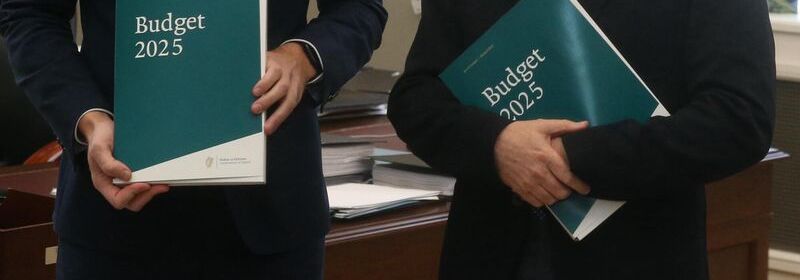
On Tuesday, 1st of October, Minister for Finance Jack Chambers and Minister for Public Expenditure, NDP Delivery and Reform Paschal Donohoe gave speeches to the Dáil Éireann announcing the Budget for 2025. The Budget was announced against a backdrop of record-level employment but unwaveringly high price levels. Advisory groups and economists alike had principal concerns regarding the budget’s size, continued breaches of spending rules and overreliance on corporation tax receipts. 

Macroeconomic Policy

The Department of Finance announced that inflation has remained at or below 2% since March, which they project will improve real wages and thus increase consumer spending. The Department also projects growth in the domestic economy: modified domestic demand will increase by 2.5% in 2024 and 3% in 2025, employment will increase by almost 110,000 by the end of 2025, and unemployment will remain at 4.5%.  

Fiscal Policy

The Department of Finance estimates €105.7 billion in tax revenues. They report that while surpluses are projected (€23.7 billion and €9.7 billion for 2024 and 2025, respectively), underlying deficits (€6.3 billion and €5.7 billion for 2024 and 2025, respectively) are present once subtracting ‘windfall taxes’ (revenues arising from taxation of industries with above average profits) and the one-off revenue from the Court of Justice of the European Union ruling last month, where the company Apple was required to pay €13 billion in unpaid taxes to the Irish state. About €6 billion of this ruling will be transferred to the Future Ireland Fund and the Infrastructure, Climate and Nature Fund. In addition, the Ministers announced €3 billion for infrastructure spending. Finally, Minister Donohoe celebrates his leadership in decreasing the General Government Debt, which has decreased from 110% of national income in 2020 to 69% this year, with a projected 56% in 2030. 

The total budgetary package amounts to €10.5 billion, comprising a total expenditure package of €9.1 billion and a net tax package of €1.4 billion. This is further divided into an expenditure package of €6.9 billion (€5.2 billion in current spending and €1.6 billion in capital spending, rounded) and a cost of living package of €2.2 billion.

Taxation

The Department of Finance announced a personal income tax package of €1.6 billion, increasing the main tax credits and the Standard Rate Cut-Off Point and reducing the Universal Social Charge (USC). All three thresholds for Capital Acquisitions Tax (CAT), colloquially known as the inheritance tax, were also increased. In addition, measures relating to climate, support for businesses, as well as improvements in education and health were introduced and expanded. Regarding housing, Minister Chambers announced an increase in the value of the rent tax credit, an extension in the Help to Buy scheme, and an extension of the reduced VAT rate for gas and energy. In a similar suit to Budget 2024, support for landowners has continued: the Department of Finance has extended relief for pre-letting expenses for landlords, exemptions on the Residential Zoned Land Tax (RZLT), and an extension of the Mortgage Interest Tax Relief.

Package Size

Budgetary packages have been of unprecedented sizes post-pandemic: for example, this budgetary package of €9.1 billion in 2024 is an almost threefold increase from €3.6 billion in 2020. While Minister Chambers argues elevated price levels will be mitigated with the cost of living package, the Irish Fiscal Advisory Council, an independent budgetary watchdog for the Irish Government, finds the increase in prices the large budgetary packages are creating outweighs the stimulus they deliver to people, estimating a €1000 reduction in household purchasing power. In addition, the Fiscal Council finds that only half of the cost of living measures were targeted, arguing that they were not given to those most in need. Finally, the Fiscal Council draws parallels to previous financial crises to highlight the dangers of large packages at full employment. Dr Barra Roantree, Assistant Professor of Economics and Programme Director of the MSc in Economic Policy at Trinity Dublin, also draws attention to the weakened tax base created by large Celtic Tiger budgets.

Spending Rules

Since 2022, the government has exceeded its limit of increasing spending by 5% each year. The Fiscal Council estimates net spending increases of 9.2% for 2024 and 5.8% for 2025, 8.8% of the €3 billion if the additional capital spending increases are included in the figures. Minister Donohoe defends the breaches in spending as necessary for mitigating the effects of the pandemic, and Minister Chambers defends higher capital spending as needed by a higher population as well as accommodated by expenditure growth. However, the Fiscal Council, siding with the views of economists, predicts that repeated rule breaches will lead to inflation.  The Central Bank also estimates prices are about 2% higher due to the rule breaches. 

In addition, excessive spending and tax reliefs are especially concerning when misplaced. For example, Irish economist and writer David McWilliams argues the tax exemptions for landowners provided by the Residential Zoned Land Tax exacerbate the housing crisis by allowing landowners to hoard land. This contributes to the supply bottlenecks that harm the Irish economy: land is available for building, but bureaucratic practices prevent it from being used. McWilliams also points out the irony of a 47% increase in spending over the last five years coupled with a housing crisis, insufficient infrastructure and a widening wealth gap. In line with this finding, Dr Roantree draws on research from The Economic Social Research Institution (ESRI), which highlights the recent rise in material deprivation and rates of child income poverty, which are insufficiently mitigated by temporary payments that will be withdrawn with a new government and social welfare payments that remain, in real terms, what they were in 2020. 

Finally, Ireland has the highest flat rate of inheritance tax in the EU at 33%, and the implications of raising its threshold are unclear. On one hand, Dr Roantree criticises its raising only benefiting wealthy parents’ children, a small fraction of people. Conversely, McWilliams draws attention to the growing number of cases where children are inheriting houses that they cannot afford to pay the 33% tax on without selling the property. 

Corporation Tax Receipts

Minister Chambers admits the heavy reliance of public finances on corporation tax and stresses it should not be used to fund permanent expenditure measures. Thus, less than half of excess corporation tax receipts were saved. At 12.5%, Ireland has the second lowest corporation tax rate in Europe and one of the lowest in the world. Projected surpluses discussed previously are completely reliant on windfall corporation tax: the Fiscal Council estimates an €80 billion surplus, including excess corporation tax revenues (receipts above what would be explained by domestic economic activity), but a deficit of €50 billion with its exclusion during the 2024-2030 period. In addition, the corporation tax revenues have more than doubled in the last three years, suggesting further exacerbation of the underlying deficit. In addition, corporation tax is incredibly concentrated (only three companies make up 43% of all corporation tax receipts). For these reasons, the Fiscal Council is in favour of more excess corporation tax receipts being saved. 

Conversely, McWilliams argues that more of the corporation tax receipts should be spent, suggesting that the revenue from the Apple ruling could be useful in mitigating the housing crisis and improving the transportation sector. He points out that Ireland, unlike most other European countries, is in a surplus and thus can afford to improve its infrastructure. 

Dr Roantree agrees with the Fiscal Council. He asserts the overreliance on corporation tax receipts means Ireland needs a stable tax base, not almost €2 billion in tax cuts. He criticises the reduction of the USC, which was originally introduced to broaden, not diminish, the tax base and the multitude of reliefs given out. He argues spending should not be increased so fast when revenues could be reversed at any point in time, necessitating a rapid cutback. For example, American multinationals make up more than half of corporation tax receipts; a shift in protectionism arising from a change in government could decrease or reverse revenues. The Fiscal Council also warns against excessive reliance on corporation tax, arguing that an almost €9 billion deficit would emerge if corporation tax receipts were reversed.

Conclusion

Clearly, the Irish Government faces a balancing act. It must take advantage of excess corporation tax receipts while not further exacerbating the underlying deficit. It must take steps to address its problem of rising demand coupled with stagnant supply. Thus, its spending must be prudent to ensure it is directed to the areas that need it most.

The Rapid Rise of Revolut

Patrick Calma

Revolut plays a substantial role for most individuals when it comes to personal finance and banking. But how did this seamless way to transfer money to your friends for splitting a taxi get its footing in the market?

The story behind Revolut is the perfect example of rapid transformation and innovation. Founded in 2015 by Nikolay Storonsky and Vlad Yatsenko, Revolut has grown from a simple prepaid card offering fee-free currency exchange to one of the world’s most valuable fintech companies. The journey of Revolut from a small startup to a unicorn with a valuation of over $45 billion is marked by its relentless pursuit of growth, strategic pivots, and significant milestones. One of the pivotal moments in its rise was obtaining a UK banking licence after a three-year wait, signalling its ambition to become a fully-fledged bank​. 

The Revolut Revolution

Revolut was launched with a mission to disrupt traditional banking by providing financial services that are more accessible, affordable, and convenient. Early on, Revolut focused on offering currency exchange at interbank rates through a prepaid card, addressing the pain points of high fees and poor exchange rates that traditional banks imposed on travellers and international spenders. This unique value proposition attracted tech-savvy consumers who were looking for a more cost-effective way to manage their money. 

Revolut’s comprehensive financial ecosystem and diverse services like peer-to-peer payments, cryptocurrency trading and budgeting tools set them apart from their competitors as more than just a digital bank. By continually listening to user feedback and rapidly iterating on its product offerings, Revolut positioned itself as a user-centric company that was constantly evolving to meet the needs of its customers.

The Current State of Revolut

As Revolut expanded, it faced increasing pressure to comply with different regulatory standards across multiple jurisdictions. This was particularly evident in its long battle to obtain a UK banking licence, which was finally granted after three years of negotiations. This milestone was a crucial step in Revolut’s ambition to transition from a fintech disruptor to a fully regulated bank​. Competition has also been fierce, with Revolut contending with other neobanks like N26, Monzo, and Starling Bank. However, Revolut’s focus on customer experience, combined with a relentless push to add new features, helped it differentiate itself in a crowded market. 

Scaling & Growth

Revolut’s aggressive expansion strategy was instrumental in its rise. After establishing a strong foothold in the UK and Europe, Revolut set its sights on the global market, launching in countries such as the United States, Japan, and Australia. The company’s “move fast and scale” mentality was escalated by significant funding rounds, which attracted major investors including SoftBank and Tiger Global Management. These funds allowed Revolut to expand its workforce, invest in new technologies, and enter new markets rapidly. 

One of the core strategies Revolut employed was its focus on customer acquisition through a freemium model. This allowed users to experience the platform without any upfront costs, while premium and metal plans provided additional features such as higher withdrawal limits, travel insurance, and exclusive concierge services. By 2022, Revolut’s revenue had surpassed $1 billion, and it doubled this figure to $2 billion in 2023. 

What’s Next?

To share the success, the company allowed the employees to sell $500 million worth of shares to big investors such as Coatue, D1 Capital Partners, and Tiger Global. Revolut’s current valuation has surpassed banking giants such as Barclays, Lloyds Banking Group, and NatWest with only HSBC being higher. Moreover, it has a higher valuation than other fintech companies in Europe such as Klarna, but it’s a big world out there as United States’ Stripe and Brazil’s Nubank are setting the bar for its European rivals.

This narrative is linked to the fact that companies are increasingly avoiding listing on the London Stock Exchange, deterred by tax regulations and a challenging economic environment. In response, the UK is making efforts to attract the next wave of public companies by reducing bureaucratic hassles, adjusting listing rules, and even inviting Revolut for a meeting with the Treasury this fall. Despite these efforts to roll out the red carpet, Revolut appears to remain drawn to the allure of a potential listing in the United States and future scaling.

Investment in future growth has been a clear priority for Revolut. The company continues to explore new areas such as decentralised finance and integrating blockchain technologies into its platform. These forward-looking initiatives reflect Revolut’s strategy to stay ahead of financial trends and provide more services to its users. Moreover, Revolut’s focus on sustainability and ethical banking is resonating with a new generation of consumers who are increasingly conscious of where they place their money. By incorporating features like carbon footprint tracking and green investment options, Revolut is appealing to environmentally conscious customers, further solidifying its position as a progressive financial institution.

« Older Entries