Category Archives: Deep Dive

Impact Investing: The Way Ahead?

By Abigail Fernandes

On September 20th and 27th , millions of people took to the streets to strike for climate action. This mass protest was a way of expressing a public sentiment that “Business as usual is no longer an option”. However, Charities and Governments around the world do not have enough capital to meet the challenges faced by the environment. Where then can we find enough capital to help the government tackle this issue? One of the best solutions to this ever-existing crisis is “Impact Investing’. The term was coined more than a decade ago but begun to gain momentum only since the last year. It refers to an agreement entered into by entrepreneurs, companies, organisations and philanthropists to invest in markets that create a social or environmental impact and generate returns. This in turn creates a win-win situation for the environment and the investors at large.

Why Impact Investing Now?

The benefits of Impact Investing are manifold. The future of human beings and the environment are interdependent. The temperatures of our planet are rising, and the icebergs are melting and the on area that is bound to get impacted is our ‘Big Businesses’. As rational beings we need to have a strong compulsion to protect our dying planet that has so much to offer. Impact Investing ensures that businesses are held accountable for the activities undertaken. Institutional Investors can see to it that the companies that they invest in are minimising risks and maximising opportunities that are presented by climate change. Thus, enabling a cleaner and greener environment. Investing in sectors like solar energy and wind power can put an end to the use of fossil fuels and help companies find new efficient ways of meeting the energy needs of the society. A greener future can be good not only for the planet that we live in but also to our wallets. A 2018 study by GIIN found that more than 90% of impact investors reported that their investments were meeting or surpassing their projections.

Growth Avenues for Impact Investing

With the growth of Impact Investments rapidly increasing, some of the best options for impact investing are iShares Global Clean Energy ETF, First Trust ISE Global Wind Energy Index Fund, Gree Mutual Funds like Amundi, Calvert Green Bond Fund, Brown Advisory Sustainable Growth Fund. These investments have a proven track record of positive returns while being beneficial to the society. The growth in these avenues is only going to increase as people now have the option of investing in hedge funds, private foundations, banks, pension funds, and other fund managers. Another way of investing is by adding a Donor Advised Fund (DAF) to one’s impact strategy. An investor gets a multiplier effect on his investments while investing in a DAF. The Fund invests only in companies that create a social impact and then those investments give back up to two to five percent returns to the DAF.

The US municipal finance sector is need of environmental impact bonds as climate change has become very important to protect their community from the bad effects of climate changes. Environmental impact bonds offer a solution to this problem. These securities are municipal bonds that transfer a portion of the risk involved with implementing climate adaptation or mitigation projects from the public agency on to the bondholder.

A good example for this is quoted from an article in The Harvard Business Review regarding a $25 million bond issued by the municipal water board in Washington, D.C. in 2016.The water board used the bond to fund the construction of green infrastructure to manage stormwater runoff and improve water quality. The return to investors is linked to the performance of the funded infrastructure, which allows DC Water to hedge a portion of the risk associated with both constructing green infrastructure and, once it’s in place, how well it works. Investors receive a standard 3.43 percent semi-annual coupon payment throughout the term of the tax-exempt bond. Towards the end of a five-year term – at the mandatory tender date – the reduction in stormwater runoff resulting from the green infrastructure is used to calculate and assign an additional payment If the results are strong (defined in three tiers; tier 1 being best performance) the investors receive an additional payment ($3.3 million) – bringing their interest rate effectively to 5.8 percent. If the results are as expected, there is no additional payment. And if the infrastructure underperforms, the investors owe a payment to DC Water ($3.3 million) – bringing the interest rate to 0.8 percent.

The Verdict

Impact Investing is and will be the future. However, investors should choose not to invest in companies that have a negative impact on the environment. The more investors give importance to impact investing, the better companies with a mission of environmental sustainability will perform. Hopefully this should encourage more and more environmental conscious investors to grow their investments and improve the world in one motion. Thus, rewarding businesses for their commitment to a higher calling.
The Impact of Artificial Intelligence on the Agricultural Industry

By Jan Keim

Artificial Intelligence (AI) and its subsets, such as Machine Learning (ML), are among the most heavily discussed technologies, both in academia and in business. AI is predicted to fundamentally disrupt many areas of business, from cybersecurity to supply chain management. In fact, most people interact with some sort of AI on a regular basis, for example when using a chatbot or filtering emails. A 2018 study conducted by PricewaterhouseCoopers (PwC) estimates a worldwide Gross Domestic Product (GDP) growth by up to 14% by 2030 as a result of accelerated use of AI, with China growing its GDP by up to 26%, compared to Northern Europe with an expected growth of 9.9% and North America with 14.5%. The Organisation for Economic Cooperation and Development (OECD) forecasts a strong impact of AI, especially on manufacturing, with the potential creation of entirely new industries. The digitalisation of industry, commonly referred to as “Industry 4.0”, is a prime example of rapid change driven by AI. Technologies such as the Internet of Things (IoT), big data analytics, cloud computing, augmented reality (AR) and 3D printing underpin this process and may lead to the transformation of manufacturing into “a single cyber-physical system in which digital technology, internet and production are merged in one”, as the European Parliament Research Service puts it.

While AI certainly has tremendous potential to transform manufacturing, one industry that is less talked about in this context is agriculture, even though the agriculture industry is among the most relevant to populations’ daily lives. There are various applications of AI in agriculture already. However, most of these applications are limited to bigger farms, currently neglecting smallholder farmers. Three areas of application of AI in agriculture are outlined below:

Precision Agriculture

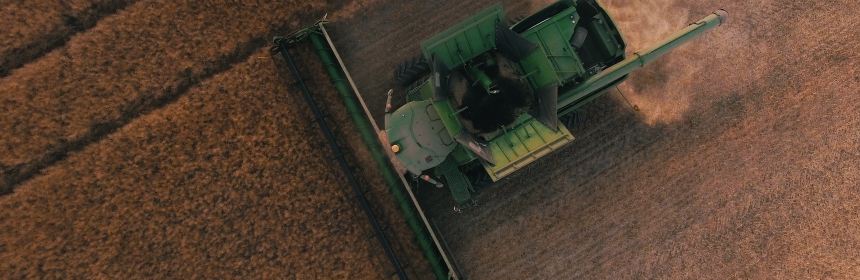
Precision agriculture refers to the observation, measurement and responses to variability in crops, fields and animals. By using AI to increase crop yields and animal performance, precision agriculture can reduce costs and optimise processes. For example, Blue River Technology, a U.S. based start-up that has been acquired by tractor giant John Deere in 2017, uses computer vision and AI to precisely apply herbicides, instead of spraying entire fields. This approach not only saves money, it also decreases the environmental impact of plant protection products by eliminating up to 90% of the herbicide volumes.

Field Monitoring & Harvest Forecasting

Analysing the current condition of fields has long been a labour-intensive challenge for farmers. By analysing drone and satellite pictures using AI, farmers are now able to receive accurate data on their fields’ condition, vegetation issues and problem areas. For instance, IBM’s Watson Decision Platform for Agriculture provides farmers with tools that alert them should there be threats from weather forecasts, soil conditions, evapotranspiration rates, or crop stress. This helps farmers improve crop protection and optimise crop yields, for example. Ultimately, field monitoring helps farmers estimate their agricultural yield and plan security measures accordingly.

Process Automation

The United Nations (UN) predicts that by 2050, 68% of the world’s population will live in urban areas. This will lead to a decrease in labour force in rural areas. By automating processes, easier risk identification, faster decision making and remote operations, AI can significantly reduce the need for labour in the agriculture industry and decrease labour costs.

While there are many benefits to using AI in agriculture, there are a few challenges that have to be taken into consideration while moving towards a more automated and AI-enhanced future. Firstly, many applications of AI, or digitalisation more generally, can be cost intensive, require technological knowledge and demand special infrastructure. While big farms can largely benefit from AI applications, smallholder farmers may be left behind. Hence, ensuring that smallholder farmers equally benefit from the technological progress is a crucial task for politics and science alike. Secondly, the AI-supported automation of agricultural processes tends to benefit countries with large farmlands, such as the United States, Germany or France. Yet, many smaller countries are dependent on agriculture, such as Togo, Sierra Leone or Guinea-Bissau. So far, trade barriers have helped some smaller countries to protect their agricultural sector. However, the advancing globalisation and increasing international trade may exacerbate such policy, which could endanger smaller countries’ agriculture. Thirdly, the technological development in agriculture tends to benefit developed countries. High wages in developed countries create a strong incentive to automate processes and thereby save labour costs. In developing countries with lower wages, this incentive is weaker. According to a discussion paper by McKinsey & Company, the automation could bring back production from poorer countries to developed countries, which would likely increase the lead of developed countries over developing countries.

AI can help farmers tackle some of the most pressing problems they face today. Therefore, the steady adoption of AI will most likely continue and ultimately become mainstream. However, to ensure a level playing field, policymakers, scientists and innovators need to make sure that neither smallholder farmers nor entire developing countries are left behind.

Impending Fiscal Gloom: Halloween’s Horror Story

By Peter Benson

The writing’s on the wall.

Warning signs of another global recession are seemingly ubiquitous, but it’s easy to dismiss them as just more meaningless bad news. Unfortunately, we may be feeling the combined effects of this bad news sooner than we think, perhaps even by the end of 2020.

What signs am I talking about? Let me explain:

The Inverted Yield Curve

You may not have heard, but in December 2018, part of the U.S. Treasury’s yield curve (5 year – 2 year yield spread) inverted for the first time in nearly a decade. The yield curve is a graph that plots the interest rates of similar bonds with varying times to maturity. Put simply, the yield curve mirrors the outlook of investors on future economic prospects. If it’s curving upward, it means they expect long-term economic growth. If it inverts (curves downward), which it did, it means that the summer holiday you just booked may be in jeopardy. Find out more on that here.

A yield curve inversion is regarded widely as being positively correlated with a recession. The yield curve on 10 year – 2 year yield spreads inverted on 14th August 2019, and the last time it inverted in this fashion was in 2007. According to Reuters, an inversion has predated every recession in the past 50 years, offering a false signal just once in that time. It has previously taken up to 24 months for a recession to follow a yield curve inversion, so perhaps we still have time to wait. Time is ticking on that deadline, however, and all should be revealed by December 2020.

It is worth mentioning that a yield curve inversion should not be taken as gospel in and of itself. Some suggest that the data is skewed because of the U.S. Federal Reserve’s wholesale purchase of bonds to retain their balance sheet, and that the economy rarely moves in ‘lock-step’ with the stock market.

Who knows? Maybe our bank accounts will soon take a hit. Maybe they won’t. But the yield curve’s latest inversion, the strongest metric by which a recession can be predicted, simply cannot be ignored. At the very least, it serves as a wake-up call that it may be time we took a second look at our finances.

Brexit

You get the idea.

The European economic fall-out from a no-deal Brexit is as yet unknown but seemingly unquantifiable.

KPMG forecast that a no-deal outcome could shrink the British economy by 1.5%. A mere 1.5% drop isn’t too bad, right? Wrong. With a GDP that is valued to be in excess of $2.6tn, a 1.5% shrinkage of the UK’s economy would equate roughly to a loss of $39bn. To put that figure into perspective, the GDP of Latvia is estimated to be in the ballpark of $39bn.

That’s not to mention the repercussions of such an outcome on the Irish economy, and the knock-on effects globally. Ireland has traditionally relied heavily on the UK for exports, and although this reliance has eased somewhat in recent years, 9% of our total exports are still to our nearest neighbours. This is notwithstanding the World Trade Organisation’s latest ruling that has paved the way for a fresh round of U.S. tariffs on EU goods to the tune of $7.5bn.

Granted, this is a worst-case scenario. Recent legislation in the form of the ‘Benn-Act’ provides us with some solace. This Act forces the British Prime Minister, Boris Johnson, to advocate for an extension on the October 31st deadline if Brussels is dissatisfied with whatever deal is proposed. However, loopholes in this legislation have already been identified, and Johnson’s comments at the latest Tory conference that Britain will leave the EU ‘come what may’ paint a foreboding picture.

Perhaps it’s fitting that our fate may be sealed on Halloween. I, for one, will be dressing up as the world’s most recent judicial champion, Lady Hale.

Everything Else

  • The escalating trade war between the U.S. and China is not expected to end anytime soon;
  • Did you know Japan and South Korea are also embroiled in a trade war with global economic implications?
  • The over-valuation of housing isn’t just a problem in Ireland; there’s a global property bubble, the bursting of which could prove disastrous;
  • This week, sharp falls were recorded in the Asian, U.S., and European markets, signalling that a recession may well be due;
  • The result of the 2020 U.S. Presidential election could inject even more volatility into an already fracturing global market.

So there you have it.

Financial and economic warning lights are flashing, and if I were a government economist I’d be shaking in my boots.

What would another global financial crisis look like as we approach the end of the decade? In light of recent calls for a lower intake of domestic students, and without increased government funding, what would be the impact on Trinity? Would more cuts be implemented, or would our focus shift to further commercialisation? How would a country only recently getting back on its feet after years of economic turmoil, but still wildly indebted, fare in future?

My message is this: there is a strong possibility of another global economic downturn occurring within the next 15 months. Rather than rest on our laurels, here are some things we can do to prepare ourselves financially. They won’t provide us with total financial security, but they may soften the inevitable blow.

There are still a lot of variables at play, particularly in relation to Brexit, that may bring with them a slightly more positive outlook.

What’s certain, however, is that the hum of our global economy is slowing, and our ears must be pricked toward it. The writing on the wall is thickening, and thus we must read it.

Data – The World’s Most Valuable Resource?

By Luz Cuentas

Origin

It is strange to think that this notion was first proposed in 2006. At the time, the exponential growth of social media as an integral part of many people’s lives across the world was at its infant stage. Yet this is what British mathematician Clive Humby remarked when he said that “Data is the new oil.” It is worth noting that this idea only really became more widespread and a popular source for debate when The Economist released an article in May 2017 called “The world’s most valuable resource is no longer oil, but data.” The question resurged again this year following the premiere of Karim Amer and Jehane Noujaim’s documentary film “The Great Hack” at Sundance Film Festival. “The Great Hack” is centred around the 2018 Facebook-Cambridge Analytica scandal. Its subsequent rave reviews by critics resulted in the release of their documentary on streaming giant Netflix in July which gained this notion even more exposure to a global audience. Ring the alarm bells, your personal information has now replaced oil as the world’s most valuable resource. Or has it really?

Oil as the World’s Most Valuable Resource

Just over a century ago, oil was undoubtedly the world’s most valuable commodity – and with good reason too. Global crude production of oil was at its highest at the start of the 20th century since its emergence in the mid 19th century. However, it was only after the 1950s that oil emerged as the global powerhouse of energy supply, replacing its predecessor, coal. Taking the example of the American oil market in the 1880s, the implementation and subsequent rise of managerial capitalism as a way of structuring the business by John D. Rockefeller and 39 other allied companies owned by his associates led to the establishment of the Standard Oil Trust. This resulted in the Standard Oil Trust controlling almost 90% of the kerosene produced in the United States – one of the earliest examples of modern monopolies. The economies of scale generated by Rockefeller and his partners led to oil overhauling coal as the primary source of energy powering the United States. This example soon occurred in many other countries worldwide. Coal was replaced by oil as the world’s most valuable commodity because oil became much cheaper and more accessible than coal despite both of them being finite.

The Rise of Data

So, where does data come into all of this? Well, oil seems to be running into the same problems that its predecessor, coal ran into at the turn of the 20th century. The argument for data becoming more valuable than oil as a resource is not as ludicrous now as it was in 2006. Why? Oil is of course finite too. Many would argue that data is also much cheaper and more accessible now than ever before. Most of us hand in our personal details and information to “The Big Five” technology giants Alphabet (parent company of Google), Amazon, Apple, Facebook and Microsoft on a daily basis. We can also access all of these websites, software services and social media platforms for “free”. Likewise, these technology giants can also access our personal data and possibly more for “free”. Hence, this argument is definitely more valid and logical now more than ever. “The difference between oil and data is that the product of oil does not generate more oil (unfortunately), whereas the product of data (self-driving cars, drones, wearables, etc) will generate more data (where do you normally drive, how fast/well you drive, who is with you, etc).” This remark was made by Piero Scaruffi, author of “A History of Silicon Valley” in 2016. Hence this leads us to the conclusion that unlike coal and oil, data are not finite.

Data reserves will not run out the same way an oil reserve will because the human population will undoubtedly keep growing. This of course leads to an infinite source of data from future generations. Our data is also much cheaper and easier to access now as seen in “The Great Hack” with the 2018 Facebook-Cambridge Analytica scandal. So our vulnerability to have our political views influenced and potentially changed using these “The Big Five” technology giants is potentially at its maximum threat level. Can a monetary value be placed on such a concept? Maybe not but all of these arguments pave the way for the proposal of data being the world’s most valuable resource as a very convincing notion.

The Economic Impact of UAV Technology: Regulatory Approvals Paving the way for a Billion Dollar Industry?

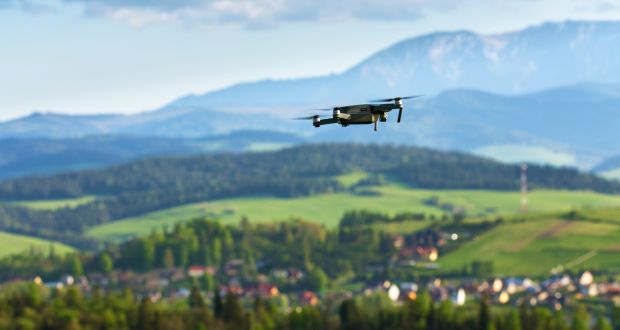
While the concept of an unmanned aerial vehicle (hereinafter UAV), also known as a drone, delivering products may seem futuristic it is set to become a reality. Given that, the Irish Aviation Authority (hereinafter IAA) have shown a willingness to support drone airspace. This is hardly surprising when considering that, according to Goldman Sachs, UAV technology is estimated to be worth $100 billion, in market opportunity, to the worlds’ global economy by 2020.

With the fastest area of growth projected to be in the commercial and civil sector. For instance, a study conducted by PwC has suggested that UAV powered business operations could potentially be worth $127 billion. While, UAV technology, which is of military origin, is likely to be as ground-breaking as similar products of military origin, such as the internet and GPS. It is questionable whether its value will be derived from its hardware which has low production costs and is, therefore, unlikely to drive industry growth. Since the technology used in this area can be easily reproduced, growth in this area is likely to be in services that operate and manage drones. For instance, Amazons’ drone delivery service, PrimeAir, which has been described as ‘ground-breaking’.

Although UAV’s have the potential for enormous market opportunity, regulatory approval is needed to start operations and to generate profits. For instance, in the U.S the Federal Aviation Administration (hereinafter FAA) must grant an air carrier certificate before commercial UAV operations can be commenced. Though Wing Aviation became the first U.S company that received FAA approval other companies such as Amazon, and UPS are still awaiting approval. In Ireland, Manna, which aims to facilitate “3-minuet food delivery” using UAV technology, should become a reality by Q1 of 2020. While the Small Unmanned Aircraft (Drones) and Rockets Order S.I. 563 of 2015 outlines that UAV registration is mandatory in Ireland for vehicles over 1kg.

It is submitted that since drone airspace is a new concept a more comprehensive framework will be needed. For instance, in April 2019 an Airbus A320 landing in London Gatwick had to swerve to avoid collision with a UAV. However, the IAA has indicated that persons operating drones illegally will be subject to the full rigors of the law. Moreover, in June 2019 the Commission Delegated Regulation (EU) 2019/945 & Commission Implementing Regulation (EU) 2019/947 published European rules on UAV’s to ensure that UAV operations across Europe are safe. Given, the novel nature of commercial UAV activity safety has been a paramount concern for regulators. 

Due to economies of scale UAV technology is predicted to play a larger role in our everyday lives. Furthermore, there may be financial incentives for using this technology. For instance, in the construction industry, when lease agreements are in place, the lessor would likely qualify for tax deductions. While data privacy concerns and infringements of General Data Protection Regulations (hereinafter GDPR) have been raised. These concerns may likely be mitigated if commercial UAV’s operate using Lidar, Sonar, and GPS without cameras. The impact of the UAV regulations and whether they will bring harmony and economic growth to this area remains to be seen.

« Older Entries Recent Entries »