Category Archives: CTI

The BCG Maturity Matrix 2024: A New Model for Global AI Adoption

Ayesha Ahmed 

In classic style, Boston Consulting Group released a new matrix about the readiness levels of world economies towards artificial intelligence. The report was titled The AI Maturity Matrix, and it provides a comprehensive analysis of 73 global economies to evaluate their readiness and exposure to artificial intelligence (AI) disruption. The report outlines the economic advantages for pioneers, proposing that emerging and other lagging nations act swiftly to remain competitive. 

AI Archetypes

The findings divided the world economies into 3 broad categories: 

  1. AI Emergents: includes economies which are in the early stages of AI adoption and need strategy to build competitiveness. This includes countries from the Middle East and South America.
  2. AI Practitioners & Contenders: are split into gradual and exposed subgroups. Gradual practitioners include economies from East Asia, Eastern Europe, Central America, and parts of South America and the Middle East. Steady countries were mainly developed economies like Hong Kong, Switzerland, and Australia. Rising contenders include developing countries like India, Brazil, and Poland, these show promising growth in AI advancement.
  3. AI Pioneers: the top of the AI chain, only 5 countries (out of 73) achieved this ‘AI Pioneers’ status. These countries generally excel in the integration of AI, and leverage strong R&D ecosystems, advanced infrastructure and host skilled talent pools. Countries like the U.S positioned themselves to influence global AI standards and ethics. 

The report notes that over 70% of the assessed nations score below the halfway mark in areas such as skills, research and ecosystem development, pointing to a substantial gap in AI preparedness. Additionally, the global AI expenditure is expected to double, reaching $632 billion by 2028, and this reflects technology’s central role in future economic strategies. 

Nations like Luxembourg and Singapore lead due to their reliance on financial and business services, which are susceptible and adaptable to AI-driven transformations. Meanwhile, developing economies like India could potentially benefit from AI applications in ‘agritech’ and industrial optimisation. 

Determinants of Maturity

The AI Maturity index is measured by two indices. The AI exposure index which reflects how susceptible an economy’s sectors are to AI disruption – positive (efficiency gains), or negative (job displacement). It provides an aggregate of sector-level data based on GDP contribution and draws on sources from BCG Global Innovation Survey, Quid data analysis, Linkedin job postings, and generative AI insights. The scores were normalised on a 0-100 scale and weighted to provide a comprehensive snapshot of the sectoral exposure. 

The report also introduces the ASPIRE framework, a mnemonic that evaluates economies across six dimensions and encompasses 33 indicators. The calculation process of this was through normalisation (using a standardised scale of 1-100, and adjusting for skewed data) and the final readiness score was a weighted sum of all dimensions. While the US leads in investment, Mainland China excels in R&D, and Singapore sets benchmarks in policy and ethical governance. The contents of the framework are as follows:

A – Ambition: presence of national AI strategies and specialised agencies                                 

S – Skills: Availability and quality of AI talent 

P – Policy & Regulation: Governance effectiveness and data management

I – Investment: Funding in AI-focused startups and infrastructure 

R – Research & Innovation: Patents, academic output, and startup ecosystems

E – Ecosystem: Technological infrastructure and digital accessibility. 

Global Implications 

The AI Maturity Index concludes with recommendations for each archetype:

  1. Pioneers are urged to drive global standards and invest heavily in R&D to continue to scale AI.
  2. Contenders are advised to expand AI applications to achieve parity with pioneers. 
  3. Practitioners should strive to balance exposure and readiness, focusing on niche applications.
  4. Emergents must concentrate to build foundational infrastructure and strategies to enter the global AI race. 

The BCG AI Maturity Matrix 2024 is useful for its strategic guidance and as a diagnostic tool for national leaders in the Artificial Intelligence sphere. Global AI spending is expected to soar, adoption is accelerating across sectors and economies that invest in readiness and innovation are likely to dominate the world of AI tomorrow. With this typology for economies, emphasis on particular areas or niches to invest in can help to grow AI as a powerful yet responsible tool for the future business world. 
The Leaders of Companies Listed on the Irish Stock Exchange: How they Made it to the Top. 

Jessica Weld

The Irish Stock Exchange (ISE) has a deeply enriched history dating back to the late 1700s. City Hall on Dame Street used to be known as the Royal Exchange, a place where local merchants traded their goods. The ISE was acquired by the European stock exchange consortium Euronext in 2018, earning the formal name of Euronext Dublin. Nowadays, Euronext Dublin is the competent authority for all thirty public company listings in Ireland. This includes some of the largest companies in the country, such as Kerry Group, Kingspan, Ryanair, AIB, Bank of Ireland and PTSB .  

Becoming the Chief Executive of a company listed on the Euronext is a momentous achievement, but how does one achieve such a feat? I’ve analysed the educational achievements and career progression via self-published data of the CEOs of all 30 companies listed on Euronext Dublin to see what paths got them to where they are now.

Level of Education

When conducting this research, I aimed to examine the proportion of top executives holding master’s degrees and how this may change over time. As educational standards increase for business-related jobs, will master’s degrees become the new bachelor’s degrees? The divide between bachelor’s and master’s degrees is a near-even split: 46.66% of CEOs of Euronext listed companies hold a National Framework of Qualifications (NFQ) Level 9 (or equivalent) Postgraduate Degree or above.

Stephen Garvey, CEO of Glenveagh Properties, boasts a real ‘started from the bottom’ story. With no formal education, and beginning his career as an apprentice plasterer on construction sites, he climbed the ladder to one of Ireland’s largest property development companies. My father who worked as a carpenter at the same time fondly recalls roofing houses while Garvey would be plastering them. Garvey then reached the top position at one of Ireland’s largest property development companies without taking the traditional college route.

Dr Colin Hunt, CEO of Allied Irish Banks (AIB), has attained the highest level of education of Chief Executives on the ISE, receiving a PhD in Economics from Trinity College Dublin in 2007, making him the only CEO on the ISE to hold a doctoral degree. In addition, he holds a Bachelor of Commerce and a Master of Economics from University College Cork. 

While the divide between bachelor’s and master’s degrees is minimal, professional qualifications often bridge the gap. For example, 53.33% of ISE-listed-CEOs hold one or more professional designations, all of which are accountants. For instance, Sean Coyle of Origin Enterprises is a Qualified Financial Advisor, and Fiona Dunlevy of Malin Corporation and Jonathan Rockett of Datalex are Chartered Tax Advisors, highlighting backgrounds in finance and accounting. 

Blessed Amongst Accountants

In simpler times when I was studying for my Leaving Certificate exams, I remember my business teacher saying that many of the top decision makers in companies of all industries across the world have one thing in common – they are accountants. Their financial understanding and expertise can prove advantageous in climbing the management ladder and taking the reins of some of the world’s largest companies.

With over half of company CEOs listed on Euronext Dublin coming from an accounting background, many started their careers in Big 4 accounting firms: Deloitte, EY, PwC and KPMG. For example, Dermot Crowley, CEO of Dalata Hotel Group, started his career as a Trainee Accountant in PwC in 1989, and Trinity Alumnus and Ryanair CEO Michael O’Leary began his career at KPMG in 1982. 

It’s in the Family

Gene M. Murtagh was the youngest CEO of a company listed on the ISE at age 34 when he took over his family business, Kingspan, in 2005. He has held this post ever since, seeing the company grow to become one of Ireland’s most valuable companies listed on the ISE.

Female Representation 

While women continue to make ground in representation across all sectors in business, they are still underrepresented as Chief Executives. For example, out of the 30 companies listed on the ISE, only two CEOs are women – Fiona Dunlevy of Malin Corporation Plc. and Rita-Rose Gagné of Hammerson Plc. 

However, Ireland has led the way in increasing representation of women in executive roles. Balance for Better Business, Ireland’s independent gender balance review group, notes progress for female representation in their 2023 report. Ireland has flown from ranking 15th in the EU for female executives in 2019, to 6th in 2023, exceeding the EU average by 22.1%. 

Being a CEO of an ISE listed company has rocket launched the careers of women in the past. Beginning as Bank of Ireland’s CEO, Francesca McDonagh became Group COO of both Credit Suisse in 2022 and Universal Investment in early 2024. 

While being publicly listed is by no means the only benchmark of success, it is a good indicator to use to deep dive into the path that each CEO took to get to where they are today. With increasing representation of women in executive roles and a changing landscape for educational standards, it will be interesting to see what changes will happen in the C-Suites of Ireland’s largest companies. 

Leading AI: What’s Next for Nvidia? 

Sean Gleeson 

In recent years, artificial intelligence (AI) has completely transformed our way of living, from how we learn to how we work. AI has been especially attractive to students; stressing over a convincing email for an assignment extension or thinking of a new business idea for a social innovation class has now become automated. But how did this all come about?

Background

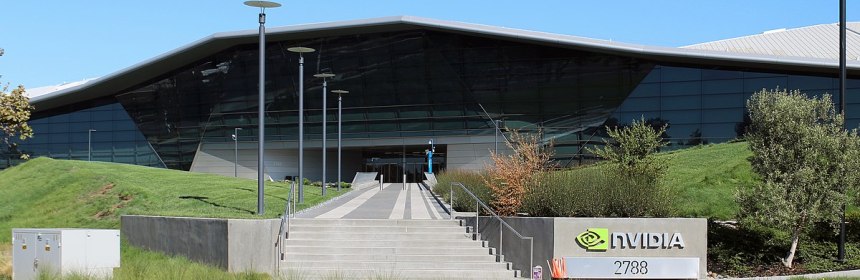
Nvidia, a company dominating the AI world, is largely responsible for the rapid rise and recognition of AI. Founded in 1993 by current CEO Jensen Huang, Nvidia has been described as the ‘world leader in chipmaking’, explaining their control of just under 90% of the AI market. 

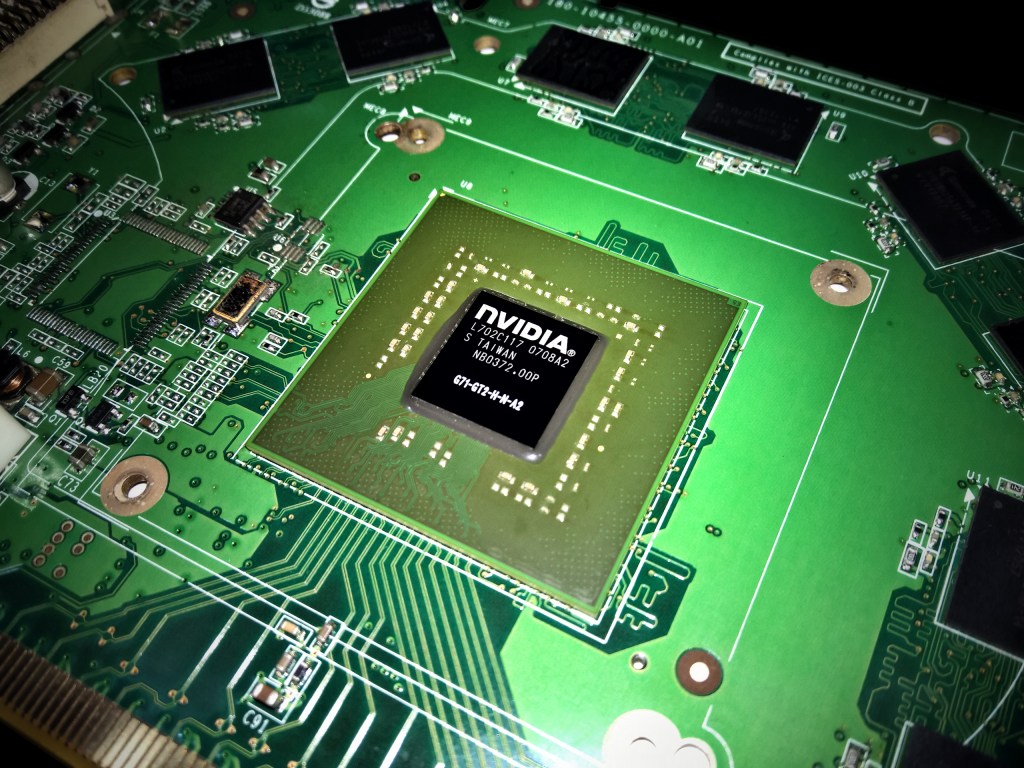
Nvidia manufactures graphics processing units (GPUs), which today are in soaring demand as they are the key feature of countless generative AI applications and models. These GPUs are more energy efficient and better able to handle sophisticated computing demands than CPUs (the traditional form of computing), making them suitable for AI applications like ChatGPT. At the heart of this chip manufacturing are enormous factories in Taiwan, the size of several football pitches that alone produce almost 90% of the world’s chips. TSMC (Taiwan Semiconductor Manufacturing Company), currently the world’s 9th largest company,  has a very close relationship with Nvidia as the manufacturer of its microchips. 

With these data centres and such an extensive roster of chips, Nvidia has gained more than just an edge over its competition through its pricing power. This has allowed its domination in the chip market as a B2B company, climbing to become the one of the most valuable corporations globally. Despite their massive growth and success, many consumers still have not heard of Nvidia, even when the company’s value matches other tech giants that have been dominating markets for decades. 

Scaling & Growth

Nvidia’s rapid rise in recent years makes it difficult to predict its next steps – most experts predict that a smaller level of growth will be maintained and that Nvidia will establish itself as one of the long-term stalwarts of the tech world and stock market alike. In the last 5 years, the company’s market value has shot up by 700% since the uptake of generative AI in early 2021. 

This type of rapid growth is extremely rare and should be handled with caution; such intense growth behaviour is unsustainable and could end in millions of lost investor equity. Indeed, in 2024 it has been easily the most volatile stock of the large companies on the market, with some citing the stock as more volatile than Bitcoin. Share price plunged by 23% during the last 3 weeks of July amid regulation breach allegations, and on the 5th of September Nvidia’s stock value declined by 9.5%, described as one of the worst days in the history of the stock market. 

Competition, or Lack Thereof?

As in any market, the company’s future success also depends on the actions of its competitors. With Nvidia’s positioning, the market is rather monopolistic. However, with companies like AMD recently forming an alliance with Intel and Cisco to develop an open standard for high-speed communications between AI chips, the competitive landscape is growing. The fact that three companies of such scale are coordinating to try to catch up is telling of how far ahead Nvidia lies in the AI world. 

Companies like Amazon and Meta are now looking at developing their own chips, putting massive capital expenditures into AI research and development. Nvidia will most likely benefit from some collaboration here; Microsoft, Meta, Amazon and Alphabet (owner of Google) make up 40% of Nvidia’s total revenue. With industry reliance comes a great deal of power, which can become excessive in the wrong hands. It may not necessarily be a good thing for AI development if Nvidia continues to be the dominant, monopolistic leader. With an investigation from the US Department of Justice for acquiring startup run.ai, Nvidia’s subtle yet aggressive business model could inhibit R&D efforts and healthy competition in the AI sphere.

The greatest issue facing Nvidia’s momentum now does not necessarily lie in its competition, but rather its supply and demand. Demand for chips is sky-high; companies that Nvidia sell to at mass scale, including Amazon and Meta, require hundreds of thousands of chips for their operations. Despite the size of the Taiwanese data centres and factories, and the efficiency of them, it is naturally difficult to meet such demands in a timely fashion. The capabilities of the suppliers must keep up with demand trends, a difficult task considering increased consumer expectations.

Where Next?

A potential influence on future performance for Nvidia lies in the political landscape. From a demand side, there may be further US barriers to Taiwan-imported chips to promote the use of domestic production, something former-president Trump has alluded to implementing if he wins the upcoming election. European countries are also looking at implementing such trade barriers. Additionally, from Taiwan’s side, their proximity to China could be a threat in the future, as China too is looking to mass-produce chips in the future.

At the moment, Nvidia certainly has the right blend of operations and strategy to thrive as the AI market leader. Its relationship with TSMC provides remarkable efficiency in the supply of products, and despite difficulty to meet the demands of tech companies, few other providers have the propensity to come close to supplying what is needed. With 88% of the world’s GPUs and a dominant strategy, change is unlikely unless regulators intervene heavily. From an AI development perspective, broader choice and lower costs would be desirable, however Nvidia investors will be happy to stake their claim if no serious competition surfaces. It seems fair to say that, despite the turbulence and volatility, the stock is a favourable choice for returns; strong revenues look set to continue, and even if growth declines, a small level of sustainable growth appears to be easily attainable. So, it seems that what Goldman Sachs strategists have called the most important stock of the year will continue to thrive in the future despite its challenges.

Shifting Consumer Habits and the Fall of Ireland’s Suburban Retail Hubs

Jessica Weld

The noble Irish shopping centre seems to be a dying breed, especially in suburban areas. The Irish Independent has reported that a deal has been struck for the sale of The Square shopping centre in Tallaght by its current owner Oaktree Capital Management for €130m –  a dramatic drop from the €250m that Oaktree bought it from NAMA for just six years ago. When reading this news, it made me think about how commercial retail property previously held so much significance in the economic development of communities around Ireland. 

Shaping Tallaght: The Square as a Retail Landmark

Anytime I think of The Square specifically, I remember my mother telling me about how enamoured she was by it when it opened. She grew up in a small village in rural County Wicklow and to her, The Square was like nothing she had ever witnessed before. This new concept of a “shopping mall” that she had only seen on American TV shows was an extravagance that she never imagined would make its way to Ireland in the 80s and 90s.

For something that at the time may have seemed like an Americanised gimmick, The Square boosted economic and community development in Tallaght at a rapid pace. Being the first major development in the Dublin suburb, it kickstarted the domino effect which grew Tallaght into the sprawling community it is today, studded with institutions like Tallaght University Hospital and the TUD Tallaght campus. 

Aside from the economic development of the town, The Square helped to shape a community in Tallaght. It provides employment and a third space for people of all ages to hang out. You’ll find that the people of Tallaght are immensely proud of The Square too. One time in a conversation with a Tallaght native, I made the ill-fated throwaway remark “There’s nothing really in The Square, is there though?” – Oh was I wrong! The site sits as more than just a shopping centre, but rather a cultural landmark of sorts.

A Changing Brick-and-Mortar

This may look like it’s turning out to be a love letter to Tallaght. It’s not. In an environment where residential property values are running high and inflation is crippling, it’s baffling to see that an established commercial retail property like The Square taking a 48% hit in value. 

One of the main contributors to this has been the overall change in consumer habits post-Covid-19 pandemic. Online shopping comes with the benefits of wider choice, hassle-free returns and of course the comfort of shopping from home, the office, or the Dargan lecture theatre (we’ve all done it). With such convenience on offer, less and less consumers are opting for traditional retail. 

In other words, the rise in online shopping accompanied with lower footfall due to changing lifestyle habits such as remote working offers little incentive for consumers to shop in brick-and-mortar locations. In a June 2024 report from Dublin Economic Monitor, Dublin city centre is still 20% behind on footfall in comparison to 2019. With such little footfall in the bustling city centre compared to pre-Covid times, I imagine that suburban areas must be feeling the same (if not worse) effect. 

The Future of Irish Retail

The current state of the economy and consumer worries are also playing a part in the decline in demand and subsequent fall in value of commercial retail property. PwC’s 2023 Irish Consumer Insights Pulse survey reported that 45% of Irish consumers are very concerned about their personal financial situation. Furthermore, It is expected that consumers will curb any discretionary spending that they can. For me personally, this means avoiding the likes of Penneys and Zara at all costs.

While Dublin city centre’s retail districts will survive through these trends to an extent, it’s plain to see that smaller suburban hubs probably won’t fare as well through this trend. As many shopping centres like The Square dramatically fall in value, the outlook on commercial retail in Ireland looks bleak and disappointing. This does not just mean a loss of places to shop but small gradual losses in the foundations of communities across Ireland.

Recent Entries »