Category Archives: CTI

Green Marketing: The Billion Dollar Lie?

Nehir Solmaz

In recent times, pinpointing greenwashing has become increasingly challenging. As you walk down Grafton Street with your no-straw mug and reusable tote bag, your perceptions are shaped by subtle messages, leading you to trust companies that give out false promises. Without even realising it your perceptions are shaped by these messages, leading you to trust companies who claim to be sustainable yet may lack a genuine commitment to the environment.

You care about what you consume because you care about the planet; therefore, you choose the green market. But what exactly is the green market, and is it green because such companies care about the planet as much as you do, or are they simply checking a box?

Sustainability in the Spotlight

As a conscious consumer, it’s safe to assume you engage with ethical consumption for the greater good of the planet by way of choosing green products or service offerings. However, this green market is often blurry and questionable, leaving you to wonder how ethical the green market claims to be – if they are ethical at all. This raises many questions about the sustainable ethos of many businesses, particularly their intentions when it comes to implementing sustainable initiatives.

On 1 January 2016, the 17 United Nations Sustainable Development Goals were officially adopted by world leaders. These goals not only foster economic growth and social welfare, but are also integrated into social systems to tackle a plethora of challenges while highlighting the urgency of addressing climate change. With the UN hitting the gas pedal on going green, there has been a surge in companies adopting green branding, often presenting themselves as eco-friendly without making significant changes to their environmental impact.

By the 2010s, being sustainable had already evolved into a mainstream expectation for companies. However, what really led to many consumers favouring eco-friendly products and practices was the power of social media. In August of 2015, marine biologist Christine Figgener posted a graphic video of herself and team pulling a plastic straw out of a turtle’s nostril, grasping over 35 million views. With this growing influence of social media, consumers began to realise the alarming impact simple consumption experiences had on the earth, leading to a mass desire to be more sustainable. 

In 2018, Starbucks began using paper straws as a sustainability incentive, closely followed by McDonald’s. In 2020, the UK banned plastic straws entirely. Such acts of eco-friendliness within the global market quickly caught people’s attention. Consumers were intrigued by the prospect of having a positive impact on the earth simply by drinking their frappuccino with a paper straw or shopping from the new H&M “Conscious Collection”.

A 2020 McKinsey US sentiment survey revealed that over 60% of customers are willing to pay more for sustainable products. Similarly, research conducted by Nielsen IQ found that over the past three years, sales of “zero waste” products in the global market have seen a surge of 34%. These statistics highlight not only a strong consumer preference for eco-friendly options but also a clear recognition from market leaders that consumers actively seek sustainable choices. This demand is reshaping advertisement strategies of most industries, in some cases pushing them to prioritise green marketing rather than actually environmental responsibility.

Sustainability or Superficiality? 

The burning question: are companies committed to long-term sustainability or just simply “greenwashing” to capitalise on consumers’ good faith? Companies use greenwashing tactics to boost sales and benefit from sustainability-centered consumer demand. According to Zippia, 58% of global companies are guilty of greenwashing. Since consumers are willing to pay more for sustainable products, greenwashing has evolved to be one of the most effective modern marketing techniques despite its unethicality.

Since green marketing is actively shaping consumer preferences across the market, businesses are facing a critical decision: invest in real sustainability or risk losing consumer trust. If companies fail to back their claims with meaningful environmental action, they are likely to face reputational damage and scrutiny.

Genuine sustainability is a long-term competitive advantage if companies integrate eco-conscious practices into their business models. Brands like Lush, Patagonia, and Uncle Studios have successfully constructed their reputations, embracing true sustainability. Notably, Patagonia not only uses recycled materials in its products but also motivates their customer base to repair and reuse their gear rather than buying new items and declaring earth as its sole shareholder. Similarly, Lush focuses on package-free products, ethically sourced ingredients and demonstration of strong commitment to ecological welfare through active engagement in reforestation, renewable energy, animal conservation and sustainable supply chain initiatives.. These companies have developed a powerful consumer base fueled by trust and loyalty, proving that authentic sustainability can drive long-term financial success. 

On the other hand, globally recognised brands like H&M and Nestlé have faced immense backlash for greenwashing despite strong financial performance. They have used green marketing as a PR strategy without engaging in meaningful changes in production or sourcing. For example, H&M’s “Conscious Collection” promotes sustainable fashion, however it was revealed that the brand engages in overproduction and exploitation, contributing to massive textile waste and unethical practices. Similarly, Nestlé, states that the company is committed to making 95% of its plastic packaging recyclable or reusable, however reports suggest Nestlé is a part of a group of five firms responsible for 24% of global plastic waste. 

Future or Fad?

Although greenwashing violators may attain strong financial returns, their business strategies are not sustainable in the long-run. In an era of digitalization, consumers are more knowledgeable than ever on climate change, sustainability, and ethical consumption. Therefore, businesses must demonstrate long-term commitments to achieving environmental sustainability rather than relying on deceptive marketing tactics. By embedding sustainability into the core of a company’s operations rather than using it purely as a marketing tool, brands can differentiate themselves, boost their supply chain efficiency and green branding. 

However, the question still remains: is sustainability truly reshaping the business landscape, or is it just a trend that companies have turned into a marketing tool? As regulations tighten and consumer awareness grows, businesses that embrace real change will likely emerge as industry leaders, while those that engage in greenwashing may struggle to keep up in the long-term. The future of marketing is not just green; it is one which favors accountability and is driven by businesses who understand that sustainability is essential for long-term success.

Navigating Social Connections in the Age of Remote Work: In Conversation with Dr. Tatiana Andreeva

Mariia Kashirina

The COVID-19 pandemic has irreversibly transformed the way we work. What was once considered a rare privilege has rapidly become the norm—more than 80% of organisations worldwide have now adopted remote or hybrid working models according to Deloitte UK.

This shift has brought undeniable advantages: convenience, flexible schedules, the elimination of daily commutes, and improved work-life balance. For many, productivity has increased — and with it, personal satisfaction. Yet while the benefits of remote work are widely acknowledged, its emotional and social consequences — particularly for young professionals — are often overlooked.

The New Work Landscape

Emerging data reveals a more complex picture. Despite enjoying greater autonomy, over one in three young professionals reported struggles with mental health issues such as anxiety and depression. Feelings of isolation, weakened social connections, and reduced access to informal support networks have become prominent concerns in this new remote reality. With limited in-person interactions, many miss out on everyday social interactions, peer learning, and emotional reassurance — elements that are especially vital in the early stages of any career.

To better understand the scope of this challenge, researchers at Trinity Business School conducted surveys and interviews with young professionals — aged 18 to 35 —  as part of the Grand Challenges module. The findings uncovered a disconnect that goes beyond physical distance:

  • 83% of respondents stated they feel more productive in in-person environments, highlighting the limitations of remote work in fostering spontaneous problem-solving and informal team bonding.
  • 41% admitted they rarely engage with co-workers remotely, further deepening the sense of disconnection.
  • 55% reported missing the stress relief and non-verbal cues typically observed through face-to-face peer support, making emotional expression and interpretation more difficult in virtual settings.

These findings are particularly relevant in Ireland, where more than 260,000 students were enrolled in higher education during the 2023/2024 academic year. As these students transition into the workforce, understanding the intersection of remote work and mental health is becoming increasingly urgent.

Preserving Connection & Wellbeing in the New Workplace

As this generation enters a professional landscape shaped by virtual workspaces, one critical question arises: how can we ensure that social connection — and, by extension, mental wellbeing — is not left behind?

To explore this further, I spoke with Dr. Tatiana Andreeva, Associate Professor at Maynooth University and a researcher in hybrid work and knowledge management. She offered crucial insights into the emotional challenges facing young professionals in remote-first environments — and, more importantly, what individuals and organisations alike can do to address them.

According to Dr. Andreeva, while the downsides of remote work are becoming more widely recognised, the real challenge lies in how we define them. One of the key obstacles, she argues, is the overuse of the word “isolation” without truly understanding its meaning.

“People often say they feel isolated, but we rarely ask — from what or from whom?” Dr. Andreeva explains. “Is it isolation from colleagues, from leadership, from tools, or from organisational culture?” This distinction, she notes, is essential. Only by identifying the specific type of distance remote workers experience can organisations and individuals respond effectively.

Dr. Andreeva points out that while remote work may reduce in-office contact, it often increases time spent with family or friends, due to more flexible schedules. However, this trade-off does not always benefit young professionals. For those just starting out — often living alone in new cities and beginning their careers from scratch — remote work can result in disconnection on all fronts. “Young professionals, particularly those who’ve recently graduated or relocated, might not yet have a strong social or professional network,” she says. “If they also feel powerless to initiate workplace interactions because they’re junior, the risk of disconnection is even higher.”

This is where organisational design plays a crucial role. Dr. Andreeva’s ongoing research into hybrid line management has shown that junior employees often face invisible barriers to learning and mentorship — simply because their senior colleagues are less present in the office. Even when companies introduce mandatory in-person days, a lack of coordination can undermine their effort. “You might come in Monday-Tuesday while your teammate comes in Wednesday-Thursday. You never cross paths. That’s not collaboration — it’s parallel isolation.”

More concerning still, inconsistent visibility can affect career progression. Dr. Andreeva recalls an interview with a manager who admitted — despite best intentions—to favouring employees he happened to see more frequently in person. “Some organisations try to address this by introducing anchor days where everyone comes in on the same day,” she says. “But in practice, only 30-40% actually follow through.” 

Done right, however, hybrid work does not have to limit social connection — it can redefine it. Dr. Andreeva highlights creative initiatives introduced by some companies: daily meetings with time set aside for casual conversation, or random virtual “blind lunch” pairings between employees who might not otherwise interact. “It sounds simple,” she says, “but in some cases, these virtual interactions are more inclusive than in-person ones — particularly for those who are shy or new.”

That inclusivity is one reason why remote work, despite its challenges, should not be dismissed. “We have to stop assuming that going back to the office is the only solution,” Dr. Andreeva. “It might work for some, but alienate others. The goal isn’t to force people back into buildings — it’s to design systems that foster connection, wherever people are.” 

This proactive design must also extend to mentorship. Rather than relying on a single mentor, Dr. Andreeva encourages young professionals to seek distributed support—reaching out to multiple individuals for different forms of guidance. “And your mentor doesn’t always have to be a senior executive,” she adds. “Peers or slightly more experienced colleagues are often more approachable and provide more relevant advice.”

Advice for Young Professionals

That said, Dr. Andreeva acknowledges how intimidating it can be for young professionals to initiate contact — especially in virtual settings. “Many hesitate because they feel they’re bothering someone,” she says. “But if your message is clear and specific — asking for advice on something the other person is experienced in — it’s much easier for them to say yes.”

For young professionals working remotely, Dr. Andreeva’s advice is clear: be proactive. Do not wait for connection to happen—create it. Propose virtual coffee chats. Volunteer to organise informal online sessions. Even small efforts can enhance visibility and foster genuine relationships. “There’s a concept called job crafting,” she explains, “where employees shape their roles around their interests. It might start with hosting a weekly catch-up, but it could evolve into a leadership opportunity.” 

However, the responsibility cannot fall solely on individuals. Organisations must take an active role in designing remote and hybrid environments that encourage connection, learning, and equity. This means aligning anchor days to suit team dynamics, building structured networking opportunities, and equipping line managers to support junior staff — wherever they’re based.

Finally, Dr. Andreeva offers a note of caution regarding how remote work is perceived—particularly when it comes to inclusion. “There’s still a stigma, especially for women who choose remote work for caregiving reasons,” she says. “Even after COVID, remote workers are often judged more harshly. Unless we confront that bias now, it could shape the future of remote work in damaging ways.” 

As hybrid work becomes the standard, the challenge — and the opportunity — lies in being deliberate. Connection no longer happens by accident in the hallway or break room. It must be cultivated —through intentional design, proactive effort, and a shared commitment to inclusion and belonging.

DeepSeek vs. ChatGPT: Reshaping NVIDIA, the US-China Tech Rivalry, and the Global AI Landscape

Connor Leonard, Rachel Ranjith & Zara Pribicevic

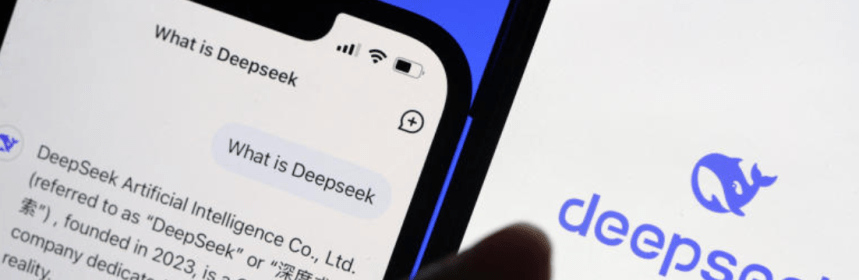
Artificial intelligence has evolved into more than a mere scientific advancement; it has transformed into a competitive arena for efficiency and worldwide dominance. Central to this evolution is ChatGPT, previously the preeminent leader in conversational AI, now confronted by a significant rival: DeepSeek. With its efficiency-driven approach and open-source architecture, DeepSeek heralds a shift in AI development, raising questions about the balance between adaptability and specialisation.

However, the ramifications extend beyond artificial intelligence models. NVIDIA, the leader in AI chip manufacturing, has experienced a challenge to its supremacy as DeepSeek demonstrates the availability of alternatives. Meanwhile, as the U.S.-China AI rivalry increases, innovation has turned into a geopolitical hotspot. With dynamic changes in the AI realm, how does DeepSeek contest ChatGPT, and what influence are felt by NVIDIA? How is the overarching AI weapons race changing global power dynamics?

The ChatGPT Phenomenon

A true marvel of modern invention, ChatGPT, the golden child of OpenAI’s GPT architecture, has become the standard for conversational AI. Alongside its ability to generate human-like text, answer complex questions and assist with tasks, ChatGPT’s ability to provide personal and professional responses have exponentially multiplied its user base, ranging from students to suburban moms to 9-5 workers. We can trace the success of this model back to its scale; trained on vast amounts of data, it uses a generalist approach to handle a wide array of tasks. Like any true everyday hero, it can write your college essay, debug your code or help you draft a breakup text.

However, the unfortunate downfall of this ‘everything-tool’ lies in its defining generalist approach. While ChatGPT excels at breadth, it, more often than not, struggles with depth, especially in specialised domains. Its reliance on pre-2021 data for GPT-3 also limits usability. These limitations, along with increasingly high subscription prices, highlight a growing tension in AI development. Will ChatGPT manage to stay relevant while the pendulum of user demand swings back and forth between versatility and expertise?

DeepSeek: A New Challenger

Cheaper and better products from China never come as a surprise, and yet, the advent of DeepSeek seemed to shock U.S. AI oligarchs. Capable of ChatGPT-esque speech (since they share the same foundational technology) while also offering a broader spectrum of knowledge, DeepSeek distinguishes itself through a more focused approach. DeepSeek is designed to prioritise efficiency and precision, often excelling in cases where ChatGPT’s generalism might fall short. However, once again, the strengths of this model are also its downfall, as DeepSeek’s narrower focus comes with trade-offs. By optimising specific tasks, it may lack the versatility that has made ChatGPT so popular. 

DeepSeek’s emergence suggests a growing recognition that one-size-fits-all solutions may not be sufficient as AI applications become more diverse and complex. However, this shift toward specialisation also risks creating a fragmented AI ecosystem, where users must navigate multiple tools for different tasks, rather than relying on a single, unified platform. The challenge for DeepSeek, then, is to prove that its targeted approach can deliver enough value to justify the added complexity.

Differences, Implications and Competitive Advantages

A key asset of DeepSeek’s groundbreaking reveal was its computational efficiency. While ChatGPT and other US AI oligarchs invest billions in AI chips for model training, DeepSeek achieves almost superior performance using only a quarter of the AI chips required for ChatGPT. This efficiency causes a ripple effect in multiple spheres. It significantly reduces cost of operations. For an increasingly climate conscious consumer, this efficiency results in a lower resource footprint that could serve as a major competitive advantage. Additionally, the reduced requirement for expensive state-of-the-art AI chips significantly lowers the barrier to entry, making it easier for smaller businesses to access the necessary hardware for deploying advanced AI models.

Another key differentiator is DeepSeek’s open-source nature. This is contrasted by OpenAI’s proprietary model which, ironically enough, started off open-source (lending to the brand name, OpenAI). DeepSeek’s openness of a superior model strips some competitive advantage from ChatGPT, as it enables broader access to creating models of similar intelligence. It must be stated, however, that an open-source model is not without fault. Without centralised oversight, there may be significant challenges in maintaining consistency, preventing misuse, quality control, security, and ensuring ethical standards.

The implications of DeepSeek are understandably widespread and have both erased and created competitive advantages on both sides of the competition. The impact can also be seen in industries adjacent to AI, such as NVIDIA, the lead supplier of coveted AI chips.

NVIDIA: An Overview

NVIDIA has been one of the most remarkable success stories in the stock market over the past few years. The company, originally known for manufacturing high-performance graphics processing units (GPUs) for gaming, has transformed itself into an artificial intelligence (AI) powerhouse. This pivot has driven NVIDIA’s stock price to unprecedented levels, with its market capitalisation surpassing $1 trillion in 2023, making it one of the most valuable tech companies in the world.

A key driver behind this explosive growth has been the surge in demand for AI-related computing power. NVIDIA’s cutting-edge chips, particularly its H100 and A100 GPUs, are essential for training and deploying large AI models. This dominance in AI infrastructure has led to exponential revenue growth, allowing NVIDIA to post record-breaking earnings and maintain its stronghold in the semiconductor industry.

AI has become inseparable from advanced semiconductor technology. Training large-scale AI models, such as OpenAI’s GPT-4 and Google’s Gemini, requires vast computational resources. NVIDIA’s GPUs, with their parallel processing capabilities, are the gold standard for AI workloads, significantly outperforming traditional central processing units (CPUs).

The reliance on NVIDIA’s technology for AI development has made the company indispensable to major tech firms. However, the company is also reliant on AI firms continuing to use their chips. An analyst from UBS estimated that Microsoft, Meta, Amazon, and Alphabet collectively make up 40% of NVIDIA revenue. 

NVIDIA’s Stock Crash: The Facts

Recently, NVIDIA’s stock experienced a sharp decline amid concerns over the emergence of DeepSeek, a new AI player backed by Chinese tech firms. DeepSeek was able to develop a GPT with a combination of NVIDIA chips and cheaper alternatives. The use of cheaper alternatives was previously thought to be impossible in the short term, thus the demand for NVIDIA chips is uncertain in the future.

The stock dropped 17% to $188.42 in one day, erasing nearly $600 billion of value – the largest one day drop in U.S. history. It briefly recovered up to $128.99 over the next few days, but recently it seems to have found an equilibrium.

The future value of the company is still uncertain. The quality of copycat AIs is uncertain, as well as what effect, if any, they will have on NVIDIA’s biggest buyers. Microsoft, Meta, and Alphabet have already built their software around NVIDIA chips which makes a decoupling seem unlikely. However, there are also broader geopolitical aspects to this issue.

DeepSeek, AI, and the Great Geopolitical Chessboard

Let us rewind to how AI rose to power to become a tool in political debate. The first AI Safety Summit was organised by then-UK Prime Minister Rishi Sunak, and the outcome was stellar. The Bletchley Declaration was this summit’s achievement – 28 countries, including the United States and China, signed the agreement, promising international co-operation in order to manage the challenges and risks that AI posed. 

The tables have now turned, and at the most recent AI Summit in Paris a new declaration was put forward: “A pledge for Trustworthy AI in the World of Work”, reiterating the importance of transparency and promoting AI accessibility in order to avoid a digital divide. 60 countries signed the declaration, including China, however the UK, who was once an advocate for AI safety, followed suit with their special partner the US, who also refrained from signing the agreement. Vice President JD Vance emphasised that he had concerns over “authoritarian censorship”. The Paris AI summit has shown a change in the dynamics, with an emphasis on geopolitical rivalry and the never ending pursuit of economic and technological advantage.

The United States: Not Amused

Let’s talk about efficiency. This January, while President Trump made Elon Musk’s schedule busier than ever with the introduction of the Department of Government Efficiency, a Chinese firm used creative methods to increase artificial intelligence efficiency –  DeepSeek. Across the pond in Washington, DeepSeek’s success has raised some serious eyebrows. The US has been cranking up the pressure on China’s AI ambitions, raising tariffs and slamming the door on high-tech chips, warning allies against playing too nice with Beijing. 

Trusted advisor J.P. Morgan and their Chairman of Market and Investment Strategy Michael Cembalest noted at a talk on the Global Market Outlook that although Deep Seek is a compelling story, it may be too good to be true. Cembalest emphasised that it was difficult to tell what really happened with DeepSeek, as Chinese statistics are not to be trusted. He compared them with his middle school child’s report, insinuating that we do not have the full picture of DeepSeek’s success story. We have to wonder though, is the US trying to play it down, and are they possibly too nonchalant for their own good?  

China: Playing the Long Game

For Beijing, DeepSeek’s rise to fame isn’t just a win – it’s a strategic flex. Following years of U.S. sanctions blocking access to high-end microchips, China found itself at a crossroads: play nice and roll over or get creative. It chose the latter, giving the country a tech boost. The long game for China begins with DeepSeek, but The People’s Republic is aiming high for full scale AI-driven industrial innovation, aligning with the new policy “Made in China 2025”, emphasising China can not only scale and commercialise emerging technologies, but also innovate and be at the forefront of the field. Beijing isn’t necessarily aiming for the crown in the AI chatbot arena, but to employ the underlying technology to create cost-effective, commercially feasible solutions, which it can subsequently export to lower-income nations. China’s objective is not exclusively “frontier AI”, but rather “mass-market AI”.

Europe: Stuck in the Middle

Meanwhile, Europe is still trying to decide what to do with its seat at the table. On one hand, leaders like former UK Prime Minister Rishi Sunak organised the first ever AI Safety Summit in November 2023. French President Emmanuel Macron is advocating for AI advancements leveraging the region’s nuclear energy edge, and the most recent “AI Investment Plan” pledging around €200bn towards accelerating AI development. Conversely, Europe seeks to avoid entanglement in the conflict between two technological superpowers. The European Union, hindered by internal discord and slow innovation processes, risks becoming a mere observer, rather than a player, in the race for AI, which is now a key economic driver. 

Microchips: The Tiny Giants Shaping Global Power

At the core of this AI turmoil lies the true arbiter: microchips. The United States has adopted a stringent approach by prohibiting the shipment of advanced semiconductors to China, aiming to impede Beijing’s progress in artificial intelligence. However, China is not lamenting; it is ingeniously managing its resources to maximise the performance of the chips it can still utilise. When the United States intensified its restrictions, China retaliated by restricting the export of gallium and germanium, essential ingredients for semiconductor manufacturing. What is the outcome? A semiconductor rivalry in which both parties are striving to surpass one another.

The Bigger Picture: A Tech Cold War in the Making?

DeepSeek’s emergence is but a fragment of a larger geopolitical conundrum. The AI arms race transcends the mere development of superior models; it encompasses the control of future technologies, economic dominance, and global impact. The United States and China are in conflict, Europe is striving to maintain its significance, and the global community is preparing for the enduring ramifications of a fragmented AI ecosystem. Will this be the dawn of a new digital Iron Curtain? Will innovation discover a method to dismantle obstacles? AI is not only transforming sectors; it is also redefining global power dynamics.

Most of these developments point to a future where AI is both an economic driver and a geopolitical chess piece. In many ways, this entire situation is a microcosm of a broader global transition. ChatGPT’s success and subsequent dethroning proves the need for the precarious balance between being an all-encompassing model and trying to be everything to everyone. DeepSeek’s efficiency-led approach and open-source philosophy promises new paths forward but also exposes fresh challenges. NVIDIA’s stock woes highlight how dependent entire industries are on AI’s progress — yet also how quickly that progress can redefine winners and losers. Nations grapple for control over microchips, data, and AI capabilities, while global alliances and trade deals strain under the weight of competing ambitions. As technology becomes a barometer of power, the potential for fragmentation — specialised models, trade restrictions, or strategic self-reliance — grows. What is certain is that AI is actively reshaping the balance of power — politically, economically, and technologically — well beyond chatbots and chip manufacturers.

The Crypto Ecosystem: How Blockchain, DeFi, and Emerging Tech Are Reshaping Finance

Rachel Ranjith

In a rapidly evolving digital world, the advent of cryptocurrencies, blockchain technology and decentralised finance is reshaping the global financial landscape. These technologies aim to decentralise power, with the intent of promising financial inclusion and accessibility, challenging traditional banking norms. Yet, they also raise pressing questions about security, scalability and sustainability, especially as emerging technologies become potential disruptors. 

To demystify the concepts surrounding crypto and make it more approachable, Dr. Martha O’Hagan Luff of the Business School and Dr. Hitesh Tewari of the School of Computer Science and Statistics were interviewed to learn more about the future of cryptocurrency. 

The Building Blocks: Crypto, Blockchain, and DeFi

Cryptocurrencies like Bitcoin and Ethereum represent a shift from centralised money controlled by governments and banks to decentralised digital assets. Built on blockchain technology, they allow for peer-to-peer transactions without the need for traditional financial intermediaries, offering greater transparency and user control.

Blockchain is the backbone of cryptocurrencies: a decentralised, distributed ledger that securely records transactions. Its immutability and transparency have made it a cornerstone of digital finance. Beyond powering cryptocurrencies, it also enables the smart contracts – self-executing code for certain banking procedures – that DeFi platforms rely on.

Decentralised Finance (DeFi) leverages blockchain to recreate traditional financial services – such as lending, borrowing and trading – without intermediaries. By using blockchain and smart contracts, these services are automated, making them faster, more transparent and accessible. Together, these components form a symbiotic network; cryptocurrencies operate as the medium of exchange, blockchain serves as the infrastructure and DeFi platforms utilise both to deliver financial services in a decentralised, trustless environment. 

A New Era of Financial Services

Traditional banking systems are built on centralised control by governments and financial institutions. This structure provides stability, insurance and regulation, but it also has its downsides. High fees, slow processes and limited access for millions of unbanked people worldwide are a few notable flaws. DeFi addresses these very issues by offering accessibility to anyone with an internet connection, it offers transparency, lower costs and user control. Since it’s automated via smart contracts, and operates without the need for trust in centralised institutions, it has evoked a lot of interest in the public. However, the lack of regulation and protections in DeFi means higher risks, such as losing funds to hacks or bugs in the system, as well as the volatility of crypto assets.

As traditional financial institutions explore blockchain technology- like JPMorgan’s use of blockchain for settlements- it’s unclear whether DeFi will coexist within traditional banking or replace it entirely. The likely outcome may be a hybrid system, combining the best of both worlds. There is a certain convenience to the efficiency of Smart Contracts that is inarguably positive. However, the reassurance and reliability of traditional banking cannot be easily replaced. 

Another possibility is the rise of CBDCs – Central Bank Digital Currencies. This was proposed as a potential solution to the crypto ecosystem. The proponents for this technology argue that the convenience of crypto is preserved while also solving the issue of unregulated currencies. However, a deeper look into this idea provides a number of disturbing concerns. If CBDCs become legalised tender, many transactions become more traceable due to regulatory requirements. The extent of this traceability can vary based on the design choices made by central banks, however, this contrasts with the ideology of cryptocurrencies. Pro-CBDC proponents often argue, “why worry if you have nothing to hide?” But, in an era of increasing concern for digital privacy, it might be safe to say CBDCs may not become popular.

Quantum Computing: Threat or Opportunity?

Quantum computing is a revolutionary leap in computing that solves problems far beyond traditional computational powers that, unfortunately, threaten the crypto environment. It has the potential to revolutionise many industries, but due to its capability of solving complex problems exponentially faster, it also poses a serious threat to blockchain technology. Since blockchain security relies on cryptography and cryptographic algorithms, quantum computers can eventually break past these walls. For example, private keys used to authorise crypto transactions could be decrypted, exposinging assets to theft. This is understandably a serious compromise of the integrity of blockchain networks.

Researchers are already developing quantum-resistant cryptography to safeguard these systems. Post-quantum encryption and hybrid cryptographic models are widely being discussed in the current tech climate, with a widespread understanding of a need for preemptive measures. While the threat is real, quantum computing also presents opportunities. From optimising scalability, efficiency and speed to the implications of a transparent ledger for business transactions, the blockchain ecosystem definitely has significant future applications.

There are parallels to be drawn between the current rise in popularity of crypto and the 90s Dot-Com Bubble. The internet’s commercial potential sparked an unprecedented wave of investment in tech companies in the late 1990s and the promise of connectivity and innovation drove massive valuations. However, when the market realised that many dot-com companies lacked profitability or sustainable models, stock prices plummeted, wiping out trillions of dollars in value. Similarly, quantum breakthroughs could trigger a re-evaluation of crypto projects, exposing vulnerabilities and weeding out weaker systems.

What is Self-Sovereign Identity (SSI)?

Self-Sovereign Identity (SSI) enables individuals to control their own digital identity, a key element while discussing DeFi platforms. Instead of relying on centralised services like banks or governments, users manage their own identity data. Blockchain’s decentralised nature makes it an ideal platform for implementing SSI, allowing users to securely store their identity data without ceding control to intermediaries. 

SSI has the potential to transform traditional Know Your Customer (KYC) processes in the crypto ecosystem by allowing users to control and share only essential data without relying on centralized institutions. While KYC regulations are currently enforced in many crypto transactions, SSI could reduce the burden of sharing sensitive information by enabling pre-verified credentials. Users could prove their creditworthiness or reputation without exposing sensitive personal information while also reducing the hassle of procuring documents from multiple institutions for any formal procedure.

However, challenges remain, including the complexity of implementing SSI on a large scale and ensuring interoperability between different systems. Additionally, the inherent lack of trustworthiness that comes with self-identification is certainly a significant obstruction to its practical application. Overcoming these hurdles will be crucial for its widespread implementation.

The Future of Crypto

Cryptocurrencies, blockchain and DeFi represent an exciting frontier in global finance and technology, offering unprecedented opportunities for innovation, accessibility and autonomy. However, their sustainability depends on addressing inherent challenges and should be approached with caution considering past trends wherein massive bubbles in the financial market often burst when oversaturated with interest. 

Meanwhile, as traditional institutions adapt to this new paradigm, the question remains: will DeFi become the dominant financial system, or will it integrate with existing frameworks to create a hybrid future? Emerging technologies could either disrupt or enhance this ecosystem and whether this decentralised world will coexist with traditional banking or replace it entirely remains to be seen. What’s clear is that the way we think about money and finance is evolving, and the journey has only just begun.

Selling the Stache: A Look into the Minds Behind Movember

Sean Smith

If you’ve been pondering why some of your fellow coursemates’ five o’clock shadows have persisted past the hours of dawn, fear not; Movember is in full swing. As we close out the month of November, you may have noticed many different initiatives around the college community to raise funds for men’s health. Between sea swims at the forty-foot, a moustache before-and-after post of that one society with little indication of said ‘after’ or watching the infamous DUBES fight night, Trinity has its fair share of contributions for the nonprofit. But who is behind the charity we have grown to know and love so well, and what is it like working for an organisation like Movember? Editor-in-Chief Sean Smith spoke with Marketing & Communications Director Aisling Quigley and Irish Country Director Sarah Ouellette to learn more about their roles at Movember Ireland and what goes on behind the mo’.

Background & Mission

Going on its 21st year of operation, Movember is a nonprofit dedicated to bolster men’s health, with mental health and suicide prevention as well as prostate and testicular cancer being of particular focus. What started as a conversation between two friends about the drift of the moustache in men’s fashion over drinks in Melbourne, Australia has now become a global movement, challenging men to grow a moustache to raise funds for these charitable tenants. 30 humble moustaches soon turned to 5 million, with the nonprofit raising $137.2 million AUD in its recent fiscal year. 

Beyond the stache, the heart of Movember’s brand lies in its locality. Commencing operations in Ireland in 2008, fundraising activities possess  a distinctly Irish flair, reaching men at meaningful touchpoints. ‘We have a dedicated community of supporters who have been with us since the day we launched in Ireland, that has been the backbone of our growth.’ says Sarah. ‘Our partnership with the GAA and GPA as well as the work we do with UCD are all impacting Irish men.  What brings it all together is the Movember ethos, brand and straight talking approach which has really resonated in Ireland.’ The team’s core value of ‘Having Fun while Doing Good’ is instilled in Movember’s culture, with a diverse group of individuals committed to putting men’s health in the limelight.

Marketing the Mo’

As with most nonprofits and social enterprises, marketing and branding efforts transcend beyond commercial interests, instead blending purpose with action. Instead of focusing on hitting sales targets, Movember’s product lies in its mission and commitment to men’s health. “This means that we have to be extra thoughtful and sensitive in how we communicate,” Aisling explains. “We’re not just asking people to buy something, we’re inviting them to join a cause and support something deeply meaningful. We’re dealing with potentially life-changing issues like mental health and cancer, so we have to be really mindful about how we engage people, making sure our messaging is always respectful and inclusive.”

Without the resources and budget one would find in a traditional corporate marketing department, Movember leverages its creativity and resourcefulness to shape its branding. With a recent campaign seeing a Movember phone booth on Grafton Street where passerby could share a story about how they are feeling to a public service announcement titled ‘Be a man of more words’, the group succeeds at striking a balance between playfulness and impact. Aisling voiced that “Hearing stories from men who got a physical check-up or opened up about their mental health because of Movember—it’s incredibly moving. Knowing that our campaigns can encourage those life-saving actions makes the hard work worthwhile. A current initiative the group is exploring is esports and gaming; through tournaments and in-game promotion, Movember is promoting men’s health in non-traditional areas of growth.

Day-to-Day: Campaigns & Community

With a lighthearted and meaningful culture, what does a normal day look like for members of the Movember Ireland team? For Aisling and Sarah, focus is drawn on long-term strategy. As Country Director, Sarah explains that her day varies between supporting local work involving media interviews and planning future strategy with their global colleagues in London and Melbourne. “No two days are the same, but most involve working with our fundraising, marketing and programmes teams on the ground here in some capacity,” she exclaims. “There are a lot of late night calls with our global teams due to time zones but I don’t mind!”

For Aisling on the marketing team, sustaining stakeholder engagement while analysing broader market trends are pivotal for her daily work. To remain competitive as a nonprofit, Movember aims to push boundaries with their campaigns, partnering with exciting brands and creating consumer experiences unique to Movember. “Day-to-day, my role is a mix of planning, creating, and responding,” she says. “On any given day, I might be drafting campaign materials, coordinating with our media partners, brainstorming with ambassadors, or handling last-minute details for an event. There’s also a lot of collaboration — whether it’s internally with our team or externally with partners, we’re always working together to keep things moving.” Another area for development has come in the form of advocacy, championing men’s health to the Irish Government in Ireland European Union aligned goals in cancer and mental health.

Advice for Students

For those interested in a career in the nonprofit or social entrepreneurship sphere, the pair shared some insight into breaking into the field. “You need to be truly passionate about the cause you’re supporting,” Aisling remarked. “Non-profit work can be incredibly rewarding, but it also comes with unique challenges, and having a strong connection to your mission will help you stay motivated. Be prepared to wear many hats, be adaptable and stay open to creative solutions. Above all, remember that every little bit of impact counts—it’s all about making a difference, no matter how big or small.”

Joining the nonprofit space does not need to be linear, either. For Sarah, her entrance to her role at Movember came from a tech and media background, which she found beneficial in skill development for her current role. She advised that “having a broad base of skills that include project management, financial acumen and data-led decision making are increasingly what we’re in need of in the sector.”

So whether you are itching for the warm grasp of your razor come the 1st of December or enjoying the Students’ Union guerilla techniques of digital fundraising, it is wonderful to see the Trinity community rally around such a poignant cause. If you want to learn more about Movember and donate to an amazing cause, you can avail of more information here.

« Older Entries