
Budget 2024: An Economic Analysis
Natalie Kollrack
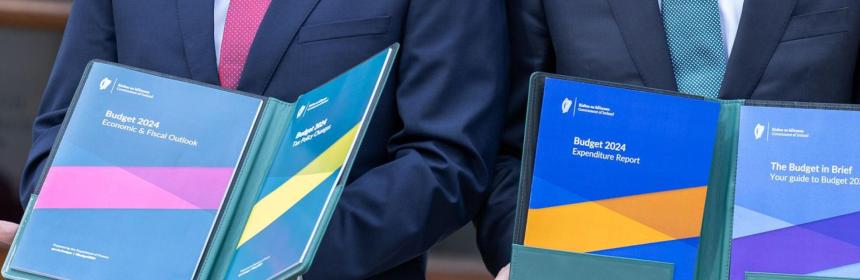
In speeches to Dáil Éireann last Tuesday, the 10th of October, Minister of Finance Michael McGrath of Fianna Fáil, and Minister of Public Expenditure, NDP Delivery, and Reform Paschal Donohoe of Fine Gael unveiled the 2024 Budget. Key themes in this year’s budget included supporting Ireland’s current society and augmenting sustainability, while also considering future implications of increasing public expenditure. The total budget package was to the tune of €14 billion, funded in part by €250 million from windfall corporation tax receipts. Interestingly, the government, boasting a budget surplus of €8.8 billion, would have encountered a €2 billion deficit were it not for the windfall corporate tax receipts. This article provides an overview of the primary provisions and delves into the criticisms raised by economists regarding its potential ramifications.
Housing
Minister McGrath detailed efforts from the government regarding housing – a prevalent issue in contemporary discourse. McGrath announced that homeowners with an outstanding mortgage balance from €80,000 to €500,000 on their house will receive a one-year Mortgage Interest Tax Relief. This will cost about €125 million and will benefit about 165,000 mortgage holders. The Rent Tax Credit has been increased from €500 per year to €750 per year, a temporary tax relief to keep small landlords from leaving the market. Additionally, the Help-To-Buy Scheme, the Vacant Homes Tax, and the Residential Zoned Land Tax are all intended to be extended. Lastly, Minister Donohoe reported that there are plans for 29,000 homes to be constructed by the year’s end, with 21,000 already built.
Finances
Minister McGrath celebrated falling inflation, with an estimated rate of 5.25% for September this year, and predicted a 2.9% inflation rate for 2024. In response to inflationary challenges, McGrath and the Department of Finance have escalated public spending from 5% to 6.1%, even as they anticipate income growth outpacing inflation due to a thriving economy. Their plan is to revert it to 5% as inflation diminishes.
Additionally, the government has also increased personal income tax to support workers and achieve efficiency in the labour market: the cutoff point for the lower income tax bracket has been raised by €2,000 for both single and married individuals. On the wage front, the national minimum wage has been increased by €1.40 to €12.70 per hour. The Universal Social Charge, or USC, has been decreased for the first time in five years, from 4.5 to 4%, and the threshold for USC will be raised to €25,760. Finally, the government has introduced the Future Ireland Fund, made to support future government expenditure, which will receive a 0.8% investment of GDP annually.
Education & Health
Minister Donohoe has allocated a significant proportion of the budget to the Department of Education. Regarding higher education, he announced a once-off reduction of €1,000 for students qualifying for free fees, as well as payments to help students with secondary education. For the health sector, Minister Donohoe announced additional recruitment to increase healthcare staff, as well as continued investment in public health and vaccinations. To combat smoking, Minister McGrath announced an increased excise duty on tobacco products, raising the price of cigarettes to €16.75, additionally proposing a domestic tax on E-Cigarettes in next year’s budget.
Climate
Minister McGrath has taken steps to address climate change concerns by launching the Infrastructure, Climate, and Nature Fund, which is set to increase to €14 billion by 2030. The fund’s financing includes an annual contribution of €2 million and a share of the windfall from corporate tax receipts. On the public transportation front, Minister Donohoe has introduced funding for cycling, walking, and Greenways infrastructure, with additional fee reductions being introduced to encourage the usage of public transportation. Regarding energy, Minister Donohoe mentioned a target of 80% of electricity coming from renewable electricity in 2030, as households prepare for the cold winter ahead. Additional funding to increase environmental sustainability and to support farmers was also cited. Last but not least, Donohoe announced that approximately half of the income from carbon tax revenues will be reinvested to enhance energy efficiency in homes.
Other
Less prominent but nonetheless important, in the digital sector Minister Donohoe announced funding in the National Broadband scheme, extension of broadband to rural communities, and investment in cybersecurity. Funds have been allocated to the tourism sector, creative arts sector, the Gaeltacht, and sporting infrastructure as well. Support for the justice sector involves investment in Gardaí recruitment, an increase in the Gardaí budget, and investment in the defense sector. Funds have been allocated for foreign aid to developing countries, especially for those struggling with the impact of climate change. Finally, investment has been announced in peace-promoting and other cross-border projects with Northern Ireland.
Reception from Economists
Measures on housing have been met with heavy criticism from economists. David McWilliams, Irish economist and writer, argues these measures have done nothing to make housing more affordable and available. Instead, these measures are contradictory and only help existing homeowners, not first-time renters and buyers. In theory, the rising interest rates Ireland is currently experiencing should increase the cost of borrowing, thus decreasing the amount of money people can borrow, decreasing the size of new mortgages on houses for sale, and decreasing housing prices. Therefore, the government need not introduce any other measures as prices will fall on their own. The tax relief given to mortgage holders simply increases housing prices – the exact opposite of what the government claims to be doing. If the government continues to give a once-off relief every time interest rates increase, housing prices may continue to increase as well. McWilliams believes the government has not built enough homes, considering net migration to Ireland significantly exceeds predicted levels. He argues that the rental tax credit and the Help to Buy Scheme could have a contradictory effect of putting upward pressure on rents. In final remarks, McWilliams emphasizes the potential drawback of tax credits designed to keep landlords in the market, potentially exceeding a cost of €100 million, especially if they had no intention to exit.
Dr. Barra Roantree, Economics professor at Trinity College Dublin, joins McWilliams in arguing the Help to Buy scheme should not have been extended as it has demonstrated a propensity to inflate housing prices. While the Mortgage Interest Tax Relief scheme could be helpful to those suffering to pay loans from non-bank lenders hiking interest rates, overall, this policy is mainly helping people who do not need the relief. Additionally, Dr. Roantree notes concerning similarities between this relief scheme and a scheme that caused the Financial Crisis of 2008. Leading up to the financial crisis, people were receiving mortgages higher than they could afford, increasing property prices. When too many mortgages were given to people who normally would not qualify, a housing bubble was created – and every bubble inevitably bursts. Finally, Dr. Roantree criticized the Rental Tax Credit, arguing there is no evidence to show the tax relief is keeping landlords who would have otherwise left. He postulates landlords are not leaving the market due to tax but due to retirement, as many became landlords in the Celtic Tiger era. Thus, a tax relief would not have an impact on their decision.
The Irish Fiscal Council, a watchdog on the government’s procedures, has also given an opinion on the budget. The Fiscal Council approved of the new Future Ireland fund, as it argues it could unburden future taxpayers. However, the council had a host of critics regarding other measures. It is concerned about the increase in core net spending to 5.7% in 2024, which breaks the National Spending Rule of 5%, and argues the predicted break of the Rule to 2026 undermines Ireland’s public finances. The Fiscal Council criticizes the Irish government’s current adherence to procyclical fiscal policy (involving the augmentation of government spending and the reduction of taxation during periods of economic growth and low unemployment) as it has been damaging to Ireland in the past. Additionally, it predicts the larger permanent budget package will increase inflation and keep it at high levels for a longer period. Considering the robust economy, declining prices, and inflation risks, the Fiscal Council discerns minimal rationale for additional ‘one-time’ or transient policies. It specifically points to non-core funding, which was created for exceptional circumstances like Covid-19 and the humanitarian response to the war in Ukraine.
Members of rival political parties were also among the prominent critics of the 2024 Budget. Sinn Féin TD Pearse Doherty declared it a “budget for landlords.” Similarly, Holly Cairns, leader of the Social Democrats, argues the budget supports landlords more than it does tenants or first-time buyers.
Irish Congress of Trade Unions (ICTU) Secretary Owen Reidy argues the tax relief for landlords has made the taxation system more regressive, as opposed to progressive (like the USC). Reidy echoes members of the public arguing that the government has not gone far enough: the minimum wage should have been raised higher, higher education fees should have been decreased further, and more should be done to address the housing crisis and cost of living. There is also general criticism of too many temporary measures, especially the large number of “once-off” taxes. Patrick Leahy of the Irish Times argues that “once-off” taxes have been used so frequently that the phrase has lost its meaning. Furthermore, he underscores the worrisome failure to address the housing crisis, especially since a significant number of young voters view housing as their primary concern. Finally, there is a prevalent argument that the budget predominantly caters to the middle class – which should not be surprising as Fine Gael prides itself as the party of the “squeezed middle”.
 Trinity Business Review